Toll-booth-free tolling on SR 520 and I-90
As early as 2010, the east-west transportation corridor could see a return to the pay-as-you-go model, done without the slowdown of a toll booth.
By Matt Rosenberg
November 18, 2008.
The State Route 520 Tolling Implementation Committee's "November Scenario Evaluation" document (pdf) released last week shows that the most robust regional financing for replacing the dangerously sub-par 520 bridge comes from time-variable tolling starting in 2010 and tolling the parallel I-90 span across Lake Washington, starting in 2010 or 2016. Tolling in this key east-west corridor would be done on the fly, electronically, with vehicle windshield transponders and overhead gantries — no toll booths. Tolls that vary by time of day are likely, though flat rates are also an option. Special lanes that would be free to buses and ride-sharers could be made available to solo drivers, for a price.
The committee's members are WSDOT Secretary Paula Hammond, Puget Sound Regional Council Executive Director Bob Drewel, and Washington State Transportation Commission board member Richard Ford. This latest analysis, along with public comment, will inform a January 2009 final report from the committee to the state legislature, which is then to approve a tolling plan for the SR 520 bridge and perhaps the I-90 bridge as well. Then, specific toll rates would be set by the state transportation commission and approved by the legislature, with construction of pontoons for the new 520 bridge beginning later in 2009 if all goes as envisioned.
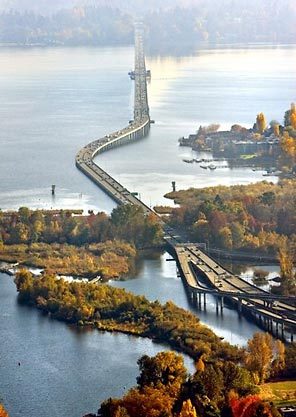
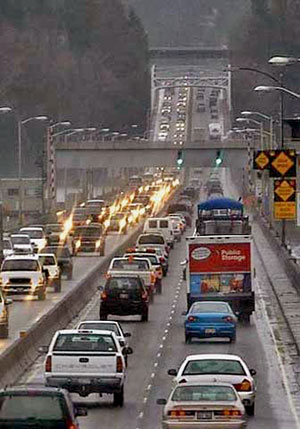
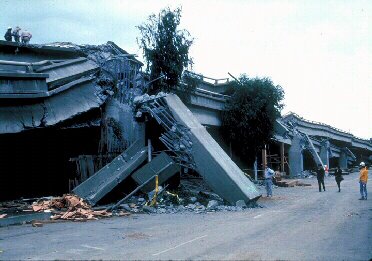
The weary and crowded 1963-vintage 520 bridge connects Seattle with Eastside job centers such as Bellevue, Redmond, and Kirkland but is at major risk of catastrophic failure in a 70 mph windstorm, or earthquake. At the same time, growing regional traffic congestion has prompted a public warming to expansion of regional transit, and bettered the odds for a system of electronic, time-variable tolling on major highways and state routes across metro Puget Sound. A priced-lanes pilot project for carpoolers and solo drivers is already underway on SR 167, and flat-rate electronic tolling in place, to rave reviews, on the new southbound span of the Tacoma Narrows Bridge.
The 520 tolling committee's latest report reveals that:
# Starting tolling in 2010 instead of at bridge completion in 2016 would pry loose an additional $400-$500 million, lowering the costs of bond borrowing for construction, which is to be repaid by tolls;
# The most revenue toward completion of the $3.7 to $3.9 billion project comes from tolling both the SR 520 and I-90 bridges starting in 2010 ($2.4 billion, Scenario No. 9) or 520 in 2010 and I-90 in 2016 ($2.4 billion, Scenario No. 4);
# One-way tolls on both bridges would range from 75 cents off-peak to $2.95 at peak hours in Scenario No. 9, and from 75 cents off-peak to $3.25 at peak in Scenario No. 4;
# Tolling 520 alone starting in 2010 (Scenario No. 7) would cut peak-hour traffic volume in the vicinity of 17 to 26 percent while peak-hour flow would rise three to seven percent on I-90;
# Tolling both 520 and I-90 starting in 2016 (Scenario No. 9) would deliver peak-hour volume cuts of 10 to 11 percent on 520 and 12-16 percent on I-90, as commuters shift travel times or use transit;
# Time-variable tolling increases peak-hour speeds on 520 by 13-16 mph, nearly double the speed gain from flat toll rates.
Tolling opponents somehow imagine they are due a free ride because the construction, maintenance, and operations costs of Puget Sound roads and bridges, as population continues to swell in coming decades, can somehow all be covered by the incredible shrinking gas tax and ... what? More sales tax hikes or vehicle fees? They're nice if you can get 'em, but the well only runs so deep.
Pay as you go is the way to go in this day and age — coupled with cost-saving, performance-based consortium contracting to design, build, operate, and maintain surface transportation facilities and systems.
The four-lane SR 520 bridge across the lake is to be replaced with a six-lane structure. Current plans call for two "general purpose" lanes and one high-occupancy vehicle lane in each direction, the former would be tolled via either a flat or time-variable rate if a plan is adopted. This is confirmed by WSDOT, though it can get a bit confusing because one doesn't necessarily think of general purpose lanes as being tolled. On the I-90 bridge, the agency also confirms, tolling would be on all general purpose vehicle lanes, except under one scenario that exempts eastbound traffic from Mercer Island. On both bridges the possible HOV lane could be designated a High Occupancy and Toll (HOT lane), free to transit and ride-share vehicles, but also available, for a toll, to solo drivers.
The more time-variable tolling, and the sooner, the better: It will further drive alternative choices such as ride-sharing and telework, and raise more money for regional surface transportation needs, transit included.
The policy decisions to come on tolling the SR 520 bridge, and perhaps the I-90 bridge as well, are an important turning point for the state and region. Going forward, a broad regional plan to implement time-variable tolling on several highways and major state routes is needed. That would allocate scarce peak-hour capacity, ease congestion, and help pay for billions more in needed safety, repair, and mobility improvements on I-5, SR 99, SR 704, SR 509, US 2 and I-405/SR 167.
The question is, how serious are we about doing this? The legislature will provide the first piece of the answer when it next meets.
Editor's Note: This article first appeared at Cascadia Prospectus.
Matt Rosenberg is a senior fellow at the Cascadia Center for Regional Development, a transportation think tank that is part of the Discovery Institute in Seattle. E-mail him at mattr@discovery.org.
View this story online at: http://crosscut.com/2008/11/18/520-bridge/18637/
Transportation
Tuesday, November 18, 2008
Tolls without the toll-booth heading for SR 520 and I 90


Saturday, March 22, 2008
Sound Transit never open to light rail on 520
Rail: Visualize the '80s, not '50s
DARWIN P. ROBERTS
GUEST COLUMNIST
Local leaders and Sound Transit are making transportation plans that threaten to take us back to our distant past (Tuesday P-I). Apparently, in designing the replacement for the 520 Bridge, they are all but killing any chance that light rail will ever cross it.
We're told this is because we won't need light rail on state Route 520 in our lifetime, if we have bus rapid transit on that route and light rail on the I-90 Bridge.
But the prospect of bus transit on SR-520 apparently has also led to a "new buzz" for bus rapid transit in the I-90 corridor, particularly as a short-term substitute for the more expensive light rail. Rail might be built across I-90, but someday in the future, when voters' attitude toward it is "more clear." In the meantime, it's proposed that I-90 could be used for more express buses and single-occupancy vehicles in tolled "zip lanes."
Our leaders seem to have forgotten that Seattle made decisions just like this in the 1950s, and they crippled our current efforts to build rail transit. When I-5 was being planned, the city's Transit Commission proposed reserving a 50-foot right of way in the freeway median for future rail transit. But as HistoryLink's Moving Washington Timeline puts it, "The state was only willing to consider express bus service." This intransigence led I-5 to be built with reversible express lanes only, "frustrat(ing) future transit planners."
In the 1980s, in contrast, we planned the Downtown Seattle Transit Tunnel for our future rail transit needs. It was designed from the start to be used by a rail system, even though we didn't know whether we'd actually build one. Because of that foresighted decision, Link light rail will run the length of downtown Seattle next year.
If you walk by Convention Place Station, though, you can still see where our smart planning in the '80s ground to a halt against our poor planning from the '50s. The '80s rail tracks come out of the transit tunnel, run through the station, curve hopefully to the north -- and then stop dead, just short of I-5's reversible express lanes. We could have left a path for the tracks to go to Northgate, but we decided not to. The billions we'll spend fixing that mistake could instead have been spent adding rail lines to all the other parts of our region that need light rail service.
Today, we can't afford to plan as badly as we did when we built I-5. We've made a massive regional investment to build a light rail system, which is finally about to start paying off. For the foreseeable future, rail transit will be critical in keeping our economy and environment healthy.
When we plan any major transportation project, such as SR 520, we should include the capacity for future rail if there is any reasonable chance we'll need it -- just like we managed to do in the '80s. And across I-90, we should stop fiddling around with the warmed-over traffic strategies of the '50s and get a rail line to the Eastside built. It'll be good for all of us.
Darwin P. Roberts lives in Seattle.
Readers Comments
Posted by Concerned_Citizen at 3/19/08 5:41 p.m.
In the 1980s, in contrast, we planned the Downtown Seattle Transit Tunnel for our future rail transit needs. It was designed from the start to be used by a rail system
Did you forget that we just spent more than $30 million to 'fix' the tunnel for rail?
seattletimes.nwsource.com/html/localnews
/2002557741_tunnel13m.html
Posted by skeptical at 3/19/08 7:08 p.m.
Seattle plan - are you kidding?
They could not even decide to use the rail line for rail -
going to make a trail out of it. So they can spend Billions later for rail.
Posted by John N at 3/19/08 7:23 p.m.
Sound Transit is in charge of light rail in this region. The systems design for light rail has been locked down for over ten years.
Read the Sound Transit long-range plan from 2006.
Read the Master Plan from the 1990s.
The Sound Transit light rail design has NEVER been open to the possibility of light rail on the SR 520 bridge.
Sound Transit's tunnel and track design does not have the capacity to aborb the predicted ridership load from Northgate, plus from the Eastside, in the University Link tunnel that is planned between U of W and Pine Street.
The Eastside light rail ridership MUST come in to the Seattle downtown from the south of Seattle's downtown, across I-90, in the ST design.
To have changed the design at any point in this current century would have jeopardized the $750 million Federal grant that ST hopes to achieve later this year.
Hi John N,
While it is true that ST never planned to take Eastside commuters over 520, why should we propagate their shortsightedness from 15 years ago?
Things change in 10 years, much less 50 years. And we are talking about a 50-100 year system lifespan. Why should we lock in future planners because of today's short sighted thinking? Remember, we will have an additional 1,000,000 people on the Eastside in 20 years. Bellevue will surpass Seattle as the state's largest city.
Unfortunatly, Ron Sims is responsible for much of this now outdated transportation thinking. I can see his dirty fingerprints all over this decision making process.
Remember how, just a few months ago, he was absolutely adamant about permanently blocking future Eastside rail with a stupid bicycle trail on the BNSF right of way? He even wrote threatening letters to POS board members. Good thing the county council and the Port of Seattle pulled him up by his jock strap. That stupid jerk was going to tear up the tracks immediately. The heck with the next 1,000,000 people moving to the Eastside in the next 20 years.
I have a sneaking suspicion that another rail crossing may be needed to accommodate that future growth. Unless, of course, Seattle is willing to tear out the Burke-Gillman trail....
Posted by BenSchiendelman at 3/20/08 1:03 a.m.
Wow. Possibly the only time I've ever (kind of) agreed with John Niles.
It would be pointless to build light rail capability into this bridge, because we have so much other light rail construction to worry about before we'll ever want to do 520.
The capacity argument isn't exactly true, as light rail trains in the future can run with very tight headways (as little as 2 minutes), just like other mature systems. It would just be extremely expensive and frankly, silly, to build an underground connection to rail over 520 when we already have the infrastructure built to build it over 90. Interlining does work perfectly over 90 as well.
This explains the issue simply and well:
http://www.soundtransit.org/Documents/pdf/projects/eastlink/LoadBalance.pdf
Report violation
#391191
Posted by Soul not sold to Road Warriors at 3/20/08 1:23 a.m.
For one of the few times in his life, JNiles actually applies some real world logic to his axe-grinding jihad. Niles references ST's long range plan, thus acknowledging the value of following some semblence of a blueprint-driven planning over the decades. Don't worry? Though. Niles will find something monorail/technobabble/ new to pursue soon. Since he works for tv Discovery Institute, look for a submerged vacuum tube footferry tlcing m n
btw, the author of this half-sane guest column wins the transportation Darwin award.
When he said "skip LRT on I-90, and do Buses Stuck in Traffic (BrT) instead of light rail, do you think Mr. Darwin Award even took a peek at what it would take to do short headway buses once the coaches leave I-90?
Of course he didn't.
And do you think Mr. Darwin Award ever examined the 35 year planning history behind converting the center lanes to light rail ?
Of course not.
Why on God's green earth would you build light rail on a bridge which was designed for light rail
Hands down, many rabid anti-rail nuts have seized on this520 rail concept, because they also know 520 ISNT ready for rail any time soon. Delay is a good thing for the crank-ideologue.
What a joke: transit opponents doing what transit opponents do best: propose sure losers. Look at Shilo's string of ideas. (two long)
Mr. Darwin Awards, what axe are you grinding today? NIMBy axe? Grudge axe ? Maybe somebody told you about Will Knedlik's free and easy BNSF crazy train?
Your guest column was convoluted an confused...the sure sign of a grudge-based secondary agenda. You're in good company with that.
Report violation
#391193
Posted by rwb77 at 3/20/08 6:35 a.m.
We could solve this problem on the proverbial cheap by people living on the side of the lake on which they work, but that would be too much to ask of Americans, wouldn't it?
Report violation
#391351
Posted by shilos dog house at 3/20/08 7:57 a.m.
Hey Soul,
I am not against mass transit in any form, other than extremely expensive holes in the ground.
What I am against is designing a transit system that creates built-in expansion restrictions.
Bellevue will be larger than Seattle in just a few years. There is no doubt about it. One only needs to look at the population history of Seattle to realize that it has only grown 10% in 50 years. Bellevue, on the otherhand has grown 1,000% in 20.
Transit planners like Ron Sims some how cannot envision this gargantuan poplulation and power shift that will occure in the near future. By constantly focusing on a Seattle centric system they obscure the much larger picture of the whole county all the while asking the whole county to pay for it.
If we do not plan for this future growth I am afraid we will have BIG Issaquah popping up all over the Eastside with no infrastructure to accomodate it. Are we ready for a Hobart with a population base of 50,000?
Report violation
#391390
Posted by hparks_3 at 3/20/08 8:26 a.m.
As has been proven (and rejected at the polls repeatedly) in the past, rail is too expensive and inflexible. But it makes the Left feeeeeel good.
Report violation
#391416
Posted by gettingreal at 3/20/08 9:06 a.m.
What we need is to have rational people plan this without their own agenda. Local planning is dominated by people who have little vision, but lots of personal agenda. Ron Sims envisions 1/2 of the population taking the bus. It is well known that buses are expensive to operate, 73 cents/passenger-mile.
king county metro government statistics
His plan won't work, because that's $15 to travel 20 miles. No matter, king Ron won't give up his fantasies. All we need to keep light rail alive is to build the 520 pontoons wide enough to handle 8 lanes, and hope future generations have better leaders.
Report violation
#391527
Posted by shilos dog house at 3/20/08 10:12 a.m.
One thing to keep in mind. Short-sightedness is inherent in all planning.
John N. talks about the plans from 10-15 years ago, and how rail on 520 was not in the plan. Ron Sims was the driver in that planning group.
I met Ron about that time at a meeting in Bothell on Brightwater. His first comment was "Wow, you guys in Bothell live way out in the country!"
Ron Sims' horizon for planning was his constituency base in the central area of Seattle. Guess where all the rail transit was/is focused? Thinking much beyond the city limits was out of his grasp at the time. Having served multiple terms now as the county Executive has broadened his scope somewhat. However, Bellevue is apparently still far off "way over there". Issaquah might as well be Denver as far as he can see.
There are 1,000,000 new people coming our way. They won't be settling inside the Seattle city limits. They will be in Hobart, Carnation, Duval, Covington, Ravensdail, Black Diamond, or Maple Valley.
For the last 30 years Seattle has been diminishing as the economic and population center of our region. That has steadily been moving east, across the lake. Microsoft is not in Redmond/Bellevue just for the view. They have located in the center of the growth pattern. We need to refocus our transportation planning for that reality. Ron Sims is not the man to do it. I don't know who is, but I know who it ain't.
To preclude future transportation planners from using 520 or any other current open corridor is just silly, to the point of being criminal. Just because a short sighted man set the plan 15 years ago is no reason at all for refusing to review that plan today.
Report violation
#391582
Posted by frustrated at 3/20/08 11:00 a.m.
I think the posts about the future importance of the eastside are correct. The eastside seems to have a lot more of the tech jobs that drive a region, and people who are leaving Microsoft or other established ventures to start something new are more likely to start them close to where they live. Often this is the eastside.
Tuesday, March 18, 2008
Olympia Transport Bills 2008 Tolls, Eastside Rail, Ferries
Washington Legislature Advances Tolling For Puget Sound
Matt Rosenberg
In its election year "short session" concluded last week, the Washington state legislature took several important, albeit partial steps to advance tolling, commuter rail, passenger-only ferries and innovative transportation funding partnerships with non-government entities.
Let's review some key '08 transportation bills that made it through both legislative chambers, and now await the signature of Gov. Christine Gregoire.
ESHB 3096 (bill as passed - bill report - legislative history) has to do with the State Route 520 floating bridge connecting Seattle across Lake Washington to fast-growing Eastside business and residential centers such as Bellevue, Kirkland and Redmond. As the bill reports reminds us, the bridge carries 115,000 vehicles and about 150,000 people per day; it is 1.5 miles long and 44 years old. As has been widely noted, the rickety span could suffer a catastrophic failure in a severe windstorm or earthquake. So 3096 codifies the intent of lawmakers to toll State Route 520 to help pay for replacement of the current bridge. It creates an SR 520 bridge tolling implementation committee to guide coming decisions by the state transportation department and state legislature.
The committee's charge includes making recommendations to avoid traffic diversion to other state and regional roads such as the parallel I-90. Effectively, this will mean tolling on I-90 as well as 520. This will be a crucial second step toward regional tolling for Puget Sound - following on tolling which began last year on the new Tacoma Narrows Bridge, and the four-year SR 167 congestion pricing pilot project starting next month. While politically sensitive, regional highway tolling, and in particular congestion pricing to control peak hour flows, are crucial if we are to handle a projected 52 percent increase in population by 2040.
The committee must also consider technology. That means, in accordance with the current industry standard and tolling on SR 167 and the Tacoma Narrows Bridge, that electronic transponders and overhead gantries will be prioritized over tollbooths. Additionally, the bill requires that the SR 520 tolling committee consider "partnership opportunities." This is a clear reference to possible alliances limiting taxpayer exposure if costs will ultimately exceed available public monies. Partners would be non-government entities, perhaps labor or public employee union pension funds. Private transportation investment funds also enter into a variety of partnership agreements with willing government sponsors, but it's best if the public entity retains ownership of the asset and toll rates.
The 520 tolling committee must also consider input from the public and local elected officials, and report back to the governor and legislature by January of 2009. Then, the bill says, the state department of transportation may seek legislative approval for tolling the existing 520 bridge, and work with the feds to get around a generic prohibition of tolling on Interstates, barring a special agreement tailored to a facility. This is considered eminently do-able; and tolling on I-90 to limit traffic diversions is essential if tolling 520 is to work.
As noted in this Washington Post story yesterday, Seattle is one of five regions nationwide to receive a special federal "Urban Partnerships" grant for innovative solutions to road congestion. Here, it is $139 million, to help pay for implementation of congestion pricing on the new SR 520 bridge and various transit projects including $3.5 million to help launch a new passenger-only ferry in the metro region's western reaches, between Kingston in Kitsap County, and downtown Seattle. But for Puget Sound to get this federal largesse, there's a hook: the grant requires that "variable" tolling, levied at different rates depending on time of day or road congestion level, be approved by the state by September 30, 2009 for the 520 corridor.
To set the stage for that '09 legislation, state lawmakers in the recent session also approved E2SHB 1773, which sets a broader state policy framework for tolling (bill as passed - final bill report - legislative history). The bill states that the legislature must authorize any specific tolls; that tolls can be applied to bridges, highways, transportation corridors, approaches and bi-state facilities; and that the aims of tolling in Washington state will be to improve transportation system efficiency and provide funding, not only for construction but also for maintenance, operations and management. This last part represents an important acknowledgement that tolling is not just for getting things built; it is also now necessary for a big share of life-cycle costs. That's because federal and state gas tax revenues are in an irreversible decline as sources for construction and maintenance.
Without specificly mentioning the word, the bill leaves open the possibility that with legislative approval some future tolling revenues could be used to help fund transit. This is something Cascadia Center supports, as our director Bruce Agnew tells the Seattle Post-Intelligencer this morning.
HB 2730 (bill as passed - bill report - legislative history) advances regional passenger-only ferries, rescinding a state prohibition against their operations by port districts on Puget Sound. This bill is tailored to the above-noted Kingston-Seattle foot ferry route for which the Port of Kingston has received federal grant funding contingent on tolling of SR 520.
The Eastside commuter rail line which Cascadia Center has championed as part of a rails and trails partnership will get a feasibility analysis, under HB 3324 (bill as approved - bill report - legislative history). It directs Sound Transit and the Puget Sound Regional Council to do a fresh analysis of proposed north-south commuter rail between residence-rich east Snohomish County and the booming Eastside business centers of King County, along the abandoned BNSF freight rail line.
Supplemental transportation appropriations via HB 2878 provide an additional peek into the legislature's thinking on metro-region roads and transit (bill as passed - bill report - legislative history).
Included in the bill are provisions which:
# secure $300,000 for a consultant to devise a plan for co-development and public private partnerships at public ferry terminals (page 22, line 30);
# direct WSDOT to analyze, and if found feasible, seek requests for distribution of alterrnative fuels along WSDOT rights-of-way (page 22, line 34);
# underscore the importance to the $4 billion bi-state I-5 Columbia River Crossing bridge replacement project of fully assessing "opportunities for the joining of state and local government agencies and the private sector in a strong partnership that contributes to the completion of the project" (page 51, between lines 14-23);
# direct that $8.5 million of the state's passenger-only ferries account is provided for "near- and long-term costs of capital improvements in a business plan approved by the governor for passenger-only service."
The state is getting out of operating passenger-only ferries, and local operators including King County, the Port of Kingston, Kitsap Transit and others are filling the void. Cascadia Center continues to advocate a voluntary interlocal agreement between ports, cities, counties, private boat operators, tribes, labor and others - coupled with combined funding for foot ferries and Puget Sound cleanup - to help establish a coordinated regional foot ferry system on Puget Sound.
Monday, March 17, 2008
No Light Rail for 520 Bridge Replacement: Victory for common sense
Light rail cut from the plan for 520 Bridge
Focus is on 6-lane design over lake and bus rapid transit
By DEBERA CARLTON HARRELL AND LARRY LANGE
P-I REPORTERS
When Seattle Deputy Mayor Tim Ceis told a group grappling with the Evergreen Point Bridge design not to count on light rail, jaws dropped.
"Don't get your hopes up on light rail across 520, folks," Ceis told the 34-member mediation group recently. "It's probably not going to happen."
You could hear the transit balloon pop. No light rail? In a hyper-congested yet critical corridor that links growing population and job centers? But Sound Transit told the group that for mostly technical reasons, the bridge section of state Route 520 is not a light rail candidate for the foreseeable future.
The revelation, while busting previous assumptions, has freed the mediation team to focus on neighborhood impacts and feasible six-lane designs, rather than on more controversial eight-lane versions for light rail.
The designs, which are being refined this week, call for pontoons strong enough for future light rail. But designs now focus on separate lanes or tunnels to allow hybrid buses to move more rapidly between Interstate 5 and Interstate 405.
"We won't see 520 light rail in our lifetime, but I don't think that's a bad thing," said Virginia Gunby, a mediation team member and former state transportation commissioner.
"You don't need light rail across 520 if you have dedicated lanes for bus rapid transit, in combination with light rail across I-90," Gunby said. "The ideal is to have both."
Rob Johnson, regional policy director for the nonprofit Transportation Choices and a mediation team member, said that while "the environmental community feels really strongly about high capacity across the 520 Bridge ... it doesn't necessarily have to be light rail. ... 520 works pretty well with a bus configuration."
The decision to focus on bus rapid transit on 520 has led to a new buzz for bus rapid transit in the Interstate 90 corridor, particularly as a short-term substitute for more-expensive light rail.
Sound Transit, the agency that has worked for years developing light rail in a north-south corridor, last week delayed until April 10 a board vote on a revised transportation package to possibly be sent to voters this fall. The board is mulling its response to the November defeat of a comprehensive roads and transit package. The measure included funding for light rail across I-90 and an "Eastlink" at least to growing Bellevue, one of the region's biggest employers.
"The decision has been made on 520: four general-purpose lanes and two high-occupancy vehicle lanes (each way), and it's going to have bus rapid transit, not light rail," said King County Executive Ron Sims.
"So now the decision is, how are you going to relieve congestion and get across the lake in the I-90 corridor?" Sims said. "That is a question that the region will have to decide."
Rep. Fred Jarrett, D-Mercer Island, who like Gunby has been involved with regional transportation planning for more than 30 years, said bus rapid transit is the way to go until transit markets, and voters' willingness to tax themselves, are more clear.
"If you build light rail across I-90, it will be 2012, optimistically, before the first part of the line is open from downtown Seattle to downtown Bellevue," Jarrett said. "In the long run, trains would be better, but how long do you want to wait?"
Some transportation experts say I-90's middle lanes could be converted to "hot lanes" or "zip lanes" for single-occupancy drivers willing to pay tolls, as well as toll-exempt buses. This could provide an interim approach to light rail and provide a better picture of transit demand, plus help pay for transit improvements on both trans-lake corridors, said Bruce Agnew, director of the Discovery Institute's Cascadia Center for Regional Development, a Seattle think tank.
Ultimately, light rail would be built on I-90's outside lanes, planners say.
King County, helped by federal transportation policies and funding, is bullish on buses. While Sims supports light rail as a needed "spine," he considers buses the "rib cage" of a transportation system. With gas and parking costs climbing, bus ridership already exceeds demand, Sims said.
As part of the expansion plan for its hybrid-bus fleet (part diesel, part electric), the county has ordered 45 buses that are expected to be delivered by the end of 2009. The buses, built by General Motors, are funded by a federal Urban Partnership Grant awarded last year.
Long before planners knew 520 needed to be replaced, I-90 was identified as the priority corridor; compatible infrastructure already exists. An eight-lane 520 corridor for light rail is unacceptable to Seattleites on the west side of the bridge -- even for those who would ride it. Connections to the University of Washington, to much of Seattle, and to Bellevue pose hurdles, as do some technical and engineering problems.
Ric Ilgenfritz, Sound Transit's chief communications officer, said light rail across 520 would overload the rail system as it is currently designed south of the Lake Washington Ship Canal.
"It's feasible conceptually, but we would not propose it as the first crossing," Ilgenfritz said.
The university link of the system, for which the agency hopes to break ground this year, was not designed to handle cross-lake traffic to downtown Seattle, but the system could handle the needed number of trains approaching downtown from I-90 from the south, he said. The agency hopes to connect the university to its light rail system by 2016.
The initial segment, between downtown and Sea-Tac Airport, is scheduled to open in late 2009.
A 2006 Sound Transit study estimated the cost of Seattle-Redmond light rail service at up to $3.9 billion, compared with up to $3.4 billion for buses that would run in exclusive lanes with doors on both sides of the vehicles, basing figures on 2005 dollars. The study estimated that the rail system would carry an average of 35,000 passengers each weekday, while the bus system would carry 24,500, with light rail travel times three minutes shorter between the two cities.
With growing population and jobs in Bellevue, Mayor Grant Degginger said the city has long hoped to be served by light rail via I-90. A citizens committee has visited cities already using light rail and will provide input to the Bellevue City Council.
Ilgenfritz said his agency has heeded the recommendations of a trans-lake study concluding that the I-90 bridge was the first place light rail should extend from Seattle to the Eastside.
If light rail is ever put on a new bridge, it would likely come after Sound Transit had built out the rest of its light rail system, said Larry Phillips, a King County councilman and a Sound Transit board member.
"It would be awhile given the limitations we have with our taxing authority," Phillips said.
Reader Comment
Posted by FURYOFPORK at 3/17/08 10:48 p.m.
A loss for the greens. It's about time the green super-lobby lost SOMETHING in this city.
And I feel sympathy for the people posting here who didn't get the light rail they wanted. I know that light rail on 520 would have helped save the planet, but some people in this city (believe it or not) still care about the cost of a project, not just so-called greenifying everything everywhere to so-called save the planet.
Poor greens.........waaaaaaaaaaaaaa
Thursday, March 13, 2008
Dealtime on SR 520
Building a bridge between Highway 520 combatants
You're sitting in one of the Puget Sound area's hideous traffic jams and you're thinking to yourself, "Why don't those louts in Olympia do something to get me out of this?"
After years of haggling, after numerous battles over plans for a new bridge, warring sides in the rebuilding of Highway 520 have come to a strange, almost eerie agreement.
The rapprochement, of course, is impressionistic in that there is so much more to be decided — and fought over. One wrong move, and the accord, which is a template for future agreements, falls apart.
But the very important fact is there is a framework for funding, a configuration, a plan. The strong hope is that a region that has been high-centered for a very long time has found a way to move forward.
The guts of the agreements:
• The Legislature agrees to finance the new bridge in part through the use of tolls on Highway 520 and perhaps Interstate 90. Lawmakers leave timing of tolling and use on one or two bridges to a task force that makes recommendations to the Legislature next year.
• Lawmakers, working with representatives of communities on both sides of the lake, agree to four general-purpose lanes, plus two lanes for buses and high-occupancy vehicles, and the possibility of two lanes in the future for high-capacity transit.
Both sides may still clamor for more of what they sought in the first place, but the more practical among us see a Legislature with a solution and, at last, some way to improve a bridge that is too small and too beat up to continue as is.
"Everyone had to give up something," said Brad Smith, Microsoft senior vice president and general counsel. Microsoft, like many entities on the Eastside, wanted eight lanes but settled for six. "We cannot allow the perfect to be the enemy of the good," Smith said.
The Bellevue Chamber of Commerce is pleased state lawmakers, Eastsiders in particular, successfully pushed to provide room for future expansion. The organization still wants actual structural supports in place that prove high-capacity transit is coming later.
To the west, certain lawmakers think the "six-plus" plan is too big. Citizens prefer four lanes or six lanes with expensive tunneling and mitigation to protect their neighborhoods.
Politics is the art of the possible, so it is time to stop clinging to earlier positions. There is no sensible place for eight lanes to land on the west side. It is absurd to build a bridge with the same limited capacity as the existing one.
The reasonable compromise is the six-plus plan that has garnered support from almost all sides.
The biggest fear in Olympia is if either side pushes too hard, the very fragile agreement for six lanes plus two future lanes would melt.
Bellevue Mayor Grant Degginger is militantly moderate in his description of what has taken place.
"I would have preferred bigger pontoons that accommodate high-capacity transit, but this is a workable solution," he said. "We're actually doing something, and that's good."
I would say the various sides all but bumped into an agreement. In a way, that is very close to what happened. Lawmakers and constituent groups have been working so long and hard the rapprochement took some people by surprise.
A lot of people worked hard to get to this point.
The list includes Eastside and Westside lawmakers: Deb Eddy, Larry Springer, Rodney Tom, Ross Hunter, Judy Clibborn, House Speaker Frank Chopp, who personally doorbelled Westside communities, Jamie Pedersen, Jim McIntire, and Gov. Christine Gregoire. She coaxed, cajoled and helped make things happen.
Clibborn, the House transportation chairwoman from Mercer Island who is a self-styled Henry Kissinger shuttle diplomat, calls the transportation agreement a real coup. Perhaps it is. It feels tentative in part because both sides are afraid to let their guard down.
Bellevueites asking for pontoons or some sort of supports in advance expect too much. Seattleites seeking overpriced tunnels and unlimited mitigation should settle down, too
For now, practical people dug in and said there has to be a solution, there has to be a new bridge. That is an achievement in a region that thrives on political gridloc
Wednesday, March 12, 2008
Cascadia plan for the Puget Sound after the failure of Prop 1
Transportation Action Plan For Puget Sound
By: Cascadia Staff
Cascadia Center
November 15, 2007
Transportation Action Plan for Puget Sound
Cascadia Center For Regional Development
November 15, 2007
ON NOVEMBER 6, 2007, Puget Sound voters rejected Proposition One, a "roads and transit" ballot measure that many argued cost too much for too long and delivered too little. In the wake of what some view as a dramatic setback, however, we see the opposite: The failed ballot measure is an opportunity for the region to begin to confront and solve our transportation challenges once and for all. These challenges in recent years have been shaped not only by population and economic growth in Puget Sound, but also by climate change and growing U.S. dependence on foreign oil. More than ever before, what we do here at home in Washington state to boost mobility while protecting the environment will be influenced by - and will necessarily influence - our nation and world. We must embrace this opportunity.
Central Puget Sound and the state of Washington must begin by squarely embracing innovation. Transportation finance, decision-making, technology and environmental protection must be viewed through the lens of the future that is already upon us - one in which relying primarily on big-ticket ballot measures (and public resources only) has become as dubious as the entire roads versus transit debate. As our region's population swells a projected 52 percent during the next 30 years, we will need to spend billions on both roads and transit. We must ensure projects really serve their highest and best uses: providing reliable mobility of people and goods, and helping to stimulate economic development.
We must repair and dramatically alter the way transportation is addressed in the region, especially in our urban areas. Two important oversight panels, appointed by two separate governors, concluded that our multiple, overlapping local and regional transportation agencies have hurt, not helped, accountability and effectiveness. The conclusions reached by the Regional Transportation Commission and the Blue Ribbon Commission on Transportation, appointed by Governors Gregoire and Locke, respectively, should be reexamined.
But the steps we take next are not just about our region. Smart choices we make on transportation fuels can help change the world around us. Today, the price of oil, which was $23 a barrel five years ago, is approaching $100 a barrel. Drivers in Washington state now pay 65 cents per gallon more than they did only one year ago. Our addiction to oil, which fuels 97 percent of our transportation needs, is not only bad for the environment, but is a clear national security risk. As James Woolsey, director of the CIA during President Clinton's administration, says, we are in effect financing both sides of the war on terror. Flexible fuel, plug-in hybrid electric vehicles would dramatically cut greenhouse gas emissions from transportation and cut our addiction to foreign oil. The Pacific Northwest, steeped in innovation, should be the first U.S. region to embrace this technology.
Each major part of a regional transportation strategy - finance, leadership, technology and environmental protection - must support the whole. The Western Washington and Central Puget Sound regions must take a comprehensive approach to designing our transportation future. Starting no later than January 2008, we recommend that our region's leaders begin engineering sweeping changes in transportation. To meet the bracing challenges ahead, political and business leaders must unify around a shared and truly progressive vision. Further discussions are needed, but we believe the key elements of the right plan are here, in our Transportation Action Plan for Puget Sound.
THE WAY FORWARD: TRANSPORTATION ACTION PLAN FOR PUGET SOUND
SR 520, ALASKAN WAY VIADUCT AND I-5 REBUILD - USING TOLLING & PUBLIC EMPLOYEE PENSION FUND PARTNERSHIPS
TOLLING
# Legislature authorizes a toll on the SR 520 Bridge in 2009 and (for our proposed) Alaskan Way Viaduct bypass tunnel. Small portion of tolls earmarked for high capacity transit on the 520 corridor and surface transit enhancements on Seattle's Waterfront.
# Expand tolling in 2010 to the express lanes only on Interstates 5 and 90 initially. Treat these as HOT (high occupancy-toll) "premium lanes."
# Reconfigure express lanes within existing I-5 footprint to three bi-directional express HOT lanes allowing two-way flows and eliminating major bottlenecks at Northgate and the I-5/I-90 interchange when directions are reversed.
# On I-90, tolling can pay for expanded Bus Rapid Transit (BRT) service rather than light rail, and cross-subsidize the 520 corridor. New passenger ferry routes in the King County Ferry District Plan should also be factored in the cross-lake non-SOV strategy.
PENSION FUND PARTNERSHIPS
# Change state law to authorize "alliance contracting" and project cost-sharing between WSDOT and public employee and building trade union pension funds for SR 520, Alaska Way Viaduct bypass tunnel replacement and I-5 rebuild.
# We recommend, wherever possible, using union and public employee pension funds as primary partners for major public highway/transit projects - with foreign or private equity investors as partners only as necessary, and only under carefully-structured terms.
# In any such partnerships, the public sector should retain control of transportation assets and toll rates to protect system users and ensure the tolls also benefit transit. (Union pension funds were used previously in construction of the Pacific Place garage.)
# British Columbia offers a remarkable example of how private equity capital was leveraged with public resources to finish major infrastructure projects like expansion of Sea to Sky Highway before the 2010 Olympic Games
HOT LANE/BUS RAPID TRANSIT/LIGHT RAIL NETWORK (KING/PIERCE/SNOHOMISH COUNTIES)
# Voters approved the "Rapid Ride" BRT enhancements in King County last year. Why not expand it to the three counties through partnerships with Sound Transit and its successful ST EXPRESS bus service? Funding could come through a portion of our proposed regional HOT lane tolls, as well as potential sales and MVET taxes levied at regional level.
# Amend I-405/SR 167 master plans to extend 167 to Port of Tacoma and construct one additional HOT lane (rather than two new general purpose lanes) from Renton to Bellevue on I-405. They would be twinned with existing HOV lane to provide two continuous HOT/HOV lanes adjacent to non-tolled, general-purpose lanes from Lynnwood to Tacoma. Operationally, they would fit well with the state's current billion dollar investments in I-405 and SR 167.
# By 2020, central Puget Sound would be ringed by a complete HOT/BRT system with expanded park and ride lots serving as major transportation gateways.
# Sound Transit should complete light rail to Northgate per the 1996 Sound Move plan. (Note: Portland's Tri-Met partnered with Bechtel to extend the rail line to Portland International Airport.)
SR 520/I-405: TRANSIT HUB, CORRIDOR AND GATEWAY
BRT AND UPGRADED PARK AND RIDES
# Bus Rapid Transit should get a new look on the East-West State Route 520 corridor. Examine potential funding partnerships with union/public employee pension funds, private developers and major employers.
# Link the Microsoft Connector, and other private and public transit choices to greatly expand Park and Ride lots such as South Kirkland. Include electrification for plug-in hybrid vehicle recharge, use development fees and provide concierge services.
I-405 CORRIDOR: SAVE EASTSIDE RAIL
# In the adjoining I-405 north-south corridor, regional leaders should ensure that lightweight, biofuel-burning, bike-toting Diesel Multiple Unit self-powered rail cars ply the BNSF eastside rail line - adjacent to a string of upgraded park and ride lots modeled after the South Kirkland facility. The enhanced park-and-rides and DMU rail service would complement the planned bike and walking trail paralleling the rail line.
# Given the electoral meltdown of Prop. 1 and its hallmark extension of light rail to the north, south and east, it seems unbelievable to us that public agencies would agree to the ripping up of 31 miles of useable north-south rail track from Renton to Snohomish for a recreational trail with a vague promise to reconsider multi-billion dollar "high capacity transit" in 20 years-plus. Once the rail is ripped out it will never return. This is the result of a signed Memorandum Of Understanding between the Port of Seattle and King County.
# Cascadia has hired respected BNSF retired operations executives to walk the entire 42-mile corridor (the 11-mile Woodinville-Snohomish section would remain in use for freight rail) to see how much it would cost to upgrade the track for Diesel Multiple Unit trains going 40 miles per hour. Private sector developers would contribute to station development.
# Sound Transit has ample current funding to contract for train and BRT service between East King and Snohomish counties. Commuters from Snohomish County and South King County could transfer at the Park and Ride from the north-south rail and trail corridor to the East-West 520 BRT corridor. But saving the Eastside rail corridor will require quick action.
FREIGHT RAIL INVESTMENT TO BOOST I-5 COMMUTER RAIL CAPACITY
# State-recommended investments in Stampede Pass would allow faster movement of freight between the Ports of Seattle and Tacoma and the eastern U.S. This would also allow for expansion of Sound Transit's Sounder commuter rail between Everett and Tacoma by freeing up north-south track capacity. The proposed Eastside DMU rail line along I-405 (see above) would connect via existing track to the more westerly and parallel Everett to Tacoma line.
REGIONAL TRANSPORTATION ACCOUNTABILITY
# For five years, Cascadia and others have pushed for a consolidation of the myriad of transportation agencies in the region under a single unified board of directors, citing the successes in Vancouver, BC, Portland, San Diego and Denver in passing major regional transportation investment programs. We are always told by the establishment, "we don't have a leadership problem, we have a funding problem." Now, following Prop. 1's defeat, we have a political problem; elected leaders going in different directions.
# A Regional Transportation Commission was appointed by the legislature and Gov. Gregoire, and chaired by John Stanton and Norm Rice. Its strong and well-reasoned recommendation for a unified regional transportation board of directors in Puget Sound passed the state senate in 2007 but was blocked in the House. The Stanton-Rice report should be the basis for reforming central Puget Sound transportation leadership. We need a unified, single board of directors with powers to plan, fund and prioritize projects and consolidate agencies (similar to Vancouver and Portland).
# A regional transportation board of directors should:
1) Consolidate current regional transportation agencies;
2) Consist of elected and appointed members;
3) Include an advisory council;
4) Propose transportation projects and funding voters will approve
5) Maintain oversight and accountability on current projects, while continuing to plan for the future.
# County borders are increasingly irrelevant. Alter MPO/RTPO statutes to establish regional transportation decision-making bodies for Central Puget Sound (King, Pierce, Snohomish, Kitsap, Thurston), North Puget Sound (Snohomish, Skagit, Whatcom, Island, San Juan), and Southwest Washington - for the purpose of multi-county transportation project planning and funding. Snohomish could be part of two different regional groups, if it so chooses.
# The three regional transportation decision-making bodies would be tasked to coordinate and pool resources with WSDOT for these programs: I-5 enhancements (including cross-Columbia River bridge), freight and passenger rail improvements (coordinated with British Columbia and Oregon), multi-county and special needs transit, and corridor-based technology improvements (i.e. truck parking, diesel emission reduction and alternative fuel/plug-in stations at I-5 highway rest areas.
FLEX FUEL, PLUG-IN HYBRID ELECTRIC VEHICLES
# Cascadia Center serves on the Governor's Climate Action Team, and recommends that state and local government fleet purchases of plug-in hybrid electric vehicles should be encouraged and expanded. Either through legislative action or executive order, Washington's state government should commit to purchasing plug-ins when they become available.
# We recommend that funding be made available for state and local governments to convert standard hybrids to plug-ins. These vehicles should work with the grid, and funding would be necessary to assure they are compliant.
# Another objective should be to establish an alternative fuels infrastructure at park and ride lots, interstate truck stops, and passenger vehicle rest areas.
PASSENGER FERRIES
# The legislature should enable a Sound-wide passenger-only ferry inter-local agreement among ports, transit districts, local governments, private operators, and the state ferries to pool resources for passenger-only ferries and coordinate regional routes. The PSRC study in progress will further articulate how a regional passenger-only ferry system can best be facilitated.
# King County has formed a passenger-only ferry district and Pierce, Skagit and Whatcom also operate ferries. All would benefit from coordination at the Sound level while allowing local communities to custom design their passenger-only ferry service and encourage public-private partnerships.
# In addition to providing direct non-SOV connections between growing cities in Puget Sound (Return of the Mosquito Fleet), new technology passenger ferries could provide more boat building jobs to our urban and maritime industries and - as in the Bay Area - an emergency transportation network in case of an earthquake.
TRAFFIC SIGNAL SYNCHRONIZATION
# More than 400 transportation projects have been funded by the 2003 and 2005 state gas tax increases, but some are clearly recognized to be proving not feasible due to a range of factors. The legislature should identify those projects and redirect the money to regional traffic signal synchronization projects, which will help reduce traffic congestion in the sort term. The Puget Sound Regional Council's new Traffic Operations Committee has an excellent framework for action, including test results from recent corridor coordination efforts.
Direct comments to Bruce Agnew (bagnew@discovery.org), Steve Marshall (smarshall@discovery.org), Mike Wussow (mikew@discovery.org), and Matt Rosenberg (mattr@discovery.org).
520 Bridge Finance Plan including Toll assessment
2007 SR 520 Finance Plan
Prepared for:
Governor Chris Gregoire
and the
Joint Transportation Committee
Submitted by:
Paula J. Hammond, P.E.
Secretary, Department of Transportation
January 2008
Plaza 600 Building
600 Stewart Street, Suite 520 Seattle, Washington 98101-1217 Phone 206-770-3500
Fax 206-770-3569
TABLE OF CONTENTS
1. SUMMARY ... .. 1
Next Steps ... . 4
Should a broader range of tolling scenarios be considered? ... .. 4
What toll levels will the public accept?... ... 4
When is the best time to update this finance plan? ... . 4
2. WHY HAS THIS FINANCE PLAN BEEN PREPARED? ... .. 5
ESSB 6099 requires this finance plan ... .. 5
How does this finance plan relate to previous work? ... ... 6
June 2006 Funding Plan for the Expert Review Panel... ... 6
March 2007 Funding Alternatives Report by the Washington State Treasurer ... .. 7
What new information is included in this finance plan? ... .. 7
3. WHAT ARE THE PROJECT COSTS AND FUNDING NEEDS?... .. 8
What is the proposed project? ... . 8
How does the project benefit the region? ... . 9
How much does the project cost?... ... 10
What project development activities are currently underway? ... . 11
How do recent developments affect the project’s financial outlook? ... ... 11
Project funding developments ... . 12
How do the above events impact the analysis and findings of this plan? ... .. 13
4. WHAT IS THE CURRENT FUNDING PICTURE? ... . 13
Nickel and Transportation Partnership Account Fuel Tax Funding ... ... 13
Bridge Funds ... ... 14
WSDOT Risk Pool Funding ... .. 14
Lake Washington Congestion Management Program ... . 14
SR 520 Bridge Replacement and HOV Project January 2008
2007 SR 520 Finance Plan i
RTID Roads and Transit Package ... . 15
State Sales Tax Deferral or Transfer ... ... 15
Federal Formula Funding Distributed by the Puget Sound Regional Council: ... . 15
5. HOW DO TOLLS CONTRIBUTE TO PROJECT FUNDING? ... . 18
What toll scenarios were analyzed?... ... 18
When would tolling begin? ... .. 21
How much are the tolls in the finance plan scenarios? ... . 21
How does tolling impact travel behavior? ... .. 26
What are the types of toll diversion?... . 26
What impact does the regional transportation network have on the potential level of toll
funding?... . 26
What impact does tolling have on the regional transportation network? ... . 27
What other factors impact the level of toll funding? ... ... 29
Pre-completion Financing Assumptions... .. 29
Post-completion Financing Assumptions ... ... 30
Debt Financing Assumptions ... ... 31
How much project funding can be raised by the toll scenarios? ... . 33
6. WHAT IS THE FUNDING GAP? ... ... 35
Project needs, sources of funding and options for closing the gap ... .. 35
Matching annual sources and uses of funds ... ... 37
How do the toll scenario options impact funding levels? ... . 38
Summary ... . 40
Next Steps ... .. 40
SR 520 Bridge Replacement and HOV Project January 2008
2007 SR 520 Finance Plan ii
LIST OF EXHIBITS
Exhibit 1. Summary of Project Funding Needs and Funding Sources ... .. 3
Exhibit 2. Components in Toll Scenario Development ... ... 20
Exhibit 3. Finance Plan Toll Scenarios ... .. 21
Exhibit 4. Weekday and Weekend Toll Schedules by Scenario and Bridge Toll Emphasis ... . 23
Exhibit 5. Pre-Completion Weekday and Weekend Toll Schedules by Bridge Toll Emphasis ... ... 24
Exhibit 6. Scenarios 2 and 4 Balanced Traffic/Revenue Bridge and Segment Tolls
(Weekdays) ... . 25
Exhibit 7. Scenarios 1-5 Bridge and Short Segment Toll Rates (Weekends) ... . 25
Exhibit 8. Toll Traffic Volumes and Persons Served in 2030 by Toll Scenario... ... 28
Exhibit 9. Toll Diversion as a Percentage of Toll-Free Traffic ... . 28
Exhibit 10. Pre-Completion "Waterfall" Progression from Gross to Net Toll Revenues ... . 30
Exhibit 11. Post-Completion "Waterfall" Progression from Gross to Net Toll Revenues ... ... 31
Exhibit 12. Bond Financing Assumptions... .. 32
Exhibit 13. Anticipated Schedule of Bond Proceeds ... ... 33
Exhibit 14. Toll Funding Potential with Tolls Beginning Mid-2018 ($ Billions) ... . 33
Exhibit 15. Toll Funding Potential with Pre-Completion Tolls Beginning in 2009 ($ Billions) ... .. 34
Exhibit 16. Toll Funding Ranges by Scenario with and without Pre-Completion Tolls ... ... 35
Exhibit 17. Summary of Project Funding Needs and Funding Sources ... . 36
Exhibit 18. Illustrative View of Annual Sources and Uses of Funds ... . 38
Exhibit 19. Impacts of Varying Toll Assumptions on Scenario 4 Funding Levels ... .. 39
SR 520 Bridge Replacement and HOV Project January 2008
2007 SR 520 Finance Plan iii
SR 520 Bridge Replacement and HOV Project January 2008
2007 SR 520 Finance Plan iv
1. SUMMARY
Funding the SR 520 bridge replacement is a high priority for the state. As Governor Chris Gregoire stated on November 7, 2007, “Safety must be our number one priority and the 520 bridge, a critical link in our transportation system, is one of the top regional safety issues. It is vulnerable to earthquakes and winds, and it must be replaced.”
In 2007, the Washington State Legislature and Governor Gregoire signed Engrossed Substitute Senate Bill (ESSB) 6099 that directed the Washington State Department of Transportation (WSDOT) to prepare a proposed finance plan for the SR 520 Bridge Replacement and HOV Project. ESSB 6099 states that the “…project finance plan must include state funding, federal funding, at least one billion dollars in regional contributions, and revenue from tolling” and must “be tied to the estimated cost of the recommended project solutions…” The intended regional contribution is primarily the funding that would have been provided by Proposition 1, the “Roads and Transit” ballot measure, had it been approved by voters in November 2007.
This plan meets the requirements in ESSB 6099 that a finance plan be provided to the governor and the joint transportation committee by January 1, 2008. The findings of this plan are summarized below.
•Funding Gap: There is still a gap between sources and uses of project funding.
The challenge lies not just in filling the gap, but in correcting mismatches in the timing of project needs and available funding.
•Schedule: Delays in delivering the project will increase the funding gap.
Construction inflation costs $100 to 120 million per year of delay, or upwards of $10 million per month. Ongoing work, such as the mediation for the west-side design, could impact the total cost and timing of the project. Alternatively, acceleration of the project could reduce the total project cost.
•Funding Probability: There are several funding sources identified in the state
transportation budget that remain uncertain. These include $1.1 billion in regional funding proposed in the Roads and Transit ballot measure and some or all of the $200 million in federal transit and highway funding distributed regionally by the Puget Sound Regional Council (PSRC).
•Toll Revenue: The 2007-09 state transportation budget identified tolling as a
revenue source. This plan examines tolling in more depth than in previous work. Scenarios involving a range of toll rates and how much of the road is tolled were analyzed under two sets of financing assumptions. The analysis concluded that tolling could contribute between $0.85 and $1.52 billion in project funding with tolls beginning in mid-2018 when the new bridge and approaches are completed.
• Pre-completion Tolling: Tolling the existing bridge “pre-completion” between
third quarter 2009 and mid-2018 could generate an additional $480 to $570
SR 520 Bridge Replacement and HOV Project January 2008
2007 SR 520 Finance Plan 1
million in pay-as-you-go funding, assuming that all toll revenue is available for project needs. Legislative action to move tolling forward will be required during the 2008 legislative session in order to meet the September 30, 2009 deadline for implementing tolls as a recipient of a federal Urban Partnership Grant.
Exhibit 1 summarizes the project funding needs, the identified funding sources, and some of the available options for closing the funding.
We believe there are some promising options to help close the funding gap, including the positive outlook for tolling. There are also outstanding policy questions that need to be considered before further work can proceed. This finance plan serves to advance the funding discussion and identify those questions.
SR 520 Bridge Replacement and HOV Project January 2008
2007 SR 520 Finance Plan 2
Exhibit 1. Summary of Project Funding Needs and Funding Sources
Millions of Dollars
TARGET PROJECT NEED
2006 Project Cost Estimate 1 $4,380 M
Less: Savings from Design Change & Early Construction of Pontoons 2 ($400 M)
2007 Project Cost Estimate $3,980 M
SOURCES OF FUNDS (based on the Governor's 2008 Supplemental Budget)
State Gas Tax (Nickel & TPA Packages, & Other State) $554 M
Allocation from WSDOT "Risk Pool" 3 $1,072 M
Previously Committed Federal Bridge Funds $114 M
State Sales Tax Deferral or Transfer (similar to TNB) 4 $180 M
Subtotal State/Federal Contribution $1,920 M
Shortfall / Funding Gap $2,060 M
Funding from Tolls
SR 520 Tolls (beginning at completion in mid-2018) 5 $850 M to $1,520 M
Pre-Completion Tolling (toll existing bridge mid-2009 to mid-2018) 6 $480 M to $570 M
Tolling I-90 To Be Determined
Note: The information in this table does not account for gaps caused by potential mis-matched timing in
which project needs occur prior to funding availability.
1 2006 estimate of probable costs for the 6-Lane Alternative with the Pacific Interchange option as reviewed by the
Expert Review Panel.
2 The magnitude of cost savings depends both on design changes and on advancing certain construction activities
to avoid the impacts of inflation; full savings requires early pontoon construction to be advanced to the 2009-11 and 2011-13 biennia.
3 The Governor's 2008 Supplemental Budget proposes full allocation of the risk pool to the SR 520 Project.
The risk pool is funded from $800 million in future federal bridge funding and $272 million in future federal Surface Transportation Program (STP) funds.
4 Statutory amendments would be required. A state sales tax deferral would be repaid with future toll revenues. 5 Legislation ESSB 6099 suggested tolls on SR 520. The range of funding generated by tolls is influenced by a
number of factors underlying the toll scenarios tested. Toll rates vary by scenario from $5.83 to $10.29 in 2007 dollars for a peak commute period round-trip (7-9 AM and 3-6 PM). All scenarios employ variable toll schedules that provide lower tolls at off-peak times.
6 Assumes all pre-completion net toll revenue would be available for project needs. Pre-completion toll scenarios
tested toll rates from $5.83 to $6.86 in 2007 dollars for a peak commute period round-trip . Pre-completion tolling would require legislative approval. The Urban Partnership Grant provides funding for tolling infrastructure.
SR 520 Bridge Replacement and HOV Project January 2008
2007 SR 520 Finance Plan 3
Next Steps
There are a number of policy questions to be considered that affect project funding. Some of these questions are outlined below.
Should a broader range of tolling scenarios be considered?
Should we include tolls on I-90 as part of a system of cross-Lake Washington travel?
All of the scenarios tested for this finance plan confined tolls to SR 520 between I-5 and I-405. A strong case can be made that SR 520 is part of a system of cross-lake routes that includes I-90, and that tolling I-90 should be evaluated to determine the amount of funding that could be generated. There are two main reasons that tolling I90 should be pursued further: 1) it is unlikely that the funding gap can be filled by tolling on SR 520 only; and 2) tolling both routes will generate needed revenue and discourage traffic diversion—facilitating better management of cross-lake travel.
What toll levels will the public accept?
What is the appropriate tradeoff between revenues and traffic?
The goal of a finance plan is to balance funding sources with uses. Nevertheless, other considerations enter into the discussion. For example, what toll rates will the public accept? Will people accept tolls before the new bridge construction is complete? If toll rates are set too high, an unacceptable number of travelers may divert away from SR 520, and their compromise travel decisions could potentially impact the levels of congestion on other roads. What is the appropriate tradeoff between raising funds, the number of people served by SR 520, and the impacts of toll diversion?
Should all of the SR 520 toll revenues be dedicated to the SR 520 bridge project or should a portion of the revenue be used for other purposes?
This finance plan assumes that all toll revenues are available to help finance the cost of SR 520 bridge construction. What are the pros and cons of making a portion of the toll revenue available for funding alternative needs such as transit operations? Does the answer to this question affect the public’s view about the tradeoff between higher toll rates and serving the public’s need to travel across the lake?
When is the best time to update this finance plan?
Plans should be updated whenever there is a significant change in the sources or uses of funds.
The SR 520 finance plan changes whenever the project definition changes, the timing of key elements change, as legislation makes new funding sources or financing methods possible, or as other significant decisions occur, such as a decision to provide toll revenue to support transit operations.
SR 520 Bridge Replacement and HOV Project January 2008
2007 SR 520 Finance Plan 4
Plans should expand the level of detail and include outside validation prior to construction.
The SR 520 project meets the FHWA definition of a “major project”, which places certain requirements that must be met before the project goes to construction. To the extent that the project uses federal funding from any source, WSDOT will be required to complete and submit a detailed finance plan to FHWA (and FTA if transit funding is involved) prior to commencing construction. This expanded financial plan cannot be finalized until after the environmental process is complete and the range of funding sources has been solidified. After submission of the plan to the federal agency, they will review and accept the plan. Annual updates will be then required during construction.
2. WHY HAS THIS FINANCE PLAN BEEN PREPARED?
The 2007-09 state transportation budget identified a number of funding sources for this project. Some of the funding is secured while other sources were identified for further study. This plan provides Governor Gregoire and the legislature with our assessment of the potential amounts of funding these sources could contribute to the SR 520 bridge replacement.
ESSB 6099 requires this finance plan
In 2007, the legislature passed and Governor Gregoire signed ESSB 6099, which laid out a process for moving the SR 520 bridge replacement project forward. There are four primary components of the legislation:
1. Complete a mediation process to select a west side interchange and develop a
project impact plan: In June, the Office of Financial Management selected The Keystone Center as the mediators and the mediation is underway. The project impact plan, due in December 2008, is to provide “a comprehensive approach to mitigating the impacts of the project… [that is] agreed to by all appropriate parties.”
2. Develop a long-range plan that will accommodate high capacity transit: We are
working with Sound Transit, King County Metro, and the University of Washington to develop a plan for a multi-modal station at Montlake Boulevard East and Pacific Street and a corridor plan for future high capacity transit on SR 520. A draft plan was submitted in October 2007. That plan outlined three key assumptions: 1) that high capacity transit on SR 520 would initially be addressed in the HOV lanes through a bus rapid transit program; 2) that the multi-modal station at Montlake would primarily be a transfer station rather than an HCT terminus or a park-and-ride facility; and 3) that rail across Lake Washington would occur first in the I-90 corridor, and that rail in the SR 520
SR 520 Bridge Replacement and HOV Project January 2008
2007 SR 520 Finance Plan 5
corridor would not be implemented prior to 2030. The final high capacity transit plan will be submitted to the governor and legislature in December 2008.
3. Incorporate the findings of a health impact assessment: The Puget Sound Clean
Air Agency and Public Health - Seattle & King County are developing a health impact assessment that will evaluate the project's impact on air quality, carbon emissions, and other public health issues. The recommendations from this assessment will be considered in the mediation process and incorporated into the project impact plan.
4. Develop a finance plan: This report fulfills the requirements for submitting a
finance plan to Governor Gregoire and the joint transportation committee by January 1, 2008. Specifically, ESSB 6009 states:
i. The state route number 520 bridge replacement and HOV project finance
plan must include state funding, federal funding, at least one billion dollars in regional contributions, and revenue from tolling. The department must provide a proposed finance plan to be tied to the estimated cost of the recommended project solutions, as provided under section 3 of this act, to the governor and the joint transportation committee by January 1, 2008.
How does this finance plan relate to previous work?
June 2006 Funding Plan for the Expert Review Panel
In March 2006, the legislature passed legislation that required WSDOT to prepare a project finance plan for the Alaskan Way Viaduct and SR 520 bridge replacement projects. It specified that each plan “clearly identifies secured and anticipated fund sources, cash flow timing requirements, and project staging and phasing plans, if applicable... .” The legislation also specified that an Expert Review Panel be appointed to provide independent review of the finance plans, and upon completion of the review, report their findings and recommendations to the joint transportation committee, the Office of Financial Management, and the governor by September 2006.
The panel’s first responsibility was to better define the “uses” of funding — what is the project; how much is it likely to cost; and when are those funds needed. The answers to those questions have been adopted in subsequent work, including this report. For financial planning purposes, the six-lane project alternative costs were assumed. Of the two west side concepts under consideration — the Montlake Interchange and Pacific Interchange options — the more costly Pacific Interchange option was assumed for fiscal prudence. The panel determined that the project would cost $4.4 billion under the then-current assumptions of when the project would begin construction.
The June 2006 finance plan submitted to the Expert Review Panel identified a total of $1.25 billion in funding from state and federal sources. This included $554 million
SR 520 Bridge Replacement and HOV Project January 2008
2007 SR 520 Finance Plan 6
from state gas taxes and an estimated $700 million generated from future tolls on the new floating bridge. This figure was based on the findings of the 2004 SR 520 Toll Feasibility Study which identified an amount that could reasonably be achieved under a variety of traffic and financing assumptions.
With a total estimated project cost of $4.4 billion and only $1.25 billion of funding identified at the time, the resulting funding shortfall was highlighted by the panel as an area needing further development. The panel also noted at the time that it was early in the project evolution to have a full funding plan.
March 2007 Funding Alternatives Report by the Washington State Treasurer
In the spring of 2007, the Office of the State Treasurer examined alternative revenue assumptions including:
• Tolling the existing SR 520 bridge prior to completing the new facility • Tolling the parallel Interstate 90 (I-90) crossing, and
• Examining the impacts of different financing methods on the amount that tolling
could contribute toward project construction.1
For this study, WSDOT updated traffic and revenue forecasts. The Office of the State Treasurer’s report assumed that the project being financed was the $4.4 billion 6-lane alternative with the Pacific Interchange option. In the report, it was also assumed that the Roads and Transit ballot measure would pass and would provide $1.1 billion to the SR 520 project.
The Office of the State Treasurer’s report concluded that the project’s funding gap could not be eliminated solely by implementing tolls on SR 520 after the project was completed. The state must either contribute additional funds toward the construction cost or toll both SR 520 and the parallel I-90 crossing.
What new information is included in this finance plan?
This current finance plan also represents an update to the previous work. We have recently developed an approach to generate cost savings of up to $400 million, consisting of a revision to the design of the floating bridge and an advancement of pontoon construction. These savings results in a new estimate of probable cost of $3.9 billion.
1 SR 520 and I-90 Toll Feasibility Analysis: Traffic and Revenue Forecasts Technical Memorandum, PB, May 2007; and The State of Washington: Report on SR 520 Bridge Replacement and HOV Project Funding Alternatives, Seattle-Northwest Securities Corporation & Montague DeRose and Associates, LLC, March 28, 2007.
SR 520 Bridge Replacement and HOV Project January 2008
2007 SR 520 Finance Plan 7
In addition, this finance plan updates earlier toll traffic and revenue studies by providing a more in-depth analysis of SR 520 tolling, including a detailed examination of potential revenue from five toll scenarios with and without precompletion tolling. Potential changes to high capacity transit and increases in capacity on nearby roadway facilities were incorporated in this analysis.
All of the funding sources identified or proposed in the 2007-09 state transportation budget and in the governor’s 2008 supplemental budget are examined. The toll scenarios analyzed identify the key trade-offs associated with different strategies for tolling SR 520.
3. WHAT ARE THE PROJECT COSTS AND FUNDING NEEDS?
The SR 520 project is one of the region’s highest transportation priorities. The floating bridge, Portage Bay viaduct and west approaches are at high risk of failure in the next 20 years and need to be replaced to maintain public safety. In addition, as one of the two east-west routes across Lake Washington, SR 520 is vital to keeping the region moving and supports the health of the regional economy.
The importance of SR 520 to the region and changes to the project’s funding sources are causing the state to update the project’s funding needs and sources, with consideration given to both the timing and magnitude of these needs and sources. There will be additional revisions to the finance plan as the project moves through the environmental and design processes and new information becomes available about potential funding sources.
What is the proposed project?
As described in the project’s Draft Environmental Impact Statement (EIS) issued in August 2006, WSDOT proposes to replace the Portage Bay and Evergreen Point bridges and approaches, replace the existing roadway between Interstate 5 (I-5) in Seattle and 108th Avenue Northeast on the Eastside, and add a new bicycle and pedestrian path. Final project specifications are still being developed.
In December 2006, Governor Gregoire endorsed the six-lane configuration (four general purpose and two transit/carpool lanes) as the alternative that will keep drivers safer, improve reliability for people crossing the lake, provide a dedicated lane for transit and high occupancy vehicles (HOVs), and accommodate future high capacity transit on the SR 520 bridge. The legislature confirmed the governor’s endorsement during the 2007 legislative session and outlined a path for resolving the remaining project issues in ESSB 6099 (described in section 2).
The communities on the east side of Lake Washington have formally supported a sixlane configuration through city council resolutions. The Seattle City Council passed a
SR 520 Bridge Replacement and HOV Project January 2008
2007 SR 520 Finance Plan 8
resolution supporting a design that improves transit reliability. We are now moving forward with design and planning for a six-lane corridor.
ESSB 6099 also directed a mediation process to develop a project impact plan for “…addressing the impacts of the state route 520 bridge replacement and HOV project design on Seattle city neighborhoods, parks, including the Washington park arboretum, and institutions of higher education.” The results of the mediation process will likely affect the design of the project west of the floating bridge and may affect the project costs and schedule.
How does the project benefit the region?
The benefits to the Puget Sound region in general, and the Lake Washington communities specifically, are numerous, and include:
• Rebuilding the west approaches, Portage Bay viaduct, and floating bridge will
improve safety by reducing seismic and storm risks;
• Adding an HOV lane in each direction will improve transit reliability and bus and
carpool travel times and will complete the HOV system between Seattle and Redmond;
• Improved shoulders between I-5 and Bellevue Way Northeast will improve safety
and travel times by allowing disabled vehicles to pull out of traffic and will improve the response times for emergency vehicles and incident responders; and
• Building a new bicycle/pedestrian path across Lake Washington will add
commuting choices.
The project will be designed and constructed with communities as well as the natural and built environments in mind.
• Stormwater treatment features will treat contaminated runoff water before it
enters Lake Washington;
• Wetlands affected by the project will be restored and/or replaced;
• Culverts that currently block fish from passing through streams in the project area
will be removed and/or replaced;
• Sound walls will reduce highway noise in nearby parks and neighborhoods; and
• Landscaped lids covering portions of SR 520 will reconnect neighborhoods on
both sides of the lake.
SR 520 Bridge Replacement and HOV Project January 2008
2007 SR 520 Finance Plan 9
How much does the project cost?
The cost of any project is a function of both design choices and timing. In 2006, WSDOT determined that the most likely cost of the 6-Lane Alternative with the Pacific Interchange option would be $4.4 billion.
We are working to reduce the cost of the project to make it more affordable without sacrificing the commitments that have been made to the public and to the communities on either side of Lake Washington. Recently, two strategies have been developed.
• The preliminary design for the floating bridge included pontoons that could
accommodate the weight of high capacity transit (in the form of light rail) in addition to four general purpose lanes and two HOV lanes. We have recently developed a revised floating bridge design concept that reduces the number of required pontoons, allowing for construction cost savings. The reduced number of pontoons will provide the necessary buoyancy for four general purpose traffic lanes and two HOV lanes, as currently envisioned in the 4+2 configuration. These pontoons would be designed to allow for modifications to accommodate future rail in the corridor.
• We are also proposing to advance pontoon construction which would provide the
ability to restore the traffic capacity of the existing SR 520 bridge in the case of a catastrophic failure. Advancing this work by almost three years over the original plan will reduce the cost of pontoon construction by not incurring as much inflation.
The combined effect of an alternative design requiring fewer pontoons and advancing pontoon construction represents a cost reduction of $400 million. Expediting construction of pontoons to restore the SR 520 bridge in the event of a catastrophic failure will require advancing significant funding into the 2009-11 and 2011-13 biennia. WSDOT’s February 2008 budget update will include the necessary cash flow to support early pontoon construction. The current estimate of probable cost is now $3.98 billion. If the start of early pontoon construction is delayed beyond the proposed 2009-11 biennium timeframe, the potential cost savings will be reduced.
Changes in project definition, design, or schedule including any resulting from mediation activities, will require updates to the project’s cost estimate.
The biggest factor contributing to rising project costs is delay. The inflationary cost has been estimated at upwards of $10 million per month for each month of delay beyond the planned start of major corridor construction in 2013. As such, the longer it takes to start construction, the more costs will be affected by inflation and price increases.
In recent years, construction inflation has exceeded general price inflation, and energy-intensive highway and heavy construction costs have increased faster than
SR 520 Bridge Replacement and HOV Project January 2008
2007 SR 520 Finance Plan 10
general construction, in part due to high oil prices. Another contributing factor in recent years has been greater demand for construction materials from growing economies in Asia, with prices moving upwards as the industry struggles to keep up with demand.
• The PPI [Producer Price Index] for highway and street construction inputs
soared 43 percent from December 2003 through August 2007; the index for “other heavy construction,” 36 percent.2
With the costs of construction materials rising faster than general inflation, public and private projects across the country are adjusting. Experts differ on their predictions as to when the market for construction commodities will stabilize.
In September 2006, we updated the cost estimates for the SR 520 project to reflect local and international construction market conditions for steel, concrete, asphalt, and diesel fuel. It is also important to note that the cost estimates for the SR 520 project are shown in future or year of expenditure dollars, which reflect the prices that would likely be in effect at the time construction occurs. This includes predictions by experts about inflation rates and construction material and labor costs.
What project development activities are currently underway?
In the 2007-09 biennium, we are continuing project design, advancing the environmental process, and participating in the mediation process so major corridor construction can begin as early as 2013. Meeting this deadline includes preparing the Supplemental Draft EIS for release in 2009. Environmental approval will be received in 2011. While the environmental process continues, early construction of the pontoons will proceed, beginning in 2010.
Final design activities, along with right of way acquisition and project permitting, will begin in early 2011 and are expected to be complete by mid-2013. We will advertise for portions of corridor construction in early 2012, with construction expected to be completed and tolling operations to commence by mid-2018. Other constructionrelated activities, including demolition of the existing bridge, will carry into 2020.
How do recent developments affect the project’s financial outlook?
As this finance plan describes, there is not enough secured funding to complete the project by 2018. Two options exist to close the gap: identify additional funding sources, and/or reduce the costs of the project.
2 Association of General Contractors, “Construction Inflation Alert,” October 2007.
SR 520 Bridge Replacement and HOV Project January 2008
2007 SR 520 Finance Plan 11
Project funding developments
Two events have changed funding options since the spring of 2007 when ESSB 6099 was passed into law (described in more detail below).
• The 2007 Roads and Transit ballot measure failed and replacement regional
funding has not been identified.
• The SR 520 project was selected by the U.S. Department of Transportation to
receive an Urban Partnership Grant.
The legislature, acting on recommendations that it received from the Blue Ribbon Panel on Transportation, concluded that major Puget Sound transportation projects, including the SR 520 bridge replacement, could not be funded solely from state contributions. As a result, in 2002 a regional transportation governance bill was passed which authorized the creation of a Regional Transportation Investment District (RTID).
RTID adopted its investment plan on May 31, 2007, called “The Blueprint for Progress” which called for $1.1 billion for the SR 520 project in year of expenditure dollars. The plan became the Proposition 1 Roads and Transit ballot measure and was put to the voters residing in the urban areas of King, Snohomish and Pierce counties. Voters’ rejection of the ballot measure in November 2007 leaves the SR 520 project without this major regional investment and leads to consideration of other funding sources.
The U.S. Department of Transportation selected the SR 520 bridge replacement as a priority project to receive federal grant funding to improve traffic through the combined implementation of advanced technology, transit, telecommuting and tolling. The Urban Partnership Grant announced in August 2007 could eventually provide $127 million in federal funding for transit, ferry and highway projects in the region aimed at reducing congestion, including $86 million for the SR 520 corridor. In order to receive the federal dollars awarded for the grant proposal, the state must implement tolling in the SR 520 corridor by September 30, 2009. While the grant would not provide additional capital funding toward the $3.9 billion project cost, it could cover the costs of implementing tolling on the existing bridge, among other activities collectively referred to as the Lake Washington Congestion Management Program.
Moreover, by providing a means to toll the project prior to its completion, the grant creates the opportunity for generating additional toll funding. Pre-completion tolling could be an extremely important revenue stream if the early pontoon construction proposal is adopted because of the timing of this source.
The option to implement tolling on the existing bridge (pre-completion tolling) assumes that tolls would begin by September 30, 2009, consistent with the Urban Partnership Grant conditions. In order for this to occur, the legislature must take action to move pre-completion tolling forward during the 2008 session.
SR 520 Bridge Replacement and HOV Project January 2008
2007 SR 520 Finance Plan 12
How do the above events impact the analysis and findings of this plan?
ESSB 6099 required that this finance plan be submitted by January 2008. In order to meet this schedule, the traffic and revenue forecasting and its associated initial financial capacity analysis work had to be completed by October 2007.
• Roads and Transit ballot measure: The analytical work assumed the Roads and
Transit ballot measure package of improvements would be fully in place by 2030. This assumption makes the other routes and transit that would be improved relatively more attractive, decreasing the number of travelers who would be willing to pay tolls on SR 520. Without these road and transit improvements, more cross-lake vehicle travel is projected, and with diminished alternatives, travelers would be more willing to pay a toll on SR 520. Therefore, the assumptions used in the technical analysis result in toll funding projections that are more conservative than if we had assumed that the Roads and Transit measure would not pass.
• Urban Partnership Grant: The option to implement tolling on the existing bridge
(pre-completion tolling) assumes that tolls would begin no later than September 30, 2009 under the grant-funded Lake Washington Congestion Management Program.
Matching revenues to project needs will change as the total cost or the timing of construction expenditures changes. This report was drafted before decisions could be made on promising new developments in cost reduction or early pontoon construction schedules, so the implications of these changes were only made at a summary level.
4. WHAT IS THE CURRENT FUNDING PICTURE?
Several federal, state, regional and local funding sources were identified by the legislature in the 2007-09 state transportation budget. The following sections provide greater detail about the risks and opportunities associated with each funding source, except for the funding contribution of tolls, which is covered in Section 5.
Nickel and Transportation Partnership Account Fuel Tax Funding
The 2003 “Nickel” and 2005 Transportation Partnership Account (TPA) packages collectively provide $554 million in state funding for the project. Motor fuel taxes are the primary revenue source supporting these two packages. The funding contributions to SR 520 represent approximately one percent of the Nickel package and approximately seven percent of the TPA package. The SR 520 funding amounts were specified in the respective legislative packages.
SR 520 Bridge Replacement and HOV Project January 2008
2007 SR 520 Finance Plan 13
Bridge Funds
The 2007-09 state transportation budget has identified $112.7 million in federally apportioned Bridge Program funding for the SR 520 Project. A state programming decision has already been made that this level of funds should go to the SR 520 project. Future disbursements of funds from the federal Bridge Program to Washington state are based on assumptions regarding the successor to the current Safe, Accountable, Flexible, Efficient Transportation Equity Act: A Legacy for Users (SAFETEA-LU), which expires at the end of federal fiscal year 2009. There is a relatively low risk that we would not receive sufficient highway funding from the federal government to make this allocation.
WSDOT Risk Pool Funding
The 2007-09 state transportation budget also identifies $1.1 billion in WSDOT “Risk Pool Funding” (also known as “pooled funds”) for budget years beyond FY 2009. This funding is derived from two federal highway programs, namely the federal Bridge Program and the federal Surface Transportation Program (STP). Future federal disbursements of funds from both programs are based on assumptions regarding the successor act to SAFETEA-LU. Funds from these two programs were described as being available for use by either the SR 520 or the Alaskan Way Viaduct projects. Because the state’s investment in the Alaskan Way Viaduct project is limited to $2.8 billion, only $400 million of the risk pool could be used to pay for viaduct expenditures. The governor is proposing in the 2008 supplemental budget that all risk pool funding be dedicated to the SR 520 project.
Until the U.S. Congress passes a successor act to SAFETEA-LU, the timing of funds from these programs disbursed to Washington state remains uncertain.
Lake Washington Congestion Management Program
The federal government, through the Urban Partnership Grant program, will provide seed money that would allow the state to begin tolling the existing SR 520 bridge in 2009 if the state chooses to accept the grant. For the purpose of this report, we assume the state agrees to accept and meet the conditions of the federal grant.
We would receive approximately $86 million in federal grant funding to develop and implement active traffic management and traveler information systems, and to inform tolling strategy development through the pre-completion implementation of tolls on the existing SR 520 bridge. The grant award itself is not a funding source that contributes to the $3.9 billion project cost. Rather, the $86 million will cover the costs of traffic management and toll collection infrastructure for the pre-completion time period.3
3 The $86 million Urban Partnership Grant is reflected in Transportation Executive Information System (TEIS) as part of the SR 520 program.
SR 520 Bridge Replacement and HOV Project January 2008
2007 SR 520 Finance Plan 14
The grant is significant because it provides the means to increase the funding contribution from tolls by implementing them in 2009. Discussion of the “precompletion” tolling assumptions and revenue estimates occurs in Section 5 of this report.
The funding potential of pre-completion tolling shown Exhibit 1 and elsewhere assumes that all net toll revenues are available for project construction uses.
RTID Roads and Transit Package
The primary assumption for regional funding in the enacted 2007-09 state transportation budget was the $1.1 billion contribution from the Roads and Transit package. Voters did not approve the ballot measure; it is unclear whether the region may elect to send a second proposal to the voters or what funding amount would be included for the SR 520 project. Therefore, this plan does not assume any regional funding.
State Sales Tax Deferral or Transfer
A component of the proposed $1.1 billion in regional funding noted above was the transfer back to the project of the 6.5% state sales tax paid on applicable projectrelated construction expenditures, which would equate to $180 million in additional project funding. Because this was a potential component of the Roads and Transit funding proposal, the credit for the state portion of the effective sales tax was not called out separately in the enacted 2007-09 state transportation budget as a source of state funding. With the voters’ rejection of the Roads and Transit package, the state sales tax transfer under current legislation is not available.
However, the governor’s 2008 supplemental budget identifies sales tax deferral as a potential source of funds and it is anticipated that the legislature will consider sales tax deferral legislation for SR 520 during the 2008 legislative session. Sales tax deferral legislation would provide a mechanism for delaying the payment of state sales tax on construction expenditures until after the new bridge is completed. Depending on the mechanism, this may be considered either an additional source of funds or a deferral of a portion of the project cost. The deferred sales tax amount would then be repaid from excess toll revenues over a number of years. A similar state sales tax deferral was employed in the construction financing of the new Tacoma Narrows Bridge.
Federal Formula Funding Distributed by the Puget Sound Regional Council:
The 2007-09 state transportation budget identified $200 million in Federal Transit Administration (FTA) funds assumed to come from the federal formula funds distributed by the Puget Sound Regional Council (PSRC). The budget proposed contributions of $25 million each year for eight years beginning in FY 2014. These FTA funds are currently dedicated to transit operations, maintenance, system preservation, bus replacements, and paratransit services for regional transit providers.
SR 520 Bridge Replacement and HOV Project January 2008
2007 SR 520 Finance Plan 15
Consideration of potential regional funding could be broadened to include Federal Highways Administration (FHWA) funding as well, specifically Surface Transportation Program (STP) or Congestion Mitigation and Air Quality (CMAQ) funds.
In the 2007-09 transportation budget, we were directed to apply for the PSRCdistributed federal funding and will do so as it becomes available.
Things to be considered when evaluating the likelihood of securing FTA and other federal funds distributed by PSRC include:
. PSRC Approval Needed: The state cannot program these federal funds (STP,
CMAQ, FTA 5307 and FTA 5309) without approval from PSRC’s Executive Board.4 This is a decision the Board may choose to make, but the timing, the amount, and the source of funding would be under their control. 2. Funding Eligibility: Most of the PSRC-distributed federal funding has strict
eligibility rules established by the U.S. Congress. CMAQ funds must be spent on a narrow type of project that has a measurable air quality benefit. Transit funding must be spent on eligible transit capital projects. STP funding has the most flexible eligibility rules. While some aspects of the SR 520 project would certainly be eligible under all of these funding sources, eligibility will need to be demonstrated for any selected project use.
. Uncertain Future Funding Levels: PSRC has already selected funding
recipients through federal FY 2010. This is one year beyond the current federal transportation funding act. This means any funding for the SR 520 project would come from future appropriations under the successor act to SAFETEALU. While the U.S. Congress is debating the future of federal transportation funding, the current trend is for lower federal appropriations in the future, resulting in less available project funding at the regional level.
4. High Regional Demand for PSRC’s Transit Funds: PSRC’s FTA 5307 and
5309 formula funds are primarily used for transit maintenance, system preservation, bus and fleet replacements and paratransit services. Re-allocating these funds to eligible components of the SR 520 project would create a gap in local transit agencies’ budgets. On the other hand, both King County Metro and Sound Transit buses use the SR 520 corridor. Both agencies would need to support a joint application to PSRC to direct some of these funds to the SR 520 project to cover the capital expenditures of certain elements, such as the direct access ramps at 108th Avenue Northeast. An application submitted jointly by King County, Sound Transit and WSDOT to the PSRC is likely to be competitive.
4 See Title 23 U.S. Code 134.
SR 520 Bridge Replacement and HOV Project January 2008
2007 SR 520 Finance Plan 16
5. Equally Competitive Non-Transit Funding: During the 2006 project selection
process, 192 projects totaling $343 million were submitted for STP/CMAQ funding, all competing for only $127 million available (over a three year period). These projects were a mix of local arterials and state highways that do not have significant funding allocated through the state Nickel and TPA packages. King County has expressed interest in supporting WSDOT’s receipt of capital funding to cover certain SR 520 project elements, such as the pedestrian/bike lane. While an application submitted jointly by WSDOT and local jurisdictions or King County is likely to be favorably received, the amount of interest in these funds by other projects and the competitive nature of funding distribution will make securing the full $200 million designated in the 2007-09 state transportation budget a difficult proposition.
What are the risks associated with obtaining FTA funds for the SR 520 project?
If FTA funds are selected by PSRC and the FTA designated recipients for the SR 520 project, FTA must be a co-lead agency for the environmental process. FTA and FHWA (the current federal lead agency) have different environmental review processes and procedures. FTA was previously a project co-lead agency earlier in the environmental review process and has provided extensive comments from the public transportation perspective. When it appeared that FTA funds would not be used to fund the project, FTA stepped back from the co-lead role. If FTA funds are used moving forward, FTA would need to validate the environmental process to date, continue as a co-lead for the future work, and process FTA grant funding.
Re-engaging FTA as a co-lead agency would likely increase the amount of time required to complete the environmental process, especially if FTA wants to re-address the purpose and need and alternatives analysis. There could be increased cost associated with additional analysis on environmental effects to resources since FHWA and FTA have slightly different methodologies for some resources. Also, we may see a delay associated with obtaining federal lead concurrence on the selected alternative, depending on the alternative that is ultimately proposed.
If we received FTA funds, what would we do to minimize those risks?
Before applying for funding, WSDOT would invite FTA to review the environmental work completed to date to determine whether FTA would need to reopen the purpose and need and alternatives analysis processes for their concurrence. If the purpose and need and alternatives analysis processes were reopened, WSDOT and FTA would jointly develop an estimate of schedule impact.
At this moment, the cumulative effect of FTA involvement in the project on the existing SR 520 NEPA process cannot be determined. If FTA funding is anticipated to be used for the SR 520 Project, coordination with FTA and the FTA designated recipients should begin as soon as possible to minimize any delay that may occur.
Prior to completing the application for FTA funds, WSDOT would assign a member of the project leadership team the responsibility of building and maintaining an
SR 520 Bridge Replacement and HOV Project January 2008
2007 SR 520 Finance Plan 17
exceptional relationship with FTA. This liaison to the FTA would be responsible for updating FTA personnel on project issues to date and to keep the FTA personnel informed as the project progresses. The liaison would be responsible for ensuring that FTA remained actively involved in project development and for ensuring that FTA concerns are understood and satisfactorily addressed at each step in the development process. FTA would concentrate on the transit elements of the project while FHWA would concentrate on highway pieces except where there is overlap. FTA is also concerned with connectivity, high capacity transit elements, and pedestrian and bike elements.
5. HOW DO TOLLS CONTRIBUTE TO PROJECT FUNDING?
The SR 520 project has been envisioned as a toll project since 2003. Tolls have the ability to contribute a significant share of project funding. Exactly how much tolls contribute depends on myriad operational and financing factors, each with trade-offs that must be weighed against other objectives.
What toll scenarios were analyzed?
Five primary toll scenarios were developed and evaluated for the finance plan analysis to test tolling that would begin in 2018, when the new SR 520 facility is scheduled to open to traffic. Two additional “pre-completion” tolling cases were analyzed to account for the possibility of implementing tolls on the existing bridge before and during construction as early as the third quarter of 2009.5 A range of toll traffic and revenue forecasts from “low” to “high,” with “base” in the middle, was prepared for each scenario to capture uncertainty about the future and associated differences in travel outcomes.
While the toll scenarios vary in several respects, all seven have some common assumptions:
• Tolling would be confined to the SR 520 corridor between I-5 and Interstate-405
(I-405);
• Toll collection would be confined to all electronic methods (no cash collection); • Tolls would be collected in both travel directions (rates are one-way);
5 This could be done in connection with the Urban Partnership Agreement grant received by WSDOT, King County and the Puget Sound Regional Council which includes implementation of congestion pricing tolls on SR 520.
SR 520 Bridge Replacement and HOV Project January 2008
2007 SR 520 Finance Plan 18
• Toll rates would vary by time of day and by weekdays/weekends following a set
schedule;
• Transit would be exempted from paying tolls; and
• All of the road and transit network improvements proposed in the Roads and
Transit ballot measure would be completed no later than 2030. (This assumption yields more conservative toll funding results, and despite the rejection of the ballot measure, it is possible that some other funding could be developed to aid in completing some or all of these projects by 2030.)
In addition, Exhibit 2 presents the menu of key components or “building blocks” that were used to define the toll scenarios for travel demand modeling, revenue projections, and financial analysis.
Toll Configuration refers to where the toll is assessed. Two options were considered:
1. A single point of toll collection on the floating bridge so that only cross-lake
trips are tolled; and
2. Corridor tolling so that both cross-lake trips and short segment trips on both
sides of the lake would be tolled. Corridor tolling was not considered for the pre-completion period, due to the additional capital expense of toll collection equipment this would incur and the relatively small additional revenue that would be generated in doing so.
Bridge Toll Emphasis refers to the primary objective served by the variable toll schedule for cross-lake travel. As the toll rate increases, some customers will seek alternative routes, travel modes or even destinations. Up to a point, however, charging a higher toll will increase revenue. Beyond that point, additional toll increases will more severely impact demand, resulting in less revenue. Three options were considered:
. A lower, “traffic throughput” toll schedule designed to optimize the number of
vehicles served in the morning (AM) and afternoon (PM) peak periods; 2. A “balanced traffic and revenue” toll schedule striking a compromise between
vehicles served and revenue generated; and
3. A “maximum revenue” toll schedule to determine the highest level of funding
that tolls could support.
Weekend tolls were not varied by scenario, as the regional travel model used in the tolling analysis does not support weekend travel demand modeling. Short segment tolls were also not varied by toll scenario. The segment rates that were used for each segmental scenario were set so that they were high enough to cover the cost of collecting the tolls and simultaneously low enough so that unacceptable diversion was avoided.
Toll Exemptions refer to which special classifications of vehicles may use SR 520 without paying a toll. As previously noted, public transit vehicles were assumed to travel
SR 520 Bridge Replacement and HOV Project January 2008
2007 SR 520 Finance Plan 19
toll-free in all scenarios. One additional option was also considered: allowing HOVs with three or more persons (3+ HOVs) to travel across the lake toll-free by not assessing the toll in the two HOV lanes of the 6-lane configuration.6 HOVs may be tolled, however, in some circumstances:
1. The finance plan travel demand modeling assumed that HOVs would be tolled
in both pre-completion scenarios to assess the revenue potential of the existing facility. Providing a toll exemption to HOVs mixed in with general traffic on the existing facility is possible, but in the absence of a continuous, cross-lake HOV lane in which to segregate HOVs for an electronic toll exemption, operational and technological obstacles would need to be overcome.
2. HOVs making short segment trips will be tolled in scenarios where the general
purpose vehicles are also tolled on the short segments. It is not feasible to expect that short-segment HOVs will be able to safely weave across to the lefthand toll-free HOV lanes and then return to the right-hand exit lane in time to exit.
Exhibit 2. Components in Toll Scenario Development
Less Funding More Funding
More Vehicles More Diversion*
Single Point Corridor (Bridge +
Toll Configuration
(Bridge Only) Short Segments)
Bridge Toll
Revenue / Traffic
Emphasis Traffic Throughput Maximum Revenue
Balance
(Weekdays)
Toll Exemptions Transit & HOV 3+ Transit Only
* See page 26 for a definition of “diversion”
Exhibit 3 identifies the distinctive components of the five primary toll scenarios as well as the two pre-completion scenarios. The scenarios are numbered and presented in descending order of their projected funding potential.
6 The SR 520 Bridge Replacement and HOV Project DEIS 6-Lane Alternative employs the 3+ HOV definition, and the finance plan analysis assumes that the rest of the network will have converted from the 2+ to the 3+ HOV definition by the year of opening (2018) or shortly thereafter.
SR 520 Bridge Replacement and HOV Project January 2008
2007 SR 520 Finance Plan 20
Exhibit 3. Finance Plan Toll Scenarios
Bridge Toll Emphasis
Scenario Toll Configuration Toll Exemptions
(Weekdays)
Toll Scenarios Applying at New Bridge Opening in mid-2018
SCENARIO 1 = Maximum Revenue + Corridor (Bridge + + Transit Only
Short Segments)
Revenue / Traffic
SCENARIO 2 = + Corridor (Bridge + + Transit Only
Balance Short Segments)
Single Point
SCENARIO 3 = Maximum Revenue + + Transit & HOV 3+
(Bridge Only)
Revenue / Traffic
SCENARIO 4 = + Corridor (Bridge + + Transit & HOV 3+
Balance Short Segments)
SCENARIO 5 = Traffic Throughput + Corridor (Bridge + + Transit & HOV 3+
Short Segments)
Pre-Completion Toll Scenarios from late 2009 until New Bridge Opening
Revenue / Traffic Single Point Transit Only
SCENARIO B = + +
Balance (Bridge Only) (No HOV Lane)
Single Point Transit Only
SCENARIO B5 = Traffic Throughput + +
(Bridge Only) (No HOV Lane)
When would tolling begin?
The new SR 520 facility is anticipated to be substantially complete and open for travel by mid-2018 (FY 2019). At that time, revenue operations would begin for the five primary toll scenarios identified in Exhibit 3.
In the case of pre-completion tolling of the existing facility, tolling would commence in the third quarter of 2009 (FY 2010).
How much are the tolls in the finance plan scenarios?
On SR 520, tolls are assumed to vary by time-of-day according to an established schedule. The bridge toll is relatively higher during peak travel times in all toll scenarios. Weekday toll rates are highest during the morning and afternoon peak commute periods. Weekend toll rates are highest at midday.
Higher peak period tolls help to manage demand and limit congestion by causing some users to change their time of travel, switch to transit or carpooling, alter their route or destination at those times when people want to travel most, or reduce the frequency of recurring trips. Tolls are lower during off-peak times to encourage some users to shift their travel away from times of high demand.
SR 520 Bridge Replacement and HOV Project January 2008
2007 SR 520 Finance Plan 21
Exhibit 4 presents the weekday and weekend toll rates by time period for each of the toll scenarios for post-completion tolling. Rates are provided for the year of opening in 2018 dollars as well as in constant 2007 dollars. A key assumption is that tolls would increase annually at a projected rate of inflation, assumed to be 2.5 percent per year.
• A typical peak period round-trip commute across Lake Washington would cost
from $5.83 (Scenario 5) to $10.29 (Scenarios 1 and 3) in 2007 dollars.
• With a variable toll schedule, the average one-way toll per transaction over the
course of a weekday would range from $2.13 (Scenario 5) to $3.12 (Scenarios 1 and 3) in 2007 dollars. While no one traveler would pay this amount, the average one-way toll per transaction serves an approximate fixed toll equivalent to the variable toll schedule, facilitating comparisons to Tacoma Narrows Bridge.
• As shown in Exhibit 4, inflation would make these amounts about 31 percent
higher in 2018, the year of opening.
SR 520 Bridge Replacement and HOV Project January 2008
2007 SR 520 Finance Plan 22
Exhibit 4. Weekday and Weekend Toll Schedules by Scenario and Bridge Toll Emphasis
Weekday & Weekend Toll Schedules
Phase: After New Bridge Opens 2018 > (FY 2019 >)
Bridge Toll Traffic Throughput Revenue / Traffic Revenue Max Segment Tolls
Emphasis: Bridge Tolls Balance Bridge Tolls Bridge Tolls to/from I-5 or I-405*
Application: Scenario 5 Scenarios 2 & 4 Scenarios 1 & 3 Scenarios 1, 2, 4 & 5
Year's $s: 2018 $s 2007 $s 2018 $s 2007 $s 2018 $s 2007 $s 2018 $s 2007 $s
Weekdays
12-5 AM $1.00 $0.76 $1.00 $0.76 $1.00 $0.76 $0.50 $0.38
5-6 AM $2.00 $1.52 $2.00 $1.52 $2.50 $1.91 $0.50 $0.38
6-7 AM $3.00 $2.29 $3.50 $2.67 $5.00 $3.81 $0.70 $0.53
7-9 AM $3.40 $2.59 $4.00 $3.05 $6.00 $4.57 $0.80 $0.61
9-10 AM $3.00 $2.29 $3.50 $2.67 $5.00 $3.81 $0.70 $0.53
10 AM-2 PM $2.75 $2.10 $2.75 $2.10 $3.75 $2.86 $0.55 $0.42
2-3 PM $3.40 $2.59 $4.00 $3.05 $5.75 $4.38 $0.80 $0.61
3-6 PM $4.25 $3.24 $5.00 $3.81 $7.50 $5.72 $1.00 $0.76
6-7 PM $3.40 $2.59 $4.00 $3.05 $5.75 $4.38 $0.80 $0.61
7-9 PM $2.75 $2.10 $2.75 $2.10 $3.75 $2.86 $0.55 $0.42
9-11PM $2.00 $1.52 $2.00 $1.52 $2.50 $1.91 $0.50 $0.38
11 PM-12 AM $1.00 $0.76 $1.00 $0.76 $1.00 $0.76 $0.50 $0.38
Wt. Average $2.79 $2.13 $3.06 $2.33 $4.10 $3.12 $0.72 $0.55
Weekends
12-5 AM $1.00 $0.76 $1.00 $0.76 $1.00 $0.76 $0.50 $0.38
5-8 AM $1.00 $0.76 $1.00 $0.76 $1.00 $0.76 $0.50 $0.38
8-11 AM $1.50 $1.14 $1.50 $1.14 $1.50 $1.14 $0.50 $0.38
11 AM-6 PM $2.00 $1.52 $2.00 $1.52 $2.00 $1.52 $0.50 $0.38
6-9PM $1.50 $1.14 $1.50 $1.14 $1.50 $1.14 $0.50 $0.38
9-11PM $1.00 $0.76 $1.00 $0.76 $1.00 $0.76 $0.50 $0.38
11 PM-12 AM $1.00 $0.76 $1.00 $0.76 $1.00 $0.76 $0.50 $0.38
Note: Assumes 2.5% per year toll escalation.
* Intra-Short Segment Tolls (e.g., between 92nd Ave & Bellevue Way) are 1/2 of the Segment Tolls.
Exhibit 5 presents the pre-completion weekday and weekend toll rates by time period for the two scenarios in which tolling could begin in third quarter 2009. Rates are shown for the year of implementation in 2009 dollars as well as in constant 2007 dollars. Tolls are also assumed to escalate for inflation by 2.5 percent each year during the pre-completion toll period in the same manner as after the new bridge opens in mid-2018. Pre-completion tolling also assumed that nights from 11:00 PM to 5:00 AM would be toll-free when demand is low and construction closures are most likely.
SR 520 Bridge Replacement and HOV Project January 2008
2007 SR 520 Finance Plan 23
Exhibit 5. Pre-Completion Weekday and Weekend Toll Schedules by Bridge Toll Emphasis
Weekday & Weekend Toll Schedules
Phase: Pre-Completion Tolling 2009-2018 (FY 2010-18)
Bridge Toll Traffic Throughput Revenue / Traffic Balance
Emphasis: Bridge Tolls Bridge Tolls
Application: Additive to Scenario 5 Additive to Scenarios 1-4
Year's $s: 2009 $s 2007 $s 2009 $s 2007 $s
Weekdays
12-5 AM Toll-Free Toll Free Toll-Free Toll Free
5-6 AM $1.60 $1.52 $1.60 $1.52
6-7 AM $2.40 $2.29 $2.80 $2.67
7-9 AM $2.72 $2.59 $3.20 $3.05
9-10 AM $2.40 $2.29 $2.80 $2.67
10 AM-2 PM $2.20 $2.10 $2.20 $2.10
2-3 PM $2.72 $2.59 $3.20 $3.05
3-6 PM $3.40 $3.24 $4.00 $3.81
6-7 PM $2.72 $2.59 $3.20 $3.05
7-9 PM $2.20 $2.10 $2.20 $2.10
9-11PM $1.60 $1.52 $1.60 $1.52
11 PM-12 AM Toll-Free Toll Free Toll-Free Toll Free
Wt. Average $2.35 $2.24 $2.58 $2.46
Weekends
12-5 AM Toll-Free Toll Free Toll-Free Toll Free
5-8 AM $0.80 $0.76 $0.80 $0.76
8-11 AM $1.20 $1.14 $1.20 $1.14
11 AM-6 PM $1.60 $1.52 $1.60 $1.52
6-9PM $1.20 $1.14 $1.20 $1.14
9-11PM $0.80 $0.76 $0.80 $0.76
11 PM-12 AM Toll-Free Toll Free Toll-Free Toll Free
Note: Assumes 2.5% per year toll escalation.
Using Scenarios 2 and 4 as a representative example, Exhibit 6 graphically presents the variable weekday bridge and short segment toll schedules. The left axis of the chart provides toll rates in year of opening 2018 dollars while the right axis converts these to constant 2007 dollars.
Exhibit 7 presents the corresponding weekend bridge toll schedule that is assumed for all of the primary scenarios (Scenarios 1-5) when the new bridge opens, as well as the short segment tolls that apply to these same scenarios except Scenario 3. Short segment tolls are assumed to be fixed on weekends.
SR 520 Bridge Replacement and HOV Project January 2008
2007 SR 520 Finance Plan 24
Exhibit 6. Scenarios 2 and 4 Balanced Traffic/Revenue Bridge and Segment Tolls (Weekdays)
$6.00
$7.50
Weekday Bridge Toll Rates $5.50
$7.00
Weekday Short Segment Toll Rates
$6.50 $5.00
$6.00
$4.50
$5.50
$5.00 $3.81 $4.00
$5.00
2018 $s 2007 $s
Weekday $3.50
$4.50
PM Peak
$4.00 $3.05
$4.00 $3.00
2018 $s 2007 $s Maximum
Week-
$3.50
day $2.50
$3.00 AM Peak
$2.00
$2.50 Maximum
$2.00 $1.50
$1.50
$1.00
$1.00
$0.50
$0.50 Short Segments — $0.50 / $0.38 Minimum
$0.00 $0.00
Exhibit 7. Scenarios 1-5 Bridge and Short Segment Toll Rates (Weekends)
$2.00
$2.50
Weekend Bridge Toll Rates
$1.75
$2.25
Weekend Short Segment Toll Rates
$2.00
$1.50
$2.00 Weekend $1.52
2018 $s 2007 $s
$1.75 Maximum
$1.25
$1.50
$1.00
$1.25
$1.00 $0.75
$0.75
$0.50
$0.50
$0.25
$0.25 Short Segments — $0.50 / $0.38 Minimum (Scenarios 1, 2, 4 & 5)
$0.00 $0.00
SR 520 Bridge Replacement and HOV Project January 2008
2007 SR 520 Finance Plan 25
How does tolling impact travel behavior?
Exhibit 2 earlier in this section illustrates how the scenario components would impact toll revenues, and thus, project funding. For the scenarios analyzed, higher tolls, more extensive corridor tolling, and/or fewer toll exemptions were projected to yield higher funding albeit with fewer vehicles choosing to use SR 520.
Because tolls change the time and monetary costs that travelers face when making a trip, they cause changes in travel behavior. Tolls raise the out-of-pocket cost of travel, but may provide travel time savings and/or improved reliability, particularly during peak periods where lower demand due to tolls is most likely to reduce congestion. The public’s willingness to pay tolls will depend upon several factors, including: how much time is saved on the tolled route relative to other alternatives; how much reliability is improved on the tolled route relative to other alternatives; the purpose and frequency of the trip being made; and the ease of payment.
What are the types of toll diversion?
The changes in travel patterns caused by tolls are often referred to as toll diversion. Implementing tolls can result in several types of diversion:
• Route diversion — a change of route to avoid the toll;
• Mode diversion — a shift in travel mode to transit or carpool to avoid or lower the
toll cost;
• Change in time of travel — a shift in travel to a lower cost (lower toll) time of
day;
• Change of trip destination — a shift in travel to a new destination that avoids the
toll; and
• Change in trip frequency — a reduction in the frequency of a recurring trip,
including trip elimination.
What impact does the regional transportation network have on the potential level of toll funding?
The characteristics of the entire network of highways, arterials and transit service can have a significant impact on the toll traffic projections for the SR 520 project. Alternatives to using SR 520 will be more attractive when the capacity and reliability of other roads and transit elements are higher. In other words, diversion away from SR 520 due to a toll will be higher if alternative routes and/or modes involving I-90, I-405 and I-5 are improved.
This finance plan assumes that the road and transit investments proposed in the Roads and Transit package are in place within the areas most impacting cross-lake travel by 2030. Travel demand modeling sensitivity tests were conducted to test what would
SR 520 Bridge Replacement and HOV Project January 2008
2007 SR 520 Finance Plan 26
happen without these improvements in order to help understand how they would impact SR 520 travel and funding potential.
Relative to the roadway and transit network that exists today (plus currently programmed and fully funded projects), adding the Roads and Transit set of improvements:
• Decreased the overall demand for cross-lake travel in the general purpose travel
lanes (-9.4 percent with tolls and -8.5 percent without tolls), with a more pronounced impact on I-90 than for SR 520;
• Increased cross-lake HOV traffic (+48 percent for SR 520 and +94 percent for I
90) due to the improved HOV facilities on I-90 and along the I-405 corridor;
• Increased overall cross-lake transit ridership (+35 percent) due to light rail on I
90, but decreased bus ridership on SR 520 (-63 percent) as reduced transit service there becomes less attractive; and
• Increased the diversion impact of tolls on SR 520 due to lower congestion on I-90
and I-405 making these routes more attractive while at the same time reliable light rail on I-90 makes transit there a more attractive option.
What impact does tolling have on the regional transportation network?
At present, there are approximately 113,500 vehicles using SR 520 on a typical weekday, carrying over 150,000 people.
The introduction of tolls on SR 520 and the resulting toll diversion will impact travel behavior and traffic characteristics for other parts of the regional roads and transit network. Some potential SR 520 users will respond to tolls by altering their own travel, including: route shifting to other corridors (e.g., I-90); shifting to other modes such as carpools or transit; shifting the times of travel to less costly periods; or by changing their trip destination or eliminating their trip altogether.
When SR 520 is tolled, general purpose lane traffic is expected to decrease and HOV lane traffic is expected to increase for the reasons described previously. Exhibit 8 presents the projected toll traffic volumes in 2030 for each of the toll scenarios analyzed.
SR 520 Bridge Replacement and HOV Project January 2008
2007 SR 520 Finance Plan 27
Exhibit 8. Toll Traffic Volumes and Persons Served in 2030 by Toll Scenario
Vehicles in Vehicles in Total Total SR 520 Total
Toll Scenario General Purpose 3+ HOV SR 520 Bridge Persons Served I-90 Bridge
Lanes Lanes Vehicles (Incl. Transit) Vehicles
Scenario 1 83,900 10,000 93,900 140,100 190,400
Scenario 2 107,200 10,500 117,700 169,700 181,300
Scenario 3 83,100 12,700 95,800 147,600 188,800
Scenario 4 107,200 12,200 119,400 175,100 180,400
Scenario 5 109,800 12,100 121,900 177,600 179,400
Note: "High Case" traffic projections for year 2030 are provided for consistency with project modeling procedures
Exhibit 9 presents the net toll diversion rates for each scenario, relative to a toll-free six-lane facility. These results include both the decrease in general purpose traffic volumes as well as the increase in HOVs if SR 520 is tolled.
Using Scenario 4 as an example, the number of vehicles crossing Lake Washington on SR 520 in 2030 is 21 percent lower when the bridge is tolled. The percentage of travelers that make these changes during the PM peak period, when SR 520 is most heavily congested, is less than the percentage change that would be observed for an entire day. This difference reflects the fact that other cross-lake routes are less attractive alternatives during the peak period due to congestion on those alternate routes. Similarly, diversion rates would be higher during off-peak periods when alternatives are more attractive, despite lower off-peak toll rates.
Exhibit 9. Toll Diversion as a Percentage of Toll-Free Traffic
Toll Impacts on 2030 Traffic (Relative to Toll-Free Build Condition)
Scenario
520 Net Toll Diversion (%) I-90 Net Increase (%) 520 Transit Mode Shift (%) 520 HOV3+ Mode Shift (%)
PM Peak Daily PM Peak Daily PM Peak Daily PM Peak Daily
Scenario 1 - 28% - 38% + 5% + 14% + 23% + 23% - 4% - 10%
Scenario 2 - 13% - 22% + 3% + 9% + 23% + 23% + 3% - 6%
Scenario 3 - 26% - 36% + 4% + 13% + 23% + 23% + 11% + 14%
Scenario 4 - 12% - 21% + 3% + 8% + 23% + 23% + 12% + 9%
Scenario 5 - 10% - 19% + 2% + 7% + 21% + 21% + 10% + 8%
In the absence of a toll on SR 520, the parallel I-90 bridge is projected to carry
167,100 daily vehicles in 2030. Projected 2030 traffic on a six-lane SR 520 bridge
without a toll is estimated at 150,600 vehicles, consisting of 139,400 general purpose
SR 520 Bridge Replacement and HOV Project January 2008
2007 SR 520 Finance Plan 28
vehicles and 11,200 high-occupancy vehicles. This level of future daily traffic would result in significant congestion during the increasingly expanded morning and afternoon commute periods.
Because peak periods would be congested, some level of toll diversion would be beneficial to SR 520 travel. Implementing tolls could actually improve throughput during these periods because the variable toll schedule would bring down peak travel demand to be more in line with available capacity.
What level of tolls is “optimal” depends on whether the goal is to move the most vehicles and persons (Scenario 5), maximize the funding provided by tolling (Scenario 1), or some balance in the middle.
What other factors impact the level of toll funding?
Pre-completion Financing Assumptions
Under the Urban Partnership Grant, toll revenues could be collected on the existing bridge before and during the construction phase of the project (2009-18). Revenues would start prior to the major construction expenditures and are best treated as “payas-you-go” project funding. This means pre-completion tolls would cover expenses as they are incurred, saving the cost of financing debt. Certain operational and maintenance expenses, including credit card fees and toll collection functions, would be deducted from the gross toll revenues resulting in the net toll revenues that would be available for funding project expenditures. Until the new facility is completed, routine bridge and roadway operation and maintenance expenses are assumed to be covered by the existing maintenance budget and/or capitalized as a cost of construction.
Exhibit 10 illustrates the flow of toll revenues that yield pay-as-you-go funding during the pre-completion period (third quarter 2009 through mid-2018).
A portion of the pre-completion gross toll revenues may need to be pledged to pay for additional transit service under the Lake Washington Congestion Management Program funded by the Urban Partnership Grant. This possibility is indicated by the “Other Non-Project Uses” bucket in Exhibit 10. The total operating cost of the new buses in the program over the nine fiscal years from FY 2010 to 2018 has been initially estimated at $40 million. Until such an agreement with the other project partners has been finalized, pre-completion toll revenues are presented excluding these non-project uses.
SR 520 Bridge Replacement and HOV Project January 2008
2007 SR 520 Finance Plan 29
Exhibit 10. Pre-Completion "Waterfall" Progression from Gross to Net Toll Revenues
Post-completion Financing Assumptions
When toll revenues are used to repay bonds, the market typically requires that gross toll revenues be first pledged to cover the toll facility’s operations and maintenance expenses prior to making debt service payments. This ensures that the facility and related assets are well-maintained and able to continue their revenue operations to provide an acceptable level of service to facility users. Providing funding for toll collection, routine bridge and roadway operations and maintenance as well as periodic repairs and rehabilitation also helps to minimize the risk of the facility being closed or other events interrupting the toll revenue stream. Other revenue sources and expenses are added and subtracted, respectively, to determine the net revenues available for debt service.
Exhibit 11 shows this progression from gross toll revenues to the net toll revenues available to repay debt, as anticipated for the SR 520 project. Gross toll revenues from SR 520 would be supplemented by “pay-by-plate” surcharge revenue from users without transponders, and would then be reduced by credit card fees, uncollectible accounts, toll collection operation and maintenance expenses, and facility operation and maintenance expenses. The resulting “Net Revenue Available for Debt Service”
SR 520 Bridge Replacement and HOV Project January 2008
2007 SR 520 Finance Plan 30
would be used to repay the principal and interest on the bonds and would determine the level of borrowing supported. 7
Exhibit 11. Post-Completion "Waterfall" Progression from Gross to Net Toll Revenues
Debt Financing Assumptions
Two financing scenarios were examined by the Office of the State Treasurer, including:
1. 30-year General Obligation / Motor Vehicle Fuel Tax (GO/MVFT) bonds —
Bonds repaid from toll revenues but backed by the Motor Vehicle Fuel Tax Fund would be considered by the financial markets to be essentially equivalent to general obligation bonds backed by the full faith and credit of the State of Washington. As a result, the cost of borrowing, issuing, and insuring these bonds would be the same as other state obligations.
7 The “pay-by-plate” surcharge amount is set to equal the additional cost of video toll collection from those without transponders.
SR 520 Bridge Replacement and HOV Project January 2008
2007 SR 520 Finance Plan 31
2. 40-year Non-Recourse Toll Revenue bonds — Revenue bonds would be backed
only by the toll revenue generated by the project, and thus, credit rating agencies consider revenue bonds riskier than their GO/MVFT counterparts. As a result, the coverage requirements and the cost of borrowing, issuing, and insuring these bonds would be greater than those for GO/MVFT bonds. The longer 40-year term helps offset the higher credit cost and coverage requirements of using non-recourse toll revenue bonds.
Exhibit 12 summarizes the bond financing assumptions used by the Office of the State Treasurer to identify the financial capacity of net toll revenues.
Exhibit 12. Bond Financing Assumptions
Assumption GO/MVFT (State-Backed) Bonds Revenue Bonds
Term Long-Term (30-year) Long-Term (40-year)
1.25x: Annual net revenue is at 1.5x: Annual net revenue is at
Minimum Debt Service
least 125% the annual debt least 150% of annual debt
Coverage Ratio*
service payments ** service payments
5.90% Current Interest 6.00% Current Interest
Interest Rates
6.40% Deferred Interest 6.50% Deferred Interest
Issuance Costs 0.2% of Par Amount 0.4% of Par Amount ***
Bond Insurance 0.15% of Debt Service 1.00% of Debt Service
Underwriter Discount
0.50% of Par Amount 0.70% of Par Amount
Current Interest Bonds Underwriter Discount
1.00% of Par Amount 1.20% of Par Amount
Deferred Interest Bonds
Minimum Fund Balance None None
Debt Service Reserve Fund
Reserves None
(Surety)
* The Debt Service Coverage Ratio is the factor of net revenue available for repaying debt divided by the
debt service principal and interest payments. The excess revenue provided by debt service coverage can be made available for other purposes, such as renovation and rehabilitation expenses, subordinated debt and/or other project or non-project uses.
** Assumed, but may not be necessary for debt backed by the State of Washington.
Includes the cost of a debt service reserve account surety policy.
The Office of the State Treasurer used the net toll revenue stream for each toll scenario and financing case to identify the maximum construction amounts that could be leveraged with bonds, subject to the above financing conditions, and assumed the bond proceeds would follow the distribution of project expenditures indicated in Exhibit 13.
SR 520 Bridge Replacement and HOV Project January 2008
2007 SR 520 Finance Plan 32
Exhibit 13. Anticipated Schedule of Bond Proceeds
Fiscal Year FY 2014 FY 2015 FY 2016 FY 2017 FY 2018
Expenditure Distribution
6.5% 16.3% 26.7% 27.1% 23.4%
for Bond Proceeds
The funding contribution of net toll revenues was optimized by “sculpting” the debt repayment schedule, using combinations of current interest bonds and deferred interest bonds, so that the payments increase over time in line with rising toll revenues. This allows the state to borrow the largest amount possible while maintaining the desired debt service coverage level throughout the life of the debt repayment schedule.
How much project funding can be raised by the toll scenarios?
The results from the financial capacity analysis conducted by the Office of the State Treasurer are presented below as ranges for each toll scenario, depending on the traffic/revenue case, financing scenario, and when tolls begin.
Exhibit 14 presents the funding that could be contributed by tolls beginning in mid2018 when the new bridge and approaches are open to traffic. The highlighted column focuses on the funding contribution that would be available from the sale of 30 year state-backed bonds under the base projection for traffic and revenue. The base projection lies between the low and high points of the traffic and revenue forecast range produced for each scenario.
Exhibit 14. Toll Funding Potential with Tolls Beginning Mid-2018 ($ Billions)
Implementation Timing Tolling Begins Post Completion (July 1, 2018)
Revenue Case Low Projection Base Projection High Projection
30 Year 40 Year 30 Year 40 Year 30 Year 40 Year
Financing
State- Non- State- Non- State- Non-
Case
Backed Recourse Backed Recourse Backed Recourse
Scenario
Debt Debt Debt Debt Debt Debt
Scenario 1
$1.20 B $1.12 B $1.35 B $1.25 B $1.52 B $1.42 B
(Rev Max/Corridor/HOVs tolled)
Scenario 2
$1.06 B $0.99 B $1.19 B $1.11 B $1.35 B $1.25 B
(Balanced/Corridor/HOVs tolled)
Scenario 3
$1.04 B $0.96 B $1.17 B $1.08 B $1.32 B $1.23 B
(Rev Max/Bridge Only/HOVs tolled)
Scenario 4
(Balanced/Corridor/HOVs free) (Throughput/Corridor/HOVs free) $0.99 B $0.92 B $0.92 B $0.85 B $1.12 B $1.04 B $1.04 B $0.97 B $1.26 B $1.17 B $1.17 B $1.09 B
SR 520 Bridge Replacement and HOV Project January 2008
2007 SR 520 Finance Plan 33
With financing provided by 30 year state-backed bonds, toll funding under the base traffic and revenue projections varies from $1.04 billion with modest tolls designed to optimize traffic throughput (Scenario 5) to $1.35 billion at the revenue maximizing tolls (Scenario 1). Future traffic levels would have to achieve their highest expectations and/or financial coverage assumptions would need to be reduced in order to reach the maximum toll funding level of $1.52 billion.
Exhibit 15 shows the higher funding amounts that would result by adding precompletion tolling to the existing bridge, beginning in third quarter 2009 (FY 2010). A single pre-completion tolling case (Scenario B) was added to Scenarios 1 through 4. This implementation of tolls in 2009 is projected to yield upwards of an additional $570 million in pay-as-you-go project funding under the base projection traffic and revenue case. Scenario 5, with slightly lower peak period toll rates, is projected to generate about $530 million in additional funding for the base projection.
Exhibit 15. Toll Funding Potential with Pre-Completion Tolls Beginning in 2009 ($ Billions)
Implementation Timing Tolling Begins Pre-Completion (Third Quarter 2009)
Revenue Case Low Projection Base Projection High Projection
30 Year 40 Year 30 Year 40 Year 30 Year 40 Year
Financing
State- Non- State- Non- State- Non-
Case
Backed Recourse Backed Recourse Backed Recourse
Scenario
Debt Debt Debt Debt Debt Debt
Scenario 1
$1.72 B $1.63 B $1.91 B $1.82 B $2.09 B $1.98 B
(Rev Max/Corridor/HOVs tolled)
Scenario 2
$1.57 B $1.50 B $1.76 B $1.68 B $1.91 B $1.82 B
(Balanced/Corridor/HOVs tolled)
Scenario 3
$1.55 B $1.48 B $1.73 B $1.65 B $1.89 B $1.79 B
(Rev Max/Bridge Only/HOVs tolled)
Scenario 4
$1.50 B $1.43 B $1.69 B $1.61 B $1.83 B $1.74 B
(Balanced/Corridor/HOVs free)
Scenario 5
$1.39 B $1.33 B $1.57 B $1.49 B $1.70 B $1.61 B
(Throughput/Corridor/HOVs free)
These amounts assume that all net toll revenues (after toll collection operations and maintenance costs) are available for pay-as-you-go project capital expenditures. There are at least two circumstances in which the pre-completion toll funding would be less:
• Pre-completion funding would be about $40 million less if toll revenues were
pledged to cover the additional transit service operations resulting from the buses proposed for purchase with funding from the Urban Partnership Grant; and
• Pre-completion funding would be less if a toll exemption were given to 2+ HOVs
or some subset of HOV traffic such as registered carpools.
SR 520 Bridge Replacement and HOV Project January 2008
2007 SR 520 Finance Plan 34
The overall range of funding across the three traffic/revenue cases and the two financing scenarios is shown in Exhibit 16 for both tolling start dates.
Exhibit 16. Toll Funding Ranges by Scenario with and without Pre-Completion Tolls
SCENARIO 1
SCENARIO 2
SCENARIO 3
Low Base High Low Base High
with Pre -Completion Tolling
SCENARIO 4
Funding Range
SCENARIO 5 Funding Range with
Pre-Competion Tolls
$0.8 B $1.0 B $1.2 B $1.4 B $1.6 B $1.8 B $2.0 B $2.2 B
Project Funding Supported by Tolls
Pre-completion tolling would provide an opportunity to establish a toll collection track-record in the SR 520 corridor. This would help to establish a baseline for the investment grade traffic and revenue forecasts that would typically occur prior to issuing debt, and would likely improve the credit rating or lower the cost of credit to the project if non-recourse toll revenue bonds are used in its financing.
6. WHAT IS THE FUNDING GAP?
Project needs, sources of funding and options for closing the gap
Earlier sections have described the project needs, the identified funding and the potential contribution of tolls. Exhibit 17 summarizes the funding as identified in the governor’s 2008 supplemental budget to define the current funding gap. The range of funding from tolls are presented as options that could help close the gap.
SR 520 Bridge Replacement and HOV Project January 2008
2007 SR 520 Finance Plan 35
Exhibit 17. Summary of Project Funding Needs and Funding Sources
Millions of Dollars
TARGET PROJECT NEED
2006 Project Cost Estimate 1 $4,380 M
Less: Savings from Design Change & Early Construction of Pontoons 2 ($400 M)
2007 Project Cost Estimate $3,980 M
SOURCES OF FUNDS (based on the Governor's 2008 Supplemental Budget)
State Gas Tax (Nickel & TPA Packages, & Other State) $554 M
Allocation from WSDOT "Risk Pool" 3 $1,072 M
Previously Committed Federal Bridge Funds $114 M
State Sales Tax Deferral or Transfer (similar to TNB) 4 $180 M
Subtotal State/Federal Contribution $1,920 M
Shortfall / Funding Gap $2,060 M
Funding from Tolls
SR 520 Tolls (beginning at completion in mid-2018) 5 $850 M to $1,520 M
Pre-Completion Tolling (toll existing bridge mid-2009 to mid-2018) 6 $480 M to $570 M
Tolling I-90 To Be Determined
Note: The information in this table does not account for gaps caused by potential mis-matched timing in
which project needs occur prior to funding availability.
1 2006 estimate of probable costs for the 6-Lane Alternative with the Pacific Interchange option as reviewed by the
Expert Review Panel.
2 The magnitude of cost savings depends both on design changes and on advancing certain construction activities
to avoid the impacts of inflation; full savings requires early pontoon construction to be advanced to the 2009-11 and 2011-13 biennia.
3 The Governor's 2008 Supplemental Budget proposes full allocation of the risk pool to the SR 520 Project.
The risk pool is funded from $800 million in future federal bridge funding and $272 million in future federal Surface Transportation Program (STP) funds.
4 Statutory amendments would be required. A state sales tax deferral would be repaid with future toll revenues. 5 Legislation ESSB 6099 suggested tolls on SR 520. The range of funding generated by tolls is influenced by a
number of factors underlying the toll scenarios tested. Toll rates vary by scenario from $5.83 to $10.29 in 2007 dollars for a peak commute period round-trip (7-9 AM and 3-6 PM). All scenarios employ variable toll schedules that provide lower tolls at off-peak times.
6 Assumes all pre-completion net toll revenue would be available for project needs. Pre-completion toll scenarios
tested toll rates from $5.83 to $6.86 in 2007 dollars for a peak commute period round-trip . Pre-completion tolling would require legislative approval. The Urban Partnership Grant provides funding for tolling infrastructure.
Tolling revenue projections are shown as ranges due to present uncertainty in their amounts or policy decisions that have not yet been made. While tolling SR 520 upon completion of the project could potentially yield up to $1.5 billion, reaching this
SR 520 Bridge Replacement and HOV Project January 2008
2007 SR 520 Finance Plan 36
amount requires charging relatively high toll rates, achieving an optimistic traffic forecast and issuing debt under favorable financing conditions. Similarly, receipt of FTA funding would likely extend the environmental process schedule, and the inflationary cost of project delay would reduce the net benefit of this potential funding source. We anticipate receiving additional direction on these funding options in 2008 as we refine the project finance plan.
Matching annual sources and uses of funds
Exhibit 18 on the next page shows the alignment between the project’s expenditures and an illustrative view of the funding over time. This illustrative funding scenario includes the governor’s 2008 supplemental budget funding identified in Exhibit 17, potential FTA/FHWA funding, and Scenario 4 toll funding levels under the base case traffic and revenue projection combined with pre-completion tolling and the use of 30 year state-backed bonds.
The stacked bars show the categories and magnitudes of funding by color in each year. Project expenditures over time are indicated by the solid and dotted black lines, where the solid line represents the 2006 project cost schedule and the dotted line represents the revised 2007 cost schedule that reflects the alternative pontoon design combined with early pontoon construction.
Exhibit 18 emphasizes that closing the funding gap requires not only balancing the magnitude of funding sources with project uses, but also their timing. The entire funding gap consists of a series of annual gaps, each of which must be balanced. Even if sufficient overall project funding were identified, gaps might still exist in the balance of sources and uses on an annual basis.
The challenges involved in moving project funding sources back or forward in time vary by source. For example, the WSDOT Risk Pool funding relies on future federal funding, some of which is received after the project is substantially complete. Moving this funding to an earlier point in time may require borrowing against future federal disbursements. However, the interest costs of borrowing would lower the amount of funding that could be made available earlier in time.
SR 520 Bridge Replacement and HOV Project January 2008
2007 SR 520 Finance Plan 37
Exhibit 18. Illustrative View of Annual Sources and Uses of Funds
900
FTA or FHWA Funding via PSRC
Pre-Completion Tolling (Scenario B Base)
800
Toll Bond Proceeds (Scenario 4 Base)
WSDOT Risk Pool Funds
700
Bridge Program Funds
Nickel, TPA & Other State Funding
600
2006 Project Expenditures
2007 Revised Project Expenditures
500
with Early Pontoon Construction
Faded shading denotes funding with an uncertain total amount
400
300 200 100
0
Prior 2008 2009 2010 2011 2012 2013 2014 2015 2016 2017 2018 2019 2020 2021 2022
Fiscal Year
How do the toll scenario options impact funding levels?
Each of the components of toll policy and tolling objectives shown in Exhibit 3 has an impact on the amount of revenue that can be generated from tolls. The illustrative funding scenario shown in Exhibit 18 would yield $1.12 billion from bonding the net toll revenues collected after the project is completed under Scenario 4. Exhibit 19 shows how changing some of the toll policy choices would impact the overall project funding provided by tolls, using Scenario 4 as a basis of comparison.
SR 520 Bridge Replacement and HOV Project January 2008
2007 SR 520 Finance Plan 38
Exhibit 19. Impacts of Varying Toll Assumptions on Scenario 4 Funding Levels
SCENARIO 4
(No Pre-Completion Tolling)
Funding Potential:
Decrease in Project Increase in Project
$1.12 B
Funding (-%) Funding (+%)
Bridge Toll Emphasis (Weekdays):
– 7% Traffic Throughput Revenue / Traffic Balance Maximum Revenue +13%
Toll Configuration:
– 7% Single Point Corridor
(Bridge Only) (Bridge + Short Segments)
Toll Exemptions:
Transit & HOV 3+ Transit Only + 7%
Toll Implementation Timing:
Post-Completion Tolling Pre-Completion
+ 50%
(begins mid-2018) Tolling (mid-2009)
For example, if optimizing traffic throughput were more important than balancing traffic and revenue goals, there would be a 7 percent reduction in the level of toll funding. Alternatively, changing the tolling emphasis to maximize revenue would result in a 13 percent increase in project funding.
Similar changes in project funding can be observed by altering other components as shown in Exhibit 19. For example, eliminating the short segment tolls so that only cross-lake travel was tolled would cut revenue by 7 percent. Separately, eliminating toll exemptions for HOV users would increase revenue by 7 percent.
The most significant component is the pre-completion tolling option. Tolling the new facility raises $1.12 billion in funding. Tolling pre-completion adds roughly 50 percent to the funding potential of Scenario 4.
SR 520 Bridge Replacement and HOV Project January 2008
2007 SR 520 Finance Plan 39
Summary
To summarize, there are several key findings described in the finance plan:
• A funding gap exists. There is still a gap between the amount of identified
funding and actual project costs. The challenge lies not just in filling the gap, but in matching project needs and schedule with timing of available funds.
• Tolling SR 520 could contribute substantial project funding. Tolling SR 520
after the new bridge is open to drivers in 2018 could generate between $850 million and $1.5 billion for project funding purposes. Policy makers would need to adopt a toll strategy that balances the number of vehicles traveling in the corridor with the amount of revenue generated from tolls.
• Pre-completion tolling jump-starts project funding. Tolling SR 520 from late
2009 until the new bridge opens to drivers in 2018 could generate an additional $480 to $570 million.
• Design changes and early pontoon construction could save $400 million. The
current project cost estimate is $4.38 billion for the 6-Lane Alternative with the Pacific Interchange option. With cost savings, including design changes and early pontoon construction, the project is estimated to cost $3.98 billion.
Next Steps
As outlined on page 4 of this plan, there are several policy decisions that will need to be made regarding toll rates, toll locations in the SR 520 corridor, and whether tolling on I-90 should be included as part of the SR 520 revenue package. As part of these policy discussions, additional tolling and traffic analysis will need to be completed for I-90.
SR 520 Bridge Replacement and HOV Project January 2008
2007 SR 520 Finance Plan 40
http://www.wsdot.wa.gov/NR/rdonlyres/EB60EF6F-B282-487A-A527-5A5AB5DBC677/0/SR520_FinancePlan_FINAL_10808.pdf