
Seattle’s Expensive and Ineffective Rail Tax Proposal
Rail tax advocates are at it again in a number of US metropolitan areas, including Seattle. A recent story in the Seattle Post-Intelligencer caught our attention because of claims being made proposed rail expansions that would be financed by a proposed tax increase. Two issues stand out:
Greenhouse Gas Emissions: According to the article, the proposed plan will reduce greenhouse gas emissions (GHG) in the Seattle area by nearly 100,000 metric tons annually. Sounds like a big number. It isn’t. Based upon previously announced Sound Transit spending announcements (an equivalent increase of $1.1 billion annually, including capital and operations costs), the cost of this reduction would be about $11,000 per metric ton. That is 220 times the United Nations International Panel on Climate Change ceiling of from $20 to $50 per ton (the amount of spending per ton is the maximum amount necessary to accomplish deep reversal of GHG concentrations between 2030 and 2050). The Sound Transit plan is not only expensive in general terms, it is profligate in the amount of spending required to reduce GHG emissions. This is illustrated by the fact that at $11,000 per metric ton, it would cost more than double the Gross Domestic Product each year to reduce US GHG emissions by 50 percent --- an often cited goal.
Traffic Reduction: The article also cites a Sound Transit report indicating that the expanded rail system could reduce driving by 30 percent. Never before has there been a forecast of such a reduction in traffic in any urban area in the world and surely it won’t happen in Seattle. Indeed, it would be charitable to call the 30 percent reduction prediction “laughable.” In other rail projections, the expected traffic reduction rarely exceeds 1 percent, and even then is not achieved. Despite having studied transportation investments for decades, never before have we seen such absurdity. If Sound Transit were subject to the same regulations as apply to used car salesmen, heavy fines and even jail terms might be in the offing.
Source Wendall Cox
Transportation
Thursday, November 20, 2008
Seatle Light Rail: cost of reducing carbon is ludicrous


The Myth of Light Rail being Green
Another green tale is derailed
Milwaukee Journal May. 11, 2008
Does Mother Earth really want Milwaukee to build light rail? Maybe not.
Rail backers lay out lots of reasons, none yet convincing, for why we should spend a billion bucks to install trains. Their trump is the environment - that it is rail alone, and not buses in whatever form, that uses energy efficiently and emits less carbon.
Only that's not true. Light rail in practice uses about as much energy to move a passenger a mile as does your average car, reports transit expert Randal O'Toole of the Cato Institute, the libertarian think tank. When it comes to carbon dioxide per passenger mile, light rail beats the average car only in some cities - mainly where electricity doesn't come from coal or oil. Nearly everywhere, you put out less carbon by driving a Prius than by taking the train.
This isn't what most people expect. Still, O'Toole, a longtime critic of light rail, confined himself to data from federal transit and energy agencies. When I checked with head researcher Steven Polzin at the transit-friendly National Center for Transit Research, he said the numbers were good and the conclusion true. Most people assume rail is far more efficient, "but the empirical data isn't very compelling," he said.
Two trends are at work, says Polzin. Even as car mileage has been rising, by about 1.5% a year, light rail has not been getting more efficient, "mainly because we made it bigger and nicer." The vehicles grow heavier, air conditioning better, lighting brighter, the station's got an escalator - it adds up.
If you fill the trains, per-passenger energy use is lower, but, says Polzin, the average load per railcar has fallen in the long run as rail expands to more marginal markets. The share of commuters taking public transportation has fallen in 20 of 25 cities since the installation of light rail or, for older systems, since 1970, say federal figures. Most of those lured by trains came off buses, not out of cars.
The upshot, says O'Toole, is that while light rail puts out about 0.36 pounds of carbon dioxide per passenger mile - and more than a pound a mile in Baltimore, Pittsburgh or Cleveland - a hybrid Prius puts out 0.26.
Minneapolis actually did lower carbon emissions with its light rail line, saving 16 million pounds of carbon dioxide when passengers switched from buses. It's also saving millions more by replacing old buses with hybrid-electrics. But while light rail cut carbon at a cost of $2.20 a pound, says O'Toole, buses did it for 60 cents.
Cost counts. If you really want more people to ride, you have to make their wait shorter and their trip faster. "Riders are not sensitive to steel wheels or rubber tires," he says. "They're sensitive to frequency and speed." Spend less than the $83 million a mile that Minneapolis' planned second line will cost and you can afford more frequent service. For most places, says O'Toole, you do better if you buy buses, especially smaller, cheaper ones.
This is what's on the table in Milwaukee - bus rapid transit, in which hybrids run frequent service on reserved lanes with few stops. Other cities have installed it for about $1 million a mile.
It's also got a big efficiency advantage, Polzin notes: Because buses have a much shorter lifespan than railcars - 12 years vs. 40 - and because hybrid technology means they're becoming more efficient, you're more likely to be riding on something clean. With rail, newer technology means you have to replace the whole system. With buses, you can start buying, say, fuel-cell vehicles the moment they come out.
Which counts if your aim is cleaner air. All it lacks is that indefinable panache of riding rails or paying extortionate transit taxes. Buses, even rapid, hybrid ones, by comparison seem plebian, almost as much as O'Toole's other suggestion for cleaner air: fixing road bottlenecks and timing traffic signals so cars carrying the other 98% of us don't waste time flatulating in traffic jams.
It doesn't feel as green. But what counts, feelings or facts?
Green benefit of light rail is vastly overstated
The carbon cost of building and operating light rail
Rail mass transit is supposed to be good for the environment. But a leading critic of Sound Transit's Link light rail project offers metrics that suggest the environmental costs are much higher than those of more vanpools, more carpools, more buses, and, particularly, more bicycling.
By Emory Bundy
Excavating a six-mile, twin-bore tunnel and hauling away the rocks and muck is like digging a huge hole and pouring money in it. The lesson has been confirmed by the Beacon Hill tunnel, an experience so sobering that it prompted Sound Transit, which is building light rail from downtown to Seattle-Tacoma International Airport, to bail out of a First Hill station, to save $350 million and reduce risk exposure. Sound Transit pegs the cost to tunnel north from downtown Seattle at $500 million per mile.
Worrying financial costs aside, what about the environmental costs and benefits of rail transit? Surprisingly, rail's environmental costs are quite adverse.
Start with the tunneling, which turns out to entail a prodigious outpouring of energy and release of greenhouse gases. To extend light rail service north from downtown, the next phase, Sound Transit will have to dig through and remove more than 600,000 cubic yards of rock and muck – equivalent to a pile of debris 350 miles long, three feet wide, and three feet high. Sound Transit plans to expend lots of energy digging and excavating that stuff: 17.4 trillion British Thermal Units, according to its environmental-impact statement, equivalent to the energy in 140 million gallons of gasoline. That much gas, or diesel, would fill 8,000-gallon tanker trucks lined up from Seattle to Canada. If all the energy consumed by tunnel-excavating and hauling is generated by gasoline or diesel, it will emit nearly 1.3 million tons of greenhouse gases, CO2, into the environment.
As an offset, Sound Transit claims it will save 14,000 tons of CO2 annually by running light rail trains on electricity, sparing the region emissions that otherwise would be generated by automotive traffic. Even if granted, it would take 90 years from completion of the line to break even on the energy transaction. If Sound Transit should manage to cut tunnel-related greenhouse emissions in half, by aggressive use of hydro electricity and human labor, an implausible proposition, it still would take 45 years to break even.
Moreover, the agency's calculations assume no improvements in automotive fuel efficiency. Yet Congress in this session might enact a measure to raise average mileage from 25 to 35 miles per gallon by 2018. That one conservation measure, a 40 percent per mile improvement even before the tunnel will be complete, would extend Sound Transit's greenhouse gas pay-back period to the year 2088.
Further, public transit's contribution to fuel efficiency is exaggerated. According to the U.S. Department of Energy's 2006 Data Book, per-passenger energy consumed by rail transit is only 19 percent more fuel efficient than today's automobiles (2,784 vs. 3,445 BTUs per passenger mile). If the improvements before Congress are enacted, shortly cars will be more energy-efficient. Bus transit already is 25 percent less fuel-efficient than cars (3,445 vs. 4,323 BTUs).
And the data make the energy performance of rail transit appear better than it really is. The reason is urban rail in the U.S. primarily is used in New York City, where it's more fuel-efficient than elsewhere, due to the packed subways. Here, the local rail energy consumption average is inferior to New York's.
The most cost-effective and energy-efficient transportation option, it turns out, would be making more productive use of existing capabilities. There is a lot of spare capacity on King County Metro Transit buses and those of other local agencies, even on a large share of the rush hour routes. One obvious way to use that spare capacity is to make more of the bus rides free or much lower-cost. But when Chuck Collins, former Metro Transit director and former chairman of the Northwest Power Planning Council, put forth his Ride Free Express plan to make markedly better use of existing transit capacity, and incrementally strengthen the most heavily-used routes to handle new levels of demand, Sound Transit and its political allies tromped on it.
vanpools would be another easy way to increase utilization of our present systems. According to the Department of Energy, vanpools are three times more fuel-efficient than transit, 1,294 BTU's per passenger mile. They're far less costly to operate and much more flexible than rail transit. But they're discriminated against, as a commuting mode. Bus transit is heavily subsidized, rail transit is hugely subsidized, while vanpools are but slightly helped. Today, Sounder commuter rail costs $20 per boarding (one-way trip) to operate and, factoring in annualized capital costs, a total of $100 per boarding. (The average fare is less than $3.) Van-pooling, by contrast, is almost 100 percent paid for by those who use it.
vanpools could swiftly surpass Sound Transit rail in ridership, at a tiny fraction of the cost, with superior energy efficiency. Again, Sound Transit and its allies stomped on this idea, also pushed by Collins, and the environmental community sat on the sidelines.
There are numerous other environmental costs to rail. Sound Transit is paying nearly $393 million, almost five times the "very conservative" price tag it told voters, to gain access to Burlington Northern Santa Fe's rail corridor between Everett and Seattle for the Sounder trains. A substantial chunk of that money will be used by the railroad to encroach on Puget Sound tidelands – one of the largest industrial fills of tidelands since Washington adopted the Shoreline Management Act in 1971. For most of the distance, the line runs right along the shoreline, not many feet above high tide, which might be oblivious to the impact of global warming.
Another environmental drawback is that Sound Transit actively promotes and subsidizes sprawl by operation of Sounder commuter rail. It provides spacious, handy free parking at all Sounder stations and intends to build a lot more so people can live hither and yon, drive their single-occupancy vehicles to the train, and take long, lavishly subsidized trips to downtown Seattle to work. The same perks are provided for Tacoma Link, as a commute avenue to downtown Tacoma. Sound Transit Executive Director Joni Earl illustrated the inducements to sprawl in the February/March 2007 edition of Mass Transit Magazine, which featured her on the cover: "Because I ride the train, I talk to customers a lot," Earl declared. "There was a guy I just started chatting with, and he said his wife and he wanted to live more in the country. They've always been in Seattle and wanted to raise their children in a more suburban-type setting. And he said the only way that made it possible was Sounder."
But the greatest harm to the environment and the public comes when you calculate the lost opportunities. Much could be done to move people and reduce congestion in energy-efficient, cost-effective, health-enhancing ways, but Sound Transit is sucking up a huge share of the fiscal oxygen. Vanpools and better use of existing transit have been mentioned. Carpools are a third option. Incentives and programs to increase carpooling just a little would take more cars off the road, and save more energy, than anything Sound Transit aspires to do, and do it much faster, more reliably, with less risk. Completing the HOV system and instituting congestion pricing should be high priorities.
The leading forfeited opportunity is bicycling, the best possible transportation mode: cost-effective, energy-efficient, non-polluting, and healthy – save for the danger from surrounding cars.
Largely due to poor civic leadership, people are oblivious to the role of bicycles in numerous modern, European cities such as Amsterdam and Copenhagen. These cities might be flatter than Seattle and more compact, but modern bicycles and good route selection cope well with hills, and northern Europe is more afflicted with snow, ice, and cold. "Two-wheels rule the roads, it's difficult to get lost, and there are bike paths everywhere," a New York Times story about Amsterdam recently declared. "The best way to get around is by bike or on foot."
A quarter-century ago, Amsterdam and Copenhagen were accumulating heavy automotive traffic, more congestion, more accidents, squeezing out bicycles and pedestrians, just like American cities. Since then, they've worked and invested to facilitate and promote bicycling and walking, reduce energy consumption and greenhouse gases, improve air quality, enhance the health of participants, and radically reduce the frequency of accidents. Much of the focus has been the provision of safe, exclusive corridors, often taking lanes or even streets that had been dedicated to (or encroached on by) automobiles. Also key is paying close attention to safe crossings, so that children, even young children, can safely bicycle to school, as most now do.
In those cities, the market share of transit is six to eight times what it is here – 16 percent in Amsterdam and 20 percent in Copenhagen, contrasted with less than 3 percent in Sound Transit's domain. Bicycling outstrips transit, with market shares well beyond 20 percent and growing. Here, it's roughly 1 percent.
Most local folks own bicycles, but they won't think of bicycle commuting because it's dangerous, for lack of safe routes. With a modest commitment, good planning and execution, and some of the money currently siphoned out of the economy by Sound Transit, bicycling could quickly surpass transit in market share.
On March 7, City Council member Peter Steinbrueck hosted a civic forum featuring Brian Hansen, a bicycle planner from Copenhagen. The large audience got a picture of what an enlightened city can do to improve and extend bicycle commuting and, by doing so, save energy and money, reduce greenhouse gases, and improve health and safety. Not to be upstaged, especially not by Steinbrueck, four weeks later Mayor Greg Nickels announced his $240 million bicycle plan, an impressive number, although there is only $27 million in hand to support it over the next 10 years.
Sound Transit compounds the bicycle imbalance by poor planning to facilitate cyclists. Recently it announced that light-rail cars will accommodate 200 passengers (by cramming them on) but only two bicycles. Two!
They just don't get it
Source crosscut 2007
Wednesday, April 16, 2008
British AA believes changing traffic signals can reduce Greenhouse emissions
Traffic light changes 'would cut emissions'
Last Updated: 12:01am BST 16/04/2008
Carbon dioxide emissions could be cut dramatically by changing traffic light sequences, says the AA.
The AA says that tailbacks could be reduced by re-phasing traffic lights leading into cities
The motoring organisation believes that more than 645 tonnes of environmentally harmful CO2 could be saved by cutting traffic queues by just one minute a day on three major roads leading into any city.
It says that tailbacks could be reduced by re-phasing traffic lights and improving co-ordination of roadworks carried out by different utility firms.
This would mean that car engines would not spend as much time idling and so pump out fewer emissions. The cut in CO2 would top that saved by switching off 2,000 street lights, calculated by one local authority to be 590 tonnes.
Edmund King, of the AA, said: "Councils should be accountable for CO2 reduction, by upgrading gridlocked junctions, co-ordinating roadworks and reducing waiting times at traffic lights."
advertisement
The AA believes that 1,000 cars held up for 10 seconds every working day while heading to and from work produce enough extra carbon dioxide to fill three and a half squash courts.
Tuesday, April 1, 2008
WS DOT officials join in Global Warming hysteria propaganda
Seattle's plans for future shaped by climate change still in infancy
By KRISTEN MILLARES YOUNG
P-I REPORTER
Climate change will make Washington a warmer and wetter place, even while shrinking the snow packs that supply us with drinking water and salmon with robust streams. In Seattle, scientists say, the future holds water -- and lots of it -- with the rising of Puget Sound.
The University of Washington's Climate Impacts Group, tapped by the state to lend its expertise to climate change policy, predicted in January that sea levels in Puget Sound could rise by as much as 50 inches by 2100.
That's a worst-case scenario with grim economic repercussions.
It's enough to threaten large swaths of more than $1 billion in waterfront investments that the port has made in the past decade. And it's more than 3 feet above the sea-level rise that could be handled by the planned Alaskan Way sea wall's replacement.
Many have focused on how climate change is affected by transportation, which in 2004 was responsible for 45 percent of Washington's greenhouse gas emissions.
But a March report by the National Research Council turned the tables. It showed that across the U.S., ports and other transportation infrastructure -- the backbone of the trade economy -- would be among the hardest hit by climate change.
With so much at stake, what is being done?
Currently, the focus is on mitigation, or lessening the amounts of greenhouse gases produced. Scrambling back from the edge, so to speak -- even as some say the die has been cast because carbon dioxide stays in the atmosphere for more than a century.
Planning for a future shaped by climate change, however, is in its infancy.
The Port of Seattle, along with its neighboring ports in Tacoma and Everett, produced an inventory of maritime emissions in this region that included greenhouse gases. The Puget Sound ports came up with a voluntary maritime emissions-reduction plan, but their focus has been on diesel soot -- created by burning diesel fuel -- because of the cancer and asthma risks they present.
Locally in 2005, "the maritime industry as a whole produced 28 percent of (the region's) diesel particulate matter but only 2.6 percent of greenhouse gases, which was part of the reason our focus was most immediately on the diesel emissions," said Stephanie Jones, the Port of Seattle's senior manager of seaport environmental programs.
Much of what the seaports encourage does address greenhouse gas emissions tangentially, such as reducing engine idling and making operations more efficient. And it improves the bottom line, which helps get businesses on board. Some of it costs both the port and its partners, such as providing infrastructure for cruise ships to plug into the city's power grid rather than running their engines while at dock.
Other costs are borne by the private sector, such as switching to burning low-sulfur fuels while at dock, as APL and "K" Line did last year, or using a biodiesel blend to fuel cargo handling equipment, as SSA Marine did at Harbor Island's Terminal 18.
"We look at climate change in two halves, the first of which is what we can do to prevent our contributions to it," Jones said. "The second half is what we can do to adapt."
The port, submerged, is the second half.
No easy answers
Waterborne commerce built the communities along Puget Sound. But as forests fell and the cities grew, hills were leveled and their soil piled up to extend downtowns into the bays. Development clustered along the creeping coastline.
Now that coastline is threatening to creep back. Standing in its way are major commercial and industrial waterfronts such as those of Seattle, Tacoma and Olympia, and major supporting urban infrastructure as well as private property.
"We don't have the answers yet," Jones said. "You can't build a gate across the front of Elliott Bay."
Just a 2-foot rise in sea levels -- 2 inches beyond the upper bounds of the UW predictions for 2050 -- would inundate 56 square miles and affect at least 44,429 people, according to a state study that identified the area between Tacoma and Olympia as among the first that would be affected.
A recent state report found that "sea level rise will trigger an impulse by property owners and managers to 'protect' shorelines through armoring or diking." Such responses will make it more difficult for the coast-wide recovery: "Additional armoring directly threatens the ability of beaches and supporting shoreline processes to adapt to sea level rise" -- and removes critical habitat for a host of species, some of which are iconic for Washington, such as salmon.
That led a group advising the state -- composed of state officials and local governments, as well as tribal, business and academic leaders -- to "discourage or preclude additional armoring whenever alternatives exist."
Sometimes there may be little choice than to build up the coastline's armor.
Downtown Seattle is protected by the aging Alaskan Way sea wall, whose 1.4-mile length is due to be replaced at a likely cost of between $600 million and $800 million, said John Arnesen of the Seattle Department of Transportation.
The plan calls for a replacement of the sea wall, which can accommodate an 11-inch rise in the sea level, Arnesen said. He added that the city plan would be based on the best scientific data available when construction begins as early as 2012.
The complex future interplay of carbon dioxide and other greenhouse gas emissions, rising global temperatures, the expansion of the ocean as it warms, melting ice sheets and shifting earth crusts provides planners with a range of predictions for rising sea levels in the Puget Sound region by 2100. The UW's January study estimated a rise of between 6 and 50 inches.
The study identified the most likely sea-level rise as 6 inches by 2050 and 13 inches by 2100, but regardless of where the actual sea level is, other factors could push it up.
The particular threat is not just from inundation in a linear fashion, but from the increase in intensity from storms and increased flooding, said Ed Miles, the team leader of the UW Climate Impacts Group. Miles said storms now considered once-in-a-lifetime events will happen more often, possibly driving waves over Washington's coastal protections.
By 2100, major sections of the ports of Seattle and Tacoma are within coastal flood zones according to mid-range UW sea-level predictions; nearly all of the seaports are engulfed by the flood zones in their upper range projections.
The Port of Tacoma is raising the wharves it has in development to 22 feet above the mean low tide, which would clear the UW's highest sea- level rise predictions for 2100 by more than 3 feet.
"Commercial forces will drive these redevelopments before climate change will," said Port of Tacoma Chief Sustainable Development Officer Lou Paulsen. Seattle port staffers said they would also plan for sea-level rises when their terminals come up for redevelopment.
Taking rising sea levels into account when planning infrastructure is foremost amongst the recommendations made to the governor by the state report, which proposed revisions to the growth and shoreline management acts as well as its environmental review process.
The report also states "it is vital that state and local governments avoid putting facilities and residences into relatively undeveloped areas that are at significant risk to sea level rise."
Questioning whether or not to build in the face of rising seas is already happening in Olympia, the city worst hit by rising sea levels. Olympia's port peninsula is built on fill at low elevations, making it "vulnerable to substantial flooding" even under the UW's more conservative projections. City officials decided to relocate their planned City Hall from an area expected to be inundated, but are in negotiations to locate a children's museum on what is now port property in the projected flood zone.
Rick Dougherty, Olympia's project manager of the City Hall and children's museum locations, said the city is planning to raise the museum to anticipate rising waters. He noted that the neighboring sewage treatment plant, which serves Lacey, Olympia, Tumwater and Thurston County and, like the West Point Treatment Plant in Magnolia, could be threatened by wind-driven waves and storm surge, and the cost of relocating it could be $1 billion.
"It's going to be a big topic for a long time to come," Dougherty said.
Olympia's officials have said they would deal with the seas as a community rather than on a case-by-case basis.
"Adapting to climate change becomes a question of resources and risk tolerance," UW Climate Impacts Group policy specialist Lara Whitely Binder said. "How much are we willing to pay to preserve certain uses of coastal areas?"
It's not just the communities, but also the roads, rails and bridges that connect them that are also threatened by rising seas and surging storms.
"Inundation would affect our highways, but also erosion and landslides could be catastrophic," said Nancy Boyd, the state Department of Transportation's deputy state design engineer.
Boyd said the Transportation Department is in the earliest stages of conducting an inventory of existing infrastructure.
What needs money, how to allocate the funds and when to decide to pull back from development are all questions to be answered through community planning, said Whitely Binder.
If ice cap melting accelerates, sea levels could rise even higher -- complicating long-term planning. "There's always going to be a coastline," Whitely Binder said. "It's just a matter of where it is."
London introduces new hybrid Double Decker buses
October 31 2006
Hybrid double-decker bus unveiled
The bus will produce 40% less emissions
Mayor Ken Livingstone has unveiled London's first hybrid double-decker bus in a bid to make commuting in the city a greener experience.
Built at a cost of £285,000, the bus runs on a combination of diesel and electricity and will produce 40% less carbon dioxide (CO2) emissions.
The mayor said the bus was the first of a fleet that will make London "one of the world's most sustainable cities".
The hybrid bus will be on the road by the end of November.
Six single-deck hybrid buses are currently operating in London.
Attractive prospect
A battery pack, which is run by a Euro IV complaint Diesel engine, powers the wheels of the new hybrid bus through an electric motor.
Unlike conventional buses, energy generated from braking is recycled and used to charge the batteries.
Mr Livingstone said: "Creating a low-carbon bus fleet is an important part of our work to cut the emissions which are causing climate change."
He said the vehicles still needed a manufacturer and needed to be "financially feasible".
But he said it was a good opportunity for such a company.
"The first off the mark will get to corner the bus market until the others catch up with them - that should be a really attractive prospect."
The bus will be exhibited at the Euro Bus Expo 2006 in Birmingham next month.
When it returns to London it will operate on the route between Wood Green and London Bridge.
Thursday, March 27, 2008
Transit Blog wants to ditch cars like Japan; ignores our lack of Bullet Trains
The US will spend $440 billion on gas this year, $1,465 per person, and more than $2,100 per driver. With gas prices at more than $3.28 on average nationwide, the New York Times is demanding stricter fuel standards again, just four months after they were tightened for the first time in 30 years. It's kind of obvious the changes were too little, too late and won't make much of a difference. The Times also seems to call for a higher gas tax, seeing as we pay so little relative to the rest of the world.
Meanwhile, in Japan, the youth there aren't even interested in cars. According to the Wall Street Journal:
Unlike their parents' generation, which viewed cars as the passport to freedom and higher social status, the Internet-connected Japanese youths today look to cars with indifference, according to market research by the Japan Automobile Manufacturers Association and Nissan. Having grown up with the Internet, they no longer depend on a car for shopping, entertainment and socializing and prefer to spend their money in other ways.
A survey last year of 1,700 Japanese in their 20s and 30s by the Nihon Keizai Shimbun, Japan's biggest business newspaper, discovered that only 25% of Japanese men in their 20s wanted a car, down from 48% in 2000. The manufacturers' association found that men 29 years old and younger made up 11% of Japanese drivers in 2005, roughly half the size of that group in 1993.
The streets of Harajuku are filled with consumers like 20-year-old Kazuto Matsui. "Young people can borrow their parents' car, and I think they'd rather spend money on PCs or iPods than cars," says the student with shaggy hair who is in no rush to get a driver's license. While Mr. Matsui says he may want a car some day, "trains will do" for now.
Too bad we don't have trains yet, many people my age (mid-twenties) that I talked to are interested in ditching their cars but don't really have a choice sometimes. What would be interesting to see, is that now as teens are waiting longer to drive, whether in 10 years, when those kids are in their mid-to-late-twenties, they'll drive less than my generation. I bet they will, and with more efficient cars, the state might get to greenhouse gas goals without unpopular driver-limit mechanisms.
Reader tells them to "Get Real!"
Tuesday, March 25, 2008
New York Times Editorial demands higher fuel standards
This is an editorial from the New York Times demanding stricter fuel standards
Pain at the Pump and Beyond
The surge in the price of energy couldn’t come at a worse time. The average price nationally of regular gasoline has shot up to a record $3.28 a gallon. Combine that with the collapse of the housing market and the seizing financial sector, and it is putting a boot to the gut of an economy that is either already in a recession or close to one.
The Bush administration can’t be entirely blamed for the pain at the gas pump. But its shortsighted energy policies — zealously focused on increasing the energy supply, with little attention paid to conservation and greater fuel-efficiency — means the country is far too dependent on oil that is both ruinously expensive and ruinous for the environment.
There are several reasons for oil’s dizzying price spiral. Soaring demand in fast-growing developing countries like China and India means there is little oil to spare. The turmoil in financial markets — the White House can take a good chunk of the blame for that — has driven prices even higher, as investors have bought oil and other commodities as stocks and the dollar plunge.
Meanwhile, President Bush’s strategy for ensuring that the nation’s energy security is focused on one thing: getting more oil by drilling in the Arctic and sending Vice President Dick Cheney to ask his Saudi friends to pump more. Neither could ever produce enough.
Not everyone is unhappy with oil at $100-plus a barrel. Authoritarian governments in Iran, Venezuela, Sudan and Russia are pocketing the profits and enjoying the political impunity that comes with such riches.
At home, the news is bad and getting worse. Consumer prices rose more than 4 percent in the past year, largely because of rising energy costs. Americans have started to reduce spending on other consumer goods, which is weakening the economy. The risk of inflation leaves the Federal Reserve with less room to maneuver.
If any good can come out of this mess, it would be an understanding — by corporations, consumers and government — that the era of cheap oil is truly over. With that, the country could finally focus on developing clean alternative energy sources and reducing oil consumption, a strategy that has served other countries well.
Take cars. Until last December, Republican and Democratic administrations had refused to raise fuel-efficiency standards for 30 years. And raising the puny gasoline tax remains a political nonstarter. By contrast, in Britain, gas at the pump costs around $7.70 a gallon, of which about $4.90 are taxes. In France, taxes account for about $4.60 of the retail price of $7.50 a gallon. Unsurprisingly, their cars get much better gas mileage than the guzzlers still popular in the United States.
Higher taxes on energy mean other rich countries are more energy-efficient across the board. The average German or Japanese uses little more than half the energy consumed by an average American. In Germany and Japan, per-capita emissions of carbon dioxide spewed by cars, power plants and other sources of energy are half those in the United States. In France, they are a third.
Americans are beginning to curb consumption. Gasoline demand declined in the first 11 weeks of the year for the first time since 1997. But it is far too little, and government policy is lagging far behind the problem.
The landmark energy bill passed in December tightened fuel standards for the first time since 1975 — demanding a 40 percent increase in cars’ and light trucks’ average fuel-efficiency by 2020. Still, the Department of Energy estimates that by 2022, the new standards would have reduced gasoline consumption by about only two million barrels a day, which amounts to a 17 percent cut in projected gasoline consumption.
A lot more needs to be done to prepare the American economy for a world of scarcer, more expensive energy. To start, the nation has to replace the oilmen in the White House with leaders who have a better grasp of the economics of energy and the interests of all Americans.
Dallas Light rail does nothing to relieve pollution
Recent studies in Denver, Dallas, and other cities show rail transit is a particularly ineffective solution to air pollution problems. Rail transit, the authors conclude, has an insignificant effect on air quality, and it actually increases the emissions of some important pollutants.
Dallas Rail Line Costly, Ineffective
A study by Dallas' transit agency, reported in the June 15 Dallas Morning News, concluded a proposed new light-rail line would reduce regional carbon monoxide emissions by less than one one-hundredth of a percent. Even a larger reduction wouldn't be important, since Dallas already complies with federal carbon monoxide standards.
The proposed light-rail line would, however, hurt regional air quality by increasing nitrogen oxide emissions by 42 tons, nearly one-tenth of a percent. Dallas already is out of compliance with federal standards for ozone, which is created when nitrogen oxides combine with other pollutants in the air. The light-rail line would force the region to impose more expensive pollution-reduction measures on local power plants that produce the electricity needed to run it.
Denver Rail Would Increase Carbon Monoxide
Similar results were found by the Denver Regional Council of Governments (DRCOG) for proposed new rail lines (known as FasTracks) in that metropolitan area. By attracting less than one-half percent of auto drivers out of their cars, the rail lines would reduce carbon monoxide and particulate emissions by less than 1 percent. They would increase nitrogen oxide emissions by nearly 3 percent.
The Denver plan includes three light-rail lines, three commuter-rail lines, and one bus-rapid transit line. The light-rail lines would produce almost twice as much nitrogen oxide as all the cars taken off the road by the plan, and the commuter-rail trains would produce four times as much nitrogen oxide as the cars they replaced. Nitrogen oxides produced by the buses would be insignificant. Like Dallas, Denver complies with all federal air quality standards except for ozone.
Denver's proposed light-rail lines would be quite costly. The June 18 Denver Business Journal noted, "FasTracks will cost the average Denver-area resident $160 in 2025, yet DRCOG says FasTracks will give average metro-area residents just six new transit rides a year. That's a cost of $26 a ride! While it will make certain members of the Chamber of Commerce rich, it certainly won't do anything about congestion or air pollution. A vote for FasTracks is a vote for higher taxes, congestion, and gridlock; a vote against it is a vote for better transportation solutions that don't require new taxes."
Rail Unpopular with Commuters
The air quality argument works against rail transit because it does not attract a significant number of people out of their cars. Denver's plan calls for building 120 miles of rail transit, but DRCOG estimates doing so will reduce auto driving by less than half a percent.
Most suburban rail riders drive to the train stations. Cars pollute the most before they are warmed up. Someone who drives two miles to a park-and-ride station and then rides light rail eight miles emits about as much pollution as the commuter who drives all 10 miles.
The other time cars pollute more than usual is in stop-and-go traffic. Since rail transit doesn't get many cars off the road, it doesn't alleviate traffic congestion. But it does consume funds that could otherwise be spent to reduce congestion.
Traffic Technology Mitigates San Jose Pollution
The city of San Jose recently spent less than one million dollars synchronizing traffic signals on its most congested streets. Traffic engineers calculate that move reduced auto emissions by 5 to 15 percent, depending on the pollutant, and also saved motorists nearly half a million gallons of fuel and thousands of hours each year.
Amortizing the cost of signal synchronization over 10 years results in an estimate of roughly $1,000 per ton of reduced emissions. By comparison, many rail projects spend well over $1 million per ton of reduced emissions.
The problem of automotive pollution has been falling and will continue to fall because of federal regulation of new cars. Americans drive about three times as many miles as we did 35 years ago ... yet our vehicles produce less than half as much pollution.
The federal government continues to tighten the standards for new cars each year, and standards for sport-utility vehicles (SUVs) are now the same as for cars. As a result, the nation's motor vehicle fleet is becoming about 10 percent cleaner each year. Since we drive about 2 percent more each year, we enjoy an 8 percent annual net reduction in auto emissions.
Buses Cheaper, More Convenient
While it won't do much more to relieve congestion, bus-rapid transit can provide much better transit service at a far lower cost than rail transit. Bus-rapid transit consists of running buses on rail speeds and frequencies. Given equal speeds and frequencies, studies show buses can attract as many new transit riders as trains.
The General Accounting Office says bus-rapid transit can go faster and cost less than rail transit. Denver's transit agency plans to run bus-rapid transit buses every two to four minutes at an average speed of 51 miles per hour. Light-rail's average speed is only 24 miles per hour, and commuter rail is 41 miles per hour; neither can operate as frequently as bus-rapid transit. Finally, despite better service, bus-rapid transit costs less per rider to operate and far less to build than rail
Monday, March 24, 2008
Obama big fan of Mass Transit
Q: Charlotte just opened a new light-rail line. How do you feel about federal support for mass transit?
Obama:
I'm a strong supporter, as part of our broader energy strategy. You know, if we are designing cities, and urban communities and suburban communities around two-hour commutes, then we are destined to continue down the course of climate change. And mass transit not only is far more environmentally sound, but with oil prices sky high, and not likely to go down significantly, because of increased demand by China and India, it gives individuals much more of an incentive to look at trains and mass transit as an alternative.
Thursday, March 13, 2008
Nickels using greenhouse gas to bully small business;
Seattle's taxis going green? Kermit's objections aside, it is easy being green, at least according to Ford Motor Company. Making cities green is getting easier too, as Ford Motor Company expands its Escape Hybrid taxi program to more cities across the country. Announced at the 2006 Chicago Auto Show by Escape hybrid "spokesfrog," Kermit the Frog, Ford told the city of its plan to expand its hybrid taxi program to the Midwest's largest city. Chicago's Escape hybrid test taxi program involves a one-year evaluation of one Escape hybrid taxi given to the Department of Consumer Services. The department's plan is to use the hybrid taxi to educate the public and cab drivers about the benefits of hybrid taxis before the city's June 2007 mandate that taxi companies incorporate hybrids into their fleets. "Mayor Daley's goal is to make Chicago the greenest city in America. Adding hybrid taxis will help Chicago meet this goal. Allowing and encouraging Chicago to use hybrids as taxis brings us one step closer to having one of the best taxi industries in the country," said Norma Reyes, Commissioner of the Department of Consumer Services. Ford is the only American company with two hybrid vehicles in production and on the road; both Escape and Mercury Mariner compact SUVs currently offer hybrid variants. By 2008, the automaker plans to increase that number to six by adding hybrid versions of the Ford Fusion and Mercury Milan midsize cars and Ford Five Hundred and Mercury Montego large cars to that list. Last week, Kermit was back in Chicago to give the Escape hybrid's keys to the city, kicking off Ford's eight-city Escape hybrid education tour. The purpose of the tour is not only to educate the public about the benefits of hybrid taxis, but also to increase awareness about hybrid technology in general. "Ford is providing this as a tool to educate the public about this type of technology and we hope this vehicle will help companies invest in hybrid technology," Reyes said. According to Ford, the advantages of the hybrid taxi program are numerous and benefit everyone involved. Escape hybrid taxi operators in New York and San Francisco are saving an average of $30-$35 a day in gas costs versus driving a shift in a Ford Crown Victoria taxi. They are also able to spend more time driving fares and less time filling up with Escape hybrid's 500 mile-per-tank range. Ford also stresses the environmental pluses of the program, claiming one Escape hybrid driven 100,000 miles saves 1,666 gallons of gas and prevents 32 pounds of carbon emissions from being released into the air. The automaker also comes out ahead as taxi drivers, like San Francisco's Yellow Cab Escape hybrid cabbie, Paul Gillespie, become spokespeople for both hybrids and Ford. "If this vehicle didn't work, I wouldn't be here today. Credibility and dependability is important in this line of work," said Gillespie. A Yellow Cab Company driver for 15 years, Paul Gillespie has been driving an Escape hybrid since February of 2005 in San Francisco and believes that everyone "has to start pushing the envelope a little in terms of clean technology." Logging almost 135,000 miles, Gillespie credits his hybrid cab with saving him $3,000 in gas money each year. His passengers like it too. "You have to explain that I don't need to stop and plug it in or that the engine didn't just die out and now we have to walk home," Gillespie said of familiarizing his customers with the hybrid cab.
By Sharon Pian Chan
Seattle Times staff reporterTo reduce greenhouse-gas emissions, Seattle Mayor Greg Nickels proposed Wednesday that all of the city's taxis get at least 30 miles per gallon.
Most of the 643 cabs in the city average 18 miles per gallon, and the mayor said upping fuel efficiency could cut the cabs' carbon emissions by 40 percent.
"It doesn't matter if your cab is orange, yellow or gray. We think they should be green," Nickels said.
City Council approval is required to make the change, and council President Richard Conlin said he likes the proposal.
Ford Crown Victorias make up most of Seattle's cabs, and as taxis they last three to seven years. As the cars are retired, the city would only issue new licenses for fuel-efficient vehicles. Nickels wants the switch to take place by 2013.
Nickels is not proposing a specific type of car, although he featured a Toyota Prius hybrid at his news conference under the Space Needle. He said cities such as Chicago, San Francisco and New York already have made their taxi fleets more green.
Nickels also wants to increase the number of cabs in Seattle by 50 percent. The current cap on taxi licenses is 667, and he proposed raising it to 1,000.
Cab owners criticized the mayor's proposal, saying it would hurt the small-business owners.
Driver Gurminder Kahlon, who owns his taxi, said, "It is very difficult for a driver to buy a $25,000 car."
"There is a recession, and Sound Transit opens next year." He was referring to the start of light-rail service between downtown and Seattle-Tacoma International Airport, which could cut into the taxi business.
Nickels said the city would work with banks to provide special lending programs for cab owners as they buy new vehicles. He also said he would discuss raising fares to help offset the cost of new cars.
City officials estimated taxi owners could save $10,000 in gas over three years if they make the switch. Kahlon said the savings may not cover higher maintenance costs for hybrid vehicles.
Several taxi drivers at the news conference who lease their cars said they supported the proposal. They said issuing more licenses would expand opportunities for them to own and license cabs, and the legislation would prohibit owners from shifting costs to drivers.
Nickels emphasized the importance of the cab industry as an economic foothold for immigrants. Eighty-nine percent of the city's cab drivers were born outside the U.S., he said.
Bashi Hassan, a driver who leases his cab, said the mayor's proposal is a "fabulous idea for economics, the environment" and driver protection.
King County started a program to protect the cab drivers' right to form a labor union and to promote green technology, but it was stopped in February by a restraining order after the license-bidding process was challenged. The county is seeking new proposals for licenses.
Sharon Pian Chan: 206-464-2958 or schan@seattletimes.com
.
Why would the Mayor of Seattle not be promoting American cars such as this Ford Escape?
Both San Francisco and New York City are already on board. San Francisco's hybrid Escape taxi program started in February 2005 with a taxi fleet of 40 vehicles. New York's 20 hybrid Escape taxis have been in service for almost a year. The latest city to put the Escape hybrid to task with around-the-clock, stop-and-go use in some of the most grueling, pothole-ridden traffic in the country is Chicago. 
Chicago is using Ford's hybrid Escape taxi for one year to evaluate how it would do on the city's streets. The city plans to make every taxi company incorporate hybrid vehicles into its fleet by June 2007.
Escape's gasoline-electric hybrid model came to market in 2004 for model-year 2005. It has the ability to run on just the electric engine, the gasoline-powered engine, or a combination of both. In mild acceleration below 25 miles per hour, the compact SUV is powered entirely by the electric battery, using no gasoline. At a stop, the engine shuts off to further save fuel. Consumer Guide's test Escape hybrid averaged 28.4 miles per gallon during mixed city/highway driving. 


The Ford Escape hybrid taxi driven by San Francisco cabbie Paul Gillespie (bottom) saves him $30-$35 a day in gas.
On hand to interview Escape hybrid cabbie Paul Gillespie was Escape "frogperson," Kermit the Frog, who had to clear up one question right away. "When is Yellow Cab planning on changing its name to Green Cab?" 
Spokesfrog Kermit passes the Escape keys from Ford's Director of Sustainable Mobility, Nancy Gioia (right), to Chicago's Commissioner of the Department of Consumer Services, Norma Reyes (left).
While Ford hasn't released plans to expand the program to other metropolitan areas, the automaker's Director of Sustainable Mobility, Nancy Gioia, is optimistic that more cities are in Escape hybrid's future. "The Escape hybrid's success with both the taxi drivers and the public represents a real-world example of the Escape hybrid's capability, reliability, and dependability," she said.
More Green Scare Tactics over building the Columbia River Bridge
Bridge to Disaster
A Proposed New 12-Lane Bridge over the Columbia River Will Cost $4.2 Billion, Increase Traffic, and Do Little to Alleviate Climate Change. What the Hell Are We Thinking?
BY AMY J. RUIZ
A man driving a gray Toyota pickup truck seems frantic; veering in and out of lanes trying to pass other traffic on the Interstate Bridge. His furtive moves don't do him much good—moments later, as we crest the green steel bridge headed south into Portland, we're greeted with flickering brake lights. Traffic slows to a plodding 20 miles an hour. We've stumbled into the morning congestion, a daily feature of the Vancouver-to-Portland commute.
Fortunately, it's a commute I never have to make. I drove to Vancouver on a recent morning to guide my Oregon-plated car into the current of vehicles bearing Washington plates purely as an experiment. I spent twice as much time in the southbound lanes trying to return to Portland as I had in the northbound lanes venturing into Vancouver. My blood pressure rose. I cursed OPB's April Baer for reminding me about the traffic I was clearly stuck in.
Like me that day, the vast majority of people driving across the bridge each morning—and back across each evening—are coming from Vancouver. According to 2005 numbers, 64 percent of people crossing the bridge southbound hopped onto I-5 via one of Vancouver's on ramps. Northbound, 60 percent of vehicles jump off the freeway into Vancouver. Unsurprisingly, Vancouver—with its cheaper real estate—is functioning as a bedroom community to Portland. And unsurprisingly, those commuters would like an easier commute into Portland.
One answer may be on the way, in the form of a $4.2 billion, 12-lane replacement bridge, coupled with light rail or bus rapid transit, and smoother on and off ramps in the five miles surrounding the bridge. Traffic engineers say the new bridge across the Columbia River—AKA the Columbia River Crossing—will make travel between the two states easier, safer, and faster.
It's the biggest public works project in our region's history, it's been years in the making, and local government bodies are poised to make final decisions on the project in the next few months. The problem is, even if we build one of the proposed new bridges, traffic is still going to increase from today's levels. And in an era of climate change—when a state task force has recommended drastically cutting greenhouse gas emissions to 75 percent below 1990 levels—increasing lanes and thereby increasing commuter traffic is simply unacceptable.
A Recipe for Disaster
Nearly everyone agrees that the bridge and the five miles of freeway surrounding it are trouble spots. Columbia River Crossing graphs show that current collision rates are proportional to traffic volumes, but "appear to increase two-fold" during peak congestion. Short entrance and exit lanes give drivers little room to maneuver into a through lane. The bridge lifts about once a day to allow river traffic to pass underneath, and "three to four times more collisions occur" on the bridge during a lift, when traffic is stopped. (The bridge has the only red light on I-5 between Mexico and Canada, too.) Transit options are limited, carrying an average of only 3,475 people across the bridge each day. Clearly, the crossing could be improved.
In 2001, Oregon and Washington agreed. The "Transportation and Trade" partnership recommended coming up with solutions to congestion in three spots, including the bridge over the Columbia.
In 2005, the Columbia River Crossing project was born. By last spring, the 39-member Columbia River Crossing (CRC) task force narrowed down the possible solutions to five that address the area's problems: "congestion, dangerous travel conditions, and travel demand that exceeds capacity," according to a CRC summary. The options include both a 10-to 12-lane replacement bridge and a four-to five-lane supplemental bridge that would augment the existing span, which would be downsized to four lanes. Both of those options are being studied twice: once with light rail, and once with bus rapid transit. The fifth option is a "no build" option that compares the alternatives to doing nothing.
A Draft Environmental Impact Statement (DEIS) analyzing those five options will be released sometime this month. From there, the public can weigh in for 60 days, and the local jurisdictions—including the City of Portland and Metro—will vote on the "locally preferred alternative" chosen by the CRC task force. Once the agencies agree on an alternative, the project will be submitted for federal funding, with the goal of starting construction in 2010.
The DEIS isn't out yet, but there's already data on the five alternatives—and the numbers don't look too good.
Right now, 134,000 vehicles cross the bridge in a given day.
If we do nothing—absolutely nothing—that traffic is going to increase thanks to growth in the region, causing many more hours of congestion. By 2030, CRC staff estimate, 184,000 vehicles will use the I-5 bridges daily, a 34 percent increase from today's levels, and they'll be stuck in eight hours of northbound congestion, and seven hours of southbound congestion. In other words, that section of freeway will be clogged up just about all day.
But if a replacement bridge is built, paired with high-capacity transit like light rail, and tolled, traffic in 2030 will be only 178,000 vehicles a day. That's a decrease, project staffers argue, if you compare it to 2030 traffic without a new bridge, transit, and tolls. Indeed, according to their math, the $4.2 billion project gives us a three percent reduction in traffic—compared with sitting around and doing nothing.
But according to the project staff's own numbers, it's light rail and tolls that has the biggest impact on the traffic in 2030, reducing it by a whopping 20 percent. CRC staff compared a new bridge with transit and tolls to a new bridge without transit and tolls. Without the alternatives and fees, roughly 225,000 vehicles would use the bridges in 2030. With them, 2030 traffic is cut by one-fifth—to the 178,000 figure.
The problem is, no one has bothered to study what happens if we do the things that deter people from crossing the bridge in the first place. Ideas that would give commuters an alternative, but don't make driving an easier choice. In other words, could we reduce traffic by 20 percent today by building light rail to Vancouver, and tolling the bridge now, without spending billions of dollars on a new, bigger bridge? Instead of giving Vancouver drivers a continued excuse to drive their single-occupancy vehicle into Oregon every day, why not give them reasons to leave the car at home?
But that option's not on the table. What the hell are we thinking?
Climate Change Is Coming
According to the final report of Governor Ted Kulongoski's Climate Change Integration Group (CCIG), released in January, Oregon needs to "act now" to address the threat of global warming.
If we don't, the prognosis is grim.
"A broad scientific consensus tells us that climate change is accelerating, and that it is happening at a speed that was unanticipated even recently," the CCIG report says. "It is urgent that we act now, both to reduce the cause of this earth-transforming crisis by rapidly driving toward a low-carbon economy, and to begin to prepare for and adapt to the changes that mitigation cannot prevent."
The CCIG report doesn't mince words in describing Oregon's future, if we don't make drastic changes. "Sea-level rise is likely to erode beaches, flood low-lying areas, and increase the damage during storm surges. Changes in average growing season temperature will change the types of wine varietals that may be grown in Oregon, making some areas suitable for wine growing that presently only support less valuable crops, while making some high value wine grapes such as pinot noir more difficult to grow. Changes in climate will affect public health, as patterns of communicable diseases and disease vectors in Oregon change; chronic disease risk factors like ambient pollen concentrations, the prevalence of smoke from forest fires and physical activity patterns are altered; and economic changes threaten communities and put some Oregonians at risk for family violence and suicide." In other words, we're all going to die (and drink bad wine in the process).
Thankfully, the CCIG came up with a plan. It's not an easy one, however. According to the group's calculations, "we must reduce emissions by 42 percent from forecasted business-as-usual levels."
The "Oregon Strategy"—a 2004 report recommending greenhouse gas reductions, which the state legislature adopted last year—dictated a similarly tough goal: Emissions need to drop significantly, to at least 75 percent below 1990 levels, by 2050. Considering that we're currently pumping out emissions at a level that's 22 percent higher than 1990 levels—and we're expecting considerable population growth in the near future—we've got a lot of work to do.
According to the Oregon Department of Energy, transportation is the single largest source of greenhouse gas emissions in Oregon, accounting for 34 percent of emissions.
Smartly, the CCIG report devotes an entire chapter to transportation and land-use recommendations, urging the state to reduce "vehicle miles traveled." According to the report, "it is the area in which the state can have the most influence." Moreover, "reducing [vehicle miles traveled] is simply the single most effective way to reduce greenhouse gas emissions."
Though the report doesn't specifically address the CRC project, the general recommendations caution against expanding infrastructure—which is exactly what the CRC project, which began before either report was issued, is poised to do.
"Traditionally, improvements in transportation systems have focused on supply, increasing capacity to meet travelers' needs. However, new infrastructure is expensive and may induce demand, locking governments into a spending cycle of adding increasingly more capacity as more drivers take advantage of new facilities."
Opposition Mounts
Last October, Sightline, an environmental think-tank based in Seattle and focused on the Northwest, released a study addressing highway expansions' impact on emissions. Not surprisingly, Sightline found that building more roads increases greenhouse gas emissions, even when improved fuel efficiency of future vehicles is taken into account, and even if the highway expansion project initially relieves congestion (cars that aren't idling in stop-and-go traffic pollute less).
"Sightline assumes that rush-hour traffic will flow more freely after new lanes are opened, and that congestion relief will raise the effective fuel efficiency of vehicles on the roadway," wrote Sightline's Clark Williams-Derry. "However, consistent with academic findings and real-world experience, we also assume that new highway capacity in a metropolitan area will gradually be filled by new trips, and that congestion and stop-and-go driving will gradually increase to approximately the same level experienced prior to the highway expansion."
Applying that logic to the CRC project—which, project staffers say, is bigger than the current bridge thanks to auxiliary lanes that allow for smoother entrances and exits—Williams-Derry points out the potential long-term effects of a bigger bridge. "You're increasing the capacity of the corridor. The end result is that there's going to be more space in the corridor and in that facility for more cars. Over the long haul, any cars that get diverted from the main freeway lanes into the auxiliary lanes, that's going to free up more space for long-distance traffic on the Columbia River Crossing."
And according to Sightline, "Adding one mile of new highway lane will increase CO2 emissions by more than 100,000 tons over 50 years." To put that in context, the average US citizen is currently responsible for 20 tons of CO emissions each year.
Groups like Sightline aren't the only ones raising alarm bells about building more roads. Locally, critics of the big bridge are emerging as the CRC project nears a decision-making point.
Joe Cortright, an economist with Impresa Consulting in Portland, released an economic analysis of the CRC project on February 13. In it, he compared the cost of the bridge project to "80 OHSU aerial trams," which "works out to nearly $2,000 per capita from each of the region's two million residents."
He picks apart the CRC's own numbers, and concludes that the bridge isn't going to solve any traffic problems. Instead, it will exacerbate congestion: "Growth in trips across the Columbia will be 70 percent greater with the bridge than if we don't build the bridge... The presence of larger transportation facilities encourages people to take trips they would otherwise avoid, or re-route."
And that traffic will spill over into the rest of the transportation system, Cortright argues. (Watch out, North and Northeast Portland.) "Presumably, with four or five travel lanes in each direction, there will be no congestion on the bridge. But what about the rest of the traffic system? How do they manage this volume without congestion on the rest of I-5? How do I-5 and North Portland road networks handle the additional 13,900 peak hour trips that will be generated by the new bridge?" Cortright asks.
The CRC's Transportation Planning/Traffic Engineering Team, along with project finance specialists, issued a March 3 memo reviewing Cortright's analysis. The CRC staffers called Cortright's analysis "incorrect," because, for example, he uses numbers from a preliminary 2002 study.
Cortright responds: "I used the newest data I could find on their website when I put it together. They've come up with some other numbers. It doesn't lead me to believe that what I wrote was wrong," he says. "What we know is—and what their data shows—that bridges cause more traffic, and tolls reduce it. It you want to reduce traffic, tolls and transit are the way to do it."
The Coalition for a Livable Future (CLF)—a group of over 90 organizations working for "healthy and sustainable communities" in our region—is pushing for a "climate smart" Columbia River Crossing. The current proposals, according to the CLF, represent an "outdated freeway expansion project that will increase global warming pollution, harm people's health, and undermine our region's vision of a sustainable economy."
Instead, the CLF wants to see a project that "reduces the growth in driving," according to Co-Director Jill Fuglister, who's also a member of the CRC task force. They recently adopted a "Climate Smart" resolution that says "we only support a Columbia River Crossing Project that will reduce the growth of driving in the future."
More Lanes, More Problems
Fortunately, the six local agencies involved in the project on both sides of the river—on this side, that's the City of Portland, Metro, and TriMet—have veto power over the project (Metro votes in April, and Portland's city council votes in May on the preferred alternative). CLF members are hoping to convince one agency to put a stop to the big bridge plan.
As that battle shapes up, local political leaders are gathering information, and beginning to take sides. At the City of Portland, Transportation Commissioner Sam Adams "really wants to hear what the community has to say on it," says his chief of staff. Mayor Tom Potter, according to a spokesperson, "has serious questions about how it's got to this point," but doesn't believe it would be a good idea "to pull back" at this time. Commissioner Dan Saltzman hasn't taken a position yet, and Commissioner Erik Sten will likely have left office by the time the issue hits the city council.
Commissioner Randy Leonard says his position has been consistent: "I would be generally supportive of the project on the condition that it has light rail, pedestrian and bike lanes."
At Metro, Councilor Robert Liberty has "very serious reservations about the project. It shows weaknesses in how we make decisions about transportation. It's a failure in creativity in how to define and address the problem."
He'd prefer to start by tolling, and then build the bike and pedestrian plus transit connection as a second phase.
So far, Liberty is the most outspoken of local leaders, but he says several of his colleagues on the Metro council— which will also consider the project—are "raising concerns."
It's unclear, however, if Liberty's strong views will trickle over to the City of Portland. "There's something basically wrong with the idea that the approach to Portland, which is trying to brand itself as a leader in sustainability, is a 12-lane bridge. How we spend our money says a lot about what kind of place we are, and I think we can do a lot better than this."
Sunday, March 9, 2008
The ill-adviced war against cars continues

The Evergreen State in more than name
NO more good intentions. Washington state is committed to a purposeful response to climate change.
The Legislature has bravely and aggressively moved down a path to limit greenhouse-gas emissions, pare back vehicle miles traveled and prepare for the employment opportunities of an environmentally-attuned economy.Passage of House Bill 2815 takes the goals outlined a year ago by Gov. Christine Gregoire and transforms them into an action plan. As captured in the title of a report by her Climate Advisory Team, the state is leading the way.
Key state agencies will report back to the Legislature by December with the tools and best practices to help everyone get started and make progress.
Directions from lawmakers make it plain they view climate change as real, and they want a sharp shift from goals to substantive public policy.
As legislative analysis noted, "reporting requirements are a good first step for reducing greenhouse gas emissions, and the details on reporting need to be clear." Establishing a benchmark to measure future progress is basic. So is the spirit of creating requirements that can be understood and embraced by the public. Do not skimp on brainpower and creativity in making it easy to comply.
At least half of the challenge from greenhouse-gas emissions is tied up in the phrase "vehicle miles traveled." Reducing emissions is a mix of driving less and creating smart transportation incentives and alternatives.
The stick of tolls, congestion pricing and creative limits on parking supply needs to be matched with the carrots of more transit options and broader availability of plug-in technology for hybrid cars. All are anticipated, along with licensing and insurance regulations linked to miles driven and vehicle weight.
The law emits a laser focus on so-called green-collar jobs, with an eye toward training, access and incentives for employment retooled to a green-built economy.
Through all of the rule-making and policy-drafting, Gregoire and lawmakers need to be sensitive to the allies they have in industry, business and commerce. Give them incentives and a clear understanding that they can do well by doing good. There is money and environmental progress to be made in smart, manageable climate-change policy.
In the absence of federal environmental leadership and action, the states must lead. Washington has stepped up admirably.
Thursday, March 6, 2008
Green claims for transit ignore extra pollution from congestion
 Transit benefits: new study, new campaign
The idea that transit systems, by moving commuters around en masse, reduce fuel consumption and reduce pollution may not surprise anyone. More surprising might be how much.
The Washington Public Interest Research Group, a decidedly pro-transit consumer organization, has completed its first nationwide look at transit's environmental benefits, using 2006 information in federal data bases. And it's using its conclusions to help campaign for expanding light rail service beyond Seattle and Sea-Tac Airport.
The verdict for the three-county area of Puget Sound: 24 million gallons of oil saved, gasoline cost reductions totaling $63 million and more than 154,000 metric tons of carbon-monoxide pollution eliminated because transit kept commuters from traveling to work in cars in King, Pierce and Snohomish counties.
WashPIRG spokesman and organizer Blair Amundson said the organization based its report on information in the Federal Transit Administration national database and a 2007 urban mobility report published by the Texas Transportation Institute. The group also used an EPA report to calculate vehicle fuel consumption. Its report is based on public transportation systems; private bus services weren't included.
A breakdown from the report: King County Metro transit saved an estimated 12.5 million gallons of oil and $32.7 million in gasoline costs and reduced carbon dioxide emissions by 87,907 metric tons, because transit buses eliminated other vehicle trips.
Sound Transit, according to the report, saved more than 6.8 million gallons of oil and $17.9 million in gasoline costs and reduced carbon-dioxide emissions by 49,622 tons.
Community Transit in Snohomish County saved more than 1.9 million gallons of oil and $5 million in gasoline costs and reduced carbon-dioxide emissions 12,697 tons.
Pierce Transit saved more than 2.7 million gallons of oil and $7.1 million in gasoline costs and cut CO2 emissions by 4,201 tons.
In amounts of oil, cost and pollution savings created, the report ranks Puget Sound's transit systems 14th among 25 major metropolitan areas, topped by the New York-New Jersey area and with Las Vegas last.
Amundson said 2006 figures were the last available from the federal government databases. Amunson announced the study Thursday at Sound Transit headquarters in Seattle, a few steps away from where Sound Transit's board held another discussion that brought them closer to deciding the shape of another transit-expansion ballot measure.
The board didn't make any decisions. Sound Transit spokesman Geoff Patrick said the agency wasn't supporting WashPIRG's study. The agency made its Grand Hall reception area available for WashPIRG's press conference.
"It's a public area," Patrick said. Amundson said his group, like others, will press Sound Transit to expand its light rail system further than the 15.7-mile segment it is building from downtown Seattle to Sea-Tac Airport and will reserve judgment until details of another package become known.
 Amundson conceded that Thursday's press conference was a "campaign event in a couple of different ways" - to try to get another ballot measure proposing light-rail expansion and to help push the federal government to keep investing in transit.
And WashPIRG is wading back into transportation issues. Amundson said WashPIRG does not favor replacing the Alaskan Way Viaduct with another highway, which would "just continue to perpetuate the road-based and car-based system."
But he said the group supports replacing the Evergreen Point Bridge with a six-lane span if two lanes are reserved for carpools and transit and the structure is built to eventually accept high-capacity transit - "preferably light rail"
Wednesday, March 5, 2008
Traffics getting worse; congestion pricing takes off
Special to The Times
|


Pull over and consider this: The traffic could get even worse
Residents of the Central Puget Sound region have been stuck in traffic for too long, and the situation is getting worse. Voter rejection of the Proposition 1 roads-and-transit measure should make us ask how we can make a difference — without waiting for a new package of projects that may take a decade to finish.
It is time to look at a broader policy of road pricing — to immediately improve mobility for everyone.
With the uncertainty of traditional revenue sources, we need a new approach that both addresses the growing demand for infrastructure and helps reduce greenhouse gas emissions, offers more alternatives to driving alone, and moves people and goods safely, reliably and on time.
One tool, which has seen only limited use in this state, would be charging for the use of roadways.
In the past, tolls have been imposed to support construction of major projects. We at the Municipal League of King County support a broader use of tolling to increase traffic flow through congested corridors, while at the same time recovering costs from those using the roads. This is how we price other goods and services when there is limited supply.
The Legislature is poised to pass a bill that would allow tolling to start soon on the Highway 520 Bridge in order to help fund construction of a new span and to meet the terms of a $135 million federal grant.
As an initial step, we support early tolling on the 520 Bridge, with variable pricing based on time of day and traffic conditions.
Higher pricing during high-use hours, lower pricing at less-congested times, has support across the political spectrum, in large part because it works so well to adjust supply and demand, and is paid by those actually using the roads. It is a user fee, not a general tax. Even users who initially opposed road fees embrace them because they reduce congestion and save time.
The concept is already familiar to anyone who uses a cellphone: Fees drop at times of day when the network is less busy.
Former Transportation Secretary Doug MacDonald has demonstrated with rice and a funnel how traffic in this area hits a tipping point: Add just a few more cars or trucks on a road at peak times and traffic slows to a crawl.
Studies by the U.S. Department of Transportation and the Puget Sound Regional Council indicate the same thing. They show that half the traffic at peak times is discretionary and that user fees work to encourage people to take those trips at other times. Moving as little as 8 percent of the trips to other times can increase flows dramatically.
Once road-pricing systems are in place, drivers have less need to add a "congestion cushion" to their trips in order to be on time for work, a flight or a meeting. Studies show that if a typical trip without congestion takes 20 minutes, drivers have learned that they need to allow 40 to 60 minutes, because they don't know when to expect a problem. This is wasted time, even when traffic ends up moving smoothly.
Variable tolls may be the one thing we can do that would have the most-positive effect, at the least cost, and take the least time to put into effect.
Reducing traffic jams not only saves time, but will save gas, lower carbon-dioxide emissions and help the economy by getting people where they need to be on time.
Many specifics are yet to be determined, including how to provide alternatives for those who can least afford to pay. The public should join the discussion on how to fairly and effectively implement variable tolls.
But, we should move quickly. Polls show that the No. 1 complaint in the region is traffic. Most feel that progress is far too slow to see any meaningful change for decades.
Variable road pricing could make a difference within months.
Bradley Meacham is the chairman of the Municipal League of King County. Steve Marshall, at right, is a member of the Municipal League's transportation committee.
Friday, February 29, 2008
Tolls to be abused as a weapon to fight Global Warming?
Seattle Times Olympia bureau Andrew Gerber
OLYMPIA — Two global-warming bills likely to pass the Legislature this session could open the door to tolls on major highways in the central Puget Sound region as a way to reduce traffic and greenhouse-gas emissions.
Environmental groups consider the bills critical to a larger effort to get people out of their cars and into public transportation. Transportation accounts for almost half of the state's greenhouse-gas emissions.
House Bill 2815 requires the state to sharply reduce greenhouse gases between now and 2050. It also calls for slashing the number of miles traveled by vehicles in the state by half in the same time period.
The second bill, House Bill 1773, says tolls should be used to reduce greenhouse gases. It would allow tolls to become permanent and to vary in price based on the time of day.
Both bills passed the House and are in the Senate. They're expected to become law.
Any widespread tolling strategy would likely face strong political opposition and wouldn't happen any time soon.
But environmental groups backing the measures ultimately want the region to use tolls to discourage travel by car, especially during peak travel times. The tolls also could raise billions of dollars to maintain highways and bulk up public transit as an alternative way to travel.
Such a strategy is often referred to as congestion pricing or variable tolling.
A study done last year found the state could raise up to $36 billion over 20 years by charging variable tolls on major highways from Lakewood, Pierce County, north to Everett and as far east as Issaquah.
"Congestion pricing is a key piece of the puzzle," along with increased public transportation and more walkable communities, said Jessyn Farrell, executive director of the Transportation Choices Coalition, which backs the legislation.
Such a tolling system would provide "a guaranteed commute where right now you're stuck in traffic," Farrell said.
State officials shy away from saying Washington is headed toward widespread tolling.
"I don't know what will happen in the future," said House Transportation Committee Chairwoman Judy Clibborn. "I don't think people are ready to get out of their cars yet."
Tolls likely unavoidable
Yet Clibborn acknowledges the legislation could set the stage for a variable tolling system years from now. And most legislative leaders say tolls of some sort are a given.
Already, drivers pay to cross the new Tacoma Narrows Bridge, and Gov. Christine Gregoire has called for adding tolls on the Highway 520 bridge as early as next year to help pay to replace the existing span.
There's also talk of tolls on the Interstate 90 bridge across Lake Washington. And on Highway 167, from Auburn to Renton, the state plans to let solo drivers pay a toll to use the car-pool lanes starting this spring.
Environmentalists see these initial projects as a way to get the public used to the idea of paying to use the roads.
"My hope is that once we try these pilot projects on Highway 167 and the 520 Bridge, people will really see they're getting an added benefit," Farrell said. "I could see this conversation growing exponentially within the next five years."
Clibborn, though, promises the state will move slowly when it comes to additional highway tolls. "If we bite off too big of a bite, we choke," she said.
Given that transportation is the single largest producer of carbon dioxide in Washington, environmentalists say it makes sense to move toward a tolling system that takes cars off the road.
Tolls also would provide the state a new source of money. The growth of state gas-tax revenue is slowing, and, as vehicles become more fuel-efficient, officials predict tax collections won't keep up with the cost of maintaining and improving the transportation system.
"My perspective is that you're going to have to do these tolls because it's the only way you're going to generate [the money] to do the transportation-system improvements you need," said Mark Hallenbeck, director of the Washington State Transportation Center at the University of Washington.
A study done last year by researchers at the University of Washington and the Virginia-based Booz Allen Hamilton consulting firm recommended the state adopt a tolling system that charges people to travel on all the major highways in the central Puget Sound area.
The study, paid for by King County, envisions using electronic sensors to detect cars equipped with transponders as they enter and exit the highways. Traveling longer distances and during heavy commute times would cost more. The fee would be automatically deducted from prepaid accounts.
Options will be studied
Backers of variable tolling argue that, in fairness, much of the money generated from tolling should be used to dramatically improve public transportation. That way, people who can't afford the tolls or don't want to pay them can avoid it by using public transportation.
Buses could be brought online quickly, they contend, followed by high-capacity transit systems such as light rail. Hallenbeck and others say money would also need to go to maintain and expand the existing highway system.
Still, it's not clear that variable tolling could ever overcome political opposition in the state.
State Ecology Secretary Jay Manning stresses that it's one of several options that will be studied by experts.
He notes that cleaner technology, such as plug-in hybrid cars, will help reduce greenhouse-gas emissions in the years ahead.
But he also said, "All the experts I talk to say it's not going to be enough to change the fleet out and have cleaner cars. We're also going to have to reduce vehicle miles traveled, and that's changing behavior. That's not easy to do."
The same bill that would allow using tolls to reduce greenhouse gases also would require state lawmakers to approve any toll proposals.
Recent history suggests that would be a tough sale.
Two bills introduced this year would have tried to link new fees to the amount of carbon dioxide a vehicle spews out. The bills had no chance of passing and didn't even get a hearing.
Yet irate voters swamped lawmakers with so many critical e-mails that Senate Transportation Committee Chairwoman Mary Margaret Haugen sent out a news release saying, "I've never had so many people asking me to kill a bill that's already dead."
Sen. Jerome Delvin, R-Richland, the Senate Republican's point person on global warming, says he's against any attempt to push people out of their cars.
"Their goal goes back to taking our choices away as consumers and forcing what they perceive as the way things ought to run and work in our society," he said.
But even Rep. Clibborn, who's very cautious about any talk of widespread tolling, thinks the state ultimately will move to a system that charges people based on how many miles they travel. Tolling could be the first step, she said.
Such a system will only happen incrementally — or not at all, Clibborn vowed.
"I think people are ahead of us on tolling. I think people are ahead of us on global warming," she said. "But we can easily step on the toes of that good message if we're not careful on how we go forward."
Andrew Garber: 360-236-8268
Sunday, February 17, 2008
Global Warming Advocate Ignores Impact of Congestion
Smart planning, transit can help cool global warming
By David Gardiner Special to The Bee
Published 12:00 am PST Sunday, February 17, 2008
NASA reports that 2007 was the second warmest year on record, and scientists at the National Oceanic and Atmospheric Administration found that seven of the eight warmest years on record have occurred since 2001. These are sharp reminders that global warming is a critical challenge. Indeed, scientists warn that the world should not warm more than 3.6 degrees Fahrenheit above pre-industrial levels, and that it's already 1.4 degrees warmer since then.
In the face of such evidence that the planet is warming at a dangerous rate, we must identify and quickly put into practice global warming solutions in as many places as possible.
Luckily, practical, proven solutions are available now. One is mass transit coupled with smarter community design.
More than 40 percent of California's greenhouse gas emissions come from transportation. Consequently, transit-oriented development – designing communities that are accessible to public transportation and that encourage walking and bicycling instead of driving – is one way to make significant emissions cuts.
According to the American Public Transportation Association, a single commuter taking public transit to work instead of driving reduces carbon dioxide by 4,800 pounds a year – far more than would result from switching to compact fluorescent light bulbs or more efficient appliances. And one person in a two-car household switching to public transportation shrinks the household's carbon footprint by 25 to 30 percent.
The fact that reductions on that scale are achievable with familiar tools is good news for California given that the governor and Legislature committed the state to reduce greenhouse gas emissions 80 percent below 1990 levels by 2050. Implemented properly, smart growth and expanded public transit can help California reach that goal.
Transit-oriented development not only reduces greenhouse gas emissions, it creates better communities. The Sacramento Area Council of Governments recently finished the Blueprint, its nationally recognized planning process, which found that a commitment today to smart growth and public transit will yield shorter commutes, less congestion, housing growth, more jobs through reinvestment in the city's urban areas and more green space. Without smart growth and better mass transit, the average household will spend half an hour more in their vehicles every day, and residents will face dirtier air, longer commutes and more sprawl.
Given its potential to reduce greenhouse gas emissions and provide other benefits, transit-oriented development is one essential solution to climate change. But for it to be an effective tool, we must take two steps.
First, state and local governments must measure the greenhouse gas and global warming impacts of transportation projects so the carbon footprint of the projects is considered like any other environmental or economic factor is. Today, this consideration is the exception, not the rule.
Second, our national and state governments need to guarantee increased funding for public transit. Without this commitment, the 14 percent reduction in carbon dioxide and particulate emissions in Sacramento's Blueprint becomes impossible.
This commitment will be a challenge. Even California, a leader on climate issues, has struggled. The 2007-08 budget redirected more than $1.2 billion allocated for transit to other purposes. Given the enormity of the climate change threat, this challenge must be overcome.
There are positive developments. Led by its chair, Sen. Barbara Boxer, the Environment and Public Works committee approved landmark climate legislation which substantially increased funding for public transit. While it is unclear if that legislation will make it to the president's desk, more funding for transit would allow plans like Sacramento's to become reality. Other policymakers, national and local alike, should join Boxer to ensure that transit-oriented development can achieve its promise as a centerpiece of this country's answer to climate change.
Global warming reports send a clear message: Every country in the world must respond to climate change. Some parts of that response will be easier, some harder, but we must respond. Mass transit and land-use planning provide a proven, familiar tool that can reduce greenhouse gases while creating more livable communities. We must seize that opportunity.
About the writer:
- David Gardiner is president of David Gardiner & Associates, a Washington, D.C., firm that helps organizations and decision-makers marshal policy, technology and finance to solve energy and climate challenges. Gardiner previously directed the White House Climate Change Task Force, the group established by President Clinton to coordinate the U.S. government's domestic and international policies on climate change.

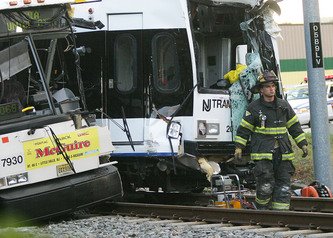


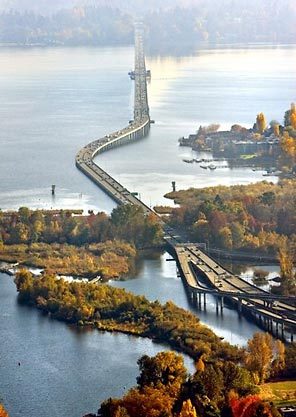
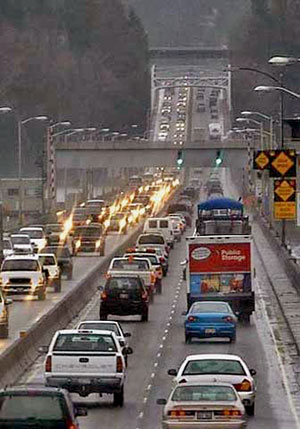
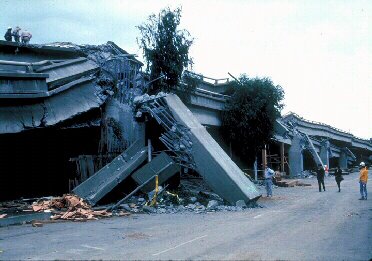


If I lived in Japan or Europe, I wouldn't have a car either or want one. Unfortnately, we dont have high speed trains here that beat driving from point A to point B and much of the US is not even served by a single passenger train let alone a half decent mass transit service unless you are living in a major city.
Also if you want to get out into the wilderness at all, you need a car/truck to get there. Even if I did all of my daily work commuting by bus/mass transit of some sort, I would still keep my car for weekend road trips.