
Environmentalists balk at roads plan
By Mike Lindblom
Seattle Times transportation reporter
Two environmental groups are criticizing this fall's proposed "Roads & Transit" ballot measure, making a tough sell more challenging for elected officials who seek its passage.
The Sierra Club says there are too many general traffic lanes, in spots such as Interstate 5 north of Federal Way, that would worsen global warming instead of solving safety problems.
And the Transportation Choices Coalition believes a proposed six-lane Highway 520 floating bridge is too large through the Washington Park Arboretum and the state doesn't plan to raise the full $4.4 billion needed for construction, said executive director Jessyn Farrell.
At $31 billion, a joint roads-and-transit package is nearing its final shape, five years after the Legislature created the Regional Transportation Investment District to propose road improvements for King, Snohomish and Pierce counties.
State law requires new regional road and transit taxes to pass together, or they both fail. The Sierra Club prefers a separate public vote on Sound Transit's proposed light-rail extensions to Lynnwood, Overlake and Tacoma.
Plan supporters point to polls done for Sound Transit that indicate firm public support.
Officials are talking with the environmental groups. Roads-group Chairman Shawn Bunney, a Pierce County councilman, called the task "a fine balancing act."
Many road projects the Sierra Club dislikes are things that commuters in some communities insist upon, he said.
State Sen. Ed Murray, D-Seattle, said support from environmental groups "is one of the key components to a successful election. Their active opposition would make a campaign that much more difficult."
Transportation
Tuesday, March 25, 2008
Sierra Club opposes Prop 1 due to roads component


Wednesday, March 12, 2008
Environmentalists file suit over who wrote the No on Prop 1
COMPLAINT - 1
BRESKIN JOHNSON & TOWNSEND
PLLC
999 THIRD AVENUE, SUITE 4400
SEATTLE, WASHINGTON 98104-4088
(206) 652-8660, (206) 652-8290 FAX
587182.1/026290.00001
8/17/07
IN THE SUPERIOR COURT OF THE STATE OF WASHINGTON
IN AND FOR THE COUNTY OF KING
Citizens Against RTID, a political
committee in opposition to the
RTID/Sound Transit Joint Ballot measure,
Plaintiff,
v.
MARTIN LUTHER KING JUNIOR
COUNTY, a Washington State County,
Defendants.
NO.
COMPLAINT
Plaintiff, Citizens Against RTID (“CAR”), by and through its attorneys of
record, hereby alleges as follows:
I. PARTIES
1.1
Plaintiff, Citizens Against RTID (“CAR”), a political committee as
defined under RCW 42.17.020(38) in opposition to the RTID/Sound Transit
Joint Ballot measure, as provided by RCW 42.17.040(G). CAR brings this
action on behalf of all its members and because its membership represents the
interest of environmentalists that oppose the Joint Ballot Proposition.
Page 2
COMPLAINT - 2
BRESKIN JOHNSON & TOWNSEND
PLLC
999 THIRD AVENUE, SUITE 4400
SEATTLE, WASHINGTON 98104-4088
(206) 652-8660, (206) 652-8290 FAX
587182.1/026290.00001
Defendant, MARTIN LUTHER KING JUNIOR COUNTY (“King
County”) is a Washington State County.
II. PLAINTIFF’S ALLEGATIONS
2.1
The Joint Ballot Proposition is a nearly $40 billion tax increase for
the development of roads (collected by RTID) and mass transit (collected by
Sound Transit).
2.2
Friday, August 17, 2007, is the deadline for appointment of
committee members responsible for drafting the “vote no” position on the King
County voters’ pamphlet regarding the Joint Ballot Proposition.
2.3
Sounds Transit appointed three committee members responsible
for drafting the “vote no” position on the King County voters’ pamphlet
regarding the Joint Ballot Proposition.
2.4
The committee appointed to draft the statement advocating
rejection of the Joint Ballot Proposition was wrongfully appointed for two
reasons. First, the committee members were selected by Sound Transit, an
entity with a direct interest in the success of the proposition. Pursuant to RCW
29A.32.280, King County is the only entity with the authority to appoint the
committee members. This interpretation has been adopted by Snohomish
County, which properly implemented the appointment requirement. Second,
committee members must be “known to oppose the measure” in its entirety, not
just the mass transit component.
THE RTID-SOUND TRANSIT JOINT BALLOT PROPOSITION
Page 3
COMPLAINT - 3
BRESKIN JOHNSON & TOWNSEND
PLLC
999 THIRD AVENUE, SUITE 4400
SEATTLE, WASHINGTON 98104-4088
(206) 652-8660, (206) 652-8290 FAX
587182.1/026290.00001
King County Ordinance 2007-0357 placed the RTID-Sound
Transit Joint Ballot Proposition on the November 2007 general election ballot.
Similar action was taken by Pierce and Snohomish Counties.
2.6
The Joint Ballot Proposition contains two distinct components: (i)
a Sound Transit component; and (ii) a RTID component. The Sound Transit
component provides for the implementation of a regional rail and transit system
financed by existing taxes and an increase in the sales tax of 0.5%. The RTID
component provides for the implementation of road construction to increase
local traffic capacity financed by increases in the sales tax of 0.1% and the
motor vehicle excise tax of 0.8%. Collectively, the package is estimated to cost
$38.1 billion through 2027, with $14.5 billion going toward the RTID for roads
and $23.6 billion toward Sound Transit.
2.7
Washington law provides for the publication of a pamphlet
regarding the Joint Ballot Proposition which includes statements from
committees advocating both adoption and rejection of the measure. The
legislative authority in the applicable jurisdiction is required to formally appoint
committees of up to three (3) individuals to prepare arguments advocating
voters' both positions.
2.8
King County Records and Elections has established deadlines for
production of the local voters’ pamphlet pursuant to RCW 29A.32.230. Under
King County administrative rules (document code number ELE 9-1-2), the
deadline to appoint committees advocating approval and rejection of the Joint
Ballot Proposition is Friday, August 17, 2007.
Page 4
COMPLAINT - 4
BRESKIN JOHNSON & TOWNSEND
PLLC
999 THIRD AVENUE, SUITE 4400
SEATTLE, WASHINGTON 98104-4088
(206) 652-8660, (206) 652-8290 FAX
587182.1/026290.00001
Sound Transit, who has a vested interest in the success of the Joint
Ballot Proposition, has purported to appoint committees advocating both
approval and rejection of the proposition.
2.10 Sound Transit is a “regional transit authority” under Chapter
81.112 RCW.
2.11 Sound Transit is not a legislative authority.
2.12 Sound Transit is not the legislative authority responsible for the
Joint Ballot Proposition.
2.13 RTID and Sound Transit are the entities that would receive the
billions of dollars in tax money if the Joint Ballot Proposition passes in
November.
2.14 Sound Transit appointed Kemper Freeman Jr., Will Knedlik, and
Phil Talmadge to the committee advocating rejection of the Joint Ballot
Proposition. RTID appointed the same individuals to the committee advocating
rejection.
2.15 King County, the legislative authority responsible for the Joint
Ballot Proposition, neither appointed any individuals to the committee
advocating rejection nor adopted the purported committee members appointed
by Sound Transit.
2.16 Snohomish County rejected the individuals appointed by Sound
Transit and RTID. The Snohomish County Council appointed pro and con
committees for the Joint Ballot Proposition measure by Amended Motion No.
07-417 on August 8, 2007.
Page 5
COMPLAINT - 5
BRESKIN JOHNSON & TOWNSEND
PLLC
999 THIRD AVENUE, SUITE 4400
SEATTLE, WASHINGTON 98104-4088
(206) 652-8660, (206) 652-8290 FAX
587182.1/026290.00001
24
2.17 It is well known that voters in King County generally support the
expansion of public transportation but oppose building more roads. The
expansion of public transportation is considered by King County voters to be an
environmentally friendly and sustainable solution to population expansion in
King County. Conversely, increasing road miles and expanding freeways is a
short-lived solution that encourages more cars and traffic while increasing
pollution and urban sprawl.
2.18 The Joint Ballot Proposition has an internal tension for the
environmental community that must be represented to voters. If the position
advocating rejection of the Joint Ballot Proposition is represented only by
opponents of Sound Transit, then it will likely not be well received by King
County voters. Similarly, the absence of voices critical of RTID is inconsistent
with the concept of a balanced voters’ guide. For these reasons, the position
advocating rejection of the Joint Ballot Proposition must also be represented by
opponents of RTID and the expansion of roads and encouragement of urban
sprawl.
2.19 The three members of the committee advocating voters' rejection
of the Joint Ballot Proposition are known opponents of Sound Transit, but have
generally supported RTID projects.
2.20 Kemper Freeman, Jr., is described as “renowned for his support of
‘roads over transit”.
He was a prominent opponent of RTA/Sound Transit
ballot measures in 1995 and 1996. In 2004, Freeman provided 90 percent of the
$353,000 campaign for Initiative 883, which would have redirected state
transportation funds to highway construction and studied the elimination of High
Page 6
COMPLAINT - 6
BRESKIN JOHNSON & TOWNSEND
PLLC
999 THIRD AVENUE, SUITE 4400
SEATTLE, WASHINGTON 98104-4088
(206) 652-8660, (206) 652-8290 FAX
587182.1/026290.00001
Occupancy Vehicle (HOV) lanes. Initiative 883 “was designed to complement
the RTID package.”
2.21 Will Knedlik served on the voters’ guide “no” committee for a
non-binding RTID advisory ballot in 2004. Knedlik supported RTID highway
projects, but opposed the funding mechanism. He argued that “regional officials
should be examining ways to divert taxes they're already collecting — away
from rail and toward projects that will help more.” In 2006, Knedlik served on
the voters’ guide “no” committee for a King County Metro Transit sales tax
measure. The approach in this statement against was unorthodox, referencing
Sound Transit as many times as King County.
2.22 Former State Supreme Court Justice Phil Talmadge is a noted
critic of Sound Transit’s light rail plan, “claiming it will spend too much money
to attract too few new transit riders.” Earlier this year, Mr. Talmadge advocated
rebuilding the Alaskan Way viaduct, opposing the tunnel and surface/transit
options. In a recent opinion article, Mr. Talmadge was critical of plans to spend
only half of transportation funds on roads, even though it accounts for 95 percent
of travel.
2.23 The Joint Ballot Proposition contains two distinct components.
The Sound Transit component provides for the implementation of a regional rail
and transit system financed by existing taxes and an increase in sales tax of
0.5%.
The RTID component provides for the implementation of road
construction to increase local traffic capacity financed by an increase in sales tax
of 0.1% and a motor vehicle excise tax of 0.8%.
Page 7
COMPLAINT - 7
BRESKIN JOHNSON & TOWNSEND
PLLC
999 THIRD AVENUE, SUITE 4400
SEATTLE, WASHINGTON 98104-4088
(206) 652-8660, (206) 652-8290 FAX
587182.1/026290.00001
2.24 Pursuant to Act of the Washington State Legislature, both the
Sound Transit and RTID components of the Joint Ballot Proposition are required
to be in a single proposition.
2.25 The Joint Ballot Proposition will be placed on the ballot during the
November 2007 general election in portions of King, Snohomish and Pierce
Counties.
III. VIOLATION OF RCW 29A.32.210 AND RCW 29A.32.241
3.1
RCW 29A.32.210 provides for the authorization and contents of a
voters’ pamphlet providing information on all measures within that jurisdiction.
3.2
RCW 29A.32.280 provides that “. . . .the legislative authority of
that jurisdiction shall. . . formally appoint a committee to prepare arguments
advocating voters' approval of the measure and shall formally appoint a
committee to prepare arguments advocating voters' rejection of the measure.”
3.3
Under RCW 29A.32.280, the legislative authority must formally
appoint the committee “not later than forty-five days before the publication of
the [local voters’] pamphlet.”
3.4
RCW 29A.32.241(5) provides that the local voters' pamphlet shall
include the arguments for and against each measure submitted by committees
selected pursuant to RCW 29A.32.280.
3.5
Defendant King County violated RCW 29A.32.280 and RCW
29A.32.241(5) because, as the legislative body of the County of King, it failed to
formally appoint a committee to prepare arguments advocating and opposing
voters' approval of the Joint Ballot Measure not later than forty-five days before
the publication of the King County voter pamphlet for the 2007 general election.
Page 8
COMPLAINT - 8
BRESKIN JOHNSON & TOWNSEND
PLLC
999 THIRD AVENUE, SUITE 4400
SEATTLE, WASHINGTON 98104-4088
(206) 652-8660, (206) 652-8290 FAX
587182.1/026290.00001
Defendant King County violated RCW 29A.32.280 and RCW
29A.32.241(5) because it failed to appoint persons known to favor the Joint
Ballot Proposition to serve on the committee advocating approval of the Joint
Ballot Measure.
3.7
Defendant King County violated RCW 29A.32.280 and RCW
29A.32.241(5) because, despite the availability of persons known to oppose the
Joint Ballot Proposition, King County failed to appoint those persons to serve on
the committee advocating rejection of the measure.
IV. REQUEST FOR RELIEF
WHEREFORE, Plaintiff respectfully requests the following relief from
this honorable court:
4.1
Judgment vacating the committee to vote no against the Joint
Ballot Proposition.
4.2
Judgment against KING COUNTY enjoining it from recognizing
the committees appointed by Sound Transit and RTID for the purpose of
advocating approval and rejection of the Joint Ballot Proposition.
DATED this 17
th
day of August, 2006.
By: s/ Roger M. Townsend
Roger M. Townsend, WSBA No. 25525
BRESKIN JOHNSON & TOWNSEND PLLC
999 Third Avenue, Suite 4400
Seattle, Washington 98104-4088
(206) 652-8660/ (206) 652-8290 Fax
Attorneys for Plaintiff CAR
Pierce County pours cold water on Regional Governance
But RTG, as I call it, involves big bucks, big power and the very future of the Puget Sound metro region. If you take the bus, ride a Sounder commuter train, drive I-5 or Highway 512 to work, RTG is about your life.
When Proposition 1, the massive roads-and-transportation tax package, cratered at the polls in November, a 2006 blue-ribbon panel’s RTG proposal sprang back to life.
Headed by former Seattle Mayor Norm Rice and Seattle telecom billionaire John Stanton, the panel recommended creating a single regional transportation board to rule all planning for transit and highway construction.
In its current incarnation, the board would consist of nine directly elected members and six appointed members, and it would have the authority to impose tolls and taxes.
RTG is a tough sell in Pierce County. But Stanton and another panel member, former state transportation secretary Doug MacDonald, are giving it a shot at Wednesday’s meeting of RAMP. The Regional Access Mobility Partnership is a coalition of Pierce County business, port and government officials that tries to form a countywide consensus on transportation issues.
Although it was hyperbolic, rude and, to my mind, embarrassing, a letter Pierce County Councilman (and county executive candidate) Shawn Bunney sent the governor in late November expressed widespread county sentiment about regional governance.
“The scene is set for another contrived feeding frenzy in the Legislature, which will leave Pierce County with crumbs,” Bunney cried.
He all but demanded a meeting with the governor to dispute “a Seattle-centric” view of the world. He accused Seattle legislators of “siphoning $700 million in gas taxes out of Pierce County” in the past 15 years.
Bunney unloaded both barrels on the Highway 520 bridge replacement project, which the governor has declared her top transportation priority.
“To say that the 520 Bridge is a ‘safety’ project does not accurately portray the planned gold-plated entrances to the Emerald City and Clyde Hill-Medina. Current plans include $100 million for bike and pedestrian lanes, $250 million for five new parks created to muffle bridge noise, $700-$800 million for parks and lids on the east side of the lake, and a 50 percent capacity increase.
“The only thing missing is a giant archway from which trumpets can blare as Ron Sims enters and exits Seattle.”
Immoderate, to be sure, but the letter was meant to be a warning shot to RTG advocates.
Bunney was chairman of the Regional Transportation Investment District, the panel of local elected officials who devised the roads portion of Proposition 1.
On Wednesday, the RAMP group is also supposed to consider three possible scenarios for addressing Pierce County highway needs. All are “go it alone,” rather than regional, approaches.
One would be a Regional Transportation Investment District with just Pierce County or with another county (perhaps Thurston). Another would be a countywide transportation benefit district. The third would be imposing a countywide local-option gas tax.
The RAMP group is supposed to discuss its legislative priorities Wednesday. The Legislature convenes Jan. 14.
We might see a split in RAMP’s ranks. Pierce County Executive John Ladenburg, who has just stepped down as Sound Transit but still sits on the board, co-chairs RAMP. He has said he doesn’t favor a go-it-alone approach for Pierce County, but it’s not clear where he’ll come down on the governance issue.
Some transit advocates want to see the transit portion of Proposition 1 return to the ballot – separately – in November.
Another key RAMP player is Tacoma Port Director Tim Farrell. His overriding interest, presumably, is completion of Highway 167 from Puyallup to Interstate 5, a huge necessity for moving freight to and from the port. The county’s business community also strongly backs the project.
But the Highway 167 project, which is only a skimpy two-lane connector, is a $1 billion-plus job that would suck up most of the county’s local funding capacity. Completing it actually might be more likely under a regional funding scenario.
But who can tell? If the regional governance proponents have the upper hand in Olympia this year – and I think they may – it may not matter much what stand RAMP takes.
E-mail editorial page editor David Seago at david.seago@thenewstribune.com.
RTID acknowledges defeat of its blueprint
The Traffic Problem
Congestion on I-5Traffic congestion and aging infrastructure are serious problems facing residents and businesses in Snohomish, King, and Pierce counties, costing us time and money, impacting our quality of life, and putting the lives of our children and families directly at risk.
Strong population and economic growth has strained our roads beyond capacity, threatening our ability to move people and goods through economic corridors in our urban centers. According to the state’s Blue Ribbon Commission on Transportation, traffic costs the businesses and residents of Washington $2 billion annually. Congestion is costly for individuals and the economy.
Most of the key roadways in the highway system were built over 40 years ago. Since then very little has been done to expand their capacity. Meanwhile, the population has mushroomed; Washington’s population more than doubled between 1960 and 2005 to 6.3 million people. Compounding our traffic problems is the projected addition of another two million people who will be using our roads in Washington over the next 25 years.
SR520 bridgeUnderinvestment in our transportation system has also led to deteriorating structures, such as the SR 520 bridge, which was built in 1963. This bridge and other structures are vulnerable to failure from earthquakes, with unacceptable risk to lives and property. The SR 520 bridge carries over 100,000 cars every day. The traffic impacts if it failed completely—not to mention the loss of lives—would be devastating. The risks are real and well understood.
In a show of leadership, elected officials from Snohomish, King and Pierce counties worked together to unite road and transit projects into a coordinated transportation plan to solve our region’s traffic problems. These projects would have levered construction already underway by Sound Transit and the state Department of Transportation. They would have tackled our region’s most congested corridors—such as I-405, which experiences up to 12 hours of gridlock in some areas every day.
The plan integrated transit and road improvements to reduce traffic backups and travel time, improve safety, and keep people and freight moving.
To ensure that funds would be spent wisely and produce results, the RTID Planning Committee adopted stringent policies for accurate cost estimation to keep projects on time and on budget, and to keep the public fully informed.
The Roads & Transit plan went before the region’s voters in the fall of 2007 and was defeated.
Tuesday, March 11, 2008
Chambers but not business Leaders support prop 1
Business Leaders from Tacoma , Seattle , Bellevue and Everett Support Roads & Transit
Chambers of Commerce/Downtown Associations throughout the Region back plan to improve freight mobility, expand light rail and provide congestion relief
For Immediate Release: October 11, 2007
Media Contact: Aaron Toso , Yes on Roads and Transit Campaign - cell: 206.859.3328 toso@yesonroadsandtransit.org
Seattle – Today, business leaders from Tacoma to Everett and points in between came together to encourage voters to support Proposition 1, the Roads & Transit plan.
Across the region, Roads & Transit's light rail expansion and freight mobility projects in and out of the Port of Seattle and Port of Tacoma will help keep our local economy strong and competitive.
"Transportation is a fundamental business issue," said Steve Leahy, President & CEO of the Greater Seattle Chamber of Commerce . "A safe, efficient, and reliable transportation network is directly linked to our current and future economic competitiveness. What we consistently hear from our members is that the status quo simply does not work anymore for them as business leaders, or as residents of the Puget Sound region. Roads and Transit is a comprehensive, balanced approach and with it, we can create a multi-modal transportation system that works for our region."
Both the Downtown Seattle Association and the Bellevue Downtown Association see the important link between investing in transportation infrastructure and a positive economic environment.
"The Roads & Transit plan offers a balanced, multi-modal approach to improving our regional highways and transit system,” said Leslie Lloyd, President, Bellevue Downtown Association . “Downtown Bellevue is growing and evolving at a rapid clip. These investments will play a vital role in sustaining our thriving city as an attractive, competitive cultural and economic center for the region.”
“Our region's future safety and economic health is fundamentally linked to an efficient transportation infrastructure, and the ability to move people and goods must be enhanced if our region and Downtown Seattle is to be competitive,” said Kate Joncas, President of the Downtown Seattle Association .
Snohomish County will see funding for projects that are long overdue. Expansion of Rte. 9 and funding of the first phase of the US 2 bypass around Monroe are important projects to keep the economy in Snohomish County moving forward.
“We feel the impact of heavy congestion here in Snohomish County everyday as it greatly affects our employers and the citizens of our communities, costing them added time and energy,” Louise Stanton-Masten, President and CEO, Everett Area Chamber of Commerce . “ The projects outlined in the Roads and Transit package, including the various ones in Snohomish County are an important step to improving mobility throughout the region. Only by working together, can we solve our collective congestion issue. We stand beside other organizations in saying YES to Roads and Transit.”
With the Port of Tacoma scheduled to double in the next 10 years and population growth projected throughout Pierce County , extension of SR 167 from Puyallup to the Port of Tacoma and bringing light rail to Tacoma are vital projects to keep Pierce County 's economy moving forward.
“ Tacoma and Pierce County need and want critical road and transit infrastructure to serve the booming population of our area and to fully participate in the region's economy,” said David Graybill, President and CEO, Tacoma-Pierce Chamber of Commerce . “Proposition 1 addresses key projects to put an end to the chokepoints and get moving.”
Here is a listing of businesses and business organizations who have endorsed the Yes on Roads & Transit campaign:
Business
American Council of Engineering Companies – Washington
Architects and Engineers Legislative Council
Associated General Contractors of Washington
Auburn Chamber of Commerce
Bayliss Architects
Bellevue Chamber of Commerce
Bellevue Downtown Association
The Boeing Company
Building Owners and Managers Association (BOMA)
Carter & Burgess
CH2M Hill
Covington Chamber of Commerce
David Evans and Associates, Inc.
Downtown Seattle Association
Everett Area Chamber of Commerce
Federal Way Chamber of Commerce
Fife Area Chamber of Commerce
GeoEngineers
Greater Redmond Chamber of Commerce
Greater Seattle Chamber of Commerce
Hal Real Estate Investments, Inc.
Hatch Mott MacDonald, LLC
INCA Engineers, Inc.
Issaquah Chamber of Commerce
Jacobs Engineering Group
Kent Chamber of Commerce
Kirkland Chamber of Commerce
Marysville-Tulalip Chamber of Commerce
Mercer Island Chamber of Commerce
Microsoft
Mirai Associates, Inc.
Monroe Chamber of Commerce
National Association of Industrial Office Properties (NAIOP)
PEMCO Financial Services
Perteet, Inc.
Pierce County Association of Master Builders
Puget Sound Energy
Puyallup/Sumner Chamber of Commerce
Renton Chamber of Commerce
South Snohomish County Chamber of Commerce
South Sound Chambers of Commerce Legislative Committee
Southwest King County Chamber of Commerce
Tacoma/Pierce County Chamber of Commerce
Tacoma/Pierce County Association of Realtors
Washington Association of Realtors
Washington Mutual
Washington Roundtable
Government self-interest permeates Alaskan Way Viaduct
ALASKAN WAY VIADUCT IN-DEPTH: PREVIOUS UPDATES from Seattle Channel
1/6/07
Viaduct traffic could increase with I-5 construction
The Alaskan Way Viaduct could see more traffic this month as transportation crews perform a major overhaul on I-5 just south of downtown. Washington State Department of Transportation (WSDOT) will replace expansion joints and repave 1.13 miles of I-5 North between Spokane Street to the I-90 interchange.
While the distance may not be that long, traffic tie-ups are considered immense. WSDOT officials will shut down several lanes of northbound traffic starting August 10 through August 29. Drivers are encouraged to take alternative routes, such as the Alaskan Way Viaduct or utilize public transportation.
The road work will prevent monthly maintenance on the 40-year old stretch of pavement. It'll also provide a smoother, safer ride for drivers on the I-5 corridor. During the upcoming Alaskan Way Viaduct construction, I-5 is expected to absorb much of the traffic from the south. Traffic officials are hoping repairs to I-5 will make the Viaduct construction reroutes easier for commuters.
Learn more about the WSDOT I-5 construction project.
Viaduct sinks another quarter-of-an-inch
The latest quarterly inspection of the Alaskan Way Viaduct revealed the aging roadway has sunk another quarter-of-an-inch between Columbia Street and Yesler Way. That section has sunk a total of five inches since the 2001 Nisqually Earthquake.
While state transportation officials are concerned about the continual sinking, they say the Viaduct is still safe for drivers. They plan on beginning work this fall to reinforce the foundations of several columns that are settling. Repairs include drilling steel rods into the ground surrounding the columns. The rods can carry a 95-ton load and will prevent further settlement into the ground.
Work isn't expected to disrupt traffic and no lane closures are planned. The project is estimated to cost $5 million and should take five to six months to complete. It's just one of six improvement projects planned to replace or repair parts of the Viaduct. The next inspection is scheduled for October.
Replacement plan given the green light
The best way to move people - not cars - efficiently should determine how to replace the aging Alaskan Way Viaduct, according to Council Member Peter Steinbrueck. That was one of his arguments as the council voted on the latest way to deal with the controversial topic.
During a Committee of the Whole meeting, members voted to approve a surface option known as the Urban Mobility Plan. The $8.1 million plan gives the Seattle Department of Transportation (SDOT) the go ahead to begin planning for Viaduct traffic on Seattle streets.
"This ordinance calls for not another study, but a new plan," Steinbrueck said. Steinbrueck also serves as the Transportation Vice-Chair.
A surface option would include improving mass transit to help absorb the number of commuters who regularly use the Viaduct. Leaders also hope it'll improve the downtown street grid, HOV lanes, bicycle and pedestrian access and include other traffic management techniques including trip-reduction strategies.
SDOT now has 45 days to work with the Washington State Department of Transportation and King County to produce the Urban Mobility Plan for the Council. If approved, City leaders hope to have the first part of the plan finished by summer 2008.
Watch the Full Council/Committee of the Whole meeting on the Urban Mobility Plan.
Governor announces $900 million viaduct update
A new Alaskan Way Viaduct project was announced Wednesday, March 14 by State and Seattle leaders - one they both agreed on. Governor Chris Gregoire announced the $900 million plan which will strengthen several parts of the aging waterfront structure. Citing safety, capacity, mobility and fiscal responsibility, the governor said that work on the solution to the viaduct must happen now. The new plan comes in the wake of the March 13 Seattle advisory vote in which Seattle residents rejected both the viaduct rebuild and tunnel options.
Appearing at a press conference alongside Mayor Greg Nickels and King County Executive Ron Sims, the governor said the project will involve the collaboration of state legislative and transportation leaders, city leaders and the Port of Seattle. The $900 million project will begin immediately with work first concentrating on engineering and design. The physical work will start this summer.
Proposed changes include a new interchange on the Viaduct's south end to improve freight transit mobility. Additionally, a road section will be replaced between Holgate Street and Royal Brougham Way and steel structures will be reinforced from Lenora Street to the Battery Street Tunnel. Also, seismic and fire suppression upgrades will occur in the Battery Street Tunnel.
Cost estimates included in March Viaduct ballot
In response to a request by Governor Gregoire, the city-wide viaduct advisory ballot choices will now include cost estimates. Ballot wording previously passed by the City Council on January 19 did not include cost numbers. City Attorney Tom Carr later rewrote the ballot to include the price proposals.
The ballot measure will consist of yes or no answers to the two viaduct replacement options: the $3.41 billion Surface-Tunnel Hybrid Alternative and the $2.8 billion Elevated Replacement Alternative option.
The Mayor and city transportation officials scaled down the original six-lane tunnel proposal after lawmakers in Olympia voiced concerns over the billion-dollar price tag. The new tunnel proposal is now four lanes with two lanes each direction, side-by-side instead of the double-decker six-lane version. Transportation officials say the new tunnel design will still be able to carry the same amount of traffic with the two shoulders converting into extra lanes during peak travel times.
The vote will take place on March 13 and be conducted exclusively by mail-in ballots.
Licata proposes Alaskan Way Viaduct vote date
March 13 may be the day Seattle residents get their opportunity to speak up about which option they prefer to replace the Alaskan Way Viaduct.
City Council President Nick Licata and Council member David Della announced Friday, January 5, they are drafting a ballot proposal that would give voters two options: replace the viaduct with an elevated structure or tunnel. The costs of both projects would also be listed on the ballot.
Licata also wants the ballot to include information that would help voters understand that residents will be responsible for picking up cost overrides on both options. The elevated rebuild is estimated to cost $2.8 billion and the tunnel option is estimated to cost $4.6 billion. So far, state and federal funds secured for the project amounts to $2.4 billion. "We have to be honest with Seattle voters about the additional $2 billion needed to build a tunnel," Licata said.
In mid-December Governor Christine Gregoire announce she'd like to see a city advisory vote on the controversial multi-billion dollar project. She believes the project is at a stalemate and wants to hear what Seattle residents have to say about the project. She called for the vote to happen sometime this spring, before the legislative session ends in mid-April.
Council member Jan Drago is also working on an alternative proposal that might negate the need for a special vote. She's hoping to find an alternative that is acceptable to supporters of both the elevated structure and the tunnel. Drago believes that an indecisive advisory vote by residents won't do the city any good.
The Alaskan Way Viaduct ballot issue will be the topic of special meetings of the Full Council on Thursday, January 18 and Friday, January 19.
Viaduct decision falls to Seattle voters
Governor Gregoire calls for special spring election
After months of speculation over tunnel, rebuild or possible surface option to replace the aging Alaskan Way Viaduct, the decision still isn't clear. One thing is for sure, the Governor wants Seattle voters to decide.
Governor Christine Gregoire announced Friday, December 15 that Seattle residents should vote for either the rebuild or tunnel option. Gregoire stated the surface option and retrofit were both unacceptable alternatives. Now City and Legislative officials must both agree with the public vote.
Mayor Greg Nickels said he welcomes a public vote. Nickels stongly supports the cut and cover tunnel option.
Gregoire said the financing plan for the rebuild option was sufficient, but financing for the tunnel option wasn't complete. If voters opt for the cut and tunnel option, Gregoire stated city leaders and tax payers would be responsible for finding any additional funds needed for the tunnel replacement.
She also felt that the state was at a "political stalemate" over the debate for a tunnel or a rebuild and that hearing from Seattle voters was a must before going forward with the massive construction project. While the exact date for the vote hasn't yet been set, it will take place before the Legislative session ends in April.
Current estimates have the tunnel rebuild option costing more than $4 billion dollars. Estimates for the rebuild put the project at $2.8 billion. The Governor hopes to have a viaduct decision by mid-2007 and construction underway by 2008.
Tunnel supporters believe this is a chance to reclaim the waterfront for residents by putting the major roadway underground. Opponents say the project is too costly and will cause too much of a disruption for businesses, residents and commuters.
The 2.2 mile double-decker Alaskan Way Viaduct carries about 110,000 vehicles per day. It was damaged in 2001 by the 6.8 Nisqually Earthquake.
Democrats denounce tunnel option
On November 16, 30 members of the House Democratic caucus sent a letter to Governor Christine Gregoire supporting the construction of an elevated highway to replace the Alaskan Way Viaduct. The letter stated that the tunnel option will results in costs "the taxpayers of Washington cannot afford."
The letter was signed by House Speaker Frank Chopp (D-Seattle), and House Appropriations chair Helen Sommers (D-Seattle) and others. In September Chopp sent a similar letter to the expert review panel as they were looking at funding options for replacing the aging Viaduct. Gregoire will consider the letter, according to her spokesperson.
She is expected to make her decision on the Viaduct by the end of the year. This decision is then subject to approval by the state legislature.
Gregoire has stated that she will only consider the tunnel or a rebuild of the existing viaduct.
Viaduct decision heads to Olympia
In a 7-1 vote, City Council members told state leaders, they preferred the cut and cover tunnel option to replace the aging Alaskan Way Viaduct. Council President Nick Licata voted against the tunnel option, while Council Member David Della was absent from the September 22 special meeting.
But the cut and cover tunnel still isn't a done deal. Now the fate of one of Seattle's main arteries lies with Governor Christine Gregoire. She had asked city leaders to either put the decision to voters, or make an advisory decision. She'll now have until the end of the year to make the call.
News of the vote comes the same day as the revised cost estimates for the replacement project were announced. The Washington State Department of Transportation (WSDOT) issued revised estimates for the tunnel replacement ranging from $3.6-$5.5 billion. An aerial replacement option was estimated between $2.2-$3.3 billion. Initial reports tagged the tunnel as costing anywhere from $3.0-$3.6 billion and the replacement option from $2.0-$2.4 billion dollars.
State leaders say the funding is available for a rebuild, however, if Seattle leaders wanted a cut and cover tunnel, they needed to find the financing for the rest of the money. Now, Gregoire is considering using a toll to provide for extra funding on the cut and cover option. So far, no toll prices have been announced, but joint legislative hearings will be held over the next few months to further discuss and explore the tolling option.
.
Expert Review Panel releases Viaduct report
The group charged with taking a closer look at the proposed cut and cover Alaskan Way Viaduct tunnel said funding looks to be "generally sound" with no "fatal flaws."
The Expert Review Panel released their report of Washington State's Department of Transportation stating, "We accept the project's funding assumptions as reasonable." The report was released on August 31.
Mayor Greg Nickels cheered the report. As a staunch supporter of the cut and cover tunnel replacement option, Nickels believes tearing down the aging viaduct and giving Seattle residents direct access to a new and improved waterfront is a once and a lifetime opportunity.
But opponents of the tunnel still claim there is some vagueness to the finances of project. Estimated to cost upwards of $3.6 billion, the cut and cover option could face cost over runs, according to Council President Nick Licata. He wants to see a resolution where Nickels would ask the state who will be responsible for those cost over runs.
Currently, state officials have said they will contribute $2.4 billion for a rebuild of the current viaduct structure. After that, any financing would need to be secured by city officials.
Despite their disagreements, all players say a decision needs to be made to replace the viaduct soon. The City Council has until September 22 to decide whether or not to place the viaduct issue on the November ballot.
Governor Christine Gregoire has stated she wants Seattle voters to have an accurate estimate of what the cut and cover option could ending up costing. She has asked the Department of Transportation to re-evaluate the tunnel costs estimates again.
Waterfront Plan On Wednesday, July 26, Mayor Greg Nickels unveiled his plans to reclaim Seattle's waterfront as a gathering place for people while preserving the environment for generations.
The plan calls for a 70-foot wide promenade along parts of the waterfront. The walkway would provide a connection for pedestrians looking for a relaxing stroll from the Pike Place Market to Pioneer Square. Shoreline restorations and beach access for environmental education would help reconnect the city directly with Elliott Bay. The plan also calls for several viewing areas and public gathering areas.
While Nickels' plan is a concept, he feels reclaiming the waterfront is a once-in-lifetime opportunity for Seattle residents. The waterfront plan is based on the aging Alaskan Way Viaduct coming down and being replaced by a cut and cover tunnel. His waterfront plan will be sent to the City Council for full consideration in September.
On June 22, Mayor Greg Nickels unveiled his funding plan for the Alaskan Way Viaduct Tunnel construction project estimated to cost between $3 billion and $3.6 billion. The Mayor's plan identifies $5 billion in potential funding.
The plan relies on the passage of the Regional Transportation Investment District (RTID) ballot measure which will come before voters in 2007. If approved, RTID would give Nickels' plan $800 million. Charging a toll for drivers of the busy roadway is another funding source currently being explored. While no set fee has been established, a possible $2 one way fare could raise $150 million dollars over 20 years. Other sources of funding include; increased taxes for waterfront property owners, utility relocations and the Port of Seattle.
More than $2.4 billion dollars has already been secured for the project. The state has enough funding to rebuild an elevated structure, larger and more seismically sound than the current viaduct. But several Seattle city leaders are pushing for the tunnel option, which would open up more potential park space along the downtown waterfront.
In early June, an independent panel was created to review the construction and finance options of the Alaskan Way Viaduct/Seawall and SR 520 floating bridge projects. The panel consists of eight experts in the fields of planning, engineering, finance, law, emerging transportation technologies, geotechnical and economic fields. Governor Chris Gregoire convened the panel since millions of state, local and federal dollars will be used to complete the projects.
The panel is expected to begin meeting in late June or early July. Some of their meetings will be open to the public, but others will be a closed work session. They are expected to submit their report in September that will help inform state and city officials whether the plans to replace the two main arteries through the Seattle area are achievable.
For more information on the Expert Review Panel, visit their Web site.
On Wednesday, March 26, City Council members authorized a $15 thousand study to evaluate a surface option proposal to replace the aging and damaged Alaskan Way Viaduct. The surface option, presented by the People's Waterfront Coalition, would put two lanes, in both directions, along the waterfront, while leaving open space for people to enjoy the views, shoreline and nature along Elliott Bay. While most council members and Mayor Greg Nickels say they prefer the tunnel option, council members wanted to learn more about the option and what other cities have built under similar circumstances. The study is expected to take about five to six weeks, at which point council members will evaluate whether the option deserves a more in-depth analysis
Source Seattle Channel
RTID plan a disaster for Pierce County
 March 15, 2007
Tacoma News Tribune op ed
Pierce County RTID plan risks becoming a road to nowhere
By Sen. Jim Kastama
“The Road to Abilene” is an old story that relates the dangers of groupthink. In this story, a family decides to embark on a road trip. Unfortunately, family members fear speaking up to avoid confrontations — even when they become aware of glaring, obvious problems. They wind up traveling a road littered with anger, frustration, blame and eventual failure.
Sadly, our own version of “The Road to Abilene” is taking place right here in Pierce County in the form of the Regional Transportation Investment District (RTID) road package that will go before the voters next November. Community members, business leaders and elected officials are so afraid of pointing out the obvious flaws with this package that they have created a false sense of agreement.
Let me give you an example. The current RTID proposal would extend State Route 167, the major highway that streams down from Auburn, passes through Sumner and dead-ends in an old strawberry field in Puyallup. Its extension from Puyallup to the Port of Tacoma is vital because it will connect the Port to warehouses in the Auburn/Kent valley and provide up to 80,000 high-paying port-related jobs.
What is not mentioned when 167 is discussed is that RTID proposes to extend this highway to the port with only one lane in each direction for most of its length, with no interchanges at Interstate 5. In addition, the plan leaves the project more than $150 million short of funding, so it may never actually be built even if voters approve it.
An equally obvious deficiency in the RTID plan is the funding for the Cross Base Highway, which will connect I-5 near Lakewood to Frederickson, the largest industrialized zoned area in Western Washington. This is a good economic investment, as it will open this area to truck traffic that will allow for further business expansion in Pierce County. Yet, as with the plan for 167, the RTID proposal is more than $100 million short of the funds needed to build the Cross Base Highway. Again, it may never actually be built, even if voters approve it.
With such glaring problems, why are our Pierce County leaders so hesitant to point out these flaws? Partly because they fear any public disagreement will lead voters to reject RTID’s proposal next November. In other words, the plan may be flawed, but it’s better than nothing.
The other reason is that they believe the governing board for RTID is so inflexible, and so dead-set against prioritizing its project list, that it will do little good to argue with them or offer alternatives.
An example is RTID’s insistence on widening State Route 162, the old Sumner/Orting highway. The cost of this project is approximately $250 million — almost the exact amount by which the other two projects are underfunded. Unlike the other two projects, however, SR 162 does not rank in the “Top Tier” category for economic impact as determined by the South Sound Chambers of Commerce. Nor is SR 162 considered “a Highway of Statewide Significance” by the Legislature.
The question is why are we sacrificing State Route 167 and the Cross Base Highway — projects that will provide high paying jobs in a time of increasing global competition — for a project that brings little or no economic benefits to the region? It is argued, in fact, that expanding SR 162 will lead to more sprawl, more congestion and more crowded schools, leading ultimately to an increase in everyone’s taxes.
This question, and others, needs to be asked. If not, RTID’s package is certain to be voted down by the voters next November and there will be a lot of anger and finger pointing by the leaders and citizens of Pierce County.
Instead, we need to start debating alternatives now. In the Senate I have offered two different options. One would give RTID the taxing authority to completely build all three projects in their plan. The other would re-prioritize projects within RTID’s current funding formula to fully build State Route 167 — with four lanes and an intersection at Interstate 5 — and the Cross Base Highway. Thus far, RTID has shown little interest in either option.
I have been fiercely criticized by proponents of the current package who would prefer I ignore these problems, as others have. But I grew up in Pierce County in a time when neighbors looked each other in the eye, and I think voters deserve a healthy debate to discern the truth. And you deserve roads that work for you instead of another “Road to Abilene.”
Sen. Jim Kastama, D-Puyallup, chairs the Senate Economic Development, Trade & Management Committee and sits on the Senate Transportation Committee.
Monday, March 10, 2008
RTID Board approves skinned down package for Prop 1
RTID Moves Forward
Posted by Erica C. Barnett on May 31 at 15:26 PM
The executive board of the Regional Transportation Investment District (RTID) approved the joint RTID/Sound Transit package this afternoon sans the dreaded Cross Base Highway, a proposed new four-lane, $477 million highway in Pierce County that would have cut through Fort Lewis and the McChord Air Force Base—and destroyed the last remaining oak-woodland prairie in western Washington. Pierce County Executive John Ladenburg, a Cross Base supporter, vowed to veto the entire proposal when it comes to Pierce County if it didn’t include the highway; Cross Base supporters and opponents each claim they have the votes to override the executive’s veto (all three counties have to approve the joint measure to put it on the ballot in all three counties). If Ladenburg does veto the joint ballot measure, and if the county council fails to overturn the veto, the ballot measure could still move forward in King and Snohomish Counties, but that’s hardly an ideal scenario.
Today’s lengthy meeting was a mix of praise (from environmentalists), criticism (from Pierce County officials and commuters) and mutual back-patting (from the board). “The package you’re looking at today is something we think we can advocate for,” said Rob Johnson, political director for the pro-transit Transportation Choices Coalition. “The environmental community is willing and excited to get this package on the ballot this fall.” However, Mary Ann Lincoln of the Spanaway Community Association, who lives in Spanaway and works in Redmond, insisted that Pierce County residents need the Cross Base Highway to commute. “I have spent five hours a day in my car. I have arrived at work angry and frustrated and that’s no way to arrive at work,” Lincoln said. She added that the number of drivers the new highway would serve “is probably a lot more people than the environmental community has in their organizations.”
The joint ballot measure includes $1.1 billion to replace the aging SR-520 bridge across Lake Washington, plus anywhere from $700 million to $1.2 billion in tolls. (Currently, RTID is using the higher number; more on that in a moment.) Additional funding for the $4.4 billion project—up to $1 billion—could come from a $1 billion “pool” of future state and federal money anticipated by the legislature; however, the more of that money pays for the 520 replacement, the less will remain for replacing the Alaskan Way Viaduct, the other recipient of funding from the “pool.”
RTID adopted the higher toll revenue estimate, according to a story in yesterday’s P-I, because the agency now predicts that evening peak-hour traffic on the bridge will be 28 percent higher than anticipated. (That’s cars, not people, so that figure doesn’t indicate higher transit use.) However, that increased revenue estimate also assumes that tolls will be around $3 each way—the highest toll level RTID considered. Given that tolls have a diversionary effect—people find other routes, or avoid trips during peak hours—you’d expect that higher tolls would mean fewer bridge users, not more. And if it doesn’t, it’s hard to see what problem building a wider (six-lane versus four-lane) bridge is going to solve—if single-occupant car traffic is just going to go up and up no matter what, what’s the point of building a larger, more expensive bridge?
The proposal now goes to the RTID Planning Committee for final adoption on June 8. From there, it goes to the Snohomish, Pierce and King county councils for placement on the November ballot
RTID cant make a decision; Fall 05 Ballot in doubt
RTID: fall ballot measure in doubt
By Eric Pryne
Seattle Times staff reporter
4/6/05
TACOMA — Regional Transportation Investment District (RTID) board members yesterday all but ruled out putting a package of transportation taxes and projects on the ballot this year.
Too much work remains to be done, said Pierce County Councilman Shawn Bunney, R-Bonney Lake, the board's chairman.
Instead, he and other board members who attended a meeting yesterday vowed to present a package to King, Snohomish and Pierce county voters in fall 2006. A new draft from Bunney got a mostly favorable response.
But several board members fretted that if they can't convince the Legislature they're making progress, the 3-year-old district could be out of business soon.
"Olympia and the press are saying we can't make a decision ... ," said Metropolitan King County Councilman David Irons, R-Sammamish. "I think we are close, quite frankly, to being history."
"RTID has about three weeks left," said Pierce County Councilman Calvin Goings, D-Puyallup.
Disenchantment with the district has been building in Olympia for months. Five state senators, including Minority Leader Bill Finkbeiner, R-Kirkland, have introduced a bill that would force it to put a plan on the ballot this fall.
The Legislature created the three-county district in 2002 to help pay for big regional transportation projects widely considered too expensive for the state to finance alone. Many expected the district's board would present something to voters quickly.
That didn't happen. Board members spent the first two years on an unsuccessful quest for consensus. When they abandoned that goal and a majority finally approved a plan a year ago, it died because big businesses, foreseeing defeat, said they wouldn't finance a campaign.
Now the RTID's future is in the Legislature's hands, Goings said.
advertising
The Legislature is considering changes in the district's authorizing legislation that the board says are needed so it can put together a package that will pass. Legislators also are contemplating a statewide gas-tax increase to provide some of the money for regional "mega-projects" such as replacements for the Alaskan Way Viaduct and Highway 520 floating bridge.
Unless both measures pass, Goings said, "I really see the window closing on RTID's future."
Without state money, he said, it would be difficult to persuade Seattle voters to support a regional package that provides only part of the money for the mega-projects.
But the Legislature, in turn, needs some assurance the RTID will come up with a plan to pay its share, said Snohomish County Councilman Gary Nelson, R-Edmonds.
Waiting until 2006 would provide more time to consult with regional leaders, refine the plan, conduct polls and educate voters, Bunney said. A bigger voter turnout in 2006 also could help the package pass, he said.
The new draft plan Bunney presented yesterday is slightly smaller than the one the board approved last year, with a different mix of taxes. Bunney called it "a work in progress," but said that, in the program's first 10 years, "we will be able to show some substantial gains in the performance of the system."
The $10.7 billion, 20-year plan would be financed by just two taxes: a 0.2 percentage-point sales-tax increase and a 0.6 percent motor-vehicle excise tax. Bunney said he chose them in part to simplify the plan, in part because federal taxpayers who itemize can deduct both taxes.
In King County, $2.17 billion would be spent to add lanes to Interstate 405 between Tukwila and Bellevue; $1 billion each to help replace the Alaskan Way Viaduct and 520 bridge; $890 million to extend Highway 509 from south SeaTac to I-5; and $440 million to widen Highway 167 through Kent and Auburn.
A joint ballot with Sound Transit, which would include additional tax increases to pay for light-rail extensions and other "high-capacity" transit projects, remains a possibility, RTID Executive Director Kjris Lund said. The RTID board expressed interest in it last year.
"I think we're generally going in the right direction," Snohomish County Councilman Dave Gossett, D-Mountlake Terrace, another board member, said of Bunney's draft, "but I think we need a lot more detail."
The RTID board has said it will put a plan on the ballot "next year" every year since 2002. This time it means it, Bunney said.
"There's been enough work done where these folks are very anxious to move forward," he said. "Heat and pressure are starting to make diamonds."
Eric Pryne: 206-464-2231 or epryne@seattletimes.c
Nickels want Sound Transit on ballot in 2008
Nickels wants new light rail vote next year
Poll: Road, transit plans might have passed separately
Seattle Mayor Greg Nickels says Sound Transit should rebound from Tuesday's drubbing at the polls and come back with a new light rail plan for voters on the 2008 ballot.
"This is a critical problem, we need to do the work, but we shouldn't take two years or three years or four years to make this decision," Nickels told the agency's board of directors on Thursday.
On Tuesday, Puget Sound voters rejected both the roads and the transit plans in Proposition 1. Those were listed separately on the ballot, but voters had to approve both to pass the multibillion-dollar tax measure.
Even before all the votes were tallied, people began second-guessing linking the two proposals and speculating that it would be years before a new transportation plan appeared on the ballot. Indeed, new polling suggests pairing the roads and transit measure was a mistake.
Nickels said he was open to running a stand-alone transit plan but wasn't ruling anything out.
"I'm not making any assumptions about what that package looks like," he said. "I don't think the voters were saying, 'We don't want to invest in transportation, and it's not a problem.' But I think they were clearly telling us something, and we need to spend some time going out and listening."
Though voters rejected Proposition 1, an extensive poll commissioned by the Sierra Club showed that if the transit element of the measure had appeared on the ballot alone, it would have passed.
The Sierra Club joined forces with the anti-transit crowd and campaigned against Proposition 1, believing the measure included too much freeway expansion, relied on general taxes, including the sales tax, and did not address global warming.
According to the poll, 52 percent of voters say they would have voted for the transit portion had it been presented alone.
The poll also indicates that if the roads portion of the ballot measure had been presented independently, it might have passed as well.
Forty-five percent of those surveyed said they would vote yes and 16 percent were undecided on the package of road improvements in King, Pierce and Snohomish counties.
The poll surveyed 5,004 voters and had a margin of error of 1.4 percentage points.
Nickels said better voter turnout in 2008 could turn the tables for either or both plans. This year nearly 70 percent of the registered voters didn't cast a ballot.
"I recounted to (the Sound Transit Board) what happened in 1995 when the first Sound Transit plan was turned down, and I think that it offers us a pretty good lesson," Nickels said. "We went back to the ballot in 1996, in a presidential election, with the second Sound Transit plan and it was very different than the first one ... and we won going away."
Sound Transit officials haven't said yet when or if they'll put something back before voters.
John Taylor, spokesman for the Regional Transportation Investment District that created the roads plan, said he had not seen the poll and that it was too early to predict the next step.
Nickels said it doesn't make sense to relegate transportation measures to off-year elections. In the past, Democratic leaders in Olympia have resisted allowing transportation tax packages on the ballot in on-year elections.
House Majority Leader Lynn Kessler, D-Hoquiam, said the Legislature won't be inclined to rush out with a new tax measure.
"I don't think anybody today thinks the public is ready to go vote for a new tax," Kessler said. "I think everyone is getting together and talking about what, if anything, we should do and before we do anything we need to start talking about the 520 Bridge."
Kessler said that House Speaker Frank Chopp, D-Seattle, typically proceeds with caution when it comes to tax measures.
The results of the Sierra Club poll contradict what transportation planners from the roads and transit camps thought -- that voters would not support just roads or just transit.
Pollster Thomas Riehle from RT Strategies said the exit poll revealed a concern that voters had that could have changed Proposition 1's outcome.
"We found that there was a group of voters who we would describe as pro-transit defectors," he said.
This new class was identified by cross-tabbing voters who said they would have voted yes to a transit-only plan with those who voted no on Proposition 1.
"The single largest reason they gave (for voting no) was environmental impacts like global warming," Riehle said.
Ric Ilgenfritz, Sound Transit's director of planning and public affairs, acknowledged that twinning the roads plan with the transit plan turned out to be detrimental.
"The strategy was to build a big-tent coalition to support a comprehensive approach and try to do roads and transit together," he said. "That was obviously a heavy lift. It drove us to a larger package and took us into that zone where people start to get nervous."
TRANSPORTATION POLL: THE NUMBERS
Voters in King, Pierce and Snohomish counties on Tuesday rejected Proposition 1, a multibillion-dollar tax package to fund road improvements and mass transit. A poll taken Nov. 4-6 found:
52% percent of voters said they would have voted for the transit portion of Prop 1 had it been presented by itself.
AMONG ALL 'NO' VOTERS
45% objected to higher taxes.
20% objected to Prop 1's impact on the environment.
Source: Poll of 5,004 voters commissioned by The
Sierra Club. Margin of error of 1.4 percentage points.
Does the Rice Stanton Group have the solution for Puget Sound
Beyond Proposition 1: A new consensus is emerging
12/18/07
A group headed by Norm Rice and John Stanton is gathering allies for a more rational and practical approach to the region's transit needs. Both supporters and opponents of the failed Proposition 1 are part of the effort.
By Ted Van Dyk, Transportation
Posted on December 18, 2007
"The voters are not fools." —political scientist V.O. Key
In the wake of Proposition 1's overwhelming rejection by King, Pierce, and Snohomish county voters, encouraging signs of rationality are beginning to appear in what has heretofore been the absurdist world of regional transportation planning.
Seattle Mayor Greg Nickels made effusive statements last week on the first run of the $52 million Allentown Trolley from Westlake Center to South Lake Union, regarding his vision of a trolley-system extension through all of downtown Seattle. Gov. Chris Gregoire, having committed $1 billion to a fixup of each end of the creaking Alaskan Way Viaduct, suddenly reversed herself on the issue of final repair or replacement and declared herself open to surface/transit options she previously had rejected. Sound Transit board members, now led by Nickels, were laying plans for resubmission, probably in 2010, of their soundly defeated proposal for an extended light rail system.
None of those outcomes (except possibly the adoption of a surface/transit solution on Alaskan Way) is likely to transpire.
Instead, momentum now has shifted toward more practical and affordable ways that the region's most pressing transportation needs can be met. For one thing, Gregoire has stated that repair or replacement of the Evergreen Point Bridge across Lake Washington will have high priority in the year ahead. Both the 520 bridge and the Alaskan Way Viaduct are state highways, and the governor, indeed, can address both definitively if determined to do so.
We also may see in 2008 a reform of the regional transportation planning and decisionmaking structures that have failed us often in the past.
The Gregoire-appointed Norm Rice-John Stanton commission a year ago proposed that Sound Transit and the Regional Transportation Investment District be superseded by a new, mainly elected, regional transportation body better able to make independent, cost-benefit-based proposals for balanced transportation systems. The proposal was well received in the Legislature but stalled in the face of full-court opposition by Sound Transit and those who are protecting turf or who benefit directly from Sound Transit contracts.
One reason that Sound Transit overreached so badly in seeking record amounts of tax dollars in Prop 1 was that it feared it might shortly be euthanized if the Rice-Stanton proposals were adopted, or that taxes reserved for Sound Transit would be raided for road building or non-Sound Transit bus systems. For Sound Transit, Prop 1 was Stalingrad. Without the fresh infusions of money, even its limited local light rail system lacks funds to get as far north as Husky Stadium.
Former Seattle Mayor Norm Rice and hi-tech executive/investor John Stanton have decided to press aggressively in 2008 for adoption of their proposal. They have been joined, initially, by a core group including of former U.S. Sen. Slade Gorton, Bruce Agnew of the Discovery Institute's Cascadia transportation center, Snohomish County transportation leader Reid Shockey, 2004 attorney general candidate Mike Vaska, and Steve Mullin, president of the Washington Roundtable and co-chair of the pro-Prop 1 campaign. This eclectic group includes previous Sound Transit and Prop 1 advocates. They are united in a belief that rationality and accountability must become cornerstones of future transportation policy.
The Rice-Stanton group already has met with the governor and key legislative leaders and reports no overt opposition to their proposal. They also have had informational meetings with Sound Transit and RTID leaders. According to Stanton, his group has no illusions regarding the support of these bodies, but they hope to at least blunt their opposition.
Rice, Stanton, et. al., shortly will form a committee — let us call it, for now, the Committee for Rational Transportation Decisions — to generate public support for their proposals and to bring pressure on the governor and legislative leaders during the coming short session of the Legislature. The effort, at least for now, will be directed toward legislation rather than a ballot measure, although the latter could remain an option. No legislative lobbyist has yet been hired.
The latest version of the Rice-Stanton proposal calls for the regional transportation authority's members to be directly elected (rather than appointed, as with the Sound Transit and RTID boards) and thus directly accountable to their constituents. It would be supplemented by six appointed members, with four to be appointed by the counties and two by the governor. Though the latter configuration could change, directly elected officials would form a strong majority on the body.
The Rice-Stanton group could also find itself working with Prop. 1 opponents such as Belltown financier Mark Baerwaldt and former state Supreme Court Justice Phil Talmadge. Baerwaldt and Talmadge have also publicly endorsed the notion of the new regional transportation agency to supersede Sound Transit and RTID. These forces, together, have the money, political juice, and potential public support to create the desired institutional change.
In all of this, a new consensus is emerging about a post-Prop 1 agenda. It centers on moving aside turf-oriented, self-serving agencies such as Sound Transit and transferring power to a more objective, more responsive regional body. It would stress immediate priorities such as addressing the urgent Alaskan Way Viaduct and Evergreen Point Bridge, which are aging and structurally vulnerable. It would not stop light rail construction in place, but it would limit construction to a line running from Seattle-Tacoma International Airport to either Convention Place, Husky Stadium, or Northgate. Future funding would be focused more greatly on express bus, bus rapid transit, and normal bus service; dedicated transit lanes; HOV lanes; tolling; and selective repair and expansion of long neglected local roads and lifeline highways. Citywide trolleys definitely would not be part of the scheme.
Things move slowly hereabouts. But finally they appear to be moving in the right direction on regional transportation policy. The coming year could actually be a good one for us in that regard.
The following comments were posted on crosscut in response
Hopefully Van Dyk has adult children living elsewhere who will come for him and place him in an appropriate living situation.
Just because a sex predator changes from a red suit to a blue one doesn't mean they won't still be up to the same tricks. To be fair, the corporate welfare folks calling themselves upstanding democrats or upstanding republicans aren't necessarily caught up in the cycle of sexual abuse.
They do certainly use those poor souls, as well as the racially damaged, to their financial benefit. Some might tell you that is legal, I would disagree.
One crucial aspect is also the question of abuse of authority of any kind. FWIW it is my opinion that the folks who stand to continue to benefit from Sound Transit and the like have a multi-generational history of abuse within the development of their authority.
The best solution to that problem is certainly a matter of debate - the fact of the existence of this major problem is not.
Personally, I think the best standards to use are those standards of law misused by these very same folks. More on this later.
-Doug
Lincoln, Tacoma
Rather, quite the contrary.
His hiring of Mike Vaska (A Foster Pepper Sheffelman Attorney - the firm just removed from 'power' at WAMU) is like Christine Gregoire hiring Mark Sidran or Jenny Durkan.
Well okay, he only hired one public shyster, instead of two like Ghetto Queen Christine, so give him that.
-Doug
There is a weight fee on our car tabs for transportation projects
There is a .3% sales tax fee on the sales tax for new cars for Transportation improvements
There is a .1% sales tax fee for improved Metro bus service
The RTA tax is still alive and well on our car tabs in King county
King County went into the Ferry business without a vote from the people in King County
It would be nice to review what we got for the current funding before new proposals with new taxes are brought forward.
Report a violationPosted by: Piper Scott on Dec 18, 2007 11:02 AM
 I'm definitely not a Norm Rice fan, but even so any movement towards a de-Balkanization of transportation planning in the region is a good move, Norm or not. And taming the rabid beast of Sound Transit and getting it to both know and keep its place as being PART of regional transportation and NOT the whole ball of wax is also a good thing.
If you'll pardon the pun, it's time for ST to know that its place is at the back of the bus, not driving the damn thing!
I hope that whatever regional authority comes out of this new effort encompasses not just the immediate turf, but also where people will be in 10, 15, 20 +++ years from now. In other words, Skagit County through Thurston need to be fully included.
Maybe the Puget Sound region will grow up after all!
The Piper
Report a violationPosted by: dltooley on Dec 20, 2007 7:07 AM
I've been talking about an elected solution for some time, perhaps as long as a decade, and certainly before even the start of the Rice/Stanton effort, most likely one 'brokered' by the incompetent Stanford Frat boy lawyer Mike Vaska.
What they are after is the end of sub-area equity in order to SUCK off the rest of the region to continue to support the heavy needs of the scam that professional Seattle has become.
What is needed is not just for Seattle to pay their own share of their ego - but for them to start giving back to the rest of the State. Top of the list of 'givers' should be the clients of Foster Pepper Sheffelman and Preston Gates Ellis, as well as those lawyers themselves. The list of their associations is long, perhaps best documented in a list of 'partner' law firms maintained by Sound Transit, and all of these folks need to pay.
FWIW, my interpretation of the law is that they have already volunteered to do exactly that.
Funny thing about the law, isn't it, how it applies the same to everyone. Perhaps the funniest are those lawyers who don't realize that Constitutional protections aren't something to try to figure out how to violate to your benefit - their provisions, in letter and spirit, are designed to avoid problems for those in power (by being fair, go figure). These STUPID FOLK actually think they've pulled one off....
-Douglas Tooley
Lincoln, Tacoma
Report a violationPosted by: animalal on Dec 18, 2007 4:26 PM
Report a violationPosted by: steptoe.fan on Dec 18, 2007 4:53 PM
for the transportation mode that OVER 90 % of us use everyday : the Auto .
light rail is not scaleable, re-configurable or even cost effective WITHOUT
MASSIVE SUBSIDY !
Report a violationPosted by: Tarl on Dec 18, 2007 8:15 PM
It also sounds like a set-up to support the Dino Rossi campaign. It looks like a bunch of republicans with money have bought off a few dumb democrats and called it bi-partisan.
It also sounds like a huge diversion from the real issues: getting something done on high priorities like 520 and the Viaduct. These guys all want to consume all the time and resources on their new big government so that Rossi can say the government didn't deliver on the big things.
Its an obvious diversion from the things real people care about. In other words, more of the same from pointy headed elites.
Report a violationPosted by: dltooley on Dec 19, 2007 9:55 AM
Mike Vaska was Foster Pepper Sheffelman's attorney on the Sound Transit effort. As I recall his most significant contribution was the naming the agency, but perhaps it was just the Sounder train.
Vaska did run as a Republican - but his firm is definitely a democratic one, though definitely the highest of the 'limousine liberal' class. They got their start in public bond issues under Rice on a housing issue.
They may well put forth an image of 'diversity' but best believe there is none. I don't know about Stanton, but Rice and Vaska are definitely stinkers. You can see the incompetent arrogance everytime they look in your eyes.
Specific impressions/recollections of each:
There is a historical racial conflict on the UW Campus between the Frats and the various minority organizations. I've no doubt that he suffered some racist insults and no doubt either that some of those folks were from my own department. But continuing that battle with a young white male from that same department whose 'racial' credentials are unassailable is more than just stupid, no matter how much the legal establishment will try to use racial laws to manage hate.
I talked once about this same general subject - his response? 'It's a free Country'. Freedom to screw over everyone else at the benefit of your clients, after yourselves? Methinks not, me thinks rather that FPS and their current clients, no longer including WAMU, are certainly able to volunteer to have their 'standards' applied to themselves.
Rice was probably qualifed as a Councilmember. As a banker he was a good hire for Fannie Mae - but his lack of skill at running that public organization - well before the current mortgage mess - is adequate evidence for his failure as a mayor. I suppose he blames it all on the white male Econ graduates in the banking industry.
Saying yes when you should say no is every bit as racist (and harmful, no matter the context) as it is to say no when you should say yes. The limousine liberals of Seattle fell all over themselves over a black man with potential that the only result was messing him up. This mess up is perhaps the most significant single factor in Seattle's current situation.
FWIW I hear Larry Gossett had a few white male aquaintances at the UW, even as head of the Black Panthers (I think it was the Panthers). I'd guess Sims had a few at Central, a true 'Buffalo Soldier', if he doesn't mind the term.
-Douglas Tooley
Report a violationPosted by: hoohah on Dec 18, 2007 9:49 PM
Second, Mr. VanDyk's "analysis" seems to consist of heaping approving characterizations (rational, practical, affordable, independent, balanced, accountable, objective, responsive) for the imagined new organization he favors and disapproving adjectives on his bete-noir Sound Transit (turf-oriented, self-serving). There is not much insight, thinking or enlightenment going on in this article.
Third, this new effort he promotes is made up primarily of people who want to expand roads and limit expenditures on transit. They want buses for transit -- the cheapest kind of transit there is and also, not coincidentally, the most inadequate and unsatisfactory, destined to get stuck in traffic just as they already are today.
The Discovery Institute has no credibility on transportation or anything else. This is the organization that led the fight against Darwinism nationally. Their transportation group continually advocates for outlandish plans such as building a new 405 further east to be called I-605 and pie-in-the-sky massive tunnel-building programs that could never be considered "rational" or "practical."
Please, Crosscut, find somebody with some knowledge, credibility and insight to write on transportation.
Report a violationPosted by: jniles on Dec 19, 2007 12:23 AM
ST will work and rework the numbers in the year ahead as part of gaining approval for the $750 million federal grant, money that is not yet in the bag. The celebrated "highest rating" for the grant as previously received by ST is continuously updated in light of new information. Sound Transit has not submitted the final grant application paperwork to USDOT yet. Only when the big grant is approved next year, IF it is approved, will we have independent verification that ST is good to go on digging the tunnel from Pine Street to Broadway & John to Husky Stadium.
Sound Transit would have plenty of money for building light rail to Husky Stadium if the tax receipts from the Eastside were diverted to University Link. However, under the subarea equity policy, these funds are dedicated to projects that benefit the Eastside.
Report a violationPosted by: Tarl on Dec 19, 2007 8:39 AM
It sounds like a stunt to let the state off the hook when it comes to making transportation a priority.
Report a violationPosted by: dltooley on Dec 19, 2007 10:00 AM
Both parties should be ashamed to have their names used in such a scam.
One thing for dang sure, when it comes to milking the public treasury FPS and PGE are nothing more tweedle dee and tweedle dum.
-Doug
Report a violationPosted by: jniles on Dec 19, 2007 12:19 PM
Cascadia Center's post Prop 1 ideas are posted at www.cascadiaproject.org. There is no mention of anything like I-605.
Cascadia Center's ideas on tunneling for highway right-of-way are also posted on the web. An important element of tunneling as described by this organization is non-governmental investment funding, with a payback on the investment from tolls. If one of the tunneling ideas pencils out as rational and practical for investors, it could happen. If not, no tunneling.
Report a violationPosted by: hoohah on Dec 22, 2007 2:12 AM
"Cascadia Center of Discovery Institute has never advocated building the I-605 outer beltway."
This simply is untrue. Here is an excerpt from a long history of the I-605 proposal, whose name was changed to the jazzier sounding "Commerce Corridor":
QUOTE:
"The Commerce Corridor, as a privately developed toll expressway and utility
system through and adjacent to the foothills of western Washington, would
be thoroughly dependent on freight in order to cover the enormous costs of
building and maintaining it....
The Cascadia Project, a division of Seattle's Discovery Institute, has been
a prime mover, politically and rhetorically, of the previously rejected and
now somewhat newfangled corridor concept. Rather than keeping it focused on
Pierce, King, and Snohomish Counties, as before, the latest grandiose
vision extends it north to Canada and south to Lewis County.
Cascadia's own report last year on Washington's transportation woes,
entitled "How Do We Get There From Here?: A Transportation Future for the
Puget Sound Region," advocated for new north-south truck highways on both
sides of the Cascades Range. Cascadia's true believer, Bruce Agnew, has
been working the stakeholders in Whatcom and Skagit Counties on this
project for years."
UNQUOTE
For the complete history, see http://tinyurl.com/2aabyr
The Discovery Institute report referenced above ("How do we get there from here?") was one tunnel proposal after another, including two tunnels for a new 520. Cost didn't seem to enter the equation anywhere. Their idea seems to be that if you privatize things, cost is never a problem.
You can see where the Discovery Institute is at by reading their own report:
http://tinyurl.com/3y6aer
I repeat: The Discovery Institute has no credibility.
As much as I believe that ST is more or less a large transportation cancer, designed to be a cancer, and effective at being a cancer, in some respects its well run, and if its growth could be brought into concert with other transport spending, it's cancerous properties could go into remission and ST could become, someday, (dare I say it) cost effective.
But the race is not to the ST swift-boaters, nor to the ST Titantic deck chair rearrangers. One should ask instead, For whom the bridge tolls? Ultimately, accountable tolling, combined with a mixture of market-driven pricing (hot lanes up to $9.00 a trip, $3 for your average bridge trip on your average bridge) and social-benefit pricing (discounts for frequent users, the poor, service drivers, etc., not to mention global warming and transit subsidies) will transform the way we pay for things.
The reason this will happen is that pricing is reasonable and rational (which in politics is usually the kiss of death), but also politically doable. It may take 50 years to get to an automatically tolled transportation system, but we can easily start right now, and the technology is pretty much available in rudimentary form right now. Getting your infrastructure bill in the mail every month is the obvious way for things to go. It's where all utilities go when taxpayers revolt. The utilities ultimately become utilities ala sewers and power companies, and pay for everything out of one budget, instead of this nutty patchwork of sales, gas, RTID, and MVET taxes split across a bunch of jurisdictions.
Appointing the next guy in charge of regional transport problems is like appointing the next exchequer of Iraq. Maybe your guy won, and your enemy lost, but that battle is not the problem.
For your holiday (maybe even your Christmas) enjoyment, here's gift text from the Transportation 2020(?) study describing current tolling technology:
"1. DSRC RFID Schemes ... — Dedicated Short Range
Communication (DSRC) is the most common form of primary electronic road pricing technology in general use and is the standard on most free-flow toll facilities. The technology is based on the use of on-board vehicle units OBUs), sometimes referred to as transponders, which communicate with gantry-mounted equipment at defined charge or check points. These units can also incorporate a smart card facility for payment. The roadside equipment identifies and verifies each vehicle’s OBU and ... either processes a charge from its designated account or confirms its rights of access. In most systems, the DSRC system also locates the vehicle within its detection zone ...
2. Vehicle Positioning Systems (VPS) — Vehicle positioning systems (e.g., GPS, Galileo) use a satellite location system (generally a [GPS] system) to determine the vehicle’s position and measure location and distance travelled for the purposes of charging and access control. A limitation of vehicle-based systems is that in addition to the position system itself, they require an external communications system ... to periodically report [a] vehicle’s required charges. Germany’s truck toll system (the only adopted PS-based system currently in operation) uses cellular telephone technology, and its associated charges, to perform this task."
By the way, the study cites $25B in revenue that such a system could bring in over (if I recall correctly) 20 years. The obvious no-brainer for all, on all sides of this issue, is that taxation is a problem for transportation, and that tolling can be done corridor-by-corridor, can be made very accountable, and makes the future possible.
One thing to keep in mind with both technologies is that they could be used not just for tolling, but also for additional purposes - all under the umbrella of what some call 'Intelligent Vehicle Systems'.
Most important of those are systems which provide a freeway based 'cruise' control which could greatly increase capacity via something called 'platooning' whereby following distances are reduce.
Such a system must have lots of redundancy in both the vehicle and the freeway. Having BOTH short term radio capability and vehicle based GPS is a good thing, and hopefully there are smart enough people out there working this so as to use the competing techs as prototypes of what hopefully will become a smart unified system.
Although I'm a Ford guy, this is an argument for GM, because of their long experience with ONSTAR. Ford has recently started to partner with Microsoft on entertainment, and I believe, navigation, computer systems. Although some aspect of Microsoft is likely to survive in the entertainment media field NO WAY IN HECK would I ever put my safety in the hands of a car relying on a Vista OS.
That's not even talking about the danger the relationship between the handlers of Microsoft and the government would have. Er, excuse me, that is the topic isn't it. Funny how it all ties together, must be god revealing himself, or perhaps just the fact that they've messed up so bad that you can't avoid no matter how you look at it.
The hand of God, indeed!
-Douglas Tooley
Lincoln, Tacoma
All I can say is WOW! Mullin, Vaska and Gorton are all ultra-pro Sound Transit. Reid Shockey was nothing but a go-along to get-along type on the ST Citizen's Oversight Committee. Now they want to take power from ST? Doubtful.
ST'll be just fine, whatever that posse proposes. Window-dressing city.
Bingo. There is a way to do "governance reform" that totally protects Sound Transit and its mission to build the largest light rail network in North America. You can bet that there will be focused crew going down that road.
Blowing up the current process is only one part of the reforms necessary to build cost-effective public transit around here. The other part is getting a focus on the mission of building cost-effective public transit. Building a six-mile long subway tunnel at $500 million per mile is not the way to get to cost-effective public transit. Sound Transit is hell-bent on digging that tunnel.
Our work centers on re-negotiating the existing contract that creates and empowers the Puget Sound Regional Council. If we intend to strengthen the land use-transportation linkage, to motivate sufficient density to abate the high cost of housing and to ensure environmentally-friendly mobility in this region, (instead of just talking about it, which we seem to enjoy) … well, then, that won’t happen by doing the same things that we’ve been doing for the last 20 years. While we’ve been wringing our hands, talking about how we don’t want to become L.A. … well, that traffic out there looks amazingly like L.A., don’t you think?
This whole discussion is about a lot more than Sound Transit, and eventually, we’ll collectively figure that out. But in the meantime, it makes for a good on-line conflict, huh?
Deb Eddy
Thank you for your comment and for your service in Olympia.
Governance reform is about more than Sound Transit, but what to do about this agency is central to reform efforts, because of this agency's prodigious appetite for regional resources in today's system of governance.
For example, the recently failed Prop 1 could be viewed as the leadership-endorsed end product of a half decade or more of effort by all the various actors in the present system of regional transportation governance.
So how were resources allocated within Prop 1? Whether you measure the spending or the tax authorization, the money would have gone overwhelmingly to Sound Transit, our regional transit agency that in its 11th year of life is delivering 14 million trips annually in a place that experiences 12.5 milllion trips per day. Some voters thought the roads part of Prop 1 was the bad, but most of the requested money was for Sound Transit's light rail.
The role of Sound Transit is central to the mission assigned to the new governance system that you and Rep. Jarrett are working on. Is governance reform about keeping Sound Transit on course doing what it tried to do with Prop 1? Is 70 miles of light rail -- the largest light rail network in America -- the key to sustainable mobility, the key to reducing greenhouse gas emissions? Or, as some of us advocate, does Sound Transit's work need to be refocused? A close look at PSRC's numbers convinces some of us that the region is on the wrong path.
Sound Transit's current mission is to build a massive, separate alternative to the road network, but the market share achieved is low. The road and highway network carries the vast bulk of all people and goods movement in the region. As PSRC has documented, that road network now and in the future carries the vast majority of transit movement, even if Sound Transit's rail network were ever to be realized.
As shown in best practice examples of bus-rapid-transit techniques from around the world, there are many ways to make the streets, roads, and highways work much better for transit, but that's not the main place where Sound Transit is trying to go. (King County Metro, City of Seattle, Community Transit, and others are working on better bus mobility, but it's only a very small part of Sound Transit's work.)
Managing Sound Transit's appetite for resources to a proportion consistent with the share of their contribution to mobility has got to be key element of reform in the view of some of us. Refocusing Sound Transit's work toward buses that move faster on an expressway system and arterials that move faster for all traffic would be a useful change of mission for Sound Transit, a change that provides an alternative for achieving "integrated roads & transit" beyond the stinky mess of Prop 1 shot down by voters.
At the moment, PSRC rationalizes and endorses the insignificant transit performance delivered by Sound Transit. Regrettably, PSRC certified that the type of results seen from Prop 1 were adequate for the billions collected and spent by Sound Transit. So, Rep. Eddy, you and Rep. Jarrett are quite perceptive in rethinking the role of PSRC.
But don't stop there. It's Sound Transit that's wagging the PSRC dog's tail, not the other way around.
A simple and good first step from the legislature -- make the Sound Transit board directly elected by district.
John Niles
You can't have two government reforms of the government if your goal is to consolidate the same governments.
John Niles just added a third. Anybody have another idea? You bet. That's why this subject is the focus of so much wheel-spinning waste.
Do we really need another government like the Port of Seattle?
PSRC is the agency by which all of us - cities, counties, states, agencies, modes, advocates, gadflies and etc. - set transportation policy for the URBAN region, i.e., the area the defies easy boundaries because it all pretty much runs together, figuratively and functionally. John's observation about PSRC's certification of ST plans is illustrative of how this all works, at present: one federated board approves the work of another federated board, and it's all rather obscure and politically invisible to the average person.
There is no "new" government being proposed, nor the willy-nilly consolidation of any governments, at least by Fred and me. We may well suggest that one or another of these boards be chosen differently, to improve political accountability and also to improve decisiveness (right now, lots of entities have essential veto authority, which is why is takes so long to come to agreement). And we will absolutely be looking at new performance expectations as part of PSRC's charge ... and that, frankly, is the really hard part, as there are cost/benefit analyses and external/internal trade-offs in every transportation decision.

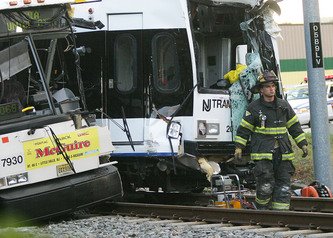


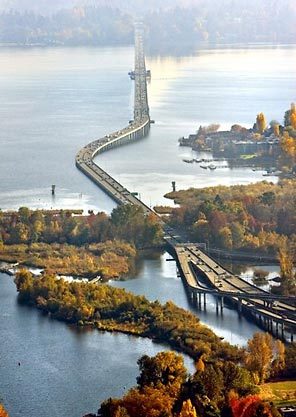
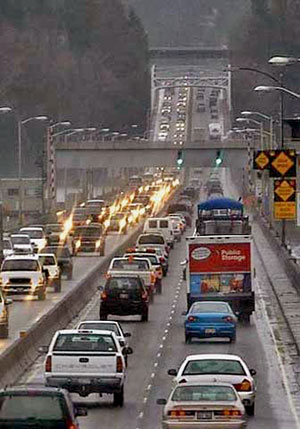
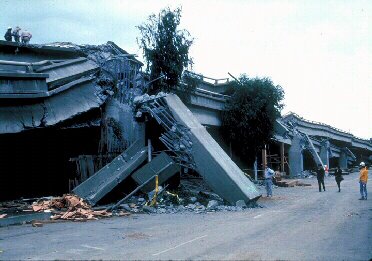


Posted by: ratcityreprobate on Dec 18, 2007 7:09 AM