Seattle goes gah-gah over choo-choos
As Seattle considers a plan to extend the South Lake Union Streetcar line, it's time to decide whether returning to a 19th-century transportation method is really the answer.
By Ross Anderson
We have seen the future of Seattle mass transit, and it looks suspiciously like the past. It is shiny and red and goes clackity-clack between South Lake Union and Westlake. It travels at a maximum speed of 20 mph and costs about $40 million per mile to build.
Seattle, it seems, has gone downright gah-gah over choo-choos. Whatever the price in dollars and aggravation, the city is determined to take the A-Train. We haven't yet completed that $2.7 billion-dollar rail line to Sea-Tac, but Sound Transit is desperately seeking more billions to extend that line to Northgate. We have the new South Lake Union Streetcar. And this week, planners unveiled their sketchy visions for streetcar lines in neighborhoods like Capitol Hill and the University District.
All this stokes the ongoing debate: How do we best relieve traffic, or at least provide an alternative way to get around? More roads? Or buses? Or rails? If the rail buffs have their way, we'll soon be looking at and living in a cityscape reminiscent of another century — the 19th.
The operative map for Seattle's transit vision is about a century old. You can go back to 1910, when Gramma and Grampa got around town just fine on a system of about 70 miles of streetcar tracks, including the legendary Interurban trolley that rumbled all the way to Everett and Tacoma. It was a fine system, and we probably should have kept it.
But we didn't. The tide turned in about 1911, when the city hired a smart fellow (read "consultant") named Virgil Bogue to come out and draw up a bold new plan for Seattle. Bogue looked around, hired a crew of draftsmen, and produced an inch-thick document calling for an elaborate, New York-style transit system, with subways and elevated trains and a tunnel under Lake Washington.
Put to a popular vote, the Bogue Plan lost by nearly 2-1. That was the beginning of the end. By the 1930s, the city was ripping up tracks and replacing streetcars with buses. The Interurban made its last run in 1939, just as engineers were completing the first floating bridge across the lake. By the beginning of the War, the transition was complete; Seattle had banked its future on the automobile.
Rail buffs blame a nationwide conspiracy by General Motors to sell more buses. But rail transit was always geographically challenged in Seattle. All those picturesque hills and lakes serve as significant obstacles to streetcars that don't climb hills, and don't float.
In any event, things haven't worked out well. In the late 60s and early 70s, voters rejected plans for new freeways and for a proposed rapid transit system. So the city had to grow and prosper without any major expansion of its transportation system. For some time, the preferred strategy was buses, or more precisely "bus rapid transit," which uses express buses in exclusive transit-only lanes, including the downtown bus tunnel.
But by the 1990s, the city was gridlocked. Drivers rolled down their car windows, shook their collective fists and bellowed something like "Do something. Do anything. But fix this mess!"
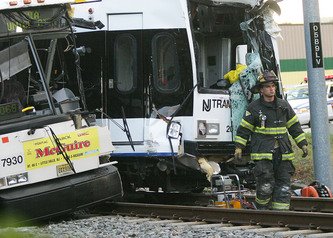
And that's more or less what's happening. Government is doing something and anything — digging holes, pouring concrete, laying rails, buying railcars — in a desperate attempt to rebuild what it dismantled 70 years ago. It's a system development by committee, or by many committees. Sound Transit builds light rail and operates those commuter trains to Tacoma and Everett. King County Metro builds and runs the new streetcar, along with the existing bus system. The state is adding HOV and transit lanes to the freeways. For a while, we had yet another agency building a monorail, until it collapsed on itself.
Which is what skeptics expect to happen with some or all of those other railroad-builders. Critics of rail trail transit scored a huge victory last fall when voters rejected Sound Transit's bid for billions more tax dollars. Yet the streetcar fad suggests that somebody out there is still determined to ride those rails.
Rail critics see their own conspiracy. Randal O'Toole is an Oregon economist and self-styled libertarian who argues that Seattle is about to join dozens of cities that have got little or no benefits from the billions spent on light rail. Trolleys and streetcars are 19th century technology that is too slow, too dangerous and too expensive, he says. "Light rail is simply one more way to take money from the pockets of ordinary taxpayers and put it in the pockets of wealthy businesses."
Coalition for Effective Transportation Alternatives, a citizen group opposed to light rail, argues that Seattle had built one of the world's best bus systems, and could adapt HOV lanes and traffic lights to move express buses more efficiently than light rail.
But for every O'Toole there is a Todd Litman, a Victoria, BC, consultant who travels the world advising cities from Dubai to Valparaiso to San Jose how to build rail transit systems. And Litman is pro-streetcar. "Seattle originally developed around streetcars and railways," Litman says. "It doesn't make sense to argue that it can't work again."
Litman learned his way around transportation issues as a volunteer bicycle advocate in Olympia, and eventually studied transit issues at Evergreen State College. He frequently finds himself at odds with the likes of O'Toole.
Ultimately, the choice between rail transit and bus transit is made by passengers, he says. "There is a bias out there. People will pay more for a Mercedes than for a Chevy. There is nothing wrong with people wanting something more prestigious, and they view light rail and streetcars as more comfortable and more prestigious."
But do taxpayers want to pay $40 million per mile for a little prestige?
John Niles, a transportation consultant and critic of light rail, is a little kinder toward streetcars. They are probably a mistake, he says, "but the scale of the error is so much smaller than with light rail."
Streetcars have a few things going for them, he says. South Lake Union businesses are picking up part of the costs of the new line, and hopefully that would be the case with other lines, he says. They may attract some tourists. And neighborhood businesses are very fond of them.
"As transportation, they don't make much sense," he says. "But they're nice. They're an amenity. They're street candy."
* Ross Anderson is a freelance journalist and blogger who lives and works in Port Townsend, Wash. His blog can be found at rossink.com.
My grandmother used to say
Report a violationPosted by: hacknflack on May 13, 2008 8:06 AM
Editor's Pick " when they passed out brains, they though they said TRAINS, and they MISSED theirs..."
As a multi generational resident, and one who works in and around Seattle transportation, I was interested to read the proposal for a new Seattle Streetcar Network.
I am a supporter of light rail, streetcars, cable cars, and any form of pragmatic transportation. But I am curious about the lack of discussion of an interbay route.
King County staff spent time and our money to review a potential extension to Interbay from the old Benson Trolley route about five years ago. We were told both the Port of Seattle, and the major tennant of Pier 86 office park, Amgen, were very interested. Now even MORE development is going on in this corridor with Whole Foods, condos, and most importantly, the new Cruise Ship terminal scheduled to open next summer.
With a majority of the more than 200 plus sailings a summer planned from the Port of Seattle’s cruise ship terminal at Pier 90/91, this dock is poorly served by METRO and Sound Transit. At a time when we are attempting to build a green city, forcing ships to plug into the dock, we are bringing upwards of 6,000 folks PER DAY in and out of this pier.
Further, this line could be built mostly on land ALREADY owned BY THE CITY (through Myrtle Edwards Park), and run parallel to existing heavy rail. A simple extension of the current Benson Line could bring streetcar access to the thousands of folks working along Elliott, at Pier 86, and the pier, along with Smith Cove. Clever routing could even bring it to the Interbay neighborhood. Clever routing could even make it circle around Nickerson, serving SPU and South Freemont Bridge, then back south to meet up with the current line at South Lake Union.
The line could also take the WEST side of the Elliott Street parking from Denny North, and on the sidewalk from Broad Street to Denny, and a spur could climb up and over the bridge, or stay on the east side of the tracks and head north on 15th.
The other end of the line should and could be extended through the ID, and even then curve down under the freeway interchange of I-90 and I-5, and circle over to Safeco Field and the Quest Exhibition Center, then loop back in to the line.
I am aware that when they built the SAM Sculpture Park, the right of way for BNSF left not enough room for the trolley line. I believe this could still be achieved by routing via the pedestrian side of the bridge (to the west) or with the help of a safe signal / bypass to insure the trolley would only venture through the gap when there was no train. (a similar signal system was installed at the Monorail after the crash).
I believe the Port might even help fund the line for the sake of traffic reduction and tourism. Currently Metro does such a poor job of service to the offices of the biotech firm at Pier 86, Amgen hired a private company to offer their employees a SHUTTLE service that runs all day long between their other offices and that site.
At first glance, it would appear that this line could even pay for itself with the ridership potential, yet there is no mention of it.
I believe the new terminal would be a great candidate for a Trolley Line. I would hope it would be studied.
by: vito on May 13, 2008 8:54 AM
I suspect the City's energy behind expanding a streetcar system is simply to be able to control and add capacity to transit within Seattle without having to beg or pay off Metro. This is an indicative of a larger trend to plan for transit at a regional level where regional solutions - such as light rail - always benefit at the expense of locally focused investments - such as bike facilities. This creates disincentives for dense communities which could actually make transit work.
Bring back the cable cars
by: dn on May 13, 2008 9:49 AM
Why do we let the other city by a bay attract zillions of tourists and their dollars when we could easily compete? Since streetcars are at best amenities and not mass transportation systems (and becoming commonplace across the country as an urban disease akin to penis envy spreads), we should go for the transit vehicles that would really attract interest and can navigate the downtown grade. There must be at least one in a museum somewhere that could be resurrected. Crosscut should start a campaign.
It's not about moving people
Rby: paddystclair on May 13, 2008 11:40 AM
What struck me about the plan to put streetcars through Freemont and on to Ballard is how closely the route followed areas that have been the target of developers who need to get rid of many of the industrial/business tennets before they can construct high priced water view condos. It's not like the City hasnt used "special developement taxes" before in order to preasure smaller business to relocate (See South Lake Union) in favour of larger firms easy aquisitions of those locations. So maybe the streetcars are designed to move people-- just not as transite.
My paranoia grows when I see a posting as sensical as the first one on this column. An Interbay route would serve an obvious need, have less impact on traffic, and create a positive first impression on visiting tourists who could disembark on peir 99 and be downtown in 10 minutes. An Interbay route would follow an historic rail line, connect dowtown residents to accessable grocery shopping ( once the new shoppng center has opened) and provide thrilling vistas if routed through Mrytle Edwards. In short, an Interbay line might actually move people--as opposed to the Slut, which we must admidt, is an over priced Disney ride for Mr Allen's vanity and Mayor Quimby's ego.
An Interbay route wont get ride of those pesky small business along Leary though--so I doubt that the City will find it very profitable.
"through Myrtle Edwards Park"
Report a violationPosted by: kieth on May 13, 2008 12:02 PM
In my mind I had trouble following the route described but I would be concerned about rail line going "through Myrtle Edwards park". Isn't the Park only a few hundred feet wide in several places (and even less in some places); how much park would remain if a streetcar line (northbound, southbound) went through there?
Street Cars worked great for me-
Posted by: JGropp on May 13, 2008 1:52 PM
As a kid, I rode the streetcars from Wallingford down through Fremont along Westlake. I just now looked carefully at your historical picture to see me getting off the streetcar to get my braces tightened- but I wasn't in the picture. Jerry Gropp Architect AIA
mment
better ideas?
Report a violationPosted by: david2 on May 13, 2008 7:55 PM
Editor's Pick So, what is the 21st century option, then? Maybe we can get some of those Japanese high-speed trains that would get us from downtown to the airport in 2 minutes...
I'm not a huge fan of the streetcar, given that it has to wait in traffic like everything else. On the other hand, it's cleaner and newer than the buses, and those signs that tell you when the next train is arriving are nice.
Individual cars obviously aren't the future; a city needs mass transit once it reaches a certain size. (I don't own a car, personally, and at the rate gas prices are going, my interest in driving is only declining.)
Whoever said "Seattle has one of the world's best bus systems" must not have lived in many cities. (Or else I've just been extremely fortunate in the places I've lived.) You can't even get from downtown Bellevue to Seattle after midnight, service is infrequent off-peak, buses are packed on-peak, bus-priority corridors are rare, no real-time arrival signs, few per-stop schedules... lots of room for improvement.
Age isn't a valid argument one way or another, anyway. Lots of old things are still good. (I'm still rather fond of the wheel.)
My hopes
sjenner on May 14, 2008 11:27 AM
1. The city council and whoever's paying the bill (nearby property owners, city residents, etc) have full and accurate information about just how much it costs to operate these trolleys, and where the funding will come from on an ongoing basis.
2. They won't slow down buses and make traffic worse.
3. The overall impact on air quality would be positive. Creating traffic jams could outweigh any positive impact of more riders on trolleys than on buses, which might or might not happen anyways.
As I looked at the diagram of the route maps in the paper, I was struck by how little land there is near to the proposed routes, particularly Eastlake. This creates a somewhat different situation compared to South Lake Union when it comes to taxing nearby property owners. There simply isn't that much property to tax.
DMorrill on May 14, 2008 3:47 PM
The streetcar plan is tragic and insane. We replaced streetcars with electic trolleys for the sane and simple reason that they are far more effective. Rail cars on arterials interefere with cars, delivery trucks, bike, busses, pedestrians and will create congestion and impede the flow of traffic. It is simple math and queing theory. Cuteness is not an acceptable basis for transportation planning.
O'Toole by the way is totally correct in his analysis of the economic of rail, including in Portland and Vancouver. Now folks here support rail on romantic grounds rather than economic effectiveness - there are few riders relative to the capital and operating costs, and a small payoff relative to alternative investments --but that's our right. Still the solution for quality uncongested transport is well understood by economists. If people had to pay closer to the real costs, via congestion pricing, tolls, parking, etc, carpooling and an extensive superior bus system would ensure an effective transport solution.
Transportation
Tuesday, May 13, 2008
Plans to expand Seattle Streetcar program


Friday, March 28, 2008
Making Seattle More Dense is Dense!
How dense can they be?
The folks at the Sightline Institute take great joy in Seattle's skipping gaily over the edge into becoming a dense Pugetopolis. They and most of the environmental community have convinced themselves that growth is good, as long as it is stuffed into high-rise shoeboxes that someone has dubbed "green." Look at Portland's light rail! Admire Vancouver's skinny towers! Envy San Francisco's density!While they act as a clearinghouse for new data and ideas of interest to greens, they are ever quick to applaud the urbanization of the region in the guise of "saving it." Like this recent blog post that cheers the fact that finally, at long last, Seattle has more multi-family housing than single family homes. Welcome to the big leagues, New York Alki.
If you'll note, those who express skepticism about growth and development Seattle-style are labeled as gloomsters. I am "sackcloth." The Seattle Post-Intelligencer's Joel Connelly is "ashes." We are not dense enough for Sightline.
The dense ones, however, believe they are on the winning side of history. Time for a "mission accomplished" lap, perhaps, along with the developers and big business interests that willingly greenwash their corporate goals to co-opt labor, enviros, and progressives into supporting urban development policies that roll over the little guy. This is the coalition that powers Greg Nickels' machine, the mayor who can't say no to "more."
We know that these green-backed policies are making the city more unaffordable. They are helping to drive the poor out of town. They are displacing long-standing communities. They are changing the scale of a once-egalitarian city that featured few poor people, few rich people, and a lot of folks in between. This old middle class Seattle is now seen as unsophisticated, not worthy of protection, backward even. Some politicians are finally taking notice: U.S. Sen. Patty Murray recently called this economic displacement Seattle's "silent epidemic." Well, I guess we were supposed to be a hub for biotech, right?
Today's ecotopian vision rejects some of the main tenants of the original Ecotopia, which stood in defiance of the supposedly unstoppable free market. Todays greens don't think small, they think big. They moralize globally while disdaining locally. Sure, buy a locally grown organic parsnip. Fine. I do. But if you stand up for tradition and history, you'll be run over by their hybrids. For this new breed of ecotopians, Seattle is a blank slate to be manipulated like a Monopoly board, as if no one really lives here, except the Sackcloth and Ashes mossbacks who haven't seen the new dawn.
And while they're acting as generals on their land of counterpane, they often ignore — or are oblivious to — the downsides of the models they tout so often.
Take Vancouver, the Cascadian city green urbanists most admire. It's a dense Hong Kong in the making. But wait. Those skinny towers haven't stopped suburban sprawl; the tax policies that created the modern city are likely unsustainable; the cost of living is sky-high; and the boom in condos is making it more difficult for the city to offer the full range of jobs and services a city requires to be healthy. Downtown is so stuffed with rich, idle baby boomers that some critics worry that Vancouver is turning into Canada's Miami Beach.
Portland is delightful in many ways, always a teacher's pet city when it comes to urban instruction. But their dirty secret has now been revealed. They've been outed. What made their urban planning work so well was that they were able to outsource sprawl across the Columbia River to growth-hungry Vancouver, Wash. On top of that, Portland-style urban planning has worked so well that it's contributed to a statewide backlash that sparked a property rights rebellion that may destroy Oregon. Hey, at least they have a new tram.
And then there is San Francisco, the city many urbanists yearn for us to be. Which is funny, because I remember author Gore Vidal saying that he liked Seattle because "Seattle is the city San Francisco thinks it is, but isn't." And that's true in many ways.
I know San Francisco. I lived in San Francisco. San Francisco was a friend of mine, and Seattle, you're no San Francisco. Which is a good thing.
Don't get me wrong, I loved San Francisco when I lived there in the mid-70s — the era of Patty Hearst, Rolling Stone, Harvey Milk, Tales of the City, Herb Caen, and Italian mayors. I love it still when I visit. But what made San Francisco is something you cannot copy. It has to do with when a city is built, by whom, and when it comes of age. It has a unique essence we couldn't replicate if we built a thousand Victorian homes on our hills. Footnote to remember: Most of San Francisco's grand Victorians were built with wood that stood where Seattle now stands. Yes, our forests built their city so we'd have a place to build our city with someone else's forests. And so it goes.
But while many of San Francisco's charms are intact — it was a city built for pleasure, unlike our nanny town — the city of today is less than it once was. Even in the 1970s, natives, the few you could find, complained that it had gone downhill, had lost it neighborly, even small-town, charm. As Vidal observed, the Seattle it always imagined itself to be. Since 1950, San Francisco has not only stolen hearts but robbed bank accounts: Real estate prices have increased at double the national average for the past half century. The New San Francisco is truly a Golden Gated community.
Today's San Francisco is unbelievably expensive. A city for rich people. Its black population all but driven out. Its families headed to the burbs. It's great for tourists — in fact, much of it is designed for them. The working waterfront is a Disneyland for monied visitors seeking things like hand-picked exotic mushrooms and artisanal chocolates. It even has that SoDo new-car smell that comes with taxpayer-funded stadiums and their upscale pubs.
But has San Francisco's density and affluence, has its progressive politics, redeemed the Bay Area? Did it save it from becoming a megalopolis? If Seattle doubles its density to match San Francisco's, if we take down the Alaskan Way Viaduct, if we cater to "knowledge workers," can we be assured that central Puget Sound will remain less paved?
The San Francisco experience offers no such assurances. The Bay Area is a sea of sprawl, despite density and despite mass transit (and maybe because of it). The Silicon Valley is ghastly and overpriced, trapped in a tech-boom economy that has turned sleepy towns into vast megacities. San Jose was dead in the mid-1970s, almost a tumbleweed town. Today, it eats the countryside. Same with the East Bay, where the Ken Behring-style mega developments of the '90s are now dwarfed. Yesterday's McMansions are mere bunglows. Sprawl hops the mountains and spreads into once rural valleys beyond. Mass transit and rail make the commuting easier, but they've greased suburban growth too. Yet the freeways are still packed.
Does Seattle really want to be a so-called "superstar city" like San Francisco, a magnet for trustafarians who love to live in elite urban environments? There's evidence to suggest that this model is reaching an economic dead end, especially since the vital middle class is fleeing to less glamorous, more affordable cities like Charlotte, Dallas, and Riverside. Joel Kotkin, fellow of the New America Foundation, pokes holes in the superstar city syndrome. We may be grasping for San Francisco status just as the market for such things is about to tank.
Yet this ideal is at the core of Mayor Nickels' and Gov. Chris Gregoire's hype about global competitiveness and the upside of being a sparkling, expensive metropolis instead of a workaday town. Even more strange, it points up how twisted progressives and enviros have become in terms of their priorities. Kotkin observes that "the fashionable 'left' defines successful urbanism by its ability to lure the superaffluent, the hypereducated and the avant garde. ... One wonders what true progressives like Harry Truman or Fiorella La Guardia would think of such an approach."
Is San Francisco uninhabitable, an unremitting hellhole? No. Will Seattle be one if it follows its urban footprint? No. Is density itself evil? No. But let's be honest: A bigger, denser Seattle is no panacea for sprawl; it's no assurance that what we love about Seattle today will still be affordable or even available in the future; it means sustaining a vastly larger and more complex city in an extremely sensitive ecosystem, Puget Sound, that our devotion to growth is already destroying.
Let's admit, too, that you can do real damage if you ignore a city's past, if you threaten a settled urban culture with displacement, if you dismiss experiences and memories as mere obstructionism. You can do irreparable harm if your theories are built on the shaky premise that only elites can save us from global doom. And you disrespect the place you profess to love if your fantasies seek to replicate urban theories that sound good on paper but ignore the roots that are sunk deeply in the soil of an actual place.
Wednesday, March 12, 2008
Governor wants to eliminate Subarea equity
Gregoire is taking the lead in recasting transportation plans
By David BrewsterNothing like a close election to focus the mind of political leaders. The best current example is Gov. Chris Gregoire, stung by defeat of Proposition 1 and the still-unresolved Viaduct and 520 decisions. She's suddenly acting courageous and creative about forging some new plans for central Puget Sound transportation.
Some interesting minds are also trying to create a package for Dino Rossi, running against the governor. So the new forum for the debate about roads and transit will now shift to the campaigns. That could be progress.
On Tuesday, Gov. Gregoire paid a visit to the Tacoma News Tribune's editorial board, saying very interesting things, according to editor David Seago's blog. She said she was prepared to look seriously at bills creating an overall regional transportation governance body, putting roads and transit authority in one largely elected body for King, Snohomish, and Pierce counties. Then this bombshell:
And the notion of "sub-area equity," Gregoire said emphatically, has got to go. That gave us a little shudder, because the principle that the money raised in each county should be spent each county is pretty much Holy Writ in Pierce and Snohomish counties.
The problem with sub-area equity, Gregoire contended, is that local goodies get piled atop the most serious regional priorities, for reasons of local politics, that the total cost of any package balloons and it topples of its own weight.
A pretty good description, I admit, of what happened with Proposition 1 on both the transit and road sides. But, as I told the governor, "we little people in the sticks" have a legitimate fear of getting little more than table scraps while the Seattle-centric mega-projects get taken care first.
Combine these remarks with Gregoire's recent change of mind on the Viaduct, where she now is open to a surface-plus-transit solution, and you have the makings of a broader, more modern approach to transportation planning in the Greater Seattle area. Opponents of Prop. 1 are cheered and will probably be welcome at the new planning table.
The first political showdown will be Sound Transit's decision next February whether to go back to the ballot in 2008, this time with no roads component. House Speaker Frank Chopp opposes the 2008 submission, fearing that some of his Democratic candidates in the suburbs will be forced to take a stand on a tax increase. Olympia has threatened Sound Transit that if they go ahead with the 2008 vote, they can expect to be punished by enactment of a regional governance entity that will weaken Sound Transit's autonomy and its dedicated taxes. Waiting to 2010 for the Sound Transit II vote may also give enough time for the regional governance entity to be enacted.
The other political question is whether Rossi will actually craft a comprehensive roads/transit/congestion plan, thus forcing Gregoire to have a better one. Rossi advisors are split over letting Dino run against Gregoire's record with no explicit plans of his own, or showing leadership by pulling together a detailed plan. He'll probably only get specific if polling shows he's behind.
Monday, March 10, 2008
Governor Gregoire Hypes Disaster to sell bridges
Is Gregoire hyping disaster to sell bridges?
Gov. Christine Gregoire is eagerly sharing the happy news of her willingness to slap tolls on bridges and highways. She met with Oregon Gov.Ted Kulongoski in Clark County the other day to discuss moving ahead on a $4.2 billion new bridge over the Columbia River on I-5. The feds would pick up most of the tab, but Gregoire is set on imposing tolls. To push her agenda, she's using last summer's Minneapolis bridge collapse to make her case for urgency. Only problem is, it turns out the Minneapolis bridge disaster wasn't a case of aging infrastructure. The National Transportation Safety Board (NTSB) has concluded the problem was a design flaw.Gregoire's statements on tolling the Columbia will ring bells for anyone listening to her rationales for exploring tolls the SR-520 bridge across Lake Washington. According to the Columbian, Gregoire is not only firm about making the new Columbia span--a key north-south link in the greater Vancouver-Portland area--a toll bridge, but she wants to look at imposing more tolls nearby:
Tolls, Gregoire said, will be a part of the finance package...
“The interesting questions there are: Do we start tolling before we even begin construction on the bridge to make sure the tolls can be lower when it’s ultimately opened? Do we do variable tolling to reduce congestion and give more choices to consumers? Do we have to toll someplace else because we’re going to push traffic in a big way” to other bridges? “In my mind, we are going to toll. How do we toll?”
The current Columbia bridge is considered a "bottleneck," but Gregoire is also raising the specter of safety and disaster. According to The Oregonian:
Gregoire said last summer's collapse of an interstate bridge in Minneapolis was "a wake-up call to this nation."
"The interstate bridges that connect Vancouver and Portland are heavily used and aging, and it is time to replace them in the name of safety as well as economic vitality," she said.
The Minneapolis bridge became the poster child for America's aging infrastructure, but Gregoire may have to look for another example. On Jan. 15, the New York Times reported:
Investigators said Monday that the Interstate 35W bridge in Minneapolis, which collapsed into the Mississippi River on Aug. 1, killing 13, came down because of a flaw in its design.
The designers had specified a metal plate that was too thin to serve as a junction of several girders, investigators say....
The I-35W bridge was of a type called “fracture critical,” meaning that the failure of any major member would cause a collapse, because it had no redundancy. The design is lighter and less expensive to build, but has gradually fallen out of favor with highway departments.
This doesn't mean that infrastructure isn't aging and that it doesn't need additional inspection, repair and possible replacement. But the situation in Minnesota isn't a case of neglected maintenance but likely a case of human error or poor judgement.
The case for bridge replacement can be made without hyping the Minnesota tragedy.
Tuesday, March 4, 2008
Very good chance Sound Transit will seek money on fall ballot
By C.R. Douglas on Crosscut
A levy-less election?
What if there was a big election season, and Seattle didn't ask its citizens for a property tax increase? Believe it or not, our levy-loving city — there have been four in the last six years alone — is likely to be levy-less come this fall.
It's especially surprising given that a presidential election year, when turnout is strongest, is the friendliest environment for local ballot measures. High turnout means lots of younger voters, who generally favor tax measures.
Why would the city let this golden opportunity go by, even though there are so many causes needing money?
Can you say "light rail?""There's a very good chance Sound Transit will go this fall," says Richard Conlin, city council president and Sound Transit board member. The three-county agency wants a second try at extending the light rail line, which was defeated last November. And local leaders seem to be giving that plan the right of first refusal when it comes to securing ballot real estate.
Says Conlin: "If we have a Sound Transit issue on the ballot, we ought to be very careful about whether we put any other issues on the ballot." That sounds like no city levy to me.
Seattle politicians, who have much to gain from a light rail extension, don't want to jeopardize its chances by adding a money measure of their own to the mix. Taxing has its limits — even in Seattle.
Interestingly, even if Sound Transit decides to hold off for another year or two, the city may still end up without a ballot measure this fall.
That's because the three most likely levy ideas — Parks, Seattle Center, and Pike Place Market — are still jockeying for who's most deserving of attention. And it's getting late.
Renewing the popular pro parks levy would seem a promising idea, but the mayor is steadfast against it. While he likes what it has accomplished, he thinks there are better priorities going forward. Most councilmembers are inclined to support a renewal, but without the mayor's backing, it won't make the ballot.
Seattle Center is talked about. Certainly it needs a cash infusion. But, according to City Councilmember Jan Drago, "it's not ready yet." And no wonder. So much is still up in the air about the Center's future, including what to do about Key Arena (with or without the Sonics); whether the Center can tear down Memorial Stadium (now controlled by the School District); and whether Center House should stay or go. Much more needs to come into place before a plan can go before voters. Fall is likely too soon.
Finally, there's Pike Place Market. It's "ready to go," says City Councilmember Sally Clark of the $80 million upgrade plan. But that may not be enough to get it on the ballot. Because it's so iconic, there will be pressure to give it "coattails" and pair it with something like Seattle Center that would have a harder time going alone. But that would mean waiting until the weaker link is ready.
Tellingly, the mayor chose not to announce a levy for this fall in his recent State of the City speech. In the past, he has used that forum to launch money measures.
Seattleites are arguably fatigued with levy requests. After all, they've approved a whopping $735 million since Nickels became mayor. With an economic downturn likely upon us, there is a strong case to be made for taking a pause. Still, it seems surprising that a ripe opportunity to hit up voters might actually come and go without them even being asked.

Saturday, March 1, 2008
Sound Transit uses illegal push-polling
Sound Transit is accused of push-polling
The widely promoted Sound Transit survey has more bugs than bang, say critics.
My blog linking to the survey gleaned excellent critiques posted by our Crosscut readers. I just got word that Will Knedlik, state-rep-turned-transportation activist, has asked Sound Transit to shut down the survey, charging that it constitutes push-polling and calling for disciplinary action. This happened at a Sound Transit board meeting on Feb. 28, and you can watch the action here. (It's about 15 minutes in, after a Link safety report.)Where does this leave the transportation quandary? Does anyone have a word in defense of the survey? Any suggestions for what Sound Transit should have done to properly solicit public comment, and through what means? As a possible contrast, remember that Puget Sound Partnership is holding workshops this spring to do the same. Should Sound Transit have opted for a method more sound?
Feb 25 08 on Crosscut
A rush 'hour' that lasts all day?
The folks at Sound Transit really want you to take an online survey to help them do what voters said shouldn't be done via Proposition 1. To get you into proper survey-taking mood, the entry to the survey page states: "Studies show that by 2030, rush 'hour' could last all day in many places." A startling statistic, no doubt, but one begging several questions: What studies? Which places? How are they defining 'rush hour,' and what does that mean, really, that it would last all day? A few links to more information would go a long way here.
But don't judge them too harshly. This portion of the Sound Transit Web site — devoted to system expansion — is new. Hopefully, improvements are forthcoming.
There's a little bit of passive-agressive, subtle Northwest attitude in the survey prompt, as well. For example:
In November 2007, voters turned down a large package of road and transit investments. Now, the Sound Transit Board of Directors is taking a renewed look at what transit service expansions would make the biggest and quickest improvements for commuters for the least cost.
Here's my straight-talking, Midwestern translation: You voters killed our last, best hope for a solution, so now you're going to have to tell us what you want. Since the pundits surmise that you torpedoed Prop 1 due to cost, we'll try to give you the moon for as little cash as humanly possible.
Snarky comments aside, you should take the survey. If only to help them "develop good answers to vital questions." Translation: Your ideas could prevent a day-long rush hour in 2030.
Saturday, February 16, 2008
Minneapolis Light Rail Does Not Generate Enough Ridership
Minnesota is a state much like Washington. I found opinion among politically active people there to be much the same as here. That is, Democrats are excited by Obama's candidacy. Yet, with less excitement, most would accept Clinton's nomination if it came to that. Both Obama and Clinton must tread carefully until Ohio and Texas — and in the weeks thereafter, if Clinton remains in the race after March 4 — to maintain the sense in their party that either would be an acceptable standard bearer. Toughening rhetoric, charges and counter-charges, and edgy media campaigns now emanating from both camps could polarize opinion among Democrats and make it harder to come out of their Denver convention united.
Infrastructure politics
While in Minneapolis, I visited the site of the Interstate 35W bridge across the Mississippi River, which collapsed last summer. Sub-zero temperatures, biting winds, and weeks-old piles of snow on the ground had not deterred construction workers building its replacement. Huge covered, heated tents protected them as they made daily progress.
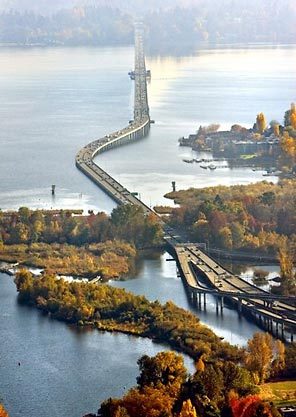
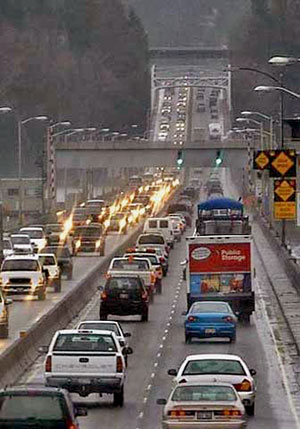
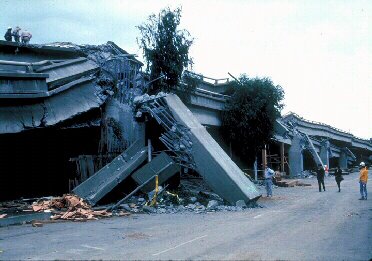
Neither our Alaskan Way Viaduct nor Highway 520 bridge across Lake Washington has collapsed, requiring such immediate replacement. However, I could not help but think, as I watched the construction crews in Minneapolis, that the job was being done start-to-finish there in a few months, whereas more than seven years after the Nisqually Quake called attention to the vulnerability of the aging viaduct and 520 bridge, state and local officials here had not yet arrived at final plans for their replacement or repair. Plans under discussion are provisional and subject to substantial change.
Minnesota is a progressive state which expects high performance by its public officials. Minnesotans would not tolerate for a moment the delay and fumbling existing around our viaduct/520 bridge issues. One particular thought crossed my mind: Does Gov. Chris Gregoire not recognize that she took office pledging fixes in both places and, in 2008, is still light years away from getting it done? Her Republican challenger, presumably Dino Rossi, no doubt will remind voters of that fact on a regular basis in the gubernatorial campaign. Both the viaduct and bridge are state highways. Any governor has it in her/his power to bring fix proposals to the Legislature and to drive them to conclusion, either with or without full support of local officials.
Minneapolis has a light rail system which is a convenient link to the airport but which does not make enough stops in the right places to generate ridership and revenue to sustain itself. A cautionary story for folk here. Federal money appears on the way to extend our Seattle light rail system beneath hills and across water to Husky Stadium, although local money also will be required. The University of Washington regents agreed long ago to cooperate in getting light rail to the University District. However, if you talk with officers of the university, you will find that most believe present bus service to the campus area is excellent and, moreover, that they anticipate the huge hole-in-ground and street disruptions attending light-rail extension to Husky Stadium with fear and loathing. Regents may wish to revisit the light rail station issue as they simultaneously examine how and with what money they propose to renovate Husky Stadium. Light rail also has become wrapped up in the debate about costs and configurations of the Montlake-adjacent 520 redo.
If all these decisions remain in limbo entering the gubernatorial and legislative campaigns, those in charge — and presumed to be not effectively dealing with them — will be on the defensive.
Minneapolis and Seattle are not alone in confronting the need to spend immediate billions on transportation and infrastructure upgrades. The questions here, as everywhere, have to do with priority, practicality, and affordability.
Wednesday, July 25, 2007
Light Rail Has Huge Carbon Footprint
The carbon cost of building and operating light rail
7/25/07
Rail mass transit is supposed to be good for the environment. But a leading critic of Sound Transit's Link light rail project offers metrics that suggest the environmental costs are much higher than those of more vanpools, more carpools, more buses, and, particularly, more bicycling.
By Emory Bundy
Excavating a six-mile, twin-bore tunnel and hauling away the rocks and muck is like digging a huge hole and pouring money in it. The lesson has been confirmed by the Beacon Hill tunnel, an experience so sobering that it prompted Sound Transit, which is building light rail from downtown to Seattle-Tacoma International Airport, to bail out of a First Hill station, to save $350 million and reduce risk exposure. Sound Transit pegs the cost to tunnel north from downtown Seattle at $500 million per mile.
Worrying financial costs aside, what about the environmental costs and benefits of rail transit? Surprisingly, rail’s environmental costs are quite adverse.
Start with the tunneling, which turns out to entail a prodigious outpouring of energy and release of greenhouse gases. To extend light rail service north from downtown, the next phase, Sound Transit will have to dig through and remove more than 600,000 cubic yards of rock and muck — equivalent to a pile of debris 350 miles long, three feet wide, and three feet high. Sound Transit plans to expend lots of energy digging and excavating that stuff: 17.4 trillion British Thermal Units, according to its environmental-impact statement, equivalent to the energy in 140 million gallons of gasoline. That much gas, or diesel, would fill 8,000-gallon tanker trucks lined up from Seattle to Canada. If all the energy consumed by tunnel-excavating and hauling is generated by gasoline or diesel, it will emit nearly 1.3 million tons of greenhouse gases, CO2, into the environment.
As an offset, Sound Transit claims it will save 14,000 tons of CO2 annually by running light rail trains on electricity, sparing the region emissions that otherwise would be generated by automotive traffic. Even if granted, it would take 90 years from completion of the line to break even on the energy transaction. If Sound Transit should manage to cut tunnel-related greenhouse emissions in half, by aggressive use of hydro electricity and human labor, an implausible proposition, it still would take 45 years to break even.
Moreover, the agency's calculations assume no improvements in automotive fuel efficiency. Yet Congress in this session might enact a measure to raise average mileage from 25 to 35 miles per gallon by 2018. That one conservation measure, a 40 percent per mile improvement even before the tunnel will be complete, would extend Sound Transit's greenhouse gas pay-back period to the year 2088.
Further, public transit's contribution to fuel efficiency is exaggerated. According to the U.S. Department of Energy's 2006 Data Book, per-passenger energy consumed by rail transit is only 19 percent more fuel efficient than today's automobiles (2,784 vs. 3,445 BTUs per passenger mile). If the improvements before Congress are enacted, shortly cars will be more energy-efficient. Bus transit already is 25 percent less fuel-efficient than cars (3,445 vs. 4,323 BTUs).
And the data make the energy performance of rail transit appear better than it really is. The reason is urban rail in the U.S. primarily is used in New York City, where it's more fuel-efficient than elsewhere, due to the packed subways. Here, the local rail energy consumption average is inferior to New York's.
The most cost-effective and energy-efficient transportation option, it turns out, would be making more productive use of existing capabilities. There is a lot of spare capacity on King County Metro Transit buses and those of other local agencies, even on a large share of the rush hour routes. One obvious way to use that spare capacity is to make more of the bus rides free or much lower-cost. But when Chuck Collins, former Metro Transit director and former chairman of the Northwest Power Planning Council, put forth his Ride Free Express plan to make markedly better use of existing transit capacity, and incrementally strengthen the most heavily-used routes to handle new levels of demand, Sound Transit and its political allies tromped on it.
vanpools would be another easy way to increase utilization of our present systems. According to the Department of Energy, vanpools are three times more fuel-efficient than transit, 1,294 BTU's per passenger mile. They're far less costly to operate and much more flexible than rail transit. But they're discriminated against, as a commuting mode. Bus transit is heavily subsidized, rail transit is hugely subsidized, while vanpools are but slightly helped. Today, Sounder commuter rail costs $20 per boarding (one-way trip) to operate and, factoring in annualized capital costs, a total of $100 per boarding. (The average fare is less than $3.) Van-pooling, by contrast, is almost 100 percent paid for by those who use it.
vanpools could swiftly surpass Sound Transit rail in ridership, at a tiny fraction of the cost, with superior energy efficiency. Again, Sound Transit and its allies stomped on this idea, also pushed by Collins, and the environmental community sat on the sidelines.
There are numerous other environmental costs to rail. Sound Transit is paying nearly $393 million, almost five times the "very conservative" price tag it told voters, to gain access to Burlington Northern Santa Fe's rail corridor between Everett and Seattle for the Sounder trains. A substantial chunk of that money will be used by the railroad to encroach on Puget Sound tidelands — one of the largest industrial fills of tidelands since Washington adopted the Shoreline Management Act in 1971. For most of the distance, the line runs right along the shoreline, not many feet above high tide, which might be oblivious to the impact of global warming.
Another environmental drawback is that Sound Transit actively promotes and subsidizes sprawl by operation of Sounder commuter rail. It provides spacious, handy free parking at all Sounder stations and intends to build a lot more so people can live hither and yon, drive their single-occupancy vehicles to the train, and take long, lavishly subsidized trips to downtown Seattle to work. The same perks are provided for Tacoma Link, as a commute avenue to downtown Tacoma. Sound Transit Executive Director Joni Earl illustrated the inducements to sprawl in the February/March 2007 edition of Mass Transit Magazine, which featured her on the cover: "Because I ride the train, I talk to customers a lot,” Earl declared. “There was a guy I just started chatting with, and he said his wife and he wanted to live more in the country. They've always been in Seattle and wanted to raise their children in a more suburban-type setting. And he said the only way that made it possible was Sounder."
But the greatest harm to the environment and the public comes when you calculate the lost opportunities. Much could be done to move people and reduce congestion in energy-efficient, cost-effective, health-enhancing ways, but Sound Transit is sucking up a huge share of the fiscal oxygen. Vanpools and better use of existing transit have been mentioned. Carpools are a third option. Incentives and programs to increase carpooling just a little would take more cars off the road, and save more energy, than anything Sound Transit aspires to do, and do it much faster, more reliably, with less risk. Completing the HOV system and instituting congestion pricing should be high priorities.
The leading forfeited opportunity is bicycling, the best possible transportation mode: cost-effective, energy-efficient, non-polluting, and healthy — save for the danger from surrounding cars.
Largely due to poor civic leadership, people are oblivious to the role of bicycles in numerous modern, European cities such as Amsterdam and Copenhagen. These cities might be flatter than Seattle and more compact, but modern bicycles and good route selection cope well with hills, and northern Europe is more afflicted with snow, ice, and cold. "Two-wheels rule the roads, it's difficult to get lost, and there are bike paths everywhere,” a New York Times story about Amsterdam recently declared. “The best way to get around is by bike or on foot."
A quarter-century ago, Amsterdam and Copenhagen were accumulating heavy automotive traffic, more congestion, more accidents, squeezing out bicycles and pedestrians, just like American cities. Since then, they've worked and invested to facilitate and promote bicycling and walking, reduce energy consumption and greenhouse gases, improve air quality, enhance the health of participants, and radically reduce the frequency of accidents. Much of the focus has been the provision of safe, exclusive corridors, often taking lanes or even streets that had been dedicated to (or encroached on by) automobiles. Also key is paying close attention to safe crossings, so that children, even young children, can safely bicycle to school, as most now do.
In those cities, the market share of transit is six to eight times what it is here — 16 percent in Amsterdam and 20 percent in Copenhagen, contrasted with less than 3 percent in Sound Transit's domain. Bicycling outstrips transit, with market shares well beyond 20 percent and growing. Here, it's roughly 1 percent.
Most local folks own bicycles, but they won't think of bicycle commuting because it's dangerous, for lack of safe routes. With a modest commitment, good planning and execution, and some of the money currently siphoned out of the economy by Sound Transit, bicycling could quickly surpass transit in market share.
On March 7, City Council member Peter Steinbrueck hosted a civic forum featuring Brian Hansen, a bicycle planner from Copenhagen. The large audience got a picture of what an enlightened city can do to improve and extend bicycle commuting and, by doing so, save energy and money, reduce greenhouse gases, and improve health and safety. Not to be upstaged, especially not by Steinbrueck, four weeks later Mayor Greg Nickels announced his $240 million bicycle plan, an impressive number, although there is only $27 million in hand to support it over the next 10 years.
Sound Transit compounds the bicycle imbalance by poor planning to facilitate cyclists. Recently it announced that light-rail cars will accommodate 200 passengers (by cramming them on) but only two bicycles. Two!
They just don't get it.
* Emory Bundy is on the board of the Coalition for Effective Transportation Alternatives, a Seattle organization that opposes light rail. He was staff director of The Bullitt Foundation from 1983-2000 and was director of public affairs at King Broadcasting in Seattle from 1969-1983. He can be reached at ebundy@nwlink.com.