Submitted by ezra on April 12, 2006 - 7:18pm.
All it takes is a little inspiration and some political will to get the ball rolling with creating Bus Rapid Transit (BRT) in the Seattle region. While rail transit is an important strategy for connecting urban centers and serving neighborhoods, building new rail infrastructure takes time and funding to complete.
For Bus Rapid Transit, the infrastructure already exists, because the streets are already built! A new network of BRT routes, traveling in separate bus lanes on existing streets, could just take several years to complete. Just imagine how exciting it would be to have BRT routes criss-crossing the metro area, connecting neighborhoods and providing mobility throughout the region by the end of this decade.
In Curitiba, Brazil the city has spent decades building a BRT system. This system has inspired many cities throughout the world because in Curitiba they don’t wish they had a rapid system, they’ve built one, and because it’s a system of buses, it’s not cost prohibitive to operate.
A new dawn for urban planning can emerge for Seattle. We see this happening already with the leadership from Mayor Nickels as the organizer of the alliance of cities in support of the Kyoto treaty. Creating new transit service and a better transit system is at the top of the list of our own Green Ribbon Commission’s recommendations for combating global warming and environmental destruction. A new BRT system will do just this.
Transportation
Monday, March 10, 2008
Bus Rapid Transit makes perfect sense for Seattle


Not only nuts come from Brazil: Now its world-class BRT
From Brazil: A different kind of bus system
4/12/06
By JENNIFER LANGSTON
P-I REPORTER
Jaime Lerner has a favorite saying: A car is like a mother-in-law -- you need to have a good relationship, but you shouldn't let her dictate your whole life.
The former mayor of the Brazilian city of Curitiba -- and an architect and international sustainability guru -- is a champion of public transit systems that use buses in a different way.
The buses run in dedicated lanes so they don't get stuck in traffic. Tubular stations on the street help make boarding swift and easy in Curitiba, where roughly 2 million people use them.
More than 80 cities around the world today are using or building similar "bus rapid transit" systems, which Lerner says can be constructed 20 to 100 times more cheaply than light rail or subway systems.
Visiting Seattle this week, Lerner shared his impressions about how to tackle this city's traffic:
What is the difference between the way our buses in Seattle operate and your city's system?
"A system of bus rapid transit is not only dedicated lanes. You have to have really good boarding conditions -- that means paying before entering the bus and boarding at the same level. And at the same time having a good schedule and frequency. We have a system where you don't have to wait more than one minute. That defines the quality."
Is there a way to create dedicated bus lanes in a cramped city like Seattle?
"There are many ways, many corridors where you can have a really good system. ... Sometimes you think, 'Aaah we don't have enough space.' ... There's always a good solution."
Could you talk about how to effect change in a city quickly through what you call "urban acupuncture"?
"The normal process for planning takes time, and it should. ... But sometimes you can make some focused interventions that can give a new energy. ... That's what I call urban acupuncture."
Could you give some examples?
"Good acupuncture is the I.M. Pei project for the Louvre (a sculptural addition to the French museum); good acupuncture is a small park in New York at East 53rd Street. ... It's something that's good for the city immediately or something that really changes the city. I would say sometimes it's an attitude and not a public work."
Do you think Seattle's waterfront has the potential to be one of those intervention points?
"Ahhh, yes. It's wonderful."
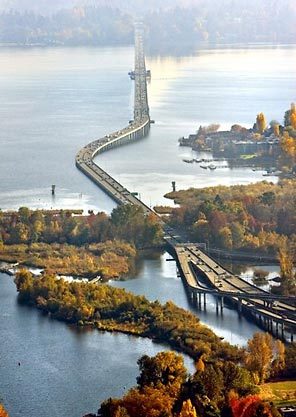
What do you think about replacing the Alaskan Way Viaduct?
"I would just vote one thing ... the viaduct definitely is not the solution. To give you an example not far from here -- San Francisco -- the city became much better when they removed the freeway at the Embarcadero Center. And the traffic is better."
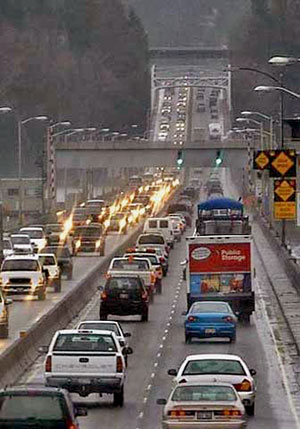
Some people say that if the viaduct were replaced with nothing but a surface road, heavy traffic along the waterfront would ruin it. Do you agree?
"If you provide good alternatives for public transport, you won't have traffic problems. ... Can you imagine how much better the city could become with 30 percent less of the cars running in the street? It's very easy. The main issue is having good public transport and after, if it's needed, the wall to protect the waterfront -- I don't have the answer to that. But definitely it's not the viaduct."
Some people in Seattle don't like buses. Did you have trouble convincing people?
"If you present the solution as a bus, it's a bus. If it's a system, the people will understand. And if they understand it's a better alternative, they will take it. So you have to be sure it's a better alternative. ... If you don't have to park, if you only have a one-minute wait, would you change for public transport? Of course you would."
How long does it typically take to set up a bus rapid transit system?
"You can build in two years a good system. It's not difficult, because it has not too much public works. It's very simple."