From Rossi, a road map to Puget Sound polls
THE NEWS TRIBUNE
Published: April 18th, 2008 01:00 AM
Dino Rossi’s new transportation plan was barely released Tuesday before Democrats started nipping at its weak points like a pack of wild dogs.
No wonder: The plan itself was designed to nip at Gov. Chris Gregoire’s vulnerabilities in the November election.
Rossi is saying that he can use existing taxes to build “megaprojects” the Puget Sound region has never been able to win funding for. That claim carries a big burden of proof, and he hasn’t met it. In some cases, his cost estimates appear low. He proposes to use state general fund money without specifying what state services would be cut to compensate. These flaws are easy targets.
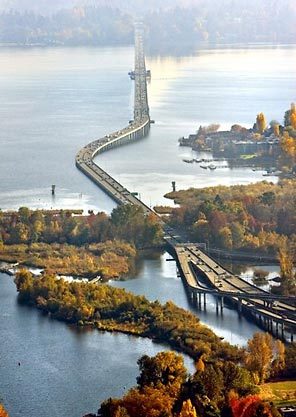
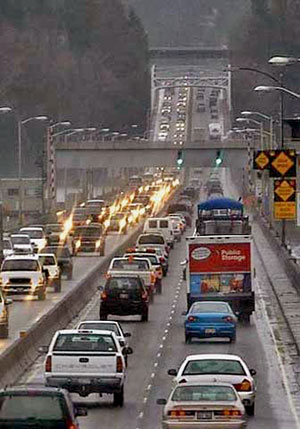
But the plan as a whole is an attack on the powers-that-be who’ve been unable to deliver crucial highway improvements. Puget Sound drivers desperately need both Interstate 405 and Highway 167 widened, and the Highway 520 bridge and the Alaskan Way viaduct replaced. Pierce County’s economy needs Highway 167 extended to the Port of Tacoma; it needs the creation of a cross-base highway to link the Frederickson area with Interstate 5.
These projects and others are stuck in what seems an endless holding pattern. As always, the problem is lack of money. Last November’s Proposition 1 was supposed to raise – from the region’s taxpayers – billions of dollars needed to pay for the megaprojects, but the voters rejected it.
Its failure is hardly Gregoire’s fault – though it’s easy for Republicans to blame her. In reality, both Republicans and Democrats share responsibility for the fact that no real plan now exists to tackle the region’s most critical highway priorities.
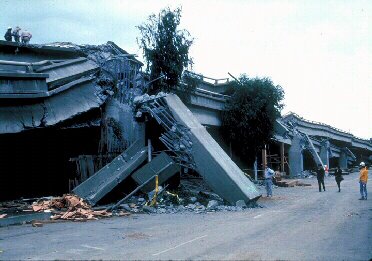
The Rossi package zeroes in on that vacuum. For example, it proposes to replace the tottering viaduct with what would inevitably be a hugely expensive tunnel. The tunnel looks needlessly costly, but it is something concrete. Neither Gregoire nor Seattle’s leaders have been able to settle on anything so specific.
The plan’s most politically appealing (and dubious) feature is that it would not raise taxes – not regionally, not statewide. That’s quite a stretch, even given Rossi’s optimistic assumption that only $402 million a year would have to be squeezed (from unspecified programs) out of the general fund.
Details, details. The point here to to attack the common assumption that Puget Sound taxpayers must dig deep into their pockets to pay for the region’s major infrastructure improvements. He argues that these are state projects that ought to be paid for with state revenues. Realistic or not, that will be a sweet sound for some of the voters who hate being stalled in traffic but balked at the cost of Proposition 1.
Those voters live in Snohomish, King and Pierce counties, where the governor’s race will be decided this fall. Whatever its merits as a transportation package, the political merits of Rossi’s plan are obvious.
Transportation
Friday, April 18, 2008
Tacoma News Tribune Editorial on Rossi's Transportation plan


Wednesday, April 16, 2008
Rossi Plan as reported by Tacoma Tribune
Rossi plan would move $15.4 billion for roads
CURT WOODWARD; The Associated Press
Published: April 16th, 2008 01:00 AM
Republican gubernatorial contender Dino Rossi unveiled a $15.4 billion transportation plan Tuesday, saying he’d help traffic-weary drivers by diverting sales taxes to expand highways and fix bridges.
Heaping criticism on Gov. Chris Gregoire and the Democrat-dominated Legislature, Rossi said at Bellevue news conference that he’d also pour more money into ferries, offer a tax break on “green” cars and push for a tunnel to replace Seattle’s aging Alaskan Way viaduct. He would use the money to build two major highway projects in Pierce County: the cross-base highway and an extension of Highway 167 to the Port of Tacoma.
But, as predicted by Democrats, Rossi spared the details of how he’d make up for the lost sales tax revenue, which flows into the state’s main checking account and funds education, prisons and social services. The former state senator couldn’t offer specific strategies for getting his no-new-taxes plan through the Legislature, where similar GOP notions of repurposing transportation-related sales taxes have foundered.
He did point to his track record of working with Democrats – he helped write a bipartisan budget for the lean years of 2003-2005 – and said an urgency to fix the state’s lingering transportation problems would fuel his plans for reform.
Rossi said his plan was superior because the financing wouldn’t be subject to the same pressures as the state gas tax, which is now the primary funding source for state highway improvements. Gas tax revenue has flattened as fuel prices have risen.
“My opponent has no funding source, so therefore she has no plan,” Rossi said. “It’s not a plan unless you have a funding source. Otherwise, it’s just yapping. It’s just talking.”
Rossi said he would pay for the plan’s 30-year, $7.7 billion diversion of 40 percent of automobile sales taxes by scouring the state budget for savings. Without offering specifics, he said education and care for the vulnerable would be spared any spending cuts.
His financing package would divert from the general fund $2.4 billion in sales taxes that are usually paid on transportation projects, and it would tap a Sound Transit reserve for about $700 million. Tolls and existing project money would cover the balance.
The Gregoire campaign and state Democratic Party officials dismissed Rossi’s plan as a lot of fuzzy math, particularly the lack of specifics on how the GOP candidate would replace the sales tax revenue.
“When you cut through the baloney and the snake oil, Rossi’s plan means higher taxes, bigger tolls, and more traffic – all while blowing a hole in the budget that robs from education, health care and public safety,” state Democratic Party spokesman Kelly Steele said in a statement.
The heart of Rossi’s plan is an $11 billion list of nine road and bridge projects, with a priority on easing traffic congestion amid continued growth in the Puget Sound area and other populous regions of Washington.
In Pierce County, he would spend $1.7 billion to extend Highway 167 from Puyallup to the Port of Tacoma. He would spend $252 million on the cross-base highway, a four-lane, six-mile link between Interstate 5 and Highway 7.
Other projects include a new Highway 520 bridge across Lake Washington, more lanes on Interstate 405 between Renton and Bellevue, and improvements on U.S. 2 across Stevens Pass.
Rossi’s hoped-for 520 bridge blueprints would allow expansion to eight lanes, although he said the cost of that additional asphalt is uncertain. The state’s current plans for the bridge call for six total lanes.
Rossi wouldn’t collect tolls on the bridge until completed, whereas Gregoire and the Legislature are moving toward imposing tolls before the project is built.
Rossi’s plan would put more money into ferry construction and a long list of road projects that are delayed or short of money under the state’s 16-year gas-tax program.
The Rossi plan also has “green” features, with a 10-year sales-tax break for owners of hybrid, electric or other alternative-fuel cars, a push to convert the state fleet to environmentally friendly vehicles, and more money to open up salmon-blocking stream culverts.
And while it’s heavy on roads and bridges, Rossi’s plan would leave transit planning to local officials. He would, however, combine Sound Transit and other Puget Sound-area transit and road agencies into a new regional board.
News Tribune staff writer Joseph Turner contributed to this report.
Sunday, March 23, 2008
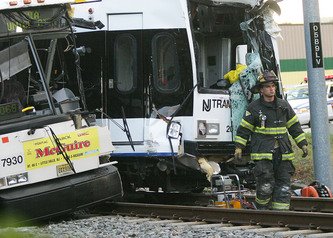
Tacoma Streetcars tries to team up with Sound Transit
This month two more neighborhood councils, representing the North End and downtown, have allied themselves with Tacoma Streetcar’s simple vision: a citywide streetcar network connecting Tacoma’s neighborhoods.
Also this month, Sound Transit announced that its 2007 ridership jumped 12.5 percent compared to an overall U.S. increase of 2 percent. That means Sound Transit recorded roughly 1.5 million more trips on its fleet of express buses and commuter trains. Rising gas prices should drive those numbers up this year – and might drive more support for streetcars.
At its board meeting Thursday, Sound Transit representatives plan to discuss whether to present us voters with another package of transit upgrades later this year. The board also will mull over what transit expansions to put in that package. It’s scheduled to vote April 10.
Tacoma Streetcar, five neighborhood organizations and a downtown transit committee have written letters to Sound Transit asking that any package presented to voters include an intracity streetcar network for Tacoma.
I sat down last week with Morgan Alexander, who founded Tacoma Streetcar three years ago, to talk about his progress and what he expects next.
What would you tell Sound Transit before its decision on the next transit package?
We’re saying, “Yes, you should do it, and yes, it should have streetcars on it.” That’s been our big push right now. I think there’s an opportunity for Tacoma, if Tacoma would just seize it, to ask for something. To say, “We want this and we want this to be streetcars.” Instead of just kind of reacting later when Sound Transit proposes something we really don’t want. I see it as an opportunity for Tacoma to take a proactive stand.
During your public presentations, how do you describe the difference between downtown’s Link light-rail line and streetcars for the neighborhoods?
It’s really confusing. The easiest way I explain it, a standard streetcar system is a quarter the cost of a light-rail system. You get four times the bang for the buck with a standard streetcar. And people understand that.
Do you see a streetcar network in Tacoma starting out with a one-line extension from Link as a test before branching out from there or do you see it starting with multiple lines to various areas?
With Sound Transit’s involvement, I think there could be enough to extend both ways to start. The best-case scenario would be at least one line up to the Stadium District and the other way, since the city’s already done studies on it, out Portland Avenue up to Salishan.
Who do you see as potential partners in the financing?
Sound Transit, of course. The Puyallup Tribe, because they paid for the Portland Avenue study, they could bring a lot to the table. Then it’s a mix of federal grants, state grants, private money, local improvement districts.
What’s the main obstacle you face?
Right now, with the uncertainty in the economy and having people still think of the long view, that we still need to make investments. We can’t just sit down and not do anything. Because when the economy does pick up, we’re going to be left in the dust. Seattle just opened up their new streetcar line, and they’re already talking about six additional lines. Honestly, once we get a taste of it down here, when we get it out into the neighborhoods, I think people will be demanding more.
What arguments do you hear from people opposing streetcars?
It’s really just your typical voice about any public project: “Why is our tax money going to this?” “I don’t want to pay more taxes.” I really haven’t heard any fresh arguments.
I’m hoping that there’s enough civic-minded people, enough community-minded people who want to see more investment in their neighborhoods, to convince everyone else.
How has the progress you’ve made so far matched with what you expected when you started Tacoma Streetcar?
It’s been kind of bittersweet. I went into it thinking really long term – like 20 or 30 years. But I was really surprised and pleased at the initial response: the fact that I was able to twist Tacoma Councilman Tom Stenger’s arm enough last year that he proposed a resolution of support; now the city manager is working on a plan, and it’s being given serious consideration. It’s been kind of bitter because I want a streetcar now, and I still don’t see one. It’s hard to be patient.
Dan Voelpel: 253-597-8785
Wednesday, March 12, 2008
Tacoma Coalition sets outs local priorities for Roads
Monday, January 7th, 2008
A “go it alone” stance on new highway construction is favored in a legislative priority list Pierce County officials will consider Wednesday.
The final draft document, released today, calls for creating a new transportation benefit district – perhaps along with another county – to pay for big projects like extending SR 167 and building the Cross Base Highway.
The draft clearly rejects the idea of creating a regional Transportation Board to rule all transit and highway planning in the Puget Sound metro region. (See my Sunday column on a regional governance plan state lawmakers will consider this session.)
A coalition of county business and government leaders called RAMP will consider the proposed legislative priorities Wednesday. But first they will hear a pitch from top advocates of regional governance. The meeting will begin at 8 a.m. at the Fabulich Center (formerly the World Trade Center) at 3600 Port of Tacoma Road.
Here's what the draft says about creating a new taxing district:
RAMP believes that a Transportation Benefit District is the most viable vehicle for advancing towards the next voter-approved funding package, whether Pierce County moves forward unilaterally or in cooperation with other counties; consequently, RAMP asks the Legislature to grant TBDs authority allotted to the Regional Transportation Investment District, as well as removing the ten-year limitation on voter-approved tax collections
Click below to see the full document.
Priorities
o RAMP believes that a Transportation Benefit District is the most viable vehicle for advancing towards the next voter-approved funding package, whether Pierce County moves forward unilaterally or in cooperation with other counties; consequently, RAMP asks the Legislature to grant TBDs authority allotted to the Regional Transportation Investment District, as well as removing the ten-year limitation on voter-approved tax collections
o RAMP maintains that transportation governance revisions are secondary to the provision of adequate financial resources for transportation (both roads and transit); to that end, RAMP will support Legislative goals and recommendations that make adequate financing their top priority
o RAMP believes that subarea equity is important for any regional transportation investment plan and will seek to maintain Pierce County's fair share of funding while working collaboratively with the rest of the region
o RAMP will work to ensure that projects funded within Pierce County via the 2003 Nickel package and the 2005 Transportation Partnership package are completed without delayProjects
RAMP will work to develop regional, state and federal funding for the following priority transportation projects:
o SR-167 - RAMP seeks to secure full funding for this critical link from Puyallup to SR-509, including right-of-way acquisition for the full-width corridor, and supports high capacity vehicle lanes being added to the portion north of Sumnero SR-704 - RAMP is an advocate for the construction of the “Cross-Base Highway” and believes that this transportation corridor should be renamed the “Armed Services Highway” to reflect the importance of the military and their families
o SR-162 - RAMP supports allocation of State funding to the SR-162 corridor between the City of Orting and SR-410 in such a manner and amount as to leverage the use of private funding being identified by the Plateau Transportation Partnership for transportation improvements
o Sound Transit - RAMP supports the following additions to regional transit services:
1. Connecting light rail from Tacoma Dome Station to SeaTac Airport
2. Contingency fund for ridership growth (e.g., additional parking, shuttle service, new stations, pedestrian facilities, signalization)
3. Extending Sounder service to DuPont
4. Expanding Sounder service to all-day or expanding express bus service to all-day
5. Linking downtown Tacoma to TCC via light rail
o Pierce Transit - RAMP supports completion of the Peninsula Park & Ride facility
o Rail Improvements - RAMP supports construction of grade separations that will serve Sounder, Tacoma Rail and Port of Tacoma infrastructure needs
o Regional Mobility Grant (WSDOT's Office of Transit Mobility) - RAMP supports funding for proposed Pierce County projectsPolicies
In addition, RAMP supports transportation policies essential to our region's economic development, which include the following:o RAMP supports the recommendations of the Washington Transportation Commission in its 2006 Comprehensive Tolling Study and believes that the state should use tolling to encourage effective use of the transportation system through congestion management as well as to provide a supplementary source of transportation funding; moreover, tolling represents the most direct way to charge system users for the cost of the highway system without singling out one specific class of user; however, RAMP believes transit should not be tolled or be subject to congestion pricing and that this should be reflected in the Transportation Commission's tolling policy.
o RAMP opposes cargo taxes that would hamper the state's competitiveness, driving economic activity from Washington to neighboring states and countries, and harming Washington ports, manufacturers, growers, and exporters: RAMP supports mechanisms for funding freight infrastructure that rely either on user fees or on general purpose taxes through which the broader community invests in freight mobility.
o RAMP supports financial incentives, such as tax credits, for new construction and infrastructure improvements on the state's rail lines
o RAMP supports allocation of all multimodal funds to public transportation and opposes any efforts to allocate federal transit funds to highway purposes.
o RAMP seeks full funding for the recommendations of the Freight Mobility Strategic Investment Board (FMSIB) to improve freight mobility and the state's competitiveness
o RAMP supports keeping the state accountable for efficiencies in the construction of transportation projects by producing verifiable and quantifiable results through cost savings, project prioritization, benchmarks, planning and project streamlining
Monday, March 10, 2008
HOT Lanes on Highway 167 will cost plenty
HOT lanes likely to cost drivers a cool sum
JOSEPH TURNER; The News Tribune
Last updated: November 15th, 2007 01:24 AM (PST)
It could cost as much as $7 to buy your way into the car-pool lanes during rush hour on Highway 167 next year.
And that charge could rise to $8 in 2010 and to $10 in 2012.
Those are the recommendations that state highway officials made Wednesday to the Washington Transportation Commission, the seven-member group that will set tolls for the pilot project of high-occupancy toll lanes on Highway 167 between Auburn and Renton.
The commission plans to publish a proposed range of variable tolls in late December and finalize them in February. The HOT lanes are expected to open between April and June next year. The project will last for at least four years.
One of the things highway officials hope to learn from the pilot project is how much people would be willing to pay for a faster trip. So the toll at the peak of congestion, mostly likely between 4:30 and 5:30 p.m. during the evening commute, could be even higher than $7 at the outset.
The key is to let solo drivers buy their way into the car-pool lane without slowing the speeds of buses, van pools, motorcycles and car pools already using those lanes, said Patty Rubstello, traffic policy engineer for the state Department of Transportation in King County.
DOT officials are recommending a range of tolls. They would vary from 50 cents to $7, depending on the time of day and the level of traffic congestion. Tolls would be in place between 5 a.m. and 7 p.m. each day – the same hours the lanes are restricted to motorcycles or vehicles with a driver and at least one passenger.
However, DOT planners would like the flexibility to extend the tolling hours if needed, Rubstello said. There probably will be no toll late at night and early in the morning.
The average toll probably will be $2 to $3 a day, she said.
If too many drivers want to buy their way into the car-pool lanes during the worst congestion, the state could close the lanes to solo drivers so that buses and car-pools could maintain a 45-mph speed, Rubstello said. But planners believe the $7 charge will keep that from happening, she said.
“Shutting down the HOT lanes is a terrible idea,” said commission chairman Dick Ford.
Commissioner Bob Distler of Orcas Island said he wouldn’t want to see them closed, either.
“I’d rather see the toll go higher and let them in,” he said. Some drivers might be willing to pay, say, $30, to travel faster during rush hour, he said. Why not let them? It would defeat the purpose of the project to allow drivers to buy their way into the car-pool lanes, only to tell them they can’t do that when traffic congestion is at its worst, he said.
“I would rather see the cost go up at the peak of the peak,” Distler said.
The whole point of the HOT lane project is to make maximum use of highway lanes that are already there. That means trying to get traffic to about 1,500 cars an hour in each lane. The state is doing the pilot project on Highway 167 because there’s excess capacity in those car-pool lanes.
Average daily traffic on Highway 167 is about 110,000 vehicles. DOT consultants predict 6,500 to 7,000 of those drivers would buy their way into the car-pool lanes.
The HOT lanes themselves have already been built, but tolling equipment is still being installed. The project’s total cost is $18 million, not counting maintenance, operation and enforcement.
The northbound HOT lane will run 12 miles from 15th Street Southwest in Auburn to Interstate 405, and southbound nine miles from I-405 to about South 288th Street.
A nine-mile extension of the southbound car-pool lane on Highway 167 is slated for 2009-11, and that might later become part of the HOT lane corridor.
Tolls on the new Tacoma Narrows bridge are $3, or $1.75 for those with Good To Go transponders.
Joseph Turner: 253-597-8436