Executive Summary 11/25/03
Transportation improvement in the central Puget Sound region— including capital investment, maintenance, and operations—desperately needs a new revenue source. Money is especially needed to manage and renovate the roadway infrastructure that supports the overwhelming majority of public transit boardings, truck deliveries, emergency travel, daily commuting journeys, and non-work-trip mobility in the region. Government agencies responsible for transportation have underinvested in the region’s infrastructure in comparison to growth in population and economic activity. Transportation funding from new fees charged to road users is increasingly appropriate.
At the same time, the region would stand to benefit immensely from a new traffic operations management (T-Ops) tool to push back on traffic congestion by efficiently allocating user demand for crowded road space. More revenue and better T-Ops would both be achieved with widespread Travel Value Pricing (TVP) supported by electronic toll collection. As our nation develops alternative fuel sources the ultimate improvement would be an in-vehicle metering system replacing fuel taxation that puts a value in cents on every mile driven by every vehicle. Such a system would collect revenue from vehicle owners and users commensurate with that value. Travel in congested periods would come at a higher price.
Nearly all transportation policy analysts have reached the conclusion that widely-applied time and place sensitive road (and parking) pricing is the single most effective tool available to bring about a fundamental change in the relationship between citizens and the daily traffic congestion that is the result of how we live. Until recently, it was hard to imagine exactly how the conversion to a different means of transportation revenue collection could be achieved. Now, with the advent of small computers and satellite-based global positioning systems (GPS), we can see how. The technical leadership of 21st century Cascadia can now envision the means to collect revenue from traveling citizens on a per motor-vehicle mile basis, value-weighted by time of day and place.
The larger challenge is to explain the reasons to the many who intuitively object to this kind of user charge. Many feel that changing to road pricing by the mile is not a good idea. The process of learning and teaching has been underway since the early 1990s, but the region is far from reaching a consensus that Travel Value Pricing is the right direction to take.
There are a many reasons why ubiquitous Travel Value Pricing will be difficult to implement, but this region is already stepping up to the challenge with first action in the form of two very innovative pilot projects, the Washington State DOT SR-167 HOT lane project and the Puget Sound Regional Council vehicle metering pilot. These fine works of public service build on the recommendations of the Blue Ribbon Commission on Transportation report of 2000 and the Puget Sound Regional Council Destination 2030 Metropolitan Transportation Plan. Both reports urge that variable road pricing become a part of the Region’s transportation future.
The Cascadia Project of Discovery Institute offers this draft discussion paper to regional leadership with an urgent overall suggestion to step up the pace of learning about and embracing Travel Value Pricing. The heart-felt but often misinformed objections to date expressed by regional citizens in reaction to government and private sector proposals for HOT lanes and other TVP indicate that much, much work remains ahead to achieve the transition to a more usage sensitive, traffic-smoothing revenue collection system for regional transportation.
What is Travel Value Pricing?
Travel Value Pricing (TVP) means a system of periodically adjusting the level of a highway toll or transit fare to make travel in high-volume periods more expensive in exchange for providing high quality, reliably fast travel despite congestion. Conversely, the price of travel during uncongested times of day is discounted in order to encourage more travel when more capacity is available.
Travel has value that partially depends on congestion. Faster travel despite congestion is more valuable than slow travel in congestion. TVP allows the cost of facilities – repayment of the construction loans – to be allocated to those willing to pay to receive the most value. TVP provides a monetary incentive to avoid travel in the peak periods, while simultaneously allowing a means for trips to be faster if a traveler is willing to pay money to save time.
Travel Value Pricing can be applied to any mode of travel. In the Puget Sound region, bus fares are higher during the morning and afternoon peak periods on weekdays, while weekend travel is a bargain with an available all-day fare. Airlines charge higher fares on their busiest days. Ferryboat travel to Victoria and Alaska is cheaper outside the main summer tourist season when demand is higher. On the bridges and tunnels into Manhattan, the tolls go up during peak periods. And on one stretch of the I-15 highway in California, there is an entry toll that changes every six minutes depending on how crowded the road is.
Travel value pricing is also called road pricing, congestion pricing, time-of-day pricing, variable pricing, or in-plain-English, road tolls.
Travel value pricing applied to highways is the topic of this presentation. High Occupancy Toll lanes (HOT lanes) that let solo drivers buy their way onto HOV lanes that are otherwise toll-free for vehicles with multiple passengers are one way of implementing road tolling and value pricing. Variable pricing can be applied to any tolled highway, bridge, or tunnel. For example, WSDOT plans to implement TVP for the expanded Tacoma Narrow Bridge within a few years after its opening in 2007, following a short period of flat rate tolling.
The toll levels set in a well done scheme of Travel Value Pricing seek to hit the moving target of optimizing vehicle flow by bringing the demand at the offered price into balance with capacity available.
When beginning in a local culture of toll-free roads financed through taxation that is unrelated to where a vehicle goes, tolls and TVP are best implemented in a framework of transportation choices. As stated in Destination 2030 Metropolitan Transportation Plan from Puget Sound Regional Council: "For market incentives to work, people must be presented with viable travel options from which to choose. If motorists face charges to use roadway facilities there should be high quality transit alternatives available. Motorists must also be able to avoid or reduce the charge they experience by altering when they travel, through ride sharing, and route alteration. If transportation alternatives are not adequate, pricing will be punitive, penalizing travel without offering substantially improved mobility."
No Toll Plazas Required
Road tolls have long been associated with toll houses and toll plazas, the physical locations where travelers stop and pay money in order to keep going. But in the information age, stopping to pay is no longer necessary.
Tolls can now be electronically debited from a traveler's prepaid or credit card account following the occasions when the vehicle passes near a roadside sensor. The sensor detects the passage of the traveler and establishes a toll payment obligation. The roadside sensor identifies the vehicle by reading its transponder, an electronic device the size of a triple thick credit card attached to the inside of the windshield in the car.
For travelers who have not obtained transponders, there are means for authorities to use digital cameras to read license plates and then send bills to the vehicle owner. In the new area-wide pricing scheme for central London in the United Kingdom, license plate readers are the sole means for identifying vehicles.
Existing toll roads worldwide now provide non-stop lanes through the toll plazas for those who have set up an electronic means of payment. While tollbooths for those who would pay a toll in cash are planned for the new Tacoma Narrows Bridge, those vehicles with transponders that record the toll automatically will be able to bypass them.
No toll plazas would need to be built if pre-paid transponders were widely available in gas stations or other convenient locations.
This electronic means of payment can be engineered to protect the freedom and privacy of travelers.
For the planned HOT lanes on SR-167, transponders will be mandatory for single-occupant vehicles that want to buy their way onto the HOV lanes. Otherwise, SOV cars must use the free general-purpose lanes alongside the HOT lanes.
The pictures below from USDOT show examples of the above-road gantry infrastructure that reads transponders or license plates. The left is from Norway, and the right from Singapore.
Travel Value Pricing Addresses Congestion
Worldwide prominence of central Puget Sound region makes ours a great place to live and work, thus yielding ongoing population growth and resulting travel demand.
As futurist John Naisbitt first described years ago, the world is both high tech and high touch. Despite the rising use of telecommuting and teleconferencing, there will be increasing demand for face-to-face proximity to yield high value, personal interaction that is qualitatively differentiated from growing, ever-easier remote interaction through networks.
Awareness through the Internet and ubiquitous wireless phones provide expanding knowledge of destinations and thus demands to travel, especially consumer demand for variety and choice in non-work destinations. The information age provides a rich environment of new ideas on when and where to go, whom to see, and how to get there.
Vehicle movement demands pressing against infrastructure capacity lead directly to expanding hours of peak period traffic congestion. Microsoft workers have the option of working late, thus avoiding evening peak traffic until such time as the WSDOT traffic monitoring web site tells them that evening traffic is beginning to ease. Trucking companies have the option of starting their runs earlier in the morning, making the morning peak start sooner.
Travel Value Pricing provides further signals to the public on when it's best to travel. Pricing of some infrastructure to allow relatively congestion-free travel through the thick of rush hour traffic provides new opportunities for meeting the demands of life.
Many Ways to do Road Pricing
Geographic options for Travel Value Pricing are described by Federal Highway Administration as follows:
* Facility -- all lanes of a specific highway section, bridge, or tunnel
* Partial facility -- a single lane in one or both directions
* Corridor -- all lanes of a highway and parallel arterial highways
* Spot -- a single congested point on a highway or facility
* Areawide -- an entire regional network of highways, or throughout a congested zone
* Parking -- all or most parking spaces in a downtown or other regional destination
Travel Value Pricing Addresses the Funding Gap
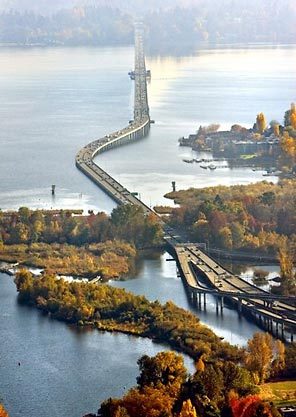
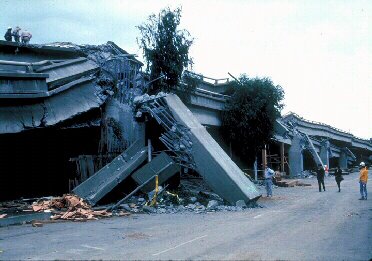
Infrastructure maintenance, replacement, and expansion demands are pressing against government revenue availability. Furthermore, until replaced or substantially shored up, selected infrastructure connections are vulnerable to catastrophic failure in an earthquake or severe storm – most prominently, the SR-520 Floating Bridge and the Seattle waterfront SR-99 viaduct.
As documented by PSRC, the current transportation financing structure:
* Is not self-sustaining because it fails to adequately link use of the system with the generation of revenues to build, operate, maintain, and preserve that system in an optimal manner
* Fails to satisfactorily support the region's goals and policies in its adopted long-range plan, VISION 2020 and its transportation element, the Metropolitan Transportation Plan
* Fails to amply link transportation planning with the generation of revenues to support planned projects and programs
Destination 2030 describes $100 billion in transportation investment needs. Only $57 billion is identified.
Fuel taxes will become less viable as the years go by. As noted by tolling specialist Peter Samuel for a Heritage Foundation Backgrounder: "Besides generating insufficient revenue, fuel taxes have a doubtful future as the principal source of funding for roads. Higher gas taxes face strong political opposition, and technology is steadily eroding the revenue yield of fuel taxes. The internal combustion engine is being made more efficient and able to use less fuel per mile traveled, while new power plants (hybrid gas-electric) and new fuels (ethanol, natural gas, and eventually hydrogen) complicate taxation."
How much money could tolling raise in Puget Sound region? The Parsons Brinckerhoff study for WSDOT of August 2002 reports as follows:
* Simulating economically efficient tolls in the regional travel demand model for seven major highway facilities in the regional network yields optimal toll rates that seek to minimize overall network travel time (maximize travel benefits). These toll rates are higher than those that would maximize individual facility throughput but lower than those which would maximize toll revenue.
* In the assumed year of implementation (2014), the optimal regional network toll rates range from 4 cents to 42 cents per mile in year of collection dollars, depending on the location, time of day, and travel direction.
* The Regional Toll Revenue Feasibility Study suggests that a regional toll network could generate toll revenues in 2014 within the range of approximately $252 to $457 million per year in inflated dollars, depending on the underlying value of time assumption and various operating parameters, and before operating and maintenance expenses. This estimated annual range is expected to grow to between $535 and $955 million by 2030, assuming tolls escalate with demand growth and inflation.
The level of toll-supported revenue bonds that are possible is approximately ten to twelve times the annual revenue amount. Every $100 million in steady annual revenue turns into one billion dollars or slightly more in construction funds.
Road Pricing's Long History
Tolling of transportation facilities has long history. In 1176, England's King Henry II chartered the construction of the first stone London Bridge over the River Thames in return for a toll concession.
In 1792, the Pennsylvania Commonwealth legislature chartered the Philadelphia and Lancaster Turnpike Company, which constructed a 62-mile log-surfaced road for settlers and their goods. Tolling was common on American horse and wagon roads throughout the nineteenth century. In 1845, there were around 1,500 chartered private road builders collecting tolls on 10,000 miles of roads. However, the rise of steam railroads in the mid-nineteenth century eventually put most of the turnpike companies out of business.
Beginning in the late 1800s and into the new century, the rise of bicycles and automobiles made roads for vehicles important again. The Good Roads Movement in the Progressive era around the turn of the 20th century established a tradition of toll-free, taxpayer-supported roads that is dominant even today. However, the first tolled automobile throughway opened in 1911 -- the 48 mile Long Island Motor Parkway running eastward out of Queens along the spine of Long Island, NY. It was the first road for motor vehicles only, and was privately financed, built, and owned. Staying in service until 1938, it was eventually superseded by the government-funded, toll-free parkways of Robert Moses and New York Port Authority.
As cars became faster and more numerous, the first of the USA's present superhighways opened in 1940. Tolled from its opening until the present day, the Pennsylvania Turnpike initially ran for 160 miles along the bed of an abandoned railroad. According to Peter Samuel, 4,900 miles (9 percent) of America's 56,000 miles of Interstates, freeways, and expressways are now tolled. Tolls generate $5.4 billion a year, or 6.7 percent of total highway user charges. Major toll facilities exist in about half the states of the Union.
Since authorized by the legislature in 1937, Washington State has used tolling to pay for significant new bridges. The Lake Washington Floating Bridge to Mercer Island was the first tolled crossing in Washington, opening July 1940 with a bond issue of $5.5 million. The revenue from tolls retired these bonds in 1949. Galloping Gertie from Tacoma to Gig Harbor was a tolled bridge, briefly, and its replacement, the present Tacoma Narrows Bridge, was tolled through 1965. The SR-520 Evergreen Point floating bridge had tolls from its opening in 1963 through 1979. The construction bonds for the new Tacoma Narrows Bridge now under construction will be repaid 100% from tolls.
In other parts of the USA, tolling has been used to pay for operations, maintenance, and management of road facilities, such as repairs, incident response, and snow plowing.
Travel Value Pricing Rising in USA
1959 - Before a Congressional Committee, economist William Vickery proposes that road user fees be assessed on moving vehicles using electronic identifiers.
1991 - FHWA Congestion Pricing Pilot Program first authorized by the Intermodal Surface Transportation Efficiency Act (ISTEA). Funding was rescinded for budgetary reasons in 1995, but FHWA was already participating in 10 congestion pricing projects.
1993 - Gordon Fielding and Daniel Klein first describe HOT lanes in a policy study for the Reason Foundation.
1993 - Washington State initiates its New Partners infrastructure program for WSDOT, authorizing private-sector infrastructure improvement projects to be funded with tolls.
1994 - National Research Council issues a special report, "Curbing Gridlock," which includes the statement, "Congestion pricing has great promise: it could reduce congestion significantly while helping to meet air quality and conservation goals."
1994 - 375 expressions of interest arrive from private sector firms worldwide in response to WSDOT New Partners solicitation; six project proposals are selected for further consideration, including rebuilding the SR-520 bridge over Lake Washington.
1994 - Anthony Downs of Brookings Institution in a speech to the Seattle Chamber's Annual Leadership Meeting held in Vancouver, BC explains why pricing is the only way to cut traffic congestion.
1995 - Citizens from throughout Puget Sound region rise in opposition to several of the six road tolling projects, causing State legislature to de-authorize the New Partners program.
1995 - Puget Sound Regional Council establishes a Transportation Pricing Task Force.
1995 - First U.S. HOT lanes become operational in California.
1997 - FHWA Congestion Pricing Pilot Program reauthorized in Transportation Efficiency Act for the 21st Century (TEA-21) as the Value Pricing Pilot Program.
1998 - Second U.S. HOT lanes project opens for traffic in California.
2000 - Washington State Blue Ribbon Commission on Transportation recommends consideration of road pricing as a revenue source.
2002 - Puget Sound Regional Council Conference on Value Pricing held in conjunction with Hubert Humphrey Institute, Discovery Institute, and Federal Highway Administration.
2002 - Washington State Department of Transportation initiates planning for HOT lanes pilot project.
2003 - Congressional Representative Adam Smith (D-WA) and others introduce FAST Lanes legislation to permit states to add tolled express lanes to Interstate Highways to relieve traffic congestion.
2003 - The Federal Highway Administration of USDOT publishes the Guide for HOT Lane Development
TVP and T-Ops, Complements in Managing Infrastructure
Think of Travel Value Pricing (TVP) and Traffic Operations Managment (T-Ops) as two ways to manage transportation infrastructure!
* T-Ops – Traffic Operations Management – The New Management
* TVP – Travel Value Pricing – The New, New Management!
Type and amount of transportation infrastructure management is a policy and political choice – an opportunity and a challenge!
Potential Goals of Transportation Infrastructure Management
* Safety – stated top priority, in itself good, but also implications for free flow and productivity
* Environmental quality
* Economic robustness
* Equitable treatment of mobility-impaired
* Equitable treatment of passenger movement and freight movement
* Flow – smooth flow at an appropriate speed, but not necessarily full road design speed for highest flows
* Productivity – people per hour or vehicles per hour, which are maximized at less than free flow
* Balance demand/use with capacity – time shifting of demand
* Vehicle restrictions – force use of alternatives, "transportation demand management," reduce single occupant vehicle (SOV) movement
T-Ops, Traffic Operations Management, does aim to optimize the flow characteristics and productivity of vehicle movement. There are many, many techniques, based often on technology applications:
* Signal synchronization, including transit priority or pre-emption
* Ramp metering
* Variable electronic road signs, including variable speed limits
* Traffic management centers focused on rapid incident clearance
* Traveler information systems about congestion ahead
A recent focus of T-Ops is managed lanes. Managed lanes are designed and operated to provide more efficient personal or vehicle throughput during high volume periods. Techniques to manage lanes include:
* Eligibility Definition, for example, HOV2 or HOV3
* Access Control, for example, ramp metering
* Pricing
Techniques can be used individually or in combination. A fundamental design choice for managed lanes includes modal choice: general purpose versus HOV versus busway versus truckway versus low height cars versus light or heavy railroad tracks. Or combinations of these modes can sometimes be operated on shared lanes.
Evolution of HOV Lanes to HOT Lanes
Definition: High-Occupancy Toll (HOT) lanes are managed, limited-access, and sometimes barrier-separated highway lanes that provide free or reduced cost access to HOVs, and also make excess capacity available to other vehicles not meeting occupancy requirements at a market price.
HOT Lanes mean pricing implemented one lane at a time. There are just a few existing HOT lanes operating in the USA:
* State Route 91 (SR 91) Express Lanes in Anaheim, California
* I-15 FasTrak in San Diego, California
* Katy Freeway QuickRide in Houston, Texas
* Northwest Freeway (U.S. 290) QuickRide in Houston, Texas
Some HOT lane benefits follow, as listed in the Guide for HOT Lane Development published by USDOT:
* Trip Time Reliability: Traffic volumes are managed to ensure superior, consistent, and reliable travel times, particularly during peak travel periods.
* Travel Time Savings: HOV and paying non-HOV vehicles travel at higher speeds than vehicles on congested general-purpose lanes.
* Reduced Corridor Traffic: Adding HOT options to existing HOV may provide traffic service improvements on congested general-purpose lanes and other parallel routes.
* Revenue Generation: HOT revenues can support transportation improvements such as the construction and operation of the lanes themselves, or to address corridor transit needs or other local demand management expenditures.
* Transit Improvements: HOT lane facilities can provide faster highway trips for transit vehicles.
* Freight Improvements: Provides new opportunities for commercial vehicles to move through congestion to meet pick up and delivery deadlines.
* Environmental Advantages: Compared to general-purpose lanes, HOT lanes reduce air pollution caused by stop-and-go traffic, and encourage carpools and mass transit, thereby reducing the number of cars on the road.
* Trip Options: In congested corridors with HOV facilities, SOV motorists have an additional travel choice.
* New Interest in Value Pricing: HOT facilities demonstrate the benefits of value pricing in transportation that may be transferable to a broader array of services.
HOT Lane Treatment for Under-Performing HOV Lanes
Prominent HOT advocates nationally are criticizing traditional HOV lanes as too empty, too much of the time, claiming low usage justifies adding SOV access for a fee – HOT Lane treatment – as a better option than conversion to general purpose lanes.
HOT lane applications have the potential to increase the number of vehicles traveling on underutilized HOV facilities and possibly reduce pressure to convert them to general-purpose use. In New Jersey a few years ago, before the HOT lane treatment became prominent, the governor converted some HOV lanes to general purpose lanes.
But Western Washington is not New Jersey. Central Puget Sound HOV lanes carry more people than adjacent general purpose lanes, while meeting the WSDOT standard for HOV of 45 mph 90% of the time to provide a travel speed and reliability advantage.
HOV critics note that according to the 2000 census, carpool commute trips dropped from 13.4 percent in 1990 to 11.2 percent in 2000. Overall, the use of carpooling for journey to work declined in 36 of the country's 40 largest metropolitan areas between 1990 and 2000.
But in the Seattle region, HOV usage rose in the period from 1990 to 2000, from 12.1% to 12.8%. In fact, the Seattle region was the only metro in the top 25 nationally to see the market share for both transit and carpooling rise over the decade of the 90s.
WSDOT chose SR-167 for potential HOT treatment because it showed the most available capacity for additional vehicles during peak periods.
Below is an example of an evening toll schedule that varies every 30 minutes on a California HOT lane.
At the same time, WSDOT is qualifying some HOV lanes for free SOV access during off-peak periods.
What’s Happening Elsewhere?
California State Route 91 Express Lanes, Orange County
The SR 91 Express Lanes are a 10-mile, four lane, HOT facility built in the median of the existing Riverside Freeway through Anaheim and Yorba Linda, California in a high-volume, highly congested corridor. They opened at the end of 1995. Users enter only at either end as an option after viewing the present price on a changeable electronic message sign. Toll rates vary on a fixed schedule from $0.75 to $5.50 by direction, by time of day, and by day of the week. Customers must have a prepaid account and a transponder to participate in electronic tolling. Tolls for HOV3+ vehicles were initially free, later charged but discounted 50 percent, and are now free again.
A private consortium financed, built, and operated the new lanes. The consortium used toll revenue to repay debt and obtain a return on investment. The concession had a non-compete clause that barred parallel capacity improvements in the corridor, a barrier removed when the project was purchased by the local government transportation authority.
California I-15 FasTrak, San Diego
Running north out of San Diego, the I-15 FasTrak project converted an underutilized preexisting, eight-mile, 2-lane HOV facility into a peak-period (only) reversible HOT operation with an entrance and exit at each end. I-15 FasTrak allows single occupancy vehicles to pay a toll ranging from $0.50 to $8.00 to use the HOT lanes, otherwise reserved for HOV2+ vehicles which travel free. In response to congestion levels, the price changes every six minutes, and is flashed on an electronic sign at the entrance. Customers must have a FasTrak account and transponder.
Opened in late 1998, the project is sponsored by the San Diego Association of Governments (SANDAG), the local metropolitan planning organization (MPO). SANDAG has earmarked a portion of the revenues derived from the HOT lane to fund expanded reverse commute express bus service in the I-15 corridor.
Portland, Oregon
The Traffic Relief Options study, 1996-1999, after evaluating travel value pricing in the Portland metro area from a regional perspective, recommended that it be considered whenever major new highway capacity is added.
A current Portland area study is developing several HOT lane and ramp meter bypass alternatives in the Highway 217 corridor, including a FAIR lanes alternative on priced ramp meter bypasses. (FAIR lanes are described below on page 19.) This major north-south transportation corridor in the western portion of the Portland metropolitan area, through Beaverton, needs additional capacity. A toll bridge over the Columbia River is also being considered as a replacement or alternative for the aging Interstate-5 bridge.
A statewide pilot is identifying and evaluating mechanisms to supplement or replace Oregon's fuel tax. After evaluating over 20 potential revenue sources to replace the Oregon tax on gasoline as the primary funding source for the state's highway system, a task force decided to go forward with a test of a vehicle miles traveled (VMT) fee collected at the fuel pump. Data would be generated by either a simple GPS device or odometer sensor with automated vehicle identification (AVI) technology. Under either technology, the data would be transmitted to a reader at the fuel pump via radio. Area pricing is feasible with the GPS option. The task force will recommend that a mandate be imposed to have every new vehicle sold in the state equipped with a GPS device, taking over 20 years for full market penetration. Area pricing would not be implemented until every vehicle is equipped with the device. [From an FHWA quarterly status report.]
Vancouver, British Columbia
Highways in Greater Vancouver Regional District, Canada cross many bridges. Four were built and paid for with tolls, but none are tolled now.
The newest water crossing, the Alex Fraser Bridge, largest cable-stayed bridge in the world, and an alternative way over the Fraser River parallel (BC Highway 91) to the Massey Tunnel (BC Highway 99), was opened in 1986 without tolls. The lack of tolls on this bridge south of Vancouver became a political issue in how to pay for the upgrading during 1999-2002 of the Lion's Gate Bridge over Burrard Inlet and connecting Vancouver to the North Shore suburbs. No tolls were added to Lion's Gate.
A future new ferry-replacement crossing of the Fraser River in the eastern suburbs of Vancouver, however, is planned by the Greater Vancouver Transportation Authority (GVTA, popularly known as Translink) to be paid for entirely with bonding covered by user tolls.
Beyond project-specific tolling, more general value pricing of existing infrastructure use is under consideration. A revenue gap in the range of CA$100 to CA$200 million per year needs to be closed over the next decade.
GVTA discussion paper: "Tolling is likely to become part of the region's future; however, how it will be applied is a major issue yet to be resolved.... The GVTA and the Province must work together to develop a flexible policy that will meet the needs of this urban region."
At the November HOT Lanes Conference in Seattle, Translink Chairwoman Pat Jacobsen described a regional tolling and revenue collection model that this regional transportation organization is contemplating, as shown in the graphic below. Translink believes that a toll and revenue collection operation could serve the planned Fraser River Crossing (FRC) toll bridge to be built, and other tolled facilities in the more distant future.
What Do Citizens Think?
Public Opinion in Greater Vancouver Regional District, British Columbia
A spring 2003 survey commissioned by Greater Vancouver Transportation Authority covered transportation payment options, with these findings, since confirmed in later surveys:
* Strongest support was for transit fares and tolling of new bridges and roads.
* Moderate support was for property, gasoline, and parking taxes.
* Weakest support was for tolling existing bridges and roads, and for vehicle charges per kilometers driven.
* Fixed-rate bridge tolls won out over time-of-day variable tolls by 63% to 35%.
* Using bridge tolls to cover just the bridge came in at 47% while 49% of respondents accepted that these tolls could pay for general regional transport needs.
Public Opinion in Puget Sound Region
A telephone survey of about 1,200 Puget Sound Region residents in May 2001 revealed that 41 percent of respondents are willing to pay tolls for faster trips, with about one quarter of respondents indicating they would be willing to do so up to three times per week. [Reported in the FHWA Guide for HOT Lane Development]
Other findings from this survey, conducted by Pacific Rim Research on behalf of WSDOT:
* People's attitudes toward managed lane concepts are essentially the same or very similar, regardless of region sub-area, travel behavior or demographics, including income.
* People believe in managing traffic.
* People believe HOV lanes and express lanes save time.
* Majority disagree or strongly disagree with converting existing HOV lanes to HOT lanes.
* Most would not reduce their own carpooling, vanpooling or busing if HOT lanes existed.
* Most do not support the 3+ HOV lane concept.
* Most support carpools, vanpools and buses getting through congestion faster, but not at the expense of eliminating SOVs in express lanes.
* Strong support for managing traffic in express lanes so that traffic flow is maintained.
* About half support varying toll rates in express lanes by time of day to manage traffic flow.
* Majority support carpool, vanpools and buses paying less to use express lanes.
* About equal support for using toll revenues for road improvements and transit services.
Source: May 2001 survey of Puget Sound residents by Pacific Rim Resources for WSDOT
What's Your Objection to Travel Value Pricing? Pick a Number from 1 to 10
NOTE: These objections were adapted from the list in the Tacoma News-Tribune story of November 20, 2003, "Readers slam the brakes on HOV fees" and from Peter Samuel's review of objections in the May 2, 2003 Heritage Foundation Backgrounder, "Tolls and Surface Transportation Reauthorization."
Very easy-to-answer objections
(1) The toll-booth traffic jam objection: Toll booths will slow down traffic.
Response: Toll booths, if any, will be an optional stop. Electronic toll collection makes stopping at a toll booth unnecessary. No toll booths are planned for the Washington State SR-167 HOT Lane project, because the general purpose lane will always be available with no toll.
(2) The privacy-violation objection: Electronic tolling will violate my privacy.
Response: Hopefully, your privacy would be violated IF you try to beat the toll. Otherwise, an electronic tolling system can be designed to protect traveler privacy by not reporting vehicle identification when a toll is successfully recorded. Privacy safeguards are essential.
Pretty easy-to-answer objections
(3) The overcrowding objection: Opening the lanes to SOVs that pay a fee will just make the lanes more congested. Overcrowding the HOV lanes is a bad idea, because we need to encourage ridesharing and we need a lane for buses and emergency vehicles to move quickly.
Response: HOT lanes have prices set and changed as necessary to keep the road free flowing for all vehicles. On one HOT lane in California, the price changes every six minutes. This has been demonstrated to keep traffic free flowing most of the time. Pricing on the SR-167 HOT Lanes will be changed as necessary, even after just a few minutes, to keep traffic flowing.
(4) The we-already-pay-taxes objection: I don't like to see tolls on a road that formerly was free, a road that has already been paid for with taxes. All people, all organizations, indeed the whole of society benefits from all roads. General taxation should pay for roads to reflect this entire scope of benefit.
Response: People prefer a "free," un-tolled road to a toll road, but an existing road is never truly "paid for." After opening day, it begins to deteriorate from exposure to the sun, rain, freeze-thaw cycle, and the weight of vehicles. Road toll revenues can cover continuing maintenance and periodic reconstruction. HOT lane tolls can also cover better T-Ops, such as enforcement of tolls and vehicle occupancy rules, and rapid incident clearance to keep traffic moving. The tolls for the SR-167 project will be used to cover the physical changes to make the HOT lanes safe and convenient, the cost of the toll collection equipment, and the ongoing enforcement to make sure those not paying the toll have passengers in the car.
(5) The I-love-HOV lanes objection: Adding toll access to HOV lanes adds a convenience that would defeat their whole purpose. The object is to get more people to car pool, not to bring more money into the state treasury. Car pooling is hard; it takes extra time and energy. It's unfair to give solo drivers an easy way out by just paying a fee.
Response: Data from California show that HOT lanes lead to an increase in car pooling, because solo drivers see car pool formation as a good way to get aboard the lane without paying tolls. A second reason for increased car pooling is the driver of a car pool can be confident of being able to use the fast lane even in the event of a usual passenger having a sick day or other absence. The driver can still use the lane solo by paying a fee instead of fighting traffic in the general purpose lane. This reliability effect appears seems to have increased car-pool formation in these corridors.
(6) The I-hate-HOV lanes objection: We've all paid for those HOV lanes; everyone should be allowed to use them. We need to get those lanes opened up now and get more lanes built for everyone to use.
Response: For every citizen who hates HOV lanes, there are other citizens who love them. HOT lanes are a government policy response to this difference of opinion among citizens. Increasing the number of vehicles on HOV lanes during the busy peak period to a point where the lanes are more productive but not bogged down is thought to be best achieved by rationing the access to those solo drivers who are willing to pay for extra speed from their pocketbooks on the days when they really need it.
(7) The I-hate-paying-more-to-travel-in-peak-period objection: It's unfair to charge more for an HOT lane during peak periods, just at the time I and others are forced to travel by virtue of employer work hours or other circumstances we don't control.
Response: The benefit of giving peak period travelers a brand new choice to pay for a more rapid and reliable trip would simply not be available if the HOT lane did not have its access rationed through requirements for minimum vehicle occupancy and tolls on SOVs. Also, the conversion of an HOV lane with spare capacity into a HOT lane pulls some drivers out of the general purpose lane, and out of the way of drivers who are unwilling or unable to pay for the HOT option.
The toughest objections to answer
(8) The economic equity objection: We have all paid for those HOV lanes with our federal and local tax dollars. Opening them for a fee would favor more wealthy people to be in those lanes, people who should not have government grant them more travel privileges than the rest of us. If there is a traffic issue, fix it for all drivers. If you want to cruise on a crowded highway, wait in line like everyone else. Some people can't afford the gas they are using to drive to work, much less pay a fee. HOT lanes will put a wedge between the haves and the have nots.
Response: On the California HOT lanes, the vast majority of drivers are not (rich) daily users, but rather are occasional users who come from all economic levels. They pay the toll for a faster ride when they are late to work or to retrieve a child from daycare. Reasonable tolls that are used occasionally are fair to all income groups. Wealthier people who take advantage of tolls frequently, even every day, are putting revenue into the transportation system that can be used to maintain and expand travel options for all people.
(9) The geographic equity objection: It's not fair to toll the road I need to use while other parts of the region have major roads that are free.
Response: Yes, but it's going to take time to implement travel value pricing over an entire region. This objection is the argument for implementing travel value pricing in several parts of a region at once. A regional policy of all new capacity and rebuilding being tolled may have a better chance of acceptance than tolling some major new facilities while leaving others free of tolls. In Washington State, as one example, the expansion of the Tacoma Narrows Bridge will be paid from toll collections once the bridge is open.
(10) The how-will-the-money-be-spent objection: I don't like that toll revenue is going to be spent on [choose one] (a) this road, (b) another road, (c) all roads, (d) public transit here, (e) public transit elsewhere, (f) bicycle paths, (g) curing cancer, or (h) something else.
Response: This is a genuine public policy choice that has to be debated and determined for the specific jurisdiction and corridor at issue. There are legal issues that need to be considered also. The traditional use of road tolls is to pay off the bonds that built the road, and then to pay for operations and maintenance of the road. One HOT lane highway in California uses part of the toll collected to support express bus service along the highway. Another choice for tolls collected from an existing road includes building up a pool of funds to pay for eventual upgrading or even replacement of the tolled facility ... think about the SR-520 Evergreen Point floating bridge, which could sink in the next big windstorm. Maybe a toll should be collected now to pay for its inevitable future replacement. (This is an idea for consideration, not a policy that has been decided.)
Evaluation of the income equity concern
As reported by the Transit Cooperative Research Program, "[A] wide range of income groups have been observed to use [the SR-91 and I-15] value priced facilities, though at differing frequencies.... Arguably the income equity issue may in many cases be more one of higher income individuals receiving greater benefits, than one of negative effects on any group.
"In the case of SR 91, an early-on study of socioeconomic characteristics found the profiles of 91X Express Lane users to be similar to those for SR 91 general-purpose lane users. However, subsequently reported surveys of commuters in the corridor do show a marked difference in 91X usage between high-and low-income travelers.... [H]igh-income commuters (household income greater than $100,000) are more than twice as likely to be frequent toll lane users (using the lanes for more than 50 percent of their peak trips) and nearly half as likely to be non-users than are low-income commuters (incomes below $40,000). Paralleling the usage pattern, 72 percent of low-income commuters lack the transponders that allow them use of the Express Lanes, versus 31 percent of the highest income travelers."
FAIR Lanes
FAIR lanes, Fast And Intertwined Regular Lanes, may be used to overcome equity concerns about High Occupancy Toll (HOT) lanes....Unlike HOT lanes, FAIR lanes provide credits to those stuck in traffic on the regular lanes. FAIR lanes also allow for more than one express lane, by making it more acceptable to take an existing adjacent free lane for use as an express lane. This permits overtaking of slower vehicles, increasing capacity per lane, and allowing consideration for use of the lanes by heavy vehicles. With more capacity available for paying motorists, tolls can be kept affordable and more motorists can make use of this premium service.
Washington State DOT SR-167 HOT Lane Project
Based on extensive research on the potential for HOT lanes throughout the central Puget Sound region, WSDOT is now implementing a pilot HOT lane project to Washington State Transportation Commission. The project location is the nine miles of SR-167 running north and south between Renton and Auburn, with the tolled lane created by converting the existing HOV lanes. There is existing unused capacity in the HOV lanes that will be sold to solo drivers willing to pay between 60 cents and $1.20 to use them for a one-way faster trip.
Quoting the WSDOT SR-167 report to the State Transportation Commission:
* "Toll prices would vary depending on traffic volumes as a way to maintain HOT lane travel speed and reliability. Access into the HOT lanes will remain free for transit, carpools and vanpools."
* "As congestion increases in the general purpose lanes, fees for entering the HOT lane increase. If traffic volumes cause travel speeds in the HOT lane to drop, fees will also be increased to reduce the number of vehicles."
* "Today, SR 167 experiences strong peak direction congestion during both the morning and evening peak periods. SR 167 carries approximately 120,000 vehicles a day. Morning congestion occurs in the northbound direction as SR 167 approaches I-405 in Renton. Afternoon southbound congestion occurs primarily as SR 167 approaches SR 18 in Auburn. During peak periods, neither northbound nor southbound HOV lanes operate to capacity; there is significant space for more vehicles in both."
* "Toll collection on SR 167 will include an electronic toll collection (ETC) system, comprised of vehicle-mounted transponders, over-roadway transponder readers and dynamic toll rate signs throughout the corridor. Overhead signs will display toll rates and toll readers. When a toll-paying motorist drives under the reader, the reader ‘speaks’ to a device mounted on the vehicle."
* "Converting the HOV lanes to HOT lanes on SR 167 from Kent to Auburn improved traffic flow by moving 13 % more vehicles through the SR 167 corridor [according to a computer model] while maintaining travel speeds and reliability for buses, carpools and vanpools that use the HOV lanes."
The SR-167 Project will use payment collection technology that will let travelers pay quickly at other toll and fare collection points in the Puget Sound Region: the new Tacoma Narrows Bridge, the Washington State Ferries, and on regional transit. Users of one program could use the services of the other providers and receive just one bill.
The fares on SR-167 are being set at a level that covers a decade-long pay back on the costs to set up and administer the project.
Universal Vehicle Metering to Cover a Region
To institute Travel Value Pricing across an entire region, two approaches are now feasible. One is to establish an electronic cordon around a region, as City of London has now set up around its congested center, and which Singapore and a few Norwegian cities instituted earlier. Every vehicle crossing the boundary of the tolled zone is detected and charged, either via transponder, or license plate reading.
Puget Sound Regional Council’s Areawide Pricing Project
The other method is to put a meter in every car. This approach is now being considered in several states. In the Puget Sound region, the Puget Sound Regional Council with the support of Federal Highway Administration and Washington State Department of Transportation is setting up a test of metered vehicles. Around 500 to 800 vehicles will be volunteered by their owners to participate.
Travel meters will be placed in the vehicles. Different prices per mile will be imposed depending upon the location and time of travel. Drivers will be made aware of the pricing both though maps and other printed material, as well as a real-time read-out on the in-vehicle meter. The location and time of travel of the vehicle will be determined by an integrated GPS antenna/receiver. The GPS approach offers pricing ubiquitously. By relying on in-vehicle meters, the need for roadside sensing of vehicles is eliminated, and even arterial roads can be priced cost-effectively.
A "hold-harmless" study design gives participants the opportunity to participate without committing their own funds. At the start of the pilot, participants will receive a billing account with a positive cash balance. Any cumulative in-vehicle meter charges will be debited against this balance. Any funds remaining in the account at the end of the pilot may be kept by the participants. This technique gives vehicle operators the incentive to adjust their driving behavior so as to enjoy the surplus remaining in the account at the end of the experiment.
Universal Metering Could Replace Fuel Taxes
Supported by USDOT and 15 state DOTs including Washington, a team based at the Public Policy Center, University of Iowa has been working to develop a new approach to assessing road user charges using an on-board computer in every car or truck. In testimony to Congress in June 2002, the team leader described how the computer would store a record of actual road use by the vehicle, based on GPS tracking that lets the computer record where the cars moves geographically, that is, which jurisdictions are traversed. Periodically, the on-board computerized record is uploaded and transmitted to a data processing center. The DP center bills the vehicle owner and reimburses the taxing districts in which the vehicle has traveled.
The on-board computer system is secure and capable of protecting the user's privacy, because it is does not transmit detail, only the summary dollar amount to be charged. Importantly, the on-board system enables a variety of user charge conventions. In its simplest form, this approach can be used to assess a vehicle-miles-traveled (VMT) tax. With a VMT tax, the computer would calculate road mileage actually traversed; it compares this mileage with that obtained through an odometer feed. It then applies appropriate user charge rates to the mileage traveled within each jurisdiction.
The computer also contains maps that define the boundaries of each jurisdiction. Received GPS signals are used to determine the vehicle's position. The computer reconciles this position with the stored data polygons that make up the map, and thus determine the jurisdiction(s) in which travel has occurred; the miles traveled within each jurisdiction are used to compute user charges, which in turn are stored. When a vehicle crosses into another state or sub-state jurisdiction, it goes to a different map, and travel within that new map is used to compute user charges.
The institutional framework for this black box calculation of charges was discussed in a workshop in March 2001, hosted by FHWA and the Eno Foundation, "The Future Role of Value Pricing in Metropolitan Areas." Highway transportation experts envisioned a radically changed long-term scenario of funding and institutional arrangements, including:
* The highway network operated like a public utility, driven by market forces, funded in private capital markets, and regulated by the states.
* Fuel taxes phased out in favor of tolls, to reduce the inequities resulting from changeover to alternative sources of energy.
* Tolling restrictions on free roads lifted; federal aid for new construction and rehabilitation of freeway-standard roads reduced or ceased. The gas tax proportionately reduced to encourage states to adopt tolling.
* Discrimination eliminated in the Federal tax code against the private sector regarding tax-exempt financing; create enabling legislation for public-private partnerships with strong non-compete clauses to protect private investors from expansions of free, public capacity.
Directly and simply stated, the challenge is to link government’s transportation revenue requirement of approximately $6 million daily in central Puget Sound region to 80 million regional daily vehicle miles per day. The average price per mile computes out to just 7.5 cents per mile. Under a Travel Value Pricing scheme this could be adjusted up to (say) plus or minus 90% to reflect the congestion level and facility cost during which a vehicle’s mileage is consumed. Consumers in California are already willing to pay 50 cents per mile for a desired ten-mile toll-road quick ride through congestion on one of the new High Occupancy Toll (HOT) lanes built there in the last decade.
Personal Privacy in Metering
One should be concerned with the possibility of electronic tracking of vehicles for road pricing and toll collection becoming an invasion of privacy and a curtailment of liberty, especially with universal metering.
This need not be the case if technical restraints are built into the implemented systems. As the FHWA Guide for HOT Lane Development notes, "Tolling agencies have addressed [privacy] by linking the transponder with a generic, internal account number that does not reveal the driver's identity. Driver information is not disclosed to other organizations."
In other words, vehicle monitoring systems can be programmed to only report out the fees due to the billing agencies. They can be designed so that the vehicle owner can request an audit trail with details of trips, but this information is otherwise privileged.
Travel Value Pricing Supports Transit
Travel Value Pricing and HOT can be used to manage the number of vehicles and leave room for buses. Don Padelford, a founder of Citizens for Mobility in Seattle, originated and promotes the concept of BRT on HOT as the potential foundation for a uniquely-Cascadia high-capacity regional transit system. He points out that managing vehicle flows on HOV via TVP/HOT can include the goal of permanently ensuring that these lanes offer free-flowing access for buses.
Express buses from Puget Sound transit agencies already make use of the regional HOV lanes. These buses incrementally approach the concept of Bus Rapid Transit (BRT), sometimes called Rapid Bus. BRT is a flexible transit concept that can be routed on freeways, highways, and arterials. At much lower cost, BRT is made competitive with light rail by:
* Readily identifiable routes - as with the Vancouver, BC Translink B-Lines
* High frequency service – 10 minute or lower headways
* Limited station locations with enhancements for customer convenience and comfort
* Right-of-way tweaking for speed enhancements – signal priority, bus-only lanes, etc.
* Promotion of development around transit stops; building sites with transit-oriented development on lids spanning freeways at BRT stops is proposed by the Cascadia Project.
Puget Sound BRT Sketch Plan
* Enhance Sound Transit Regional Express Bus now serving major urban centers with marketing to attract more riders, and higher frequencies in response to demand.
* Finish the freeway HOV network as the regional guideway for BRT, and convert to HOT.
* Hold off revamping the Downtown Seattle Bus Tunnel for rail until after a Phase 2 Sound Transit tax vote that confirms the regional commitment to Sound Transit's Central Link Light Rail and its affordability.
* Implement I-405 East Side suburban spine BRT with branch routes into neighborhoods.
* Implement the three already published King County Metro BRT options along arterials such as Aurora Avenue North.
* Implement BRT along future LRT and monorail routes to build up transit ridership.
* Implement BRT from Seattle CBD to Northgate and Lynnwood on I-5 two-way HOV/HOT originating in the Downtown Bus Tunnel ... a revival of the 1970s Blue Streak.
* Implement BRT along I-90 HOV/HOT from Seattle CBD to Bellevue CBD, between the Downtown Bus Tunnel and the Bellevue Downtown Transit Center.
* If Central Link terminates because of judicial rulings, reprogram its local funds under Sound Transit Resolution 75 to WSDOT-screened HOV connection improvements for BRT and other BRT investments.
Alternative Investment Opportunities for Central Puget Sound
The availability of time-variable electronic toll collection and Travel Value Pricing leads to consideration of the following investment opportunities:
* Less reliance on gasoline tax, sales tax, and MVET; more reliance on facility tolls and transportation value pricing of existing infrastructure.
* Additional HOT trials beyond the SR-167 trial now in development.
* Put a value-based toll on the present SR-520 to build funds for inevitable bridge replacement.
* Put a value-based toll on the present Seattle Waterfront Viaduct to build funds for inevitable reconstruction of that corridor.
* Rebuild the I-5 Express Lanes into a two-way, four-lane, HOV/HOT facility 24 by 7 between Northgate and Seattle CBD.
* Put HOV/HOT toll on I-90 Center Lanes, Mercer Island to Mt. Baker Tunnel.
* Build the WSDOT-recommended HOV connection improvements in North King for I-5 and I-90, those now unfunded in favor of building Link Light Rail between Northgate and SeaTac.
* Other infrastructure improvements that would be supported by SOV motorists and truckers in exchange for tolled access to faster, more reliable travel.
Investment of collected toll revenues in transportation improvements related to the tolled facility is assumed in all cases. These improvements can include rapid incident response and other T-Ops, improved public transit, and future reserves for capital construction in the same corridor.
The Role of Political Champions
A new international study of road pricing by Deloitte Research points out that "success in congestion pricing will depend on politics, good assessment, public consultation, planning, advocacy, and implementation. It will also depend on the prudent boldness of good leadership."
A frequently stated success factor is the need for an influential champion ... hopefully somebody in the political arena. The recent FHWA Guide for HOT Lane Development provides interesting commentary on the role of political champions:
"Political support is key to the successful implementation of variable pricing projects in the United States. All projects that have resulted in actual implementation to date can point to one or more elected individuals that championed the use of pricing as an effective method for addressing the growing gap between transportation demand and the available supply. Many of the projects that have not been successful can point to elected officials that actively blocked project implementation….
"Outreach to elected officials should discuss an array of issues about the proposed initiative, including any impacts that local constituents may experience as a result of the project. Other issues that elected officials may consider when deciding whether to back the project include:
* the disposition of toll revenues
* increased public spending
* increased public revenues
* relationships with other officials and political jurisdictions
* alternative financing scenarios
* competing transportation needs
* competing transportation projects
* their own political capital."
Trends in Automobility – Increasingly "Intelligent" Vehicles
Automobiles, light trucks, SUVs, vans, and buses will likely remain the dominant regional personal travel mode over the next 30 years. Trucks will remain the dominant freight and goods movement mode. Public policy should emphasize steps toward continuous improvement in the efficiency and effectiveness of road movement given its popularity and dominance.
To push back against the discomfort and economic costs of traffic congestion, technology-application businesses like Microsoft are emphasizing improvements of in-vehicle telematics (computers and wireless telecommunications) to make time in a car more comfortable and productive.
Quoting recent Microsoft literature:
* "Windows Automotive allows you to make phone calls, retrieve e-mail, find your way around town, and even download news and entertainment--all hands-free. Microsoft technology will transform the vehicle into a mobile extension of real life, enabling drivers and passengers to easily and safely manage their daily lives, work and travel from the road. So watch for cars with Windows. They'll give you an incredible view of the future."
* "Today, Microsoft's Windows-powered technology is fueling 17 preinstalled and aftermarket devices from world-class automakers and suppliers, including BMW, Citroen, Clarion, Fiat, Mitsubishi, Subaru, Toyota and Volvo. Unveiled this past year in the U.S., Japanese and European markets, various models showcase advanced navigation, communication and infotainment systems that effectively deliver safe and reliable services to drivers and passengers. Capabilities include turn-by-turn navigation, hands-free cellular phone control, voice-recognition and text-to-speech functions, maintenance status and wireless synchronization of data with mobile devices."
Innovative consumer electronics applications from other companies, such as TrafficGuard, a commercially-available, hand-held display device showing drivers the WSDOT real-time traffic condition maps for the Seattle area, show the way to a future of increasingly sophisticated traffic information systems that give travelers opportunities to avoid joining up with existing traffic jams.
Other technology applications coming before 2030, such as adaptive cruise control, radar-assisted braking, centimeter-accurate continuously-updated in-car electronic maps, and lane-edge detection help drivers cope with increasingly crowded roads and narrower lane widths squeezed onto existing infrastructure footprints. The automated highways of the future are not going to depend on public sector infrastructure, but are likely to arrive incrementally, in the form of vehicle innovations like the new Toyota Prius just introduced for the Japanese domestic market, a car that can parallel park all by itself without the driver's hand on the steering wheel.
Conclusions and Follow Up Actions to Discuss
From U.S. General Accounting Office, "Congestion Pricing Has Promise for Improving Use of Transportation Infrastructure:"
"Congestion pricing can potentially reduce congestion by providing incentives for drivers to shift trips to off-peak periods, use less congested routes, or use alternative modes, thereby spreading out demand for available transportation infrastructure. Congestion pricing also has the potential to create other benefits, such as generating revenue to help fund transportation investment. Possible challenges to implementing congestion pricing include current statutory restrictions limiting the use of congestion pricing, and concerns about equity and fairness across income groups. In theory, equity and fairness concerns could be mitigated depending on how the revenues that are generated are used."
From Puget Sound Regional Council, Destination 2030, Metropolitan Transportation Plan:
"The Blue Ribbon Commission on Transportation recommends that value pricing and bonding be authorized for use by regions for investments in, and management of, transportation facilities. This recommendation is consistent with findings and recommendations of the Regional Council’s Transportation Pricing Task Force. Facility-specific financing mechanisms are most appropriate on controlled facilities, where access and egress can be managed and a financial transaction (manual or electronic) can take place. And within transportation corridors that will have self-financed facilities, travel alternatives should be available, in the form of alternative modes and/or routes, to ensure that travelers can make choices that best fit their needs. In the long run, value pricing of transportation may be administered on a system-wide level to improve travel speeds, to recover infrastructure maintenance costs, and to finance capacity investments in a reliable and efficient manner."
From The Discovery Institute’s Cascadia Project, "Where Do We Go From Here?"
"[C]urrent revenue proposals ... are making the possibly false assumption that the gas tax is a reliable future income source. Thus, broadening the funding base is simple prudence. Alternative financing must be explored, and that leads first to consideration of tolls and value pricing. Tolls are an appropriate user charge if their revenue feeds back directly into the building and maintenance of a particular facility or community enhancement."
Follow up Action in Cascadia Suggested by the November 2003 HOT Lanes Conference
* Manage roads and road vehicles toward the goal of reliable, uninterrupted flows at average speeds (lower than free flow) that maximize the number of people moved per hour.
* Seek to manage all Cascadia regional freeways, highways, and arterials for lower congestion levels with Travel Value Pricing that is variable depending on vehicle volumes.
* Establish facility-specific user tolls to pay for construction of all new highways, bridges, and tunnels.
* Implement traffic operations management for 24 X 7 coverage of all freeways, highways, and arterials.
* Convert existing HOV lanes into HOT lanes using lessons learned from the SR 167 Pilot.
* Ensure that all new or upgraded highways, bridges, and tunnels include HOT lanes.
* Emphasize electronic toll and user fee collection at discounted rates, but provide opportunities for cash payment at premium prices reflecting the higher costs of cash collection.
* Rigorously protect personal privacy while measuring overall travel behavior.
* Give appropriate priority at all times to more rapid passage of emergency vehicles, buses, van pools, and car pools.
* Using lessons learned from the Regional Council's research project, transition to universal variable road pricing using vehicle metering that recognizes distance traveled by location and time of day with prices that reflect road space scarcity during high volume periods
* Develop and implement a technological means that permits a smooth transition from universal fuel tax funding to universal vehicle metering.
Resources
* FHWA – Guide for HOT Lane Development: www.itsdocs.fhwa.dot.gov/JPODOCS/REPTS_TE/13668.html
* Hubert Humphrey Institute - Value Pricing: www.hhh.umn.edu/centers/slp/projects/conpric/index.htm
* Texas Transportation Institute, Managed Lanes Project: managed-lanes.tamu.edu/
* Washington State DOT - Toll Analysis Studies: www.wsdot.wa.gov/projects/tolls/
* Puget Sound Regional Council Value Pricing: www.psrc.org/projects/pricing/index.htm
* Reason Foundation: www.rppi.surtrans.html
* University of California Irvine, Institute for Transportation Studies, Center for Urban Infrastructure:
www.c-u-i.org
* Deloitte Research - Congestion Pricing: www.dc.com/Insights/research/public/gridlock.asp
* Victoria Transportation Policy Institute Online TDM Encyclopedia - Road Pricing: www.vtpi.org/tdm/tdm35.htm
* Urban Transport Pricing in Europe (Gateway to Six Projects): www.transport-pricing.net/
* National Bus Rapid Transit Institute, University of South Florida: www.nbrti.org/
* San Diego's I-15 FasTrak: www.sandag.org/index.asp?projectid=34&fuseaction=projects.detail
* Orange County 's SR91: www.91expresslanes.com
* Houston 's Katy Freeway commuter programs: www.ridemetro.org/services/commuter.asp