Summary of Tim Eyman Initiatives (wiki)
Eyman launched his first initiative, Initiative 200, in 1997, which attempted to prohibit affirmative action in state higher education and government hiring and contracting. At first, Eyman had difficulty collecting enough signatures to place the initiative on the ballot (8% of the votes cast in the last gubernatorial election), so he sought help from local talk show host John Carlson. After Carlson took over, the initiative received enough signatures to earn placement on the ballot. In November of 1998, voters approved the initiative.
In 1998, Eyman failed to gather enough signatures for a new initiative which would have eliminated Washington's relatively high (though steeply progressive) motor vehicle excise tax, or MVET. Eyman sought to reduce public taxation by eliminating the MVET.
In 1999 Eyman tried again, with Initiative 695, which proposed replacing the old MVET with a flat $30 fee for yearly car registration fees, called "car tabs", while simultaneously requiring voter approval for any tax or fee increases at the state or local level. It was supported by the public but opposed by state officials.
Enlisting a number of volunteers from different regions of the state, and working with fellow activists Monte Benham and Jack Fagan, Eyman succeeded in getting I-695 on the ballot. It passed, despite opposition from a broad coalition—including some businesses, some labor groups, environmentalists, civic groups, and other organizations—who argued that the loss of revenue would wreak havoc on state government. Some major newspapers in Washington called for its rejection, and some cities, including officials in Seattle, passed resolutions opposing the initiative.
After I-695 was passed, opponents contested the initiative in court. The initiative was declared unconstitutional by the Washington State Supreme Court because it had two subjects. Fearing voter backlash, the Legislature, with the cooperation of Governor Gary Locke, quickly acted to maintain the lower car tabs.
After I-695, Eyman formed a political committee known as Permanent Offense. He began working on Initiative 722, which was designed to cap property taxes at 2%. With the support of groups such as the state asphalt pavers' union, he also sponsored Initiative 745, which would have mandated that 90% of all transportation funding go to roads (interpreted by some as an attack on mass transit spending).
Unlike I-695, I-722 and I-745 were placed on the ballot largely through the use of paid signature gatherers. While there was some initial concern by his opponents, the courts have ruled that paid signature gathering is protected by the First Amendment.
I-722 and I-745 both appeared on the November 2000 ballot. I-722 passed, but I-745 was rejected by voters. Political opponents contested I-722 in court, and it was overturned on the same grounds as I-695: that it was unconstitutional because it contained two subjects. The initiative had tried to reduce existing property taxes and enact a 2% cap on future property tax growth.
Eyman came back in 2001 with Initiative 747, which imposed a 1% cap on property tax growth in Washington. Like earlier initiatives, I-747 got on the ballot thanks to the use of paid signature gatherers. The public voted for and I-747 passed despite well-funded and visible opposition from many of the same political interests which had opposed Eyman's previous initiatives. Opponents argued that it passed because voters didn't realize or comprehend that public services would actually be cut. Supporters contended that those same services and costs were unnecessary and could not be justified. In Nov. 2007 I-747 was ruled unconstitutional. On November 29th, the state legislature entered a special session to consider reinstating the 1% cap.
Opponents then attacked Eyman claiming he had received help from the Code Revisor's Office in drafting the initiative and sued to force disclosure of the work the code revisor did. They won that battle in May 2002. The initiative went into effect, as the public had voted, shortly after passing. On June 13, 2006, King County Judge Mary Roberts threw out the measure, arguing that "The voters were incorrectly led to believe they were voting to amend I-722. The voters were misled as to the nature and content of the law to be amended, and the effect of the amendment upon it. The (state) constitution forbids this." (see [1]).
After the November 2001 election, Eyman began work on his next initiative, Initiative 776, which he called the "son of 695". Its aim was to cut local car tabs fees which I-695 and the Legislature had failed to remove earlier. The local car tab fees funded regional transportation in four Washington counties, including Sound Transit, a multi-county transportation agency in the Puget Sound area.
Opponents complained that the initiative asked voters statewide to vote on an issue which only affected four counties. Opponents questioned the constitutionality of allowing voters across Washington to vote on fees they were not paying nor seeing the benefit of. But supporters feared that similar fees would eventually be charged statewide.
In 2007, Eyman spearheaded Initiative 960, intending to make it harder for the Legislature to raise taxes and fees. This initiative is currently passing but election results have not been finalized yet.
[edit] List of initiatives and outcomes
* I-200 (1998) - Prohibit affirmative action in public employment, education and contracting.
o Passed by voters.
* I-695 (1999) - Cut the state motor vehicle excise tax and required voter approval for all tax increases.
o Passed by voters but declared unconstitutional.
* I-722 (2000) - Cut state and local property taxes, which fund public services.
o Passed by voters but declared unconstitutional.
* I-745 (2000) - Required 90% of transportation funding to be spent on road building.
o Defeated by voters.
* I-747 (2001) - Cut state and local property taxes
o Passed by voters but declared unconstitutional in Superior Court and Supreme Court.[1]
o Passed by a special session of the Democratically controlled legislature in 2007.
* I-776 (2002) - Cut local motor vehicle excise taxes.
o Passed by voters
* I-267 (2002) - Divert money from the general fund for road building.
o Failed to qualify for ballot.
* I-807 (2003) - Require a supermajority vote for all tax increases.
o Failed to qualify for ballot.
* I-864 (2003) - Cut property taxes by 25%.
o Failed to qualify for ballot.
* I-892 (2004) - Legalize slot machines.
o Defeated by voters.
* I-900 (2004) - Give state auditor ability to conduct performance audits.
o Passed by voters.
* Referendum 65 (2006) - Repeal ESHB 2661 legalizing sexual orientation discrimination.
o Failed to qualify for ballot.
* I-917 (2006) - Cap motor vehicle registration charge at $30 a year.
o Failed to qualify for ballot.
* I-960 (2007) - Require 2/3 majority in state Legislature to raise taxes and fees.
o Passed by voters.
Transportation
Tuesday, March 11, 2008
History of Eyman Initiatives


Monday, September 18, 2000
Arguments for and Against Referendum 745
2000 Election: State Ballot Measures - Arguements For and Against Initiative 745
The following arguments were prepared by committees appointed in accordance with state law. The Office of the Secretary of State is not authorized to edit statements, nor is it responsible for their content.
OFFICIAL BALLOT TITLE
Shall 90% of transportation funds, including transit taxes, be spent for roads; transportation agency performance audits required; and road construction and maintenance be sales tax-exempt?
Statement For I-745 Statement Against I-745
SINCE 1986, WASHINGTON'S BUILT ONLY 47 NEW MILES OF ROADS WHILE POPULATION CONTINUED TO INCREASE
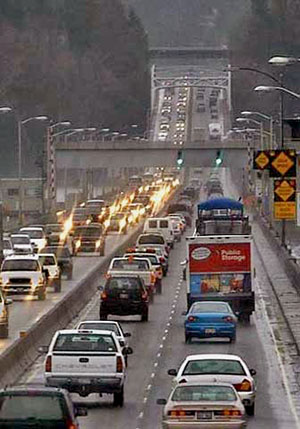
We have the 3rd worst traffic congestion in the country because road capacity has not kept pace with population growth.
I-745'S FUNDING FORMULA (90% FOR ROADS, 10% FOR ALTERNATIVES) MATCHES HOW PEOPLE ACTUALLY GET AROUND
Cars and trucks account for 94.6% of all transportation trips - alternatives, like buses, account for just 5.4%. The Office of Financial Management estimates we currently spend 70% of our transportation taxes on roads and 30% for alternatives. They spend 70% of your money on something you use 95% of the time! The vast majority of us need the freedom and flexibility only a vehicle can provide - I-745 simply requires lawmakers to allocate our taxes based on reality.
But this doesn't mean we abandon people who need transportation assistance. Under I-745, alternative modes of transportation will continue to receive substantial funding totaling $1 billion every two years. I-745 is exclusively a transportation initiative - it doesn't affect funding for schools, police, or other non-transportation programs. I-745 won't raise your taxes - sufficient tax revenues exist, including Washington's $1tax surplus, to reach the 90-10 ratio required under I-745.
A RESPECTED STUDY SHOWS ADDING JUST 4% TO OUR ROADS WOULD DECREASE TRAFFIC CONGESTION 25%
By widening arterials, installing efficient on-and-off ramps, and increasing road capacity at our major bottlenecks, we can solve our traffic problems and improve Washington's air quality. It's not that we can't fix these problems, we simply haven't tried.
I-745 WILL FINALLY ADDRESS WASHINGTON'S EVER-RISING TRANSPORTATION ADMINISTRATIVE COSTS (4TH HIGHEST IN THE NATION)
Transportation agencies' performance is currently not measured. I-745 enables our State Auditor to see if our transportation dollars are being spent effectively. This will ensure accountability and efficiency. More than 270,000 citizens signed I-745. Please join them and vote "Yes" and let's get Washington moving again.
For more information, call 425.493.8707 or visit www.i-745.org.
Against
WASHINGTON STATE HAS A TRAFFIC PROBLEM - I-745 WILL NOT SOLVE IT. I-745 WILL MAKE IT WORSE.
I-745's 90% for roads is a "one-size-fits all" solution to our state transportation problems that will not work. Real traffic solutions require providing people with choices that include both good roads and good public transportation, including buses, ferries, and rail.
Roads are important, but taking the money away from public transportation to fund them will only make traffic worse.
WE NEED CHOICES. PUBLIC TRANSPORTATION IS AN IMPORTANT PART OF THE SOLUTION FOR MANY AREAS.
I-745 dictates that 90% of all transportation funds go to one solution - roads. It also puts politicians and bureaucrats in Olympia in the driver's seat - giving them control of our local transportation funding. I-745 limits our options. If roads are the only transportation priority, other choices like transit will be severely cut. With less public transportation more people will be forced to drive, putting even more cars on the road. Seniors, disabled people, and those unable to drive will lose their ability to get around.
LOCAL CONTROL IS NEEDED TO SOLVE TRANSPORTATION PROBLEMS - I-745 TAKES AWAY LOCAL CONTROL.
Recently voters in Grays Harbor, Clallam and Island Counties have voted to support public transit as a choice in their community. I-745 would send that money - along with other locally approved funds from around the state - to the State Legislature, to be spent on roads. The will of the voters in those communities would be ignored.
WHO REALLY BENEFITS FROM PASSAGE OF I-745? ASPHALT PAVING COMPANIES - NOT US.
"Washington Citizens for Congestion Relief" was founded by the Asphalt Paving Association of Washington. With help from oil companies, they paid over half a million dollars to buy signatures to get I-745 on the ballot.
They will make millions and we will still be stuck in traffic.
For more information, call 206.343.4491 or visit www.No745.org.
Rebuttal of Statement
For I-745
With continued increases in population, expanding our road capacity is the only cost-effective way to solve our traffic congestion problems. I-745 doesn't abandon alternatives, like buses (they'll continue to get $1 billion every two years). I-745 simply requires spending to match usage, meaning most transportation spending will go toward critical infrastructure that benefits everyone (road construction, maintenance, lane extensions, bridges, car-carrying ferries, arterials, on-and-off ramps). I-745 ensures better roads and long-overdue performance audits. Vote "Yes."
Rebuttal of Statement
Against I-745
Asphalt pavers bought the signatures to put I-745 on the ballot. Their campaign and their studies make claims that are misleading and inaccurate.
Washington's transportation problems need a solution that includes both road improvements and transportation choices for local communities. I-745's requirement that all transportation funding be split 90%-10% does not allow us to maintain real transportation choices.
That's why seniors, business, churches, labor, the disabled, and conservation groups, recommend voting No on 745.
Arguments For I-745
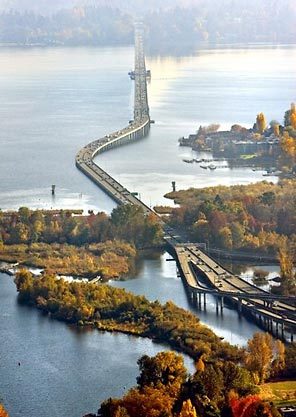
Prepared By
Prepared By
TIM EYMAN, appreciates 270,000 citizens who signed I-745 petitions (thanks!); MONTE BENHAM, "best part of I-745 are the performance audits"; JACK FAGAN, concerned lawmakers will raise taxes if I-745 loses; ANN BENDER, "520 bridge should've been widened in 1980!", Bellevue; BOB HENKEL, "congestion is bad - we need more roads", Tacoma; ANDRE' GARIN, wants cleaner environment by ending traffic gridlock, Vancouver.
Against prepared by ELIZABETH PIERINI, Co-Chair, League of Women Voters of Washington; STEPHANIE SOLIEN, Board Chair, Washington Conservation Voters; WILL PARRY, President, Puget Sound Council of Senior Citizens; LOUISE MILLER, Republican, King County Council; RICK BENDER, President, Washington State Labor Council; ROGER BERGH, President, Washington State Good Roads & Transportation Association.
WS Labor unions oppose Init 745: claims it will impact education, housing, jobs
OPPOSING INITIATIVE 745
Resolution #11
WHEREAS, Initiative 745 mandates that 90% of public transportation dollars in Washington State be spent on "road construction and road maintenance", and widely defines "transportation funds" as "government funds spent on transportation purposes, including, but not necessarily limited to, the transportation fund, the highway fund, public transit and ferry operating accounts and reserves, local government transportation accounts, public transportation authorities, (and) transportation benefit districts", thereby usurping the budget authority of local governments and undermining the ability of cities to accommodate growth in a manner consistent with maintaining a high quality of life for its citizens; and
WHEREAS, Initiative 745 would divert 90% of the sales tax revenue now dedicated to local transit systems to non-transit purposes, which would likely cripple Public Transportation's ability to provide any significant transit service to city and county residents, prevent cities and counties from achieving their Comprehensive Plan public transportation goals, leave little option for replacing lost public transportation service, and severely limit the ability of local governments and transportation systems to leverage federal matching dollars for public transportation purposes; and
WHEREAS, with dramatic losses in local tax revenue and matching federal dollars many local transit systems will be substantially reduced and/or eliminated, resulting in dramatic losses in fare box revenue, leading to accompanying financing problems of adequate funding to service bonds, with the potential of bankruptcy for some public transit agencies and the elimination of bus service in some areas of the state; and
WHEREAS, by having to divert 90% of its revenue to road building and maintenance, Initiative 745 would cause the termination of Sound Transit operations, undermining the will of the voters who approved the system in 1996, just as the Sound Transit Regional Express bus service, which started in September of 1999, has started carrying up to 14,000 people per day, and shortly after the start of the Sounder commuter rail service in September of this year and just a few months shy of groundbreaking for the Link Light Rail System in Spring of 2001; and
WHEREAS, Initiative 745 provides sales and use tax credits to road builders at the expense of general fund programs such as education, human services or affordable housing; and
WHEREAS, Initiative 745 undermines the Growth Management Act (GMA) by requiring all local comprehensive plans developed under the GMA and all six-year transportation plans required of state agencies to "reflect the provisions and priorities" of the initiative; and
WHEREAS, by eliminating the availability of environmentally sound public transportation choices, Initiative 745 greatly increases the possibility that the Puget Sound and other regions will be held in non-compliance of the Federal Clean Air Act, which would, ironically, result in the loss of all federal funding for new road projects; and
WHEREAS, Initiative 745 cripples transportation mobility for the most needy of our citizens, affecting those without the income or ability to own and operate private vehicles, such as seniors, people with disabilities, those not old enough to drive, and people on low incomes who rely solely on public transportation; and
WHEREAS, Initiative 745 proponents inaccurately label I-745 as a "populist" initiative when its effects would be the opposite by diverting 90% of all of Washington's public transit funds, which were supported by local, voter approved ballot measures; and
WHEREAS, the "No on I-745" Campaign is endorsed by the League of Women Voters, Washington Conservation Voters, Action: Better City, the Washington State Labor Council, AFL-CIO, the Washington State Audubon Society, Transportation Choices Coalition, Washington Environmental Council, Alliance for Voter Approved Education, Lighthawk, Amalgamated Transit Union Workers, WashPIRG, Livable Communities Coalition, and 1000 Friends of Washington; now, therefore, be it
RESOLVED, that the Washington State Labor Council, AFL-CIO, oppose Initiative 745 and urge its affiliates and all voters throughout our state to vote against the initiative.
Saturday, September 9, 2000
Text of Initiative 745 Road Funding Eyman 2000
2000 Election: State Ballot Measures - Initiative 745
« Back
OFFICIAL BALLOT TITLE & EXPLANATORY STATEMENT
BALLOT TITLE AND EXPLANATORY STATEMENT WRITTEN BY THE
STATE ATTORNEY GENERAL AS REQUIRED BY LAW.
OFFICIAL BALLOT TITLE
Shall 90% of transportation funds, including transit taxes, be spent for roads; transportation agency performance audits required; and road construction and maintenance be sales tax-exempt?
EXPLANATORY STATEMENT
The Law As It Presently Exists
Under existing law, transportation is the responsibility of both state and local governments. The state department of transportation constructs and operates a system of state highways. In addition, the department operates the state ferry system and provides support for rail transportation and some small airports in the state. Counties and cities construct and maintain their own systems of roads and streets. Counties and cities also have authority to operate ferry and public transit systems. Special purpose districts have been created to operate public transit and rail systems on a local or regional basis. Each of these governments operates with funds derived from taxes or from user fees (such as ferry and bus fares) in various proportions.
The state auditor presently conducts periodic audits of all state and local agencies to ensure their compliance with the constitution and laws of the state, with local ordinances, and with applicable accounting practices (RCW 43.09). These audits are not "performance audits" as that term is generally understood. The Joint Legislative Audit and Review Committee, a legislative committee, has legal authority to conduct performance audits of state agencies or of local governments receiving state funds (RCW 44.28).
Materials, labor, and services used in the construction or maintenance of state-owned roads, streets, highways, places, easements, rights of way, mass public transportation terminals and parking facilities, bridges, tunnels, and trestles are presently subjected to the retail sales tax (RCW 82.08) and use tax (RCW 82.12). In addition, materials (but not labor and services) used in the construction or maintenance of other publicly owned roads, streets, highways, places, easements, rights of way, mass public transportation terminals and parking facilities, bridges, tunnels, and trestles are presently subjected to retail sales tax and use tax. Contractors pay sales tax on materials and labor used in construction projects on facilities owned and operated by the federal government.
The Effect of the Proposed Measure Should It Be Approved Into Law
This measure would declare that new road and lane construction and road maintenance would be the state’s top priority for transportation system improvements. The measure would direct the legislature, in consultation with local governments, to adopt implementing legislation which would require a minimum of 90% of transportation funds to be spent on construction of new roads, new lanes on existing roads, improvements to the traffic carrying capacity of roads, or maintenance of roads. The term "transportation funds" would include state and local government funds spent for transportation purposes, including the transportation fund, the highway fund, public transit and ferry operating accounts and reserves, public transit and ferry capital accounts and reserves, local government transportation accounts, public transportation authorities, transportation benefit districts, and the amounts placed in the high occupancy vehicle account (RCW 81.100.070). It does not include federal funds specifically provided for non-roadway purposes, transportation vehicle funds used by school districts, funds used by airports or port districts, or the fares paid by customers of transit and ferry systems. The term "roads" would include all publicly owned roads, streets, and highways.
The measure would also require a performance audit on each transportation agency, account, and program, including the state department of transportation, the state ferry system, and all public transit agencies. The first audit report for each agency would be submitted by December 31, 2001, and subsequent performance audits would be conducted as determined necessary by the state auditor. Transportation funds would be used to pay for the performance audits.
The measure would exempt, from sales and use taxes, materials and labor used in the construction or maintenance of publicly owned roads, streets, and highways.
The measure would also require the updating of comprehensive plans developed under Chapter 36.70A RCW (the growth management act) and the six-year transportation plans required by RCW 44.40.070, to reflect the provisions and priorities of this measure.