Fewer Bus Routes, More Frequency
Matt Rosenberg 5/21/07
On days when telecommuting won't work, I park my car on a side street in West Seattle and take the bus downtown. After one or two round trips per week for four months, I'm not on the verge of driving instead, but I'm pretty unimpressed with King County Metro's on-time performance. The #54 is regularly five to ten minutes late getting to its Alaska Street stops on the way downtown, and two days in a row last week, between 2:30 and 4:00 p.m., the #55 bus from downtown back to West Seattle was running at least ten minutes late. The first time, when it finally did arrive, we sat through a green light while the driver finished up a personal cell phone call. The next day, more than 10 minutes after the #55 was to have left a stop two blocks north of where I was waiting on First Avenue, it still hadn't showed, and I boarded another bus headed near enough to where my car was parked.
For several years, riders on some Metro routes have been able to use certain cell phones or handheld Internet devices to tell when their buses are really expected to arrive. Now, a research project underway at the University of Washington is examining improvements in bus tracking via wireless Internet and global positioning system technologies. More and better information will be helpful, but, knowing the bus is running late doesn't get it there on time.
We may need to really re-think how our region's bus system is arranged. Quite possibly, what's needed are fewer routes, more greatly concentrated along selected major corridors, running to and from designated transit hubs with increased frequency. Add to this a greater reliance on paratransit options for the last few miles.
Punctuality is a minimum baseline expectation in the world of business and education. Managers and elected officials need to ensure their public transit systems conform to that expectation, and convey added value through speedier service delivery.
Transportation
Tuesday, March 11, 2008
Bus Rapid Transit - Fewer Bus Routes, More Frequency


LA Expands Bus Rapid Transit
Los Angeles County to Expand Bus Rapid Transit
Matt Rosenberg 6/6/07
As part of its current budget proposal, the Metropolitan Transit Authority of Los Angeles County is planning to add eight more "Metro Rapid" bus rapid transit routes to the 20 that will already be in operation by later this month. The LA Times reports. If you're someone at all inclined to take the bus to and from work once or more a week, see how this sounds.
Service on the Metro Rapid Program, implemented in June 2000, is 25% faster than regular service because the buses make fewer stops and run every three to 10 minutes during peak travel times, the MTA says. Also, the Rapid buses have equipment that extends green lights or changes red lights 10 seconds faster. By June 2008, 500 Metro Rapid buses, up from 359, will serve 28 transit corridors covering 420 route miles and 35 cities throughout the county.
More here on what makes Metro Rapid rapid. One additional factor is "low floor," near ground-level entrances; rather than the usual several steps. That's part of a larger Metro Rapid emphasis on cutting the amount of time that buses are stopped - either for passenger ingress and egress, or traffic signals.
In the central city-suburban core of the Seattle region, King County Metro, which operates a bus system and wastewater treatment facilities, is planning to initiate five bus rapid transit "RapidRide" routes as part of the "Transit Now" package approved by voters last fall. This map shows the routes. Metro says RapidRide service will include increased frequency, new buses, upgraded passenger waiting areas, and technology to synchronize traffic signals.
A clear and publicly-stated emphasis on fewer stops, enablement of faster boarding, and specific pledges of reduced travel times - as in LA - would be helpful, and increase public interest in the planned RapidRide routes. It would also be good to see King County Metro gather and make easily available online information on which among all current routes have the highest and lowest riderships. This could help guide decisions on re-allocating existing funding to additional, selected RapidRide routes.
Ridership data made easily available to the public online should include average and peak hour load factors (percentage of seats filled) for the given routes, and the system-wide average and peak load factors. Where a route's load factor continues running significantly below the system-wide average even at peak hours, that route should be cut, and the savings funneled into expansion of "best practices" rapid bus service on high-capacity transit corridors.
Responding to: "Where a route's load factor continues running significantly below the system-wide average even at peak hours, that route should be cut..."
The degree to which a government jurisidiction considers public transit to be a utility that covers all the geographic territory of the place may be an important consideration here. There may be some minimum level of service that represents a policy-set floor.
Of course "service" doesn't need to mean a 60 passenger bus. It can mean issuing taxi scrip to carless impoverished senior citizens in the target market for the utility.
Posted by: John Niles | June 7, 2007 2:04 AM
Governor Gregoire's Plan for Tolls on 520
Gregoire Unveils Tolling Proposal For SR 520 Bridge, I-90
Matt Rosenberg
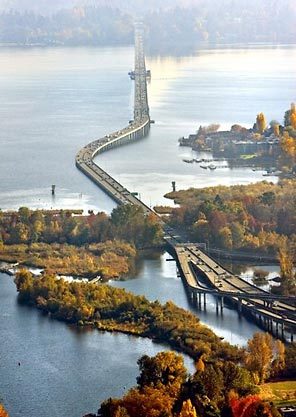
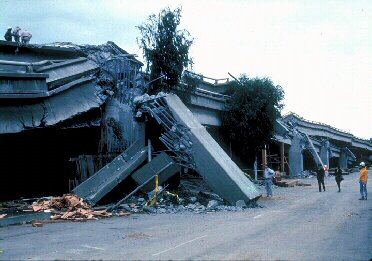
Washington Governor Chris Gregoire yesterday announced a proposal - which the legislature would have to approve - for tolling the S.R. 520 bridge starting next year, and also indicated preliminary support for tolling the parallel I-90 bridge across Lake Washington. All this could raise about $2 billion for replacement of the deteriorating SR 520 span, which could fail in an earthquake or severe windstorm. The Seattle Times reports. The total cost was estimated at $4.4 billion, though a new state estimate suggets the tab could be cut to $4 billion with a questionable single-pontoon design which limits future transit expansion. Some $2 billion in bridge rebuild funding is already secured.
The new tolls would vary by time of day, higher during rush hours. This would qualify as congestion pricing, which is gaining steam across the U.S., as we wrote here earlier this week.
Tolling the SR 520 bridge is a required condition of a federal grant which provides $138 million for the bridge rebuild and other projects. There've been some promising developments on tolling and congestion pricing in Puget Sound - which we noted in the above-linked post, namely on the new Tacoma Narrows Bridge and a pilot project starting this year on SR 167. But we have a ways to go. While voters have approved two modest gas tax hikes in recent years and some city (Seattle) and county (King) taxes in 2006 for street maintenance and bus service respectively, a large, three-county roads and transit ballot measure (Proposition 1) tanked last November. Some say it was because road projects dragged down otherwise popular light rail, others because the price tag ($18 to $47 billion depending how you did the math) was too high and major priorities such as the 520 bridge and replacement of the crumbling Alaskan Way viaduct weren't allocated anywhere near the needed funds for completion.
There are tens of billions of dollars worth of road and transit projects remaining in Puget Sound; and a bracing 52 percent population increase projected by 2040, according to the Puget Sound Regional Council. Prospects are dim for any major gas tax hikes. So tolling and congestion pricing are key, along with expanded transit which will actually make a sizeable dent in traffic.
It's early yet in the political conversation about regional tolling and congestion pricing, but the Governor deserves some credit for broaching the subject with respect to the 520 bridge rebuild. However, the announced 2018 completion date is much too far off; hundreds of lives could be lost if the bridge fails. Is it a worrisome risk requiring strong leadership and timely action? Or not?
A public-private partnership including union or public employee pension funds could be fashioned to generate more money for a better bridge and get it built sooner. If there's ever been a time to think big about delivering better transportation infrastructure while limiting taxpayer costs, it's now. SR 520, the Viaduct replacement, vital road projects in Pierce and Snohomish counties, and regional transit expansion are all cases in point.
And while tolling I-90 would be essential to prevent traffic diversions from 520 motorists seeking to avoid the proposed new tolls there, it is the reversible express lanes of I-90 which should used for this purpose, and then, under a congestion pricing strategy. The toll revenues from I-90 would be needed to help pay for the SR 520 bridge rebuild, and a certain portion could be carved out to help fund additional express bus service on both bridges.
The 60-day short-session in the Washington state legislature beginning next week will be an eventful one on transportation. Stay tuned.
UPDATE, 1/14/08: Gregoire's announcement is earning positive feedback from the Seattle Post-Intelligencer editorial board, the Tacoma News Tribune editorial board, and Seattle Times editorial page editor James Vesely.
Vision for Hybrids in the Puget Sound
By ROBERT McCLURE
Imagine at first hundreds of Northwesterners -- but later thousands, and ultimately tens of thousands or even millions -- plugging in their electric hybrid cars every night. Then they all commute the next day without dipping into their fuel tanks.
Imagine that the other cars on the road, still using fuel systems more like today's, get around on the byproducts of cow poop or wheat stubble.
 | ||
 | Grant M. Haller / P-I | |
| This could be a common sight on area roads in the future if hybrid gas-electric vehicles take off. | ||
Imagine further that this new fleet of cars carries devices to signal the traffic-light system, reducing congestion by half at rush hour. And imagine these same devices prevent cars from running into one another no matter what their idiot drivers do. The same devices could offer drivers a choice between the fastest route, the cheapest route (because many roads will have tolls) and the "greenest" route.
These were some of the visions that emerged Monday at a broad-ranging conference of Seattle-area businesspeople, utility executives, public officials, environmentalists and others titled "Jump Start to a Secure, Clean Energy Future" at Microsoft Corp.'s Redmond campus.
State Transportation Secretary Doug McDonald said questions about how to start a Northwest pilot project on plug-in electric hybrids are flying fast as the technologies are emerging.
"Just exactly where is the project going to happen? Just exactly when is it going to start? Just exactly what is it going to be about?" McDonald asked participants. "We don't exactly have all those answers just exactly yet."
 | ||
| Grant M. Haller / P-I | |
| Frank Ziegler, hybrid technologies director of sales and distribution, demonstrates his company's all-electric motorcycle. He says it will travel up to 85 mph and travel 75 miles before needing a four-hour recharge. The bike was developed in Mooresville, N.C. | ||
That hasn't stopped many entrepreneurs from launching into efforts to move the technology along, get it to market -- and make some money.
But one roadblock for the Northwest is that lack here of an efficient market for buying and selling power, such as the ones in Texas and California, said David Kaplan, president and chief executive officer of V2Green.
His Seattle software and electronics company is working on moving power from the electric grid to plug-in hybrids -- and back again, allowing owners of the cars to earn cash for the power their cars create.
"Can we launch a Northwest pilot demonstration project this year?" Kaplan wondered aloud. "The basic technologies are all developed and pretty well understood. However, what has to happen is all these technologies have to be pulled together."
Technology companies, electric grid operators, utilities and regulators all have to communicate, Kaplan said -- which was exactly the goal of the sponsor of the conference, the Cascadia Center, a project of the Seattle think tank Discovery Institute.
"The key is uniting them and getting them talking to each other," said Bruce Agnew, the center's policy director. "In the end, you could be completely petroleum-free, which is our goal."
Monday, March 10, 2008
The Case for Eastside Commmuter Rail
Get On Board With Eastside Commuter Rail" 1/22/08
Matt Rosenberg
"Get on board with Eastside commuter rail," urges the Everett Herald in a Sunday editorial following two community forums on the policy initiative last week, in which Cascadia Center previewed a new 501c4 non-profit - the Eastside TRailway Partnership - to raise public and private funds for a pilot route between Snohomish and Bellevue on old Burlington Northern and Sante Fe tracks to be purchased by the Port of Seattle. The Herald:
Imagine relatively small, quiet, fuel-efficient trains carrying thousands of commuters and tourists between Snohomish and Bellevue, and perhaps farther south, each weekday -- running every hour or even half-hour on tracks that already exist. Imagine a comfortable, scenic rail commute that includes seamless connections to buses to get you right where you need to go. Then imagine a bicycle/pedestrian trail safely using the same corridor, potentially connecting Snohomish County's Centennial Trail with King County's extensive trail system.
It's not a dream, it's a real possibility....First, the Port of Seattle must complete its planned purchase of the 42-mile Burlington Northern Santa Fe corridor. The port...should follow through with this visionary investment.
In the meantime, local leaders should get behind this eminently sensible idea and quickly identify funding sources. The nonprofit Cascadia Center, which is pushing the rail and trail idea, estimates that between $100 million and $250 million will be needed to get the line going -- a bargain compared with other projects. Cascadia's (Director) Bruce Agnew, a former Snohomish County Council member, says much of that could come from private investors who could put in amenities along the route.
After the first Eastside TRailways Partnership forum held last week in Kirkland (Seattle Times article here), Agnew spoke at length with KIRO 710's Dave Ross. Agnew said:
We're talking about a mixture of public and private financing. We'd like to see the track rehabilitated by public agencies like Sound Transit, Metro and Community Transit, since it extends up into Snohomish County. But the stations and the trail development and some of the other track work like sidings could be paid for by private developers in nodes around stations where they want to put in...software parks or housing. For instance, Metro has a plan for housing that goes around the South Kirkland park-and-ride lots, similar to what was done with the streetcar in Seattle.
Getting the old tracks up to snuff for commuter rail is eminently do-able. A Cascadia Center report by retired BNSF Northwest Director of Operations Read Fay emphasized the modest costs for rehabilitation of the tracks to accomodate trains at 40 miles per hour. Part of the proposal is to use smart trains. Cascadia has also stressed the preferability of Diesel Motor Unit double-decker coaches on the envisioned route, which can burn biodiesel and carry bicycles. They require no locomotive and can pull two more cars of the same type. (Above left is a DMU unit to be used in the San Diego region on the North County Transit District's "Sprinter" route between Escondido and Oceanside. Service is scheduled to begin in several weeks). As Agnew noted on the Dave Ross Show, so-callled DMUs are:
....extremely quiet, it's basically not louder than a bus, instead of the traditional commuter rail, which has a loud locomotive and a bunch of train sets following it....the vision is a quiet train operating once a half hour or maybe an hour, and a good trail system with small stations that are community oriented, lots of stops. We could see at South Kirkland park-and-ride a transfer to bus rapid transit at an expanded park-and-ride on (State Route) 520....
Using double-decker DMU coaches, the passenger capacity of a two-car train would be almost 400, compared to just 200, Agnew noted, on the West Coast Amtrak run which includes Portland, Seattle and Vancouver. Artist J. Craig Thorpe's preliminary sketches of Eastside commuter rail station designs - done for Cascadia Center - are here.
The next step, as the Everett Herald noted, is for the Port to complete its purchase of the BNSF line. In a post-event recap, Cascadia Center provides names and e-mail addresses of key Port officials that the public may wish to contact regarding the proposed deal.
It's important to note that not only does the Port of Seattle deserve credit for deciding to keep the valuable rail and trail corridor protected in public ownership, so too does King County, which in recent months has engaged in sometimes-complicated negotiations focused on buying some or all of the property from the Port and perhaps ripping out all the rails to focus solely on trail construction. In a Seattle Post-Intelligencer op-ed published yesterday, County Council Members Larry Phillips and Bob Ferguson affirm the Council's formal support of a dual use approach which leaves the rails intact and includes their use for transit.
The county will quite understandably proceed with its own public process in part because it wants to encourage regional agencies to deliberate together on possible rail operations, and partly because the county retains an option to purchase from the Port the seven-mile-long Woodinville-Redmond spur, and track south from the Wilburton Trestle in Bellevue, to the end of the line in Renton.
Meanwhile, a March public meeting in Bellevue is being tentatively planned, at which board members of the Eastside TRailways Partnership would meet formally for the first time. Priorities will include advancing the dialog on joint public-private financing of the Snohomish to Bellevue pilot project; plus balancing needs of trail and rail users; and seeking additional community input. Stay tuned.
UPDATE, 1/28/08: Additional press coverage on Cascadia's push for Eastside commuter rail comes via the Everett Herald news staff; plus Seattle Times opinionator Lance Dickie, and the Kirkland Courier-Reporter.
Time for HOT Lanes to relieve Congestion Pricing
Tolling, HOT Lanes Spread In U.S., Creep Forward In Puget Sound 1/7/08
Matt Rosenberg (Cascadia)RO
Highway tolls to help raise maintenance and construction funds, and sliding-scale user fees to control peak-hour congestion are spreading across the U.S and creeping forward in central Puget Sound. In a year-end editorial, the Tacoma News Tribune highlighted the success of tolling on the new, second (southbound) Tacoma Narrows bridge (right side in adjacent photo), and the importance of tolling as a future transportation revenue source in Puget Sound:
The greatest challenge facing the growing Puget Sound region is building and repairing transportation infrastructure to keep people and freight moving smoothly. But the region’s voters in November soundly rejected Proposition 1, a massive and costly roads-and-transit ballot package that, among other things, would have extended Sound Transit’s light-rail system all the way to Tacoma.
Now state lawmakers must devise new approaches, including more emphasis on using highway tolls to pay for road repairs and construction. On the plus side, the new Narrows Bridge opened July 15, on time and under budget. More than 50,000 pedestrians packed the span from end to end for hours. Afterward, commuters marveled at the improved traffic flow. Complaints about the bridge toll dwindled.
Narrows Bridge tolls are $3 for two-axle vehicles without a pre-paid account, $1.75 with an account - they do not vary by time of day or traffic loads, as is the case under so-called "congestion pricing."
Narrows Bridge tolls can be collected on approach at booths off to the side, but there's been a run on electronic, dashboard-installed "Good To Go" transponders, which are read by overhead gantries as cars whiz underneath.
Congestion Pricing Pilot Project In Puget Sound
Also on the regional tolling roster in Puget Sound is a Washington State Department of Transportation pilot project to start later this year on Route 167 in South King County. It will convert the carpool lane in each direction to a High Occupancy and Toll (HOT) lane open to carpoolers (two passengers or more in this case) for free, and to solo drivers for a sliding-scale toll set by real-time levels of road congestion. As for regular commuters on the southbound Narrows Bridge, transponders will be used. The higher peak-hour fees are offset by lower off-peak charges, which may compel shifting of some trips to those hours - or the forgoing of non-essential peak-hour solo driving.
Regional HOT Lane Network Needed On Puget Sound Highways
The SR 167 pilot project is a good first step, but part of what Puget Sound really needs to control traffic congestion as population grows robustly in coming decades is a regional network of HOT lanes on connecting highways; not just a few HOT lanes here and there. In addition, HOT lanes should number at least two in each direction, not one.
The Domino Effect?
Another possible tolling project in Puget Sound could have a domino effect. To qualify for a $138 million Urban Partnerships grant from the feds to help fund the financially-challenged SR 520 bridge rebuild, state legislators must approve tolling for that span. If they do that - as they certainly ought to - it will immediately raise the possibility of also tolling the parallel I-90 bridge across Lake Washington, in order to avoid undue congestion there from motorists seeking to avoid 520 tolls. Tolling these major east-west highways in turn cannot help but promote consideration of tolling our region's congested north-south highways, namely I-5, SR 99, and I-405.
Legislature Seen Likely To Act
With such considerations at top of mind following Prop. 1's defeat, the legislature is expected to develop a tolling bill in the upcoming short session.
An Emerging Policy Priority Across The U.S.
The action on tolling in Washington state comes against a busy national backdrop - and a growing awareness that highway tolling and highway congestion pricing are necessary in many urban regions.
Car drivers aren't the only ones affected; truckers - and consumers - also have a big stake in congestion relief.
In Forbes, logistics expert Robert Malone writes:
There will be increased road congestion in nearly all urban areas in the U.S. in 2008. Delays in commuting and delivery of commercial loads continue to go up, and that means money wasted idling and just-in-time delivery threatened. Many lane miles will have to be added to the U.S. highway system just to keep up with traffic growth. There will be more calls, consequently, for congestion pricing, specifically in dense urban areas.
Congestion pricing just adds one more cost to truckers or those using their services, and that will inevitably be passed on to the consumer....there are not a lot of choices: cut down on delivery (unsatisfactory), build roads (politically complex and expensive), or go congestion pricing and help some and alienate others.
"Congestion Pricing Isn't Going Away"
According to Forbes Small Business:
...congestion pricing isn't going away. U.S. municipalities including Dallas, Miami, Minneapolis, San Diego, and Seattle are expressing interest in the idea. Groups such as the AARP and the National Supermarkets Association back it...Recent studies estimate that traffic jams cost the U.S. economy a whopping $65 billion annually - and the figure is rising. Among the industries hardest hit: trucking, service and repair, wholesale trades, and construction. Gridlock costs New York City $4.6 billion in lost business revenue, estimates the Partnership for New York City, a group of 200 CEOs who support congestion pricing.
The traffic crisis is spreading beyond the largest areas....Adam Madetzke, the owner of Salt City Couriers, says that northbound congestion on I-15 - Utah's most clogged highway - has hampered his delivery business: "During rush hour the heavy traffic drops our profits by 20% to 30%." While it debates congestion pricing, Utah hopes that a new commuter rail system set to open next spring will alleviate the problem....San Diego has been charging commuters a toll on an eight-mile stretch of I-15 since 1998, which lets those who pay use special lanes during peak hours. The charge varies from 50 cents to $8, depending on demand. Since the toll was imposed, usage of express lanes has nearly doubled, and the number of carpools has gone up more than 70%. Denver, Houston, and Minneapolis have similar toll highways....Minneapolis, which has suffered from heavy gridlock since the I-35W bridge collapsed in August, will raise tolls and partner with companies located along the interstate to encourage telecommuting.
14 Miles Of HOT Lanes Coming to Capital Beltway
One big HOT lanes deal announced recently is in the Washington, D.C. region and involves the State of Virginia and private partners. The Washington Business Journal reports that the U.S. Transportation Department, the State of Virginia, Fluor Enterprises, and Australia-based Transurban Group are partnering on a $1.9 billion public-private venture to add two new HOT lanes in each direction and one general use lane on each side of the Capital Beltway between Springfield, Virginia and the Maryland border. Virginia keeps control and oversight of the new HOT lanes while the private partners operate them and collect tolls to pay back a $588 million federal loan and $600 million in private-activity bonds issued on their behalf by the feds. Construction on the new lanes begins this year and is to be completed by 2013.
Pennsylvania's Act 44
Faced with an estimated shortfall of $900 million each year for road and bridge maintenance, Pennsylvania has passed Act 44, which will raise up to $116 billion over 50 years for roads, bridges and transit through new tolls on I-80, toll hikes on the Pennsylvania Turnpike, and the sale of revenue bonds. Turnpike Authority Vice-Chairman Timothy J. Carlson writes in the Philadelphia Inquirer that the added tolls and borrowing may be tough to swallow for some but are the right course - given pressing system needs, high gas prices and pinched pocketbooks.
"Desperate" L.A. Seeks Congestion Pricing On 3 Highways
In the Los Angeles Daily News, staff writer Sue Dolan notes L.A. has submitted a federal grant application for funds to convert HOV, or carpool lanes to HOT lanes on three area freeways, and comments:
Some Californians have long believed in the concept of the free and open road, but with freeway speeds today crawling as slowly as 17 mph by 6 a.m., that free-spirited thinking could soon dead end in Los Angeles. And good riddance. While roads may be free today, they're simply not moving....It's gotten so bad that traffic dictates where we shop, who we date and how we spend our free time. And after grappling with bottlenecks during the week, many commuters feel too worn out on weekends to go anywhere. What a way to live.
But transit officials hope to get certain freeway lanes moving along at 50 mph and say tolls could lead the way. Rates have not yet been set but would vary by the time of day - and solo drivers would pay more to use the lanes. "We're desperate," said Marc Littman, Metro spokesman. "We've reached a tipping point and have to come up with some solutions."
Orange County HOT Lanes More Popular Than Ever
South of L.A. in Orange County, what are perhaps the nation's best-known HOT lanes have become crowded at rush hour despite the costs. So Friday afternoon tolls will rise from $9.25 to $10 between 3 p.m. and 4 p,m, on the eastbound SR 91 Express Lanes connecting Orange and Riverside counties (right). Tolls are substantially lower at other hours, but some motorists are upset nonetheless. The L.A. Times reports:
Express lane officials argue that the toll lanes are too popular, which slows travel for paying customers. By using so-called congestion pricing, they hope to persuade some commuters to travel during cheaper hours....Joel Zlotnik, a spokesman for the Orange County Transportation Authority, which owns and operates the express lanes....(says)...by raising the peak toll, drivers are encouraged to travel during off-peak hours....
The OCTA isn't the only agency in the state to use a sliding fee scale....San Francisco has congestion pricing in place on several roads and is considering a plan similar to London's, under which motorists would be charged for entering the downtown area, or even for entering the city's limits.
...The higher toll rates indicate a demand for extra capacity, said Peter Samuel, who edits a Web-based news service specializing in toll roads. "They need to widen the 91 Freeway and look at a whole range of alternatives, including building a tunnel through the local mountains as was talked about," Samuel said. "The new toll is one of the highest in the country. But if you're reaching the saturation point with traffic, you've got to raise the cost, or otherwise the idea for having toll roads breaks down."
The Times reports Riverside County wants the 91 Express Lanes extended into their territory, as well.
The "Lexus Lanes" Canard
The popularity of the 91 Express Lanes was already clearly evident in 2005, when the Washington Post reported:
...the most important lesson of these California roads -- sometimes derided as elitist, double-taxing "Lexus lanes" -- is that commuters will flock to them in large numbers, regardless of the price....ridership on the Express Lanes has surged -- from 10 million trips in 2003 to 11.2 million last year. (The Reason Foundation's Robert) Poole surmises that commuters view the tolls as "congestion insurance" -- costly, but essential to keep their lives from being lost in traffic. "I don't see any way around it," said Crystal Lee, a Riverside accountant and mother of two. Her ride home on the Express Lanes saves her 10 to 30 minutes, she estimates, and guarantees she'll be home in time to get her daughter to dance class. "I need the time," she said, "more than the money."
The Democratic Leadership Council tackles head-on the class- and income-based "Lexus Lanes" claim.
...some oppose (HOT lanes) on equity grounds, claiming they would represent "Lexus Lanes" where commuters who can afford tolls receive an unfair advantage over their less-affluent fellow citizens (this is actually an argument against any toll roads, not just HOT lanes). But studies of HOT lanes have shown that a representative mix of commuters use them, not just the wealthy. Moreover, commuters in the regular lanes benefit from reduced congestion. And finally, it is low-to-moderate income commuters who most often encounter the kind of work or family emergencies that can be eased by the ability to occasionally buy a quick commute.
Reviewing surveys of Orange County HOT lane users and conducting its own community survey on the upcoming SR 167 HOT lanes pilot project, WSDOT reached similar conclusions.
Forbes Small Business notes:
Despite opposition, congestion pricing may have legs politically. It's a cheap alternative to building new roads, and it can help cities reduce pollution. That makes it a natural for Democrats, with their base among big-city voters.
The Road Ahead, In Cascadia
Here in the Cascadia region including Washington and Oregon, the Seattle region is already instituting tolls and HOT lanes, with more likely to come, as detailed above. Down the road apiece, look for metro Portland to give serious consideration to tolling the replacement for the congested six-lane bridge across the Columbia River on I-5. The Oregonian reported the new 12-lane bridge will include special transit lanes (for either light rail or bus rapid transit), and the preliminary cost estimate is about $4 billion, emphasis on "preliminary." The feds want to help and are encouraging tolling as part of the funding mix.
U.S. Transportation Secretary Mary Peters visited Portland to endorse the Columbia River (bridge) effort and encourage private sector investment and tolling options. She suggested the federal government might pay as much as 80 percent of the project cost, but that is far from certain.
A Common-Sense Tool To Help Fight Traffic Congestion
The movement toward congestion pricing reflects rational valuation of a scarce commodity, road capacity. All of us in urban regions will have to adapt sooner or later. Businesses such as Microsoft Corp. have helped pioneer amenity-drenched private bus routes for employees, while Sun Microsystems in the Bay Area has taken the lead in encouraging remote work centers and telecommuting. With the gradual spread of tolling and especially higher peak-hour tolls through expanding regional HOT lane systems, expect more and more large employers to develop trip consolidation and trip reduction options, and embrace telecommuting on a larger scale, over time.
Given advances in remote audio and video conferencing technology; ever-improving group software applications for sharing complex projects among a distributed workforce; plus heightened concerns about time lost in traffic and greenhouse gas emissions; and you've got a real harmonic convergence.
The time for congestion pricing has come.
Olympia Bill to Expand Sound Transit Role to Roads
Bill would expand Sound Transit's role
Agency would coordinate, finance regional projects
Wednesday, January 23, 2008
Last updated 8:06 a.m. PT
By LARRY LANGE
P-I REPORTER
Could a larger regional transportation agency solve the Puget Sound area's congestion problems?
The chairwoman of the state Senate Transportation Committee thinks so.
Bills to eliminate an existing road-project agency and make Seattle-based Sound Transit the first agency to coordinate and help finance major transportation projects were proposed Tuesday by Sen. Mary Margaret Haugen, D-Camano Island.
Senate Bill 6772 would reduce Sound Transit's board from 18 members to 12, with seven elected by voters, including six from geographic districts, and serving six-year terms. The state secretary of transportation and the director of the Puget Sound Regional Council would be nonvoting members.
Currently, the board's members are appointed by executives in King, Pierce and Snohomish counties.
Haugen said the bill also would allow some regions to form new transportation entities similar to Sound Transit.
The proposal comes weeks after regional voters rejected Proposition 1, the $47.2 billion road-and-transit ballot measure.
But Haugen said she introduced it because the Puget Sound area and other heavily populated parts of the state need a regional entity to complete transportation improvements the state can't afford.
"We (the state) cannot fully fund everything that is needed across the state," she said.
Sound Transit and possible new agencies created regionally could, with voter approval, raise a variety of taxes to finance new road and transit projects -- up to 1 percent additional sales tax, up to 0.8 percent in motor-vehicle excise tax and annual car license fees of up to $100 for each vehicle. All are similar to those proposed in Proposition 1.
Sound Transit also could impose a local gas tax and use the proceeds for roads.
If the Legislature passes the measure and Gov. Chris Gregoire signs it, the new Sound Transit would develop projects that would be subject to voter approval.
Another measure, Senate Bill 6771, would eliminate regional transportation investment districts such as the one including King, Pierce and Snohomish counties that developed the road portion of last fall's ballot measure.
"It didn't work," Haugen said. "We need to take it off the books."
At least two state commissions have recommended in the past a regional transportation agency of some kind, saying it would prevent delays, reduce duplication and make certain officials more accountable.
But it's unclear if either bill will pass; hearings haven't been set, and legislative officials contacted Tuesday said they hadn't had time to analyze the measures.
A spokesman for Seattle Mayor and Sound Transit Chairman Greg Nickels said, "Our focus is going to be, do (the bills) fix the problem?"
Sound Transit spokesman Geoff Patrick said the agency will "look closely" at how the change would affect its efforts to get a $750 million federal grant to extend light rail service to the University of Washington, though "there's nothing out of the gate that would suggest (the change) would endanger it."
Others weren't so sure.
"I'm concerned about adding to the scope of responsibilities and funding availability for Sound Transit, since its staff is so committed to light rail," said John Niles, a fellow at the Cascadia Center for Regional Development, a think tank involved in development and transportation issues.
King County Councilwoman Julia Patterson said it's OK for lawmakers to eliminate the districts, if it means the state is ready to fully finance needed highway projects.
Mike Ennis, director of the market-oriented Center for Transportation Policy, said organizational changes should help, but officials have "got to do more to relieve congestion" as well.
Rep. Judy Clibborn, D-Mercer Island, chairwoman of the House Transportation Committee, doubts the Sound Transit measure will get through the short session.
In previous attempts, backers of similar measures couldn't convince other lawmakers that the proposal would improve things.
And "if you can't convince people it would be better, it's hard to push forward," Clibborn said.
Slow Growth in Telecommuting
Slow But Steady "Telework Revolution" Eyed 9/26/07
Matt Rosenberg
The nation and major urban regions within the West Coast Corridor of Cascadia and California - namely Vancouver, Seattle, Portland, Los Angeles, San Francisco and San Diego - continue to grapple with costly road and transit projects and the threat of global warming. These stem in part from workforce and population increases. Against this backdrop, common-sense trip reduction strategies such as telecommuting deserve more attention. Adopted on a broader scale, increased telecommuting can: help control road congestion and future transportation infrastructure costs; and help limit man-made greenhouse gas emissions and vehicle-related air pollution.
A recently-released study by Tiax LLC of Cambridge, Mass. for the Consumer Electronics Association calculates that telecommuting - or to use a much better phrase, telework - saves 840 million gallons of gas in the U.S. annually and reduces carbon dioxide emissions by 14 million metric tons. But media reports and the study itself may actually underestimate both the number of current U.S. teleworkers (those who work from home or remote work centers at least eight hours a week) and their cumulative environmental benefit. Reports on the TIAX study by, for instance, the San Jose Mercury News and a Washington Post blogger assert that the study finds there are 3.9 million U.S. workers who telecommute (at least once a week). But the TIAX study itself casts the numbers in a clearer light. First, (p. 39, link above), the study's actual stated estimate of U.S. workers who telecommute at least once a week is 4 to 6 million, not 3.9 million. That's because (p. 40, link above) the U.S. Energy Information Administration 2001 estimate used as the source is not of 3.9 million once-a-week telecommuters, but rather translates, as Tiax notes, to 3.9 million households where at least one member telecommutes at least once a week.
Not mentioned anywhere in the recent media reports on the Tiax study is that the EIA data cited is from a six-year-old survey, and that using the same definition of what constitutes telework, other more recent estimates size the current U.S. teleworker pool as two to three times that in the Tiax study. April 2007 information from Gartner Dataquest highlighted earlier this month in an in-depth MSNBC.com story on telework is that currently, 12 million U.S. employees work from home at least eight hours per week; up from 6 million in 2000; and growing to 14 million by 2009. Percentage-wise that's still a drop in the bucket, but some assert that the trend grow. Rita Walston of The Telework Consortium tells MSNBC we should expect to see four-fifths of larger corporate workforces working out-of-office in the future, either from home or remote work centers. The MSNBC story also notes that 56 percent of Sun Microsystems' employees use home or remote work centers, resulting in information technology and real estate savings to the company of $387 million per year.
The amount of telework per worker per week is a key variable not fully addressed in the current discussion. If one day of telework out of five is feasible, why not two or three or more? To an extent it still depends on the employee and work team, and the product or service. But face it: for all the considerable upside of working on-site, there are also downsides. Put another way, there's a reason Dilbert rules.
Obvious barriers to telecommuting are lack of trust from employers, and personal disconnectedness for teleworkers perhaps coupled in some instances with legitimate fears their career advancement will be harmed by lack of time spent on in-person alliance-building and office politicking. The reality is that even for teleworkers, there are times when there is simply no substitute for being on-site. Remote work centers can often serve this purpose in larger organizations, but for smaller or mid-sized workplaces, flexible on-site work spaces for teleworkers can be important.
Government programs including financial incentives for employers and employees to increase their use of telework and other trip reduction methods such as carpooling are one approach currently in vogue. But if telework is to reach a more critical mass in coming decades, it will be more due to corporate and political leaders who connect the dots between telework, employee retention, the daunting costs of transportation infrastructure upgrades, and man-made greenhouse gas emissions.
Plug-in Electric Vehicles
Plug-in Electric Vehicles Get A Charge
Matt Rosenberg 2/8/08
The U.S. transportation sector contributes more than any other to manmade greenhouse gas emissions which threaten the planet's environment, while our nation's dependence on foreign oil means - as former CIA Director James Woolsey so astutely puts it - that we are funding both sides of the war on terrorism. Some say the answer is to "get people out of their cars," and certainly, the more who can be enticed to use public transit or telecommute, the better. I'm a regular Seattle bus rider, and telecommuter, myself. But cars are an uttter necessity for the majority of daily commuters, and indispensable for much discretionary personal transportation. That's just not going to change.
So, we can rail against cars and trucks. Or we can try to make more vehicles run on cleaner fuels, as we also muster political will to enact key road and transit improvements and institute a robust regional congestion pricing strategy.
As anyone not currently ensconced in a cave in Tora Bora knows, there's been growing scientific and investment capital devoted to developing cleaner vehicle fuels and energy sources. And one of those cleaner fuels, depending of course on how it is produced, is electricity.
There are hurdles still to clear on crucial lithium ion battery development for electric cars and - unavoidably - some uncertainty about ultimate levels of market penetration, but as we'll see below, the auto industry is increasingly committed to developing plug-in electric hybrid vehicles (PHEVs) in a big way. These will improve upon the popular Toyota Prius hybrid. They will plug in overnight at home and elsewhere during down times. They will run on electricity for as long as 40 miles between charges from more powerful lithium ion power packs, versus the Prius' nickel metal hydride batteries, which allow electric powered travel just at lower speeds and via brake pedal-activated regeneration. Some of the new models will be plug-in hybrids which can seamlessly switch to biofuels if and when the charge runs down, others will be extended range all electric plug-ins.
Cascadia Center's joint conference with Microsoft last year at the software firm's Redmond main campus brought some of the nation's top PHEV experts and advocates together - you'll find speaker presentations here, and links to conference press coverage here.
Since then, Cascadia Senior Fellow Steve Marshall has continued his peripatetic evangelism to keep building support for a Northwest PHEV pilot project. And with Cascadia Center director Bruce Agnew, Marshall has authored several op-eds on the topic - here, in the Puget Sound Business Journal; in NW Current; in the Sunday Seattle Times; and in the Seattle Times again. Our belief at Cascadia is that with the region's supply of clean, hydro-powered electricity and a growing commitment to alternative energy and fuels, the Northwest is ideal for ramping up electrified transportation. That's something the rest of the nation and world need to do too, in meeting the larger challenge to "green" surface transportation.
One Northwest pilot project approach now being considered is to find a way to look more closely at how PHEVs perform for everyday Northwest commuters in the private sector. Marshall has already helped link key players in a PHEV pilot project involving government agencies in the Seattle region.
Cascadia Center is also beginning to gear up for its 2008 annual Microsoft conferrence on transportation and technology, where the latest developments on PHEVs and all-electric vehicles will be among the featured topics. (It will be held in the May-June time frame; stay tuned to our Web site for more details).
There'll be a lot to explore because the momentum for longer-range, plug-in electric vehicles is building. At the Detroit auto show last month, General Motors Chairman and CEO Rick Wagoner said oil supply cannot keep pace with demand and the answer, mid- and long-term, is electric cars. GM's Vice-President of Global Program Management Jonathan Lauckner tells Wired the company plans to sell its plug-in hybrid Chevy Volt, now in development, globally and by the "tens of thousands," with models beginning to come off the assembly line in late 2010 and initial price around $40,000.
The Boston Globe's veteran auto writer Bill Griffith notes that the Volt will seat four or five passengers, will go 40 miles without a charge, and 600 miles without stopping when the onboard gas engine kicks in, as a generator only. Attending an unveiling of a Volt prototype outside Boston's Faneuil Hall at Quincy Market last week, he wrote:
The step Chevy is taking with its Volt is that the drive wheels are powered only by an electric motor, as opposed to other hybrid systems in which a combination of internal combustion engines and electric motors do the job. Even for someone who never took high school chemistry, the first question about the Volt came easily: Is it cleaner and more efficient to "plug in" this vehicle than to power it by burning gasoline? "In areas where electricity is produced by fossil-fuel plants, you can reduce overall emissions by up to 40 percent at fossil-fired plants that employ 'scrubbing' of combustion gases," said Keith Cole, director of legislative and regulatory affairs for General Motors. "But in areas where there is hydropower, nuclear power, or wind power, there's a huge advantage."
....Among the battery suppliers General Motors has been dealing with over the past five years of the Volt's development is A123 Systems of Watertown, a company with its roots in the Massachusetts Institute of Technology's research labs. As the car was being put on a carrier later that fall evening, Ric Fulop, A123 Systems' founder and vice president of marketing and business development, tried to explain the state of battery art to me by using a restaurant napkin. He started with the lithium-ion batteries that we still use in laptops and digital cameras. Fulop scribbled lines of formulas - hieroglyphics to me - each one a step toward finding the right combination of power, battery life, and safety....Rick Arnold, a museum educator and faculty member at the Tsongas Industrial History Center at the University of Massachusetts Lowell, followed Fulop's battery explanation step-by-step, asking questions along the way. His summation of the evening: "This is the biggest step forward in automotive engineering in the past 100 years."
Toyota cedes no ambition to GM on developing next-generation electric vehicles. Forbes reports the Japanese automaker has commited to unveiling two new plug-in hybrid prototypes at the '09 show in Detroit as part of its strategy to lease PHEVs to government and corporate fleet customers by 2010 and sell a million hybrids a year in the next decade. Toyota is teaming with Japan's largest consumer electronics manufacturer, Matsushita, in a joint venture to evaluate the feasibility of mass-produced lithium ion batteries for PHEVs, and is also working on developing ethanol from wood waste rather than agricultural crops. As The Oregonian's PDX Green blog reports, another "cellulosic ethanol" effort has launched, in Oregon. It's one of many in North America. Once further developed and distributed, such relatively clean and green "flexible fuels, or "flex fuels" would be a desirable complement to electrified vehicles, because many hybrid models will be able to run on these liquid alternative fuels, and electricity, extending average gas mileage range up to and even beyond 100 miles per gallon.
The implications, environmentally and geopolitically, are huge - and all upside.
Another oft-mentioned alternative fuel is hydrogen. Notably, though, the Toronto Star's Tyler Hamilton reports that two University of Waterloo students in Ontario who won the GM-U.S. Department Of Energy three-year "Challenge X" energy-efficient vehicle design competition have shifted their focus from hydrogen fuel cells to PHEVs.
"Ethanol, hydrogen, they're nice approaches, but we see the biggest impact coming from electrification," says (Matthew) Stevens, who's just finishing off the last year of a PhD in chemical engineering. "Electrification is by far the best bang for your buck. We're most excited about plug-in hybrids."
Stevens and partner Chris Mendes have formed a UW spin-off called CrossChasm Technologies, to develop software that manages power-sharing between the electricial grid and PHEVs. Shades of a Puget Sound firm named V2Green, profiled here in the Seattle Post-Intelligencer's Venture Blog by technology reporter John Cook. V2Green CEO David Kaplan spoke at the Cascadia-Microsoft conference last year. At Cleantech Blog, John Addison has more on future interplay between PHEVs and electric utilities, including an ambitious pilot project envisioned by XCel Energy's Smart Grid Consortium. More on that from the Denver Business Journal. Regarding V2G and the backdrop to the company's emergent smart grid technology, The Star's Hamilton notes:
The long-term idea is that plug-in vehicles, as they begin to take market share, could end up becoming back-up power systems for homes and the grid – an approach that would also require complex management.
Another Puget Sound company elbow-deep in PHEV technology is AFS Trinity Power Corp in Bellevue. As the Chicago Tribune reported last week, AFS is marketing an $8,700 "Extreme Hybrid" conversion kit, which is now being showcased on a customized, lithium ion battery-powered Saturn Vue PHEV prototype. With the kit, the Vue, which would otherwise have a normal cruising range of 10 all-electric miles before needing to recharge, can go 40 miles without a charge. Ultracapacitors and proprietary electronics boost battery power and control overheating, which is still a major concern with lithium ion batteries.
Finally for now, one more sign of the times. The Detroit Free Press reports this week that the University of Michigan has begun a new one-year graduate program which aims to train engineering students for work on clean vehicle energy systems including lithium ion battery power packs, and to prepare them for advancing the two-way connections between plug-in electric vehicles and the electrical power grid.
The race to develop clean vehicles and bring them to the masses is only in its infancy, but is of vital importance to the global environment and U.S. national security. The corporations and entrepreneurs who succeed will stand apart not only because of their smarts, but also their ambition and audacity. As famed Chicago urban designer Daniel Burnham said, way back when: "Make no little plans; they have no magic to stir men's blood."
With that at top of mind, we'll continue to keep you posted on developments in clean vehicle technology, including attendance and program information on what's sure to be an outstanding 2008 Cascadia-Microsoft conference, later this year.
Saturday, March 8, 2008
Electric Vehicles
Plug-in Electric Vehicles Get A Charge
Matt Rosenberg
The U.S. transportation sector contributes more than any other to manmade greenhouse gas emissions which threaten the planet's environment, while our nation's dependence on foreign oil means - as former CIA Director James Woolsey so astutely puts it - that we are funding both sides of the war on terrorism. Some say the answer is to "get people out of their cars," and certainly, the more who can be enticed to use public transit or telecommute, the better. I'm a regular Seattle bus rider, and telecommuter, myself. But cars are an uttter necessity for the majority of daily commuters, and indispensable for much discretionary personal transportation. That's just not going to change.
So, we can rail against cars and trucks. Or we can try to make more vehicles run on cleaner fuels, as we also muster political will to enact key road and transit improvements and institute a robust regional congestion pricing strategy.
As anyone not currently ensconced in a cave in Tora Bora knows, there's been growing scientific and investment capital devoted to developing cleaner vehicle fuels and energy sources. And one of those cleaner fuels, depending of course on how it is produced, is electricity.
There are hurdles still to clear on crucial lithium ion battery development for electric cars and - unavoidably - some uncertainty about ultimate levels of market penetration, but as we'll see below, the auto industry is increasingly committed to developing plug-in electric hybrid vehicles (PHEVs) in a big way. These will improve upon the popular Toyota Prius hybrid. They will plug in overnight at home and elsewhere during down times. They will run on electricity for as long as 40 miles between charges from more powerful lithium ion power packs, versus the Prius' nickel metal hydride batteries, which allow electric powered travel just at lower speeds and via brake pedal-activated regeneration. Some of the new models will be plug-in hybrids which can seamlessly switch to biofuels if and when the charge runs down, others will be extended range all electric plug-ins.
Cascadia Center's joint conference with Microsoft last year at the software firm's Redmond main campus brought some of the nation's top PHEV experts and advocates together - you'll find speaker presentations here, and links to conference press coverage here.
Since then, Cascadia Senior Fellow Steve Marshall has continued his peripatetic evangelism to keep building support for a Northwest PHEV pilot project. And with Cascadia Center director Bruce Agnew, Marshall has authored several op-eds on the topic - here, in the Puget Sound Business Journal; in NW Current; in the Sunday Seattle Times; and in the Seattle Times again. Our belief at Cascadia is that with the region's supply of clean, hydro-powered electricity and a growing commitment to alternative energy and fuels, the Northwest is ideal for ramping up electrified transportation. That's something the rest of the nation and world need to do too, in meeting the larger challenge to "green" surface transportation.
One Northwest pilot project approach now being considered is to find a way to look more closely at how PHEVs perform for everyday Northwest commuters in the private sector. Marshall has already helped link key players in a PHEV pilot project involving government agencies in the Seattle region.
Cascadia Center is also beginning to gear up for its 2008 annual Microsoft conferrence on transportation and technology, where the latest developments on PHEVs and all-electric vehicles will be among the featured topics. (It will be held in the May-June time frame; stay tuned to our Web site for more details).
There'll be a lot to explore because the momentum for longer-range, plug-in electric vehicles is building. At the Detroit auto show last month, General Motors Chairman and CEO Rick Wagoner said oil supply cannot keep pace with demand and the answer, mid- and long-term, is electric cars. GM's Vice-President of Global Program Management Jonathan Lauckner tells Wired the company plans to sell its plug-in hybrid Chevy Volt, now in development, globally and by the "tens of thousands," with models beginning to come off the assembly line in late 2010 and initial price around $40,000.
The Boston Globe's veteran auto writer Bill Griffith notes that the Volt will seat four or five passengers, will go 40 miles without a charge, and 600 miles without stopping when the onboard gas engine kicks in, as a generator only. Attending an unveiling of a Volt prototype outside Boston's Faneuil Hall at Quincy Market last week, he wrote:
The step Chevy is taking with its Volt is that the drive wheels are powered only by an electric motor, as opposed to other hybrid systems in which a combination of internal combustion engines and electric motors do the job. Even for someone who never took high school chemistry, the first question about the Volt came easily: Is it cleaner and more efficient to "plug in" this vehicle than to power it by burning gasoline? "In areas where electricity is produced by fossil-fuel plants, you can reduce overall emissions by up to 40 percent at fossil-fired plants that employ 'scrubbing' of combustion gases," said Keith Cole, director of legislative and regulatory affairs for General Motors. "But in areas where there is hydropower, nuclear power, or wind power, there's a huge advantage."
....Among the battery suppliers General Motors has been dealing with over the past five years of the Volt's development is A123 Systems of Watertown, a company with its roots in the Massachusetts Institute of Technology's research labs. As the car was being put on a carrier later that fall evening, Ric Fulop, A123 Systems' founder and vice president of marketing and business development, tried to explain the state of battery art to me by using a restaurant napkin. He started with the lithium-ion batteries that we still use in laptops and digital cameras. Fulop scribbled lines of formulas - hieroglyphics to me - each one a step toward finding the right combination of power, battery life, and safety....Rick Arnold, a museum educator and faculty member at the Tsongas Industrial History Center at the University of Massachusetts Lowell, followed Fulop's battery explanation step-by-step, asking questions along the way. His summation of the evening: "This is the biggest step forward in automotive engineering in the past 100 years."
Toyota cedes no ambition to GM on developing next-generation electric vehicles. Forbes reports the Japanese automaker has commited to unveiling two new plug-in hybrid prototypes at the '09 show in Detroit as part of its strategy to lease PHEVs to government and corporate fleet customers by 2010 and sell a million hybrids a year in the next decade. Toyota is teaming with Japan's largest consumer electronics manufacturer, Matsushita, in a joint venture to evaluate the feasibility of mass-produced lithium ion batteries for PHEVs, and is also working on developing ethanol from wood waste rather than agricultural crops. As The Oregonian's PDX Green blog reports, another "cellulosic ethanol" effort has launched, in Oregon. It's one of many in North America. Once further developed and distributed, such relatively clean and green "flexible fuels, or "flex fuels" would be a desirable complement to electrified vehicles, because many hybrid models will be able to run on these liquid alternative fuels, and electricity, extending average gas mileage range up to and even beyond 100 miles per gallon.
The implications, environmentally and geopolitically, are huge - and all upside.
Another oft-mentioned alternative fuel is hydrogen. Notably, though, the Toronto Star's Tyler Hamilton reports that two University of Waterloo students in Ontario who won the GM-U.S. Department Of Energy three-year "Challenge X" energy-efficient vehicle design competition have shifted their focus from hydrogen fuel cells to PHEVs.
"Ethanol, hydrogen, they're nice approaches, but we see the biggest impact coming from electrification," says (Matthew) Stevens, who's just finishing off the last year of a PhD in chemical engineering. "Electrification is by far the best bang for your buck. We're most excited about plug-in hybrids."
Stevens and partner Chris Mendes have formed a UW spin-off called CrossChasm Technologies, to develop software that manages power-sharing between the electricial grid and PHEVs. Shades of a Puget Sound firm named V2Green, profiled here in the Seattle Post-Intelligencer's Venture Blog by technology reporter John Cook. V2Green CEO David Kaplan spoke at the Cascadia-Microsoft conference last year. At Cleantech Blog, John Addison has more on future interplay between PHEVs and electric utilities, including an ambitious pilot project envisioned by XCel Energy's Smart Grid Consortium. More on that from the Denver Business Journal. Regarding V2G and the backdrop to the company's emergent smart grid technology, The Star's Hamilton notes:
The long-term idea is that plug-in vehicles, as they begin to take market share, could end up becoming back-up power systems for homes and the grid – an approach that would also require complex management.
Another Puget Sound company elbow-deep in PHEV technology is AFS Trinity Power Corp in Bellevue. As the Chicago Tribune reported last week, AFS is marketing an $8,700 "Extreme Hybrid" conversion kit, which is now being showcased on a customized, lithium ion battery-powered Saturn Vue PHEV prototype. With the kit, the Vue, which would otherwise have a normal cruising range of 10 all-electric miles before needing to recharge, can go 40 miles without a charge. Ultracapacitors and proprietary electronics boost battery power and control overheating, which is still a major concern with lithium ion batteries.
Finally for now, one more sign of the times. The Detroit Free Press reports this week that the University of Michigan has begun a new one-year graduate program which aims to train engineering students for work on clean vehicle energy systems including lithium ion battery power packs, and to prepare them for advancing the two-way connections between plug-in electric vehicles and the electrical power grid.
The race to develop clean vehicles and bring them to the masses is only in its infancy, but is of vital importance to the global environment and U.S. national security. The corporations and entrepreneurs who succeed will stand apart not only because of their smarts, but also their ambition and audacity. As famed Chicago urban designer Daniel Burnham said, way back when: "Make no little plans; they have no magic to stir men's blood."
With that at top of mind, we'll continue to keep you posted on developments in clean vehicle technology, including attendance and program information on what's sure to be an outstanding 2008 Cascadia-Microsoft conference, later this year.
Tuesday, October 23, 2007
Can Carpooling Work
Can Better Carpooling Help Fix Our Traffic Mess?
Matt Rosenberg
A recent proposal under Washington State DOT's Trip Reduction Performance Program would utilize a “Flexible Carpooling” strategy in a pilot project for Sea-Tac Airport employees, removing 100 commuter round trips per work day.
Trip Convergence Ltd. is seeking a WSDOT grant of $86,000 over two years to help launch a five-year "proof of concept" test of its user-friendly form of carpooling - described in this YouTube video. (Full disclosure: Cascadia Center is one of several regional entities serving in an advisory capacity to Trip Convergence Ltd. with respect to the above-referenced pilot project).
According to Trip Convergence's grant application to WSDOT, members would drive to a Park and Ride location near Interstate 5 and State Route 18 in Federal Way, where they meet up with other commuters - each person choosing whether to drive or to be a passenger. When a car has one or more additional passengers, the driver then departs for the airport, letting the passenger(s) out at a designated drop off point. In the evening, the process is simply reversed. The application notes:
Participation will be tracked through the use of infrared and radio frequency ID technology, and based on the record of each trip, ride credits will be transferred between riders and drivers. The ride credit received by the driver will entitle the driver to take a ride at a later date.
The system does a good job of addressing the inconvenience that often accompanies carpooling. Rather than wait for a specific group of people, each member rides with the first available vehicle thereby increasing flexibility of when to come into and leave from work. Commuters that often need a car during the day can choose to be drivers, and locating a couple of Flexcars at the airport would also help alleviate the fear of being caught somewhere without a car.
But will it really pencil out, especially with a government grant involved, and compared to more popular forms of alternative commuting, such as bus transit? Let's try to drill down a bit. When a "trip reduction" is tallied, the car is sitting idle not for one day, but for each work day of the calendar year - about 250 days - because the driver is using an alternative form of travel, flexible carpooling in this case. Thus an "annual trip reduced" is really about 250 annual round trips that one car foregoes, or the equivalent spread among several cars.
So, 100 annual round trips reduced - the aim of the Trip Convergence Ltd. pilot project - is really about 25,000 daily round trips, total, reduced per year. At a stated trip reduction cost to WSDOT of $43,000 per year in the project's first two years, the operating subsidy would total a modest $1.72 per daily trip reduced. Factoring in 15 vacation days per year for the owner of each vehicle, 100 annual round trips reduced would total 23,500 daily round trips reduced, and the subsidy would rise to $1.82.
That compares favorably to King County Metro bus service, which as this Metro fact sheet reports, requires $3.64 in operating costs per boarding while simultaneously yielding only 84 cents in operations revenue, for an average operating subsidy of $2.80 per boarding, or $5.60 per daily round trip.
A large part of the difference is likely explained by the unionized salary and benefits costs of operating large public bus fleets and, as off-peak load factors run low, uneconomic fuel costs as well.
One implication is that smaller, more nimble and flexible approaches to group commuting could attract greater market share, especially if regional tolling and transportation-specific carbon taxes, or mileage or cordon fees, are instituted within high-density metropolitan regions. Already, due simply to existing road congestion, we see companies such as Microsoft instituting their own privately-funded regional bus service for employees, which is both salubrious for taxpayers, and in the company's enlightened self-interested, due to its employee retention concerns.
Another implication is that Metro may need to look more closely at serving fewer routes better and faster to improve operating margins. Metro's planned bus rapid transit "rapid ride" corridor routes may provide a useful template for broader stratagic shifts in the system.