How to pay for the roads still traveled
Notwithstanding increasing mass transit ridership and more prudent use of cars, automobiles will dominate U.S. transportation for decades to come. So how do we pay for roads? Variable tolling is one answer, and in the age of GPS the logical next step should also be explored: a fee on miles traveled everywhere by individual vehicles.
By Matt Rosenberg
October 21, 2008.
I had a telling conversation with an old friend several months ago, a devoted environmentalist who's a community college biology teacher living south of San Francisco in a pleasant small town abutting the Pacific. I don't recall how it came up, but she declared, "We've just got to get more people out of their cars." Then came a pregnant pause, followed by her admission that of course, because of where they lived and worked and their packed daily schedules, she and her husband drove themselves and their children everywhere.
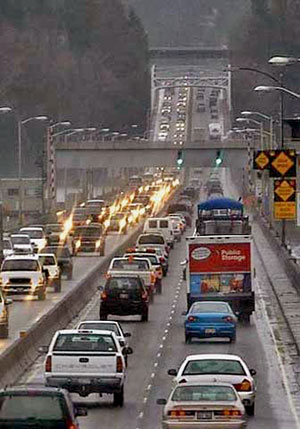
I've been thinking about this lately because, well, the roads are still chock full of cars and trucks, and despite an uptick in transit and bicycle use, traffic is still congested here in metro Seattle, and metro regions nationwide. Meanwhile, U.S. surface transportation needs will require some $12.5 trillion (yes, with a "t") over the next 50 years, according to a landmark federal report issued this year. But the way we fund such projects is broken, relying too much on dwindling by-the-gallon gas taxes due to improved fuel efficiency, and ever more difficult local and regional sales tax hikes.
The historical trends show whopping increases in U.S. miles driven and gasoline supplied. We've gone from 2 million barrels of gas a day in the 1950s to more than 9 million per day by 2007, the U.S. Energy Information Administration reports. The U.S. Bureau of Transportation Statistics reports that U.S. vehicle miles traveled (VMT) multiplied more than fourfold from 1960 to three trillion in 2006. Though the term "highway" is sometimes attached to VMT, they are estimated monthly for all U.S. roads and streets, drawing from data gathered at 4,000 continuous traffic counting locations.
What of the future?
BTS projects that VMT will grow by more than half the current level to 4.7 trillion in 2030, while U.S. population grows about 23 percent from 2005 to 2030. In Washington state, annual VMT nearly doubled between 1980 and 2007, and is projected to rise another 54 percent by 2030.
In the four core counties of metro Puget Sound, daily VMT has more than doubled between 1980 and 2007.
During the oil and gas price run-up earlier this year, drawing considerable media attention were marginal decreases, of a few percentage points only, in monthly and calendar year-to-date U.S. VMT compared to a year ago. Even a slight dip in VMT draws notice in a time when some celebrate the end of suburbia and advocate "carectomies."
One can hope. These days, it seems that every seminar addressing surface transportation and every green "visioning" session includes earnest discussion of how to "reduce vehicle miles traveled." To the skeptic, the imperative sounds like one of those wishful commands sported on the seven-bumper-stickered Subaru Outbacks endemic to Seattle, like "World Peace Now," or "End Poverty." It's an appealing idea, sure. But the devil is in the details.
The infrastructure crumbles
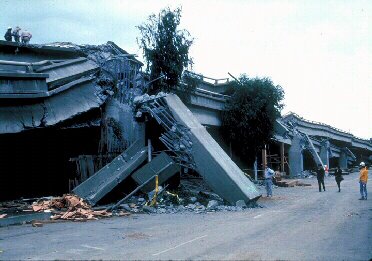
In the meantime, there's still a pressing need to deal with roadway and bridge wear and tear, and increased congestion resulting from exponential VMT growth during a post-Interstate-building era when transportation investment chronically lagged. One reminder comes via veteran Chicago Tribune transportation reporter Jon Hilkevitch, who this month wrote that despite a five percent regional drop in VMT, traffic congestion there has remained high. One big reason:
Roadways were already so badly saturated with traffic before the recent spikes in fuel prices that the decline in miles traveled hasn't significantly loosened the gridlock.
Most daily trips in metro regions actually aren't to and from work, a point often overlooked. But many of those trips by their nature are less likely to involve transit. If you're going to Costco or Lowe's or Target, to your in-laws in Olympia or friends in Lynnwood, to curriculum night at your kid's school across town, or your cottage on Whidbey Island, you're most likely to be driving. Of total daily trips in the four-county core of the Puget Sound region, only 4 percent were via scheduled public transit, according to a 2006 Puget Sound Regional Council survey (second paragraph of p. E-6, here).
Work-related travel is somewhat more predictable, and there's more room, potentially, to change behavior and actually get some people out of their cars, some of the time. But progress there had been scant. The BTS also reports that — based on federal surveys and Census data — between 1989 and 2006 the percentage of U.S. workers for whom the principal means of transport to work was solo driving remained at 76. Those workers usually carpooling declined very slightly, to 10 percent of the workforce over the same 17-year stretch, and those usually taking public transportation decreased from 4.6 percent to 4.3 percent. Walking, biking, taxi, and "other" principal means of conveyance to work grew from a combined 4.7 percent of the workforce in 1989 to 5 percent in 2006, while telecommuting increased from 2.6 percent to 3.9 percent.
Numbers for 2007 and 2008 will likely show some decrease in solo driving to work, and a shade more transit use nationally, but without drawing up a whole new landscape, prospects remain iffy for reducing VMT or merely curtailing its growth.
As politically unpalatable as it seems now — and that would be "very" — some experts believe within a few decades we'll be tolling not just managed highway lanes with time- or congestion-related variable fees but tolling every mile traveled, via GPS devices planted on most if not all vehicles. "VMT tolling" or "mileage fees" have already been studied in Puget Sound and Oregon, and imposed on heavy trucks in Germany. This month, the Atlanta Regional Commission mused publicly about the unsustainability of the federal gas tax and the attractiveness of mileage fees. The Atlanta Journal-Constitution reported:
The board of the Atlanta Regional Commission is studying the idea of eventually dropping the federal gas tax, the main source of transportation funding, as it looks for "sustainable" transportation funding. The gas tax doesn't rise with inflation and gets weaker every year. The ARC, metro Atlanta's planning agency, hasn't approved a final statement on the issue and has no authority to implement it. The agency is giving its recommendations to Congress, as it begins to look toward renewing the multiyear federal transportation funding law.
The gas tax is charged as cents-per-gallon instead of cents-per-dollar, so the same size tank always reaps the same amount of money in taxes, no matter how much the price of gas goes up. In addition, as people get more fuel-efficient cars, they use less gas, and so pay less gas tax. The ARC suggests more research on one of the more talked-about ideas, an odometer charge, or vehicle miles traveled. Such a charge would tax drivers by the amount of miles they drive. The idea is for drivers to pay for the wear they put on the roads. Depending on how sophisticated the tracking is, it could send the tax paid directly to the jurisdictions whose roads the driver uses. To avoid getting weaker every year, as the gas tax does, it would have to be designed to rise with inflation.
For now, to untie Atlanta's grimly congested traffic, the state transportation department is pushing a $400 million-plus plan to convert the region's 44 miles of carpool lanes to electronically-tolled high-occupancy and toll (HOT) lanes, which are open to carpoolers and transit for free, and to solo drivers for a variable fee depending on time of day or congestion levels. Nearly half of the spending would be for added bus service and park-and-ride lots along the HOT lane corridors.
Closer to home, the rationale for considering mileage fees was also well-stated by Oregon officials. A report from ODOT to the Legislature makes the case for advance planning even if political acceptance isn't an immediate prospect.
The first question people ask about the pilot program for mileage fees is, "Why are you doing this?" The answer is simple. Oregon is preparing for the day when a substantial number of motorists are driving highly fuel efficient vehicles and no longer paying enough gasoline taxes to support their road system. ... that day may come about ten years from now. No one in Oregon proposes immediate implementation of an electronically collected mileage fee. Investigation and preparation for a new revenue system, however, is warranted because of the long lead time necessary for any change.
The Los Angeles Times, in an editorial last month titled "America's Broken Infrastructure," provocatively argued:
The vehicle mileage tax is probably the answer. Rather than taxing people based on the amount of gas they buy, it would tax them based on the number of miles they drive. Most likely, this would be done by installing tamper-proof devices in vehicles that would transmit mileage information to a tax office, though the data also could simply be confirmed by a certified mechanic. Some states are performing pilot studies on mileage taxes, but they're a long way from having all the bugs worked out — there are serious technical and logistics questions, not to mention privacy concerns (many people are uncomfortable beaming information about their driving habits to the government). Nonetheless, a mileage tax makes sense because it rightly puts the burden for building and maintaining roads on the shoulders of those who use them, even if they happen to drive high-mileage cars.
I'll admit to deep ambivalence about tolling every mile traveled. It's not about the privacy concerns, which to me seem exaggerated. But mileage fees feel like pervasive fiscal over-reach, no matter how reasonable the peak-hour charges and how meaty the off-peak discounts which would need to be part of any such package. I always eschew a car rental agreement that includes any kind of mileage fee. So I'm not supporting mileage fees here, and Cascadia Center has made no such endorsement, either. But we have hosted public conversations on the topic, and the national dialog on mileage fees will continue to gain impetus because tax funding for surface transportation will need to be leavened more and more with a variety of updated pay-as-you-go strategies.
Whatever one's feelings — and they are likely to be intense — mileage fees with off-peak discounts, and a robust but revenue-neutral national carbon tax could drive increased off-peak travel, greater transit usage, and tele-work.
How soon any of this will happen, if ever, is unclear. What's more clear now is that we like living in the suburbs and that driving is often a necessity. In the suburbs, housing costs are less, though bargains have crept toward the edges, which in turn increases VMT. Suburban public schools aren't always ideal but are much less problematic than urban public schools. More and more jobs are dispersed across metro regions, in varied suburban locales. Meanwhile, the vision of "living close to work" is reality only for a lucky, small slice of the populace.
The shortcomings of present gas taxation
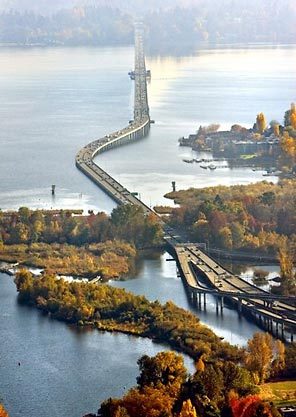
Puget Sound voters will get a chance to weigh in on a $17.9 billion second-phase Sound Transit proposal next month that would extend the starter north-south light rail line in both directions and east, and add to existing ST express bus and commuter rail service. Other regional needs include replacing the shaky Alaskan Way Viaduct and the Highway 520 bridge across Lake Washington; fixing dangerous Highway 2 in Snohomish County; revising tangled interchanges and repairing cracked pavement on Interstate 5 in Seattle (a crucial but unfunded $2 billion job that's rarely discussed); and building key missing links in Pierce County, such as the Cross-Base Highway and the Highway 167 connector to the Port of Tacoma.
Funding the roads piece, and any major additions to the regional transit infrastructure beyond the pending "Sound Transit 2" plan, will be daunting. Regional taxpayers here aren't a bottomless well. And the federal role in surface transportation funding has been heading into permanent decline, as Atlanta's planners and the Los Angeles Times both pointedly note. The federal gas tax hasn't been raised since 1993, and no amount of Beltway jabber and finagling will produce any substantive hike in it soon, or quite possibly ever again. The federal gas tax trust fund was poised to land about $4.3 billion in the red by last month's end, but as Logistics Management reports, Congress threw the troubled account a one-year life preserver of $8 billion from the U.S. Treasury General Fund.
State gas taxes, which often support state bonding for transportation projects, are losing buying power, too. Oklahoma's road and bridge bonds are getting pricier because of tighter credit. Connecticut couldn't find a refinancing deal for highly-rated transportation project bonds worth nearly half a billion dollars, a never-before challenge for a state with serious surface transportation needs. Syndicated columnist Neil Peirce writes in The Seattle Times, "The Wall Street fiscal crisis effectively shut the state-local government sector out of borrowing." Well before that storm hit, state transportation project budgets had already been smacked by sharply rising costs for construction materials and equipment fuel, plus a tightening global labor market. India, China, and other fast-developing nations are on a global road building binge.
It's true that a proposed U.S. infrastructure bank could raise some $60 billion over 10 years for deserving projects. That'd be a start, but as Congressional Quarterly reports, the National Surface Transportation Policy and Revenue Study Commission, in a major report issued earlier this year, said $225 billion per annum is needed for the next 50 years for repairs and upgrades to meet future needs. That's $12.5 trillion. The commission noted that current expenditures are less than 40 percent of their recommended yearly nut and that future funding will need to be closely tied to cost-benefit analyses and performance-based outcomes. Expect some major wrangling next year when the new Congress takes up reauthorization of the surface transportation bill, which is rather hopefully named the Safe, Accountable, Flexible, Efficient, Transportation Equity Act, a Legacy for Users — or SAFETEA-LU to you. The commission's scarifying estimate dovetails, roughly, with one by the American Society of Civil Engineers: Just to get moving on vital projects, the nation's infrastructure needs an infusion of $1.6 trillion over the next five years.
A promising development, as much or more for its cost-saving peak-hour rationing incentives as for its revenue-raising potential — is variable-fee highway tolling, now spreading across the U.S., often in so-called HOT lanes. A HOT lane pilot project is under way on Highway 167 in metro Puget Sound, and a federal grant to help fund the Highway 520 bridge replacement requires state legislative approval of pricing on 520.
Even Democrats embrace public-private partnerships
Whether Puget Sound decides to move toward regional variable-fee highway tolling, there's another important tool we're going to be hearing more about: public-private partnerships, or P3s, which help share taxpayer risk and dramatically speed up project delivery. They're not a solution for every occasion, but they deserve leeway to support more of our region's and nation's staggering surface infrastructure needs. P3s are widespread in Europe, Canada, and Australia and now are beginning to gather steam stateside.
High-profile Democrats such as Pennsylvania governor Ed Rendell, House Speaker Nancy Pelosi, Los Angeles Mayor Antonio Villaraigosa, and Chicago Mayor Richard M. Daley are all supporters. The new, Democratic Governor of New York, David Paterson, is interested in transportation P3s, too.
P3s need not involve the sale of public assets such as highways and bridges or transit systems but, rather, the leasing of such facilities, which then yield toll or fare revenue for the private operators. These operators are not reviled foreign sovereign concerns. They are either transit service firms or special "private" infrastructure investment groups which may be headquartered in Europe or Australia but are increasingly bankrolled by U.S. public employee union pension funds or those of building trades unions. Those funds have lost some value in their stock portfolios lately, but they're still flush and see infrastructure as good risk diversification for their long-term obligations to pensioners.
The Washington State Investment Board, representing a slew of state employee retirement funds, plans to invest 5 percent of its sizeable portfolio in infrastructure. The board explains here (p. 2) that it has come to view "tangible asset types" (other than real estate and) including infrastructure as capable of producing "long-term" and "high-quality" revenue streams. A number of others public employee union pension funds in North America have invested in infrastructure, and more have announced similar plans.
They tend to go with the private infrastructure investment groups because directly buying state highway bonds doesn't meet their fiduciary duties to pensioners. Interest earnings on state bonds are tax-exempt, so interest rates are correspondingly a bit lower. Yet public pension funds are already granted a tax exemption on interest earned, so unlike individual investors they have no financial incentive to go for the state bonds. In fact, they have a disincentive, as Robert Poole of the Reason Foundation explains.
For the WSIB and most other public-employee pension fund managers, investing in privately held companies is simply a part of smart portfolio diversification and risk management. As of last year, WSIB had already earned $9.7 billion in private equity profits since 1981 and had one-seventh of its portfolio in private equity.
The proliferation of P3
Can P3 investments that are paid off in toll revenue still prove viable as worries persist about gas prices and road travel volume? In a word, yes. Travelers value their time most of all; private vehicles are usually more direct, flexible and faster than transit; and tolls for managed lanes guaranteed to maintain traffic flow of 45 mph or higher yield a valued benefit, like housing, utilities, and groceries. This perspective cuts across income levels. UCLA and USC researchers in a case study released this year found a sizable percentage of lower-income drivers used HOT lanes and that it was less regressive in terms of tax policy for them to pay related tolls versus sales taxes for transportation projects.
Fears tend to be overblown about runaway toll rates to cover P3 finance costs and profit margins. Governments retain control over P3 toll rates and transit fares. The contracts between private partners and governments are long-term, usually 35 years or more. That's plenty of time to make the margins. In the meantime, P3s deliver transportation projects sooner rather than later or not at all, thus providing quantifiable economic benefits that are rarely counted by critics.
A slew of P3s and traditional-procurement projects studied by The University of Melbourne showed the P3s were up to 30.8 percent more cost-efficient from inception; that cost overruns were nearly non-existent for P3s; that they were completed faster, even when large; were far more transparent; and their benefits tended to be underestimated because the hefty value to the public of quicker project completion and integrated professional management aren't part of the present calculus.
Cal Marsella, the Executive Director of Denver's Regional Transportation District, which is now pursuing a P3 bid process (and, yes, perhaps a small sales tax hike) to complete an over-budget regional light rail program within the original timeline, states in this presentation that P3s can save 10 percent to 25 percent in the design-build phase and 10 percent to 30 percent in the course of operations and maintenance.
This approach to P3s emphasizes bundling of design, construction, operations, and maintenance services provided by private consortiums of industry-leading transportation firms. The payments occur over time and can be pegged to strict contractual performance standards. Exemplified in British Columbia, it's a strategy well-suited to controlling cost overruns during construction, meeting construction deadlines, limiting operations and maintenance costs after project delivery, and ensuring good service. Partnerships BC has employed design-build-operate P3 contracts, or some variation thereof, to construct a new rapid rail line to the airport and the suburban center of Richmond, to rebuild the treacherous road north to Whistler before the 2010 Winter Olympics, and to develop an electronically-tolled bridge across the Fraser River in Vancouver's east suburbs.
The American Public Transit Association in a white paper on public transit P3s says they're no silver bullet but need to be encouraged as part of the financing mix and as a good management tool. Europe, Asia, Australia, and South America are far ahead of the U.S. in implementing public transit P3s, APTA says, although Houston, the Bay Area, and Denver are highlighting the approach. Private investment in transit-oriented development is a related tack and should be encouraged, according to APTA, by working with developers to learn their needs and by encouraging value-capture strategies pegged to new development around transit stations. To facilitate broader consideration of highway and transit P3s, APTA's P3 task force has drafted model legislation for state governments to consider.
Another organization, the National Council For Public-Private Partnerships, holds a special conference this week on transit P3s, including officials from the regions of Boston, Miami, Atlanta, Dallas, and Charlotte, as well as federal figures and private firms.
Zero miles, shared miles, efficient miles
While the U.S. struggles to fund the surface transportation infrastructure backlog and shift the balance from fossil-fueled vehicles to greener alternatives, the world is undergoing a vehicle population boom. A New York University study projects total vehicle stock will more than double globally between 2002 and 2030, with the highest annual percentage growth rates in vehicles per 1,000 population in Asia and South America.
BTS data show that since 1960, the number of passenger vehicles in use globally has about quadrupled, while the U.S. share of that total has decreased more than five-fold. Global commercial truck population is five times greater over the same period, with the U.S. share holding steady at less than a third.
However, in the U.S. we tend to drive longer distances and use a disproportionate share of available fossil fuels. The holy grail in the auto industry is substitution of renewable-source electricity for fossil fuels, in "flex-fuel" plug-in hybrid cars. The vision is that they'll be able to run not only on clean electricity (itself a major undertaking) but also net-green second generation bio-fuels, which don't require acres of food-producing farmland to grow.
GM, Toyota, Ford, and Chrysler are among the automakers focused on bringing plug-in electric flex-fuel hybrids to market in the next few years, with lithium ion battery packs. Those haven't been fully debugged, but engineering teams are working hard to do so. Congress has passed a tax exemption of up to $7,500 per vehicle for plug-in buyers, and large government and corporate fleet purchases would allow manufacturers to scale up production for the masses.
There are still environmental and financial reasons to try to engineer boundaries on growth of vehicle miles traveled. A good framework was provided last month in Redmond by Microsoft Chief Environmental Strategist Rob Bernard at Cascadia Center's "Beyond Oil: Transforming Transportation" conference. (TVW video of Bernard and a full transcript of his remarks.)
Bernard set out a hierarchy of descending transportation preferences that he calls "zero miles, shared miles, and efficient miles":
*
The first priority entails schedule-juggling and trip avoidance through tele-work from home, with small meetings as needed in locales near workers' home bases. More than a few Microsoft employees have discovered they can meet near home at a coffee shop rather than drive to Redmond, Bernard said. An astounding 40 percent of the workforce at British Telecom (a Microsoft client) work from home regularly, Bernard said.
With current virtual conferencing tools, and an emphasis on "deliverables" from tele-workers, many other employers — albeit not those in fields such as manufacturing, construction, or retail — could raise their percentage of tele-workers.
*
"Shared miles" would cover public transit, but at present transit routes here just aren't convenient for that many people, said Bernard. He evangelized for an alternative of matching ride-sharers on the fly through smart carpooling, using networked real-time data on the shifting locations and schedules of riders. The same basic principles could help better consolidate freight shipments, said Bernard.
*
"Efficient miles" entail alternative fuel breakthroughs and more of the real-time traffic data purveyed by companies such as the Microsoft spin-off Inrix, of Kirkland, to help drivers optimize routes and departure times.
As far as behavior change around driving, there's a long way to go. If we were constantly reminded of the cost to the infrastructure every time we used it, would that change our actions enough to make a difference, a "zero miles more often" difference? It's not unimaginable.
For surface transportation funding, the federal teat is running dry. States and especially regions will shoulder the brunt in coming decades as we try to catch up before the rising tide of population threatens to overwhelms us. So we're going to have to do a few things differently. We can start sooner, or we can start later. But the longer we wait, the higher the price.
Matt Rosenberg is a senior fellow at the Cascadia Center for Regional Development, a transportation think tank that is part of the Discovery Institute in Seattle. E-mail him at mattr@discovery.org.
View this story online at: http://crosscut.com/2008/10/21/transportation/18586/
Transportation
Tuesday, October 21, 2008
How to pay for the Nation's roads - a case for public private partnerships


Friday, April 11, 2008
Road performance review thru 2005
http://www.reason.org/ps360.pdf to obtain color graphs which did not transfer onto the blog
June 2007. In any case, most graphs are described in the text.
16th AnnuAl RepoRt on the peRfoRmAnce
of StAte highwAy SyStemS (1984-2005)
By David T. Hartgen, Ph.D., P.E., and Ravi K. Karanam
Project Director: Adrian T. Moore, Ph.D.
POLICY
STUDY
360
Reason Foundation
Reason Foundation’s mission is to advance a free society by developing, ap-
plying, and promoting libertarian principles, including individual liberty, free
markets, and the rule of law. We use journalism and public policy research to
influence the frameworks and actions of policymakers, journalists, and opin-
ion leaders.
Reason Foundation’s nonpartisan public policy research promotes choice,
competition, and a dynamic market economy as the foundation for human
dignity and progress. Reason produces rigorous, peer-reviewed research and directly engages the policy process, seeking strategies that emphasize cooperation, flexibility, local knowledge, and results. Through practical and innovative approaches to complex problems, Reason seeks to change the way people think about issues, and promote policies that allow and encourage individuals and voluntary institutions to flourish.
Reason Foundation is a tax-exempt research and education organization as
defined under IRS code 501(c)(3). Reason Foundation is supported by volun-
tary contributions from individuals, foundations, and corporations. The views
are those of the author, not necessarily those of Reason Foundation or its
trustees.
Copyright © 2007 Reason Foundation. All rights reserved.
R e a s o n F o u n d a t i o n
16th Annual Report on the Performance
of State Highway Systems (1984-2005)
By David T. Hartgen, Ph.D., P.E. and Ravi K. Karanam
Project Director: Adrian T. Moore, Ph.D.
This is the 16th annual report in a series on the condition and performance of the U.S. state-owned
road system. The report is supported this year by Reason Foundation, a public policy research
institution. The views expressed in the report are solely those of the authors. Copyright 2007 by the
authors. Permission to copy and reproduce by electronic or paper means with appropriate credit is
given.
R e a s o n F o u n d a t i o n
Table of Contents
Overview ... . 1
Cost-Effectiveness Rankings of the States ... .. 4
Trends in Performance Indicators: ... ... 7
System Extent ... . 8
Resources ... .. 10
System Performance ... . 15
Individual State Results... ... 27
Alabama ... . 27
Alaska ... . 27
Arizona ... .. 27
Arkansas ... . 28
California ... .. 28
Colorado ... 28
Connecticut ... . 28
Delaware ... .. 29
Florida... . 29
Georgia ... .. 29
Hawaii ... 30
Idaho ... .. 30
Illinois ... . 30
Indiana... 31
Iowa... . 31
Kansas ... . 31
Kentucky ... 31
Louisiana ... 32
Maine ... . 32
Maryland... 32
Massachusetts... .. 33
Michigan ... 33
Minnesota ... . 33
Mississippi ... . 33
Missouri ... . 34
Montana ... 34
Nebraska ... 34
Nevada ... .. 35
New Hampshire ... . 35
New Jersey ... 35
New Mexico ... 36
New York ... .. 36
North Carolina ... 36
North Dakota ... .. 36
Ohio ... 37
Oklahoma ... . 37
Oregon ... .. 37
Pennsylvania ... 38
Rhode Island ... 38
South Carolina ... 38
South Dakota ... .. 38
Tennessee ... . 39
Texas ... .. 39
Utah... . 39
Vermont ... . 40
Virginia... 40
Washington ... .. 40
West Virginia ... 40
Wisconsin ... . 41
Wyoming ... .. 41
About the Authors... . 42
Related Reason Studies ... .. 43
Endnotes... ... 44
Tables and Figures
Table 1A: Expenditures and Performance of State-Owned Highways, 1998-2005... . 2
Table 1B: State Ranks ... . 5
Table 2: State-Controlled Highway Mileage ... . 8
Table 3: State Highway Agency Mileage ... ... 9
Table 4: Receipts per State-Controlled Mile... .. 10
Table 5: Capital & Bridge Disbursements per State-Controlled Mile ... .. 11
Table 6: Maintenance Disbursements per State-Controlled Mile ... . 12
Table 7: Administrative Disbursements per State-Controlled Mile ... . 13
Table 8: Total Disbursements per State-Controlled Mile ... . 14
Table 9: Rural Interstate Condition ... ... 15
Table 10: Urban Interstate Condition ... .. 17
Table 11: Rural Arterial Condition ... . 19
Table 12: Urban Interstate Congestion ... ... 21
Table 13: Deficient Bridges ... .. 23
Table 14: Fatality Rates ... .. 24
Table 15: Rural Narrow Lanes ... . 26
Figure 1: Trends in U.S. Highway Performance Indicators... .. 1
Figure 2: Overall Rank... . 6
Figure 3: Rural Interstate: Poor Condition Rank ... ... 16
Figure 4: Urban Interstate: Poor Condition Rank ... . 18
Figure 5: Rural Arterial Condition: Poor Condition Rank... .. 20
Figure 6: Urban Interstate Congestion Rank ... ... 22
Figure 7: Fatality Rates ... . 25
16TH ANNUAL HIGHWAY STUDY 1
P a r t 1
Overview
he states reversed the 2004 declines in highway condition by spending federal funds approved
by Congress in 2005 for improved pavements, bridge repairs, and congestion relief. The
nation's continuing trend of generally improving highway performance from 1998 to 2003 was reestablished in 2005.
Federal highway funds increased about 13 percent between 2004 and 2005, as the states saw the first full year of additional funds from the new federal highway program. Capital and bridge expenditures increased 12 percent and maintenance expenditures increased 11 percent.
Administrative costs were flat.
Figure 1: Trends in U.S. Highway Performance Indicators
1.4 .
. 1.2
Worse
. 1.0
Better
. 0.8
. 0.6
. 0.4
. 0.2
0
1998 1999
Urban Interstate Congestion
Narrow lanes
Fatality Rate
Urban Interstate Pavement Condition Deficient Bridges
Rural Interstate Pavement Condition
Rural Arterial Pavement Condition
2000 2001 2002 2003 2004 2005
2 Reason Foundation
The states converted the additional funding into improved performance. The percent of roads in
poor condition fell sharply for both the interstate and rural primary roads. Increasingly, the
remaining serious pavement condition problems are confined to just a few states. The percentage of bridges rated deficient also improved slightly. The states also held their ground on congestion and narrow lanes. But accident rates crept up slightly.
Substantial as it is, this progress was offset slightly by several troublesome problems. The
condition of secondary and local roads continues to worsen. Over one half of urban interstates
remain congested, and the states’ ability to deal with congestion seems to be slowing. And one
quarter of the nation’s bridges are still rated ‘deficient’; at the current improvement rate it will take 50 years to eliminate bridge deficiencies. Highway fatalities have edged up, increasing the fatality rate slightly. And sharp increases in highway construction costs in 2005-2006 mean that fewer repairs can be made from the same dollars.
This 16th annual study tracks the performance of the state-owned roads from 1984 to 2005. Twelve indicators—covering the states’ highway revenues and expenditures, pavement and bridge
condition, congestion, accident rates, and narrow lanes—make up each state’s overall rating. The
study is based on spending and performance data submitted to the federal government by the state
highway agencies.
Table 1A: Expenditures and Performance of State-Owned Highways, 1998-2005
Statistic 1998 2004 2005 Percent Change,
04-05
Total Revenues, All Sources, $B $67.80 $90.68 $102.71 13.27
Total Expenditures, $B $66.40 $87.69 $98.91 12.80
Expenditures, Capital/Bridges, $B $36.30 $47.74 $50.31 5.38
Expenditures, Maintenance, $B $11.40 $14.29 $15.94 11.55
Expenditures, Administration, $B $4.70 $6.32 $6.36 0.63
Highway Construction Price Index 126.9 154.4 175.4 13.6
Rural Interstate, Percent Poor Condition 3.25 2.02 1.73 -15.84
Urban Interstate, Percent Poor Condition 8.69 7.13 5.97 -16.27
Rural Primary, Percent Poor Condition 1.42 0.94 0.85 -9.57
Urban Interstate, Percent Congested 45.90 51.60 51.85 0.48
Bridges, Percent Deficient 29 25.03 24.53 -2.12
Fatality Rate per 100 Million Miles Driven 1.58 1.440 1.453 0.69
Rural Primary, Percent Narrow Lanes 11.04 10.72 10.72 -0.19
Bold =Worsened
16TH ANNUAL HIGHWAY STUDY 3
The study also found wide variations among the states in road performance. Just six states (New
York, Alabama, California, Utah, Alaska and Michigan) have over 60 percent of the poor rural
interstate mileage in the country. And four states (California, Minnesota, New Jersey and North
Carolina) have more than 70 percent of their urban interstates congested. The states also vary
widely by fatality rates. Massachusetts reported the lowest rate, Montana the highest.
Congress passed new highway legislation in August 2005. The federal bill increased highway
funding by about 40 percent over 1998 levels. Congress did not address fundamental reforms in
how road projects are financed, so the action averted a looming drop in highway performance. But there is still cause for concern about the lack of progress in reducing congestion. It is simply
unacceptable for half of urban interstates to be congested. We need to spend our dollars on real
problems, not frills. States need to re-think their priorities and focus more on congestion reduction and mobility provision.
4 Reason Foundation
P a r t 2
Cost-Effectiveness Rankings of the
States
his report continues its annual ranking of the state highway systems on costs versus
effectiveness. Since the states have different budgets, system sizes and traffic, comparative
performance depends on both system quality and on resources available. To determine relative performance, state highway budgets (per mile of responsibility) are compared with system
performance, state by state. States ranked high typically have good-condition systems along with relatively thin budgets.1
The following table shows the results for 2005. For 2005, the top three states in overall costeffectiveness—North Dakota, South Carolina and Kansas—are followed by New Mexico, Montana, Georgia, Wyoming, Oregon, Nevada and Idaho.
Several states improved their rankings sharply from 2004:
Missouri jumped from 28th to 17th after sharp improvements in its pavement condition. Nevada moved up 12 positions from 21st to 9th.
Indiana moved up from 23rd to 14th.
Montana moved up from 13th to 5th.
16TH ANNUAL HIGHWAY STUDY 5
Table 1B: State Ranks
2005 Overall Cost- State 1998 Overall Cost- 2004 Overall Cost- Change, 2004-2005
Effectiveness Rank Effectiveness Rating Effectiveness Rank
1 North Dakota 1 1 0
2 South Carolina 4 2 0
3 Kansas 11 6 3
4 New Mexico 31 4 0
5 Montana 3 13 8
6 Georgia 6 3 -3
7 Wyoming 2 9 2
8 Oregon 8 5 -3
9 Nevada 13 21 12
10 Idaho 5 7 -3
11 South Dakota 15 14 3
12 Kentucky 9 10 -2
13 Minnesota 32 12 -1
14 Indiana 23 23 9
15 Texas 7 8 -7
16 Ohio 28 17 1
17 Missouri 14 28 11
18 Virginia 18 11 -7
19 Nebraska 17 16 -3
20 Tennessee 26 19 -1
21 Utah 30 27 6
22 Wisconsin 29 18 -4
23 Maine 12 22 -1
24 Oklahoma 27 20 -4
25 Mississippi 19 26 1
26 West Virginia 22 15 -11
27 Arizona 20 29 2
28 Arkansas 47 33 5
29 Colorado 45 36 7
30 Louisiana 39 34 4
31 North Carolina 35 30 -1
32 Washington 24 38 6
33 Illinois 36 32 -1
34 New Hampshire 16 25 -9
35 Iowa 25 31 -4
36 Pennsylvania 33 35 -1
37 Vermont 34 24 -13
38 Maryland 37 43 5
39 Connecticut 41 40 1
40 Delaware 38 37 -3
41 Florida 40 41 0
42 Michigan 42 39 -3
43 Alabama 10 42 -1
44 California 44 45 1
45 Massachusetts 49 48 3
46 Hawaii 46 44 -2
47 Rhode Island 43 47 0
48 New York 48 49 1
49 Alaska 21 46 -3
50 New Jersey 50 50 0
6 Reason Foundation
On the other hand, several states lost ground between 2004 and 2005: Vermont slipped from 24th to 37th.
New Hampshire slipped from 25th to 34th.
West Virginia slipped form 15th to 26th.
Figure 2: Overall Rank
Detailed data and trends in rankings for each of the states are shown in the attached tables:
Go to reason.org/ps360.shtml for Overall State Ranks and
Comparative Performance of State Highway Systems
16TH ANNUAL HIGHWAY STUDY 7
P a r t 3
Trends in Performance Indicators
etails on the trends of performance measures follow. Selected system condition measures are
also shown in the attached maps.
8 Reason Foundation
System Extent
State-Controlled Miles.
State-controlled miles include the State Highway
Systems, state-agency toll roads, some ferry services,
and state-owned systems serving universities and
state parks. Nationwide, about 812,871 miles are
under state control (Table 2, State-Controlled
Highway Mileage), about 2000 more than in 2004.
The smallest state-owned road systems continue to
be Hawaii (975 miles) and Rhode Island (1,102
miles); the largest in Texas (79,651 miles) and North
Carolina (79,779 miles). North Carolina has replaced
Texas as the state with largest state-owned system.
Table 2: State-Controlled Highway
Mileage
Rank State Mileage
1 North Carolina 79,779
2 Texas 79,651
3 Virginia 57,884
4 Pennsylvania 43,283
5 South Carolina 41,582
6 West Virginia 34,051
7 Missouri 32,464
8 Kentucky 27,753
9 Ohio 22,461
10 Georgia 18,274
11 California 18,230
12 Washington 17,836
13 Louisiana 16,696
14 Illinois 16,521
15 Arkansas 16,444
16 New York 15,707
17 Tennessee 14,163
18 Oklahoma 13,389
19 Minnesota 13,182
20 New Mexico 12,205
21 Oregon 12,065
22 Florida 12,040
23 Wisconsin 11,794
24 Indiana 11,183
25 Alabama 11,124
26 Mississippi 10,948
27 Montana 10,789
28 Kansas 10,548
29 Colorado 10,343
30 Nebraska 10,256
31 Michigan 9,735
32 Iowa 9,266
33 Maine 8,684
34 South Dakota 8,038
35 North Dakota 7,405
36 Wyoming 7,404
37 Arizona 6,959
38 Alaska 6,420
39 Nevada 5,922
40 Utah 5,868
41 Maryland 5,277
42 Delaware 5,243
43 Idaho 4,957
44 New Hampshire 4,004
45 Connecticut 3,960
46 Massachusetts 3,257
47 New Jersey 2,906
48 Vermont 2,844
49 Rhode Island 1,102
50 Hawaii 975
Total 812,871
Mean 16,257
State Highway Agency Mileage.
About 775,860 miles are the responsibility
of the 50 state highway agencies (Table 3,
State Highway Agency Mileage). In most
states these are generally the Interstates and
other major U.S.-numbered and state-
numbered roads, but a few states also
manage major portions of the rural road
system. A few states (New Jersey, Florida,
California, and Massachusetts) manage
significantly wider roads.
16TH ANNUAL HIGHWAY STUDY 9
Table 3: State Highway Agency Mileage
Rank State Miles Lane miles Ratio
1 West Virginia 33,987 69,955 2.06
2 Alaska 5,659 11,658 2.06
3 Maine 8,548 18,136 2.12
4 North Carolina 79,031 168,655 2.13
5 Virginia 57,860 125,165 2.16
6 South Carolina 41,391 89,543 2.16
7 Delaware 5,243 11,502 2.19
8 Pennsylvania 39,890 88,320 2.21
9 Kentucky 27,510 60,971 2.22
10 New Hampshire 3,975 8,819 2.22
11 Arkansas 16,444 36,665 2.23
12 Missouri 32,464 72,645 2.24
13 Nebraska 9,975 22,440 2.25
14 Montana 10,789 24,480 2.27
15 North Dakota 7,382 16,832 2.28
16 Vermont 2,634 6,045 2.29
17 Louisiana 16,693 38,447 2.30
18 South Dakota 7,873 18,135 2.30
19 Kansas 10,370 23,917 2.31
20 Wyoming 6,757 15,590 2.31
21 Texas 79,648 190,570 2.39
22 Nevada 5,399 13,072 2.42
23 Oregon 7,532 18,239 2.42
24 Idaho 4,957 12,041 2.43
25 Oklahoma 12,285 29,936 2.44
26 New Mexico 11,990 29,291 2.44
27 Minnesota 11,871 29,086 2.45
28 Mississippi 10,896 26,756 2.46
29 Wisconsin 11,782 29,325 2.49
30 Colorado 9,106 22,942 2.52
31 Indiana 11,183 28,317 2.53
32 Ohio 19,292 48,857 2.53
33 New York 15,033 38,084 2.53
34 Alabama 10,955 28,067 2.56
35 Iowa 8,895 22,837 2.57
36 Illinois 16,103 41,833 2.60
37 Tennessee 13,817 35,941 2.60
38 Hawaii 928 2,415 2.60
39 Utah 5,858 15,260 2.60
40 Washington 7,045 18,367 2.61
41 Georgia 17,930 47,003 2.62
42 Rhode Island 1,102 2,898 2.63
43 Connecticut 3,717 9,777 2.63
44 Arizona 6,800 18,503 2.72
45 Michigan 9,698 27,567 2.84
46 Maryland 5,140 14,621 2.84
47 Massachusetts 2,849 8,756 3.07
48 California 15,213 50,559 3.32
49 Florida 12,040 41,477 3.44
50 New Jersey 2,321 8,486 3.66
Total 775,860 1,838,803
Mean 15,517.2 36,776
10 Reason Foundation
Resources
Receipts for State-Administered Roads.
The states obtain their road funds primarily
from state-imposed road user fuel taxes and
fees, the federal government, general funds,
tolls, bonds and other financial initiatives. In
2005 the states received about $102.71
billion for state-administered roads, up
sharply 13.3 percent from 2004 (Table 4,
Receipts per State-Controlled Mile). This
reflects the first full year of SAFETEA-LU
funding. Since 1984, per-mile receipts for
state-owned roads have increased about
218.7 percent. In 2005, receipts per mile of
responsibility averaged $126,354, and
ranged from a low of $36,890 per mile of
responsibility for South Carolina to a high of
$2,370,630 for New Jersey.
Table 4: Receipts per State-Controlled Mile
Rank State Receipts / mile
1 South Carolina $36,890
2 North Dakota $42,199
3 West Virginia $42,804
4 North Carolina $43,715
5 Montana $46,948
6 Missouri $50,099
7 South Dakota $53,079
8 Virginia $55,063
9 Arkansas $55,320
10 New Mexico $56,765
11 Wyoming $58,822
12 Nebraska $61,427
13 Maine $67,954
14 Oklahoma $71,894
15 Kentucky $75,688
16 Louisiana $79,773
17 Mississippi $83,296
18 Kansas $83,832
19 Idaho $85,571
20 Vermont $89,492
21 Alaska $93,028
22 Iowa $94,827
23 Georgia $95,933
24 Oregon $98,766
25 New Hampshire $103,380
26 Minnesota $104,546
27 Tennessee $106,015
28 Washington $107,373
29 Texas $108,820
30 Pennsylvania $111,874
31 Alabama $112,652
32 Ohio $117,624
33 Indiana $126,436
34 Utah $135,117
35 Nevada $143,812
36 Wisconsin $148,768
37 Colorado $150,818
38 Delaware $203,616
39 Michigan $240,272
40 Illinois $249,760
41 Arizona $265,039
42 Maryland $274,984
43 Connecticut $344,347
44 Rhode Island $365,624
45 California $397,951
46 Hawaii $533,169
47 New York $600,702
48 Florida $621,822
49 Massachusetts $753,892
50 New Jersey $2,370,630
Mean $126,354
Capital and Bridge Disbursements.
Capital and bridge disbursements for state-
owned roads totaled $50.309 billion in 2005,
about 5.4 percent higher than in 2004 (Table 5,
Capital and Bridge Disbursements per State-
Controlled Mile). This again reflects the “surge”
forward due to financing from SAFETEA-LU.
Since 1984, per-mile capital and bridge
disbursements have increased about 209.4
percent. Capital and bridge disbursements
averaged $61,891, up 5.4 percent from 2004. On
a per-mile basis, 2005 capital and bridge
disbursements ranged from a low of $17,935 in
South Carolina to a high of $599,979 in New
Jersey.
16TH ANNUAL HIGHWAY STUDY 11
Table 5: Capital & Bridge Disbursements per State-Controlled Mile
Rank State Disbursements/mile
1 South Carolina $17,935
2 Virginia $19,297
3 West Virginia $19,778
4 New Hampshire $21,350
5 New Mexico $24,049
6 North Carolina $26,013
7 Missouri $28,979
8 Maine $29,542
9 Kentucky $30,546
10 Montana $33,438
11 Oklahoma $35,719
12 Wyoming $36,132
13 Nebraska $37,695
14 North Dakota $38,431
15 Arkansas $38,853
16 South Dakota $40,046
17 Vermont $43,798
18 Pennsylvania $49,030
19 Mississippi $51,202
20 Iowa $57,083
21 Louisiana $57,649
22 Colorado $58,392
23 Alaska $58,975
24 Oregon $59,961
25 Washington $62,734
26 Tennessee $63,348
27 Georgia $63,433
28 Idaho $64,862
29 Minnesota $64,971
30 Kansas $67,029
31 Delaware $68,231
32 Ohio $70,710
33 Texas $71,457
34 Indiana $74,421
35 Alabama $77,516
36 Wisconsin $80,287
37 Utah $81,573
38 Nevada $87,716
39 Illinois $117,654
40 Arizona $124,426
41 Michigan $135,271
42 Connecticut $140,322
43 New York $147,011
44 California $157,164
45 Rhode Island $167,735
46 Maryland $186,348
47 Hawaii $214,810
48 Florida $337,530
49 Massachusetts $353,552
50 New Jersey $599,979
Mean $61,891
12 Reason Foundation
Maintenance Disbursements.
Maintenance disbursements increased sharply,
11.5 percent from 2004 to 2005 to $15.94
billion, and accounted for about 16.1 percent of
total disbursements (Table 6, Maintenance
Disbursements per State-Controlled Mile).
Since 1984 per-mile maintenance
disbursements have increased about 165.3
percent. On a per-mile basis 2005 maintenance
disbursements per mile of responsibility
averaged about $19,615. The lowest per-mile
maintenance disbursement was $5,077 in North
Dakota, the highest $153,845 in New Jersey.
Table 6: Maintenance Disbursements per
State-Controlled Mile
Rank State Disbursements/mile
1 North Dakota $5,077
2 Montana $5,973
3 West Virginia $6,673
4 South Dakota $6,983
5 South Carolina $7,297
6 Mississippi $8,454
7 Kentucky $8,864
8 Oregon $9,048
9 Nebraska $9,891
10 North Carolina $9,933
11 Arkansas $10,092
12 Georgia $10,123
13 Idaho $11,678
14 Wyoming $11,895
15 Iowa $13,382
16 Alabama $13,435
17 Oklahoma $13,685
18 Kansas $13,833
19 New Mexico $14,094
20 Wisconsin $14,155
21 Missouri $14,333
22 Nevada $14,693
23 Arizona $15,170
24 Tennessee $16,955
25 Utah $17,271
26 Texas $17,657
27 Virginia $18,282
28 Maine $18,831
29 Vermont $18,981
30 Ohio $19,203
31 Washington $20,129
32 Louisiana $21,319
33 Delaware $22,193
34 Alaska $25,512
35 Minnesota $26,084
36 Michigan $27,481
37 Pennsylvania $28,060
38 Illinois $29,497
39 Hawaii $32,291
40 Colorado $32,419
41 New Hampshire $34,034
42 Connecticut $37,668
43 Indiana $37,884
44 California $43,448
45 Maryland $51,132
46 Massachusetts $52,779
47 New York $71,744
48 Rhode Island $74,506
49 Florida $90,410
50 New Jersey $153,845
Mean $19,615
Administrative Disbursements.
Administrative disbursements increased slightly: they totaled $6.36 billion in 2005, about 0.63 percent higher than in 2004 (Table 7,
Administrative Disbursements per State-
Controlled Mile). Administrative costs
accounted for about 6.43 percent of total
disbursements, down from 7.21 percent in 2004. Since 1984, per-mile administrative
disbursements have increased about 199.4 percent. On a per-mile basis, 2005
administrative disbursements averaged $7,824, ranging from a low of $1,786 in North Dakota to a high of $68,352 in New Jersey.
16TH ANNUAL HIGHWAY STUDY 13
Table 7: Administrative Disbursements per State-Controlled Mile
Rank State Disbursements/mile
1 North Dakota $1,786
2 Arkansas $1,805
3 Missouri $1,989
4 South Carolina $2,061
5 West Virginia $2,356
6 Louisiana $2,837
7 Virginia $3,113
8 Maine $3,136
9 Texas $3,147
10 Montana $3,856
11 Mississippi $3,920
12 Kentucky $3,989
13 North Carolina $4,359
14 Nebraska $5,032
15 Idaho $5,135
16 Iowa $5,148
17 Indiana $5,428
18 Wyoming $5,585
19 South Dakota $5,840
20 Washington $5,971
21 Oregon $6,095
22 Kansas $6,326
23 Colorado $6,856
24 Oklahoma $6,952
25 Alaska $7,172
26 Pennsylvania $7,260
27 Ohio $7,523
28 Nevada $7,684
29 Minnesota $9,702
30 Maryland $10,408
31 Tennessee $10,580
32 New Hampshire $10,659
33 Michigan $10,757
34 Georgia $11,201
35 New Mexico $11,466
36 Alabama $11,621
37 Vermont $12,066
38 Wisconsin $13,184
39 Illinois $13,441
40 Connecticut $14,564
41 Utah $15,337
42 Florida $16,109
43 New York $18,687
44 Rhode Island $24,481
45 Arizona $26,962
46 Delaware $37,172
47 Hawaii $49,924
48 California $50,614
49 Massachusetts $60,807
50 New Jersey $68,352
Mean $7,824
14 Reason Foundation
Total Disbursements.
In total, the states disbursed about $98.905 billion
for state-owned roads in 2005, about 12.8 percent
higher than in 2004 (Table 8, Total
Disbursements per State-Controlled Mile). Since
1984, per-mile total disbursements have increased
about 227.3 percent. On a per-mile basis, 2005
disbursements averaged $121,674. The lowest
disbursement per mile was $31,262 in South
Carolina, the highest $2,360,450 in New Jersey.
Table 8: Total Disbursements per State-
Controlled Mile
Rank State Disbursements/mile
1 South Carolina $31,262
2 West Virginia $41,839
3 North Carolina $44,654
4 Montana $46,905
5 North Dakota $47,685
6 Missouri $52,452
7 Virginia $53,569
8 Kentucky $54,091
9 South Dakota $55,216
10 Arkansas $55,642
11 Wyoming $57,558
12 Nebraska $59,717
13 New Mexico $67,581
14 Maine $68,344
15 Oklahoma $70,984
16 Mississippi $74,617
17 Louisiana $83,061
18 Idaho $87,687
19 Iowa $87,886
20 New Hampshire $88,191
21 Vermont $91,719
22 Oregon $92,102
23 Tennessee $98,547
24 Alaska $99,819
25 Pennsylvania $100,558
26 Texas $106,221
27 Kansas $106,844
28 Georgia $109,005
29 Minnesota $110,066
30 Washington $110,094
31 Alabama $111,286
32 Ohio $122,839
33 Nevada $133,381
34 Colorado $135,251
35 Indiana $138,520
36 Utah $142,167
37 Wisconsin $153,700
38 Illinois $192,318
39 Delaware $210,522
40 Arizona $245,197
41 Michigan $252,879
42 Maryland $293,541
43 California $336,954
44 Connecticut $356,230
45 Rhode Island $361,106
46 Hawaii $491,498
47 New York $552,807
48 Florida $570,191
49 Massachusetts $893,236
50 New Jersey $2,360,450
Mean $121,674
System Performance
Rural Interstate Condition. In most
states road condition is measured
using special machines that determine
the roughness of road surfaces. (A
few states continue to use visual
ratings). About 1.73 percent of U.S.
rural interstates—532 miles out of
30,802—were reported in poor
condition in 2005 (Table 9, Rural
Interstate Condition, and Figure 3).
This has improved sharply from
2004, when 2.02 percent of rural
interstates were rated poor.
The amount of poor mileage varies widely. Twenty-two states reported no poor mileage, and six more
reported less than 1 percent poor
mileage. But four states reported
more than 5 percent poor mileage,
and two states (New York and
Alabama) reported more than 10
percent poor mileage. Just six states
(New York, Alabama, California,
Utah, Alaska and Michigan) have 60 percent of the poor rural interstate mileage in the country. On the other hand, several states made great
progress: Missouri, Pennsylvania and Louisiana made significant gains.
16TH ANNUAL HIGHWAY STUDY 15
Table 9: Rural Interstate Condition
Rank State % Poor
1 Arizona 0.00
1 Connecticut 0.00
1 Florida 0.00
1 Georgia 0.00
1 Hawaii 0.00
1 Indiana 0.00
1 Kansas 0.00
1 Kentucky 0.00
1 Massachusetts 0.00
1 North Dakota 0.00
1 New Mexico 0.00
1 Nevada 0.00
1 Oregon 0.00
1 Rhode Island 0.00
1 South Carolina 0.00
1 Virginia 0.00
1 Tennessee 0.00
1 South Dakota 0.00
1 Ohio 0.00
1 Maine 0.00
1 Minnesota 0.00
1 New Hampshire 0.00
23 Texas 0.09
24 Illinois 0.21
25 Idaho 0.38
26 Montana 0.53
27 Maryland 0.55
28 Missouri 0.63
29 Colorado 1.17
30 Oklahoma 1.17
31 Wyoming 1.34
32 Pennsylvania 1.40
33 Vermont 1.43
34 Louisiana 1.47
35 Iowa 2.07
36 Nebraska 2.12
37 West Virginia 2.27
38 Mississippi 2.27
39 Wisconsin 2.30
40 Arkansas 2.58
41 North Carolina 2.69
42 Washington 2.78
43 California 3.70
44 Utah 4.17
45 Alaska 4.24
46 Michigan 7.72
47 New Jersey 9.38
48 Alabama 12.52
49 New York 13.32
Delaware NA
Mean 1.73
16 Reason Foundation
Figure 3: Rural Interstate: Poor Condition Rank
Urban Interstate Condition.
The urban interstates consist of major multi-lane interstates in and near urban areas. The condition of the urban interstate system also improved
sharply in 2005, to 5.97 percent poor from 7.13 percent poor in 2004 (Table 10, Urban Interstate Condition, and Figure 4).
The condition of the urban interstate also varies widely. Ten widely scattered states reported no poor urban interstate mileage, while four states (Iowa, Hawaii, Alabama, and New York)
reported more than 15 percent poor mileage.
But just five states (California, New York,
Michigan, Alabama and North Carolina) have
half of the poor-mileage urban interstate in the
country. Since 1998, the percentage of poor
urban interstate mileage has been reduced
about 31 percent.
16TH ANNUAL HIGHWAY STUDY 17
Table 10: Urban Interstate Condition
Rank State % Poor
1 Alaska 0.00
1 Arizona 0.00
1 Georgia 0.00
1 Kansas 0.00
1 North Dakota 0.00
1 New Hampshire 0.00
1 Oregon 0.00
1 Rhode Island 0.00
1 Utah 0.00
1 Vermont 0.00
11 Florida 0.14
12 South Carolina 0.38
13 Massachusetts 0.84
14 Ohio 1.41
15 Kentucky 1.44
16 South Dakota 1.45
17 Maine 1.47
18 Tennessee 1.69
19 Nevada 1.80
20 Indiana 1.90
21 Pennsylvania 2.38
22 Minnesota 2.56
23 New Mexico 2.58
24 Texas 2.60
25 Mississippi 3.59
26 Wisconsin 3.86
27 Connecticut 3.97
28 Virginia 4.03
29 West Virginia 4.40
30 Delaware 5.00
31 Missouri 5.53
32 Illinois 5.66
33 Arkansas 5.85
34 Washington 6.40
35 Colorado 7.04
36 Louisiana 7.59
37 Maryland 7.67
38 Idaho 9.78
39 North Carolina 9.96
40 Montana 11.67
41 Wyoming 12.22
42 Michigan 12.78
43 New Jersey 12.78
44 California 13.32
45 Nebraska 14.04
46 Oklahoma 14.11
47 New York 16.46
48 Iowa 16.99
49 Alabama 18.21
50 Hawaii 28.00
Mean 5.97
18 Reason Foundation
Figure 4: Urban Interstate: Poor Condition Rank
Rural Arterial Pavement Condition.
The condition of the major rural highways also improved sharply from 2004 to 2005. Overall, about 0.85 percent of the rural other principal arterial system—799 miles out of 94,216 were reported in poor condition (Table 11, Rural
Arterial Condition, and Figure 5). This
compares with 0.94 percent, or about 892
miles, in 2004. Since 1998, the percentage of poor rural primary mileage has decreased
significantly, more than one-third.
The states also vary widely in condition. Ten
states reported no poor rural primary mileage
in 2005, whereas two states (New Hampshire
and Alaska) reported large increases, from
about 0 percent to over 10 percent, from
2003 to 2004. Three other states (Vermont,
Rhode Island and New York) reported more
than 3 percent poor. Just six states (Alaska,
Iowa, New York, South Dakota, North
Carolina, and Mississippi) account for more
than half the poor rural primary mileage in
the country.
16TH ANNUAL HIGHWAY STUDY 19
Table 11: Rural Arterial Condition
Rank State % Poor
1 Arizona 0.00
1 Delaware 0.00
1 Florida 0.00
1 Georgia 0.00
1 Hawaii 0.00
1 Idaho 0.00
1 Kentucky 0.00
1 Massachusetts 0.00
1 Nevada 0.00
1 Utah 0.00
11 Kansas 0.03
12 Montana 0.04
13 Wyoming 0.05
14 South Carolina 0.08
15 Washington 0.10
16 New Mexico 0.11
17 Minnesota 0.14
18 Texas 0.15
19 Tennessee 0.17
20 Indiana 0.17
21 Maryland 0.23
22 Ohio 0.30
23 Wisconsin 0.34
24 Michigan 0.35
25 West Virginia 0.46
26 Arkansas 0.49
27 California 0.50
28 Pennsylvania 0.52
29 Alabama 0.56
30 Connecticut 0.61
31 Nebraska 0.67
32 Missouri 0.69
33 Illinois 0.75
34 Virginia 0.76
35 Oregon 0.79
36 New Jersey 0.81
37 North Dakota 1.02
38 Oklahoma 1.08
39 Colorado 1.21
40 Louisiana 1.55
41 North Carolina 1.66
42 Mississippi 1.75
43 South Dakota 2.34
44 Maine 2.41
45 Iowa 2.49
46 Vermont 3.75
47 New York 3.94
48 New Hampshire 4.19
49 Rhode Island 10.42
50 Alaska 25.35
Mean 0.85
20 Reason Foundation
Figure 5: Rural Arterial Condition: Poor Condition Rank
Urban Interstate Congestion.
There is no generally accepted definition of traffic congestion, but in reporting to the federal government the states use the
volume-to-capacity ratios that are
determined by Transportation Research
Board’s Highway Capacity Manual. The congestion measures for 2005 are not
totally comparable with earlier years, since most states increased the rated capacities of Urban Interstates based on the 1997 and 2000 Highway Capacity Manuals.
Nevertheless, the overall 2005 statistic— 51.85 percent congested—shows just a
slight worsening from 2004 (51.60 percent congested) (see Table 12, Urban Interstate Congestion, and Figure 6). For 2005, about 8,051 miles out of 15,528 urban interstate miles were rated as having
volume/capacity ratios greater than 0.70, the standard for mild congestion.2
The states vary widely in congestion
levels. Four rural states report no
congested urban interstates. But 17 states report more than half of urban interstates congested, and four states (California 83.3 percent, Minnesota 77.8 percent, New
Jersey 73.4 percent and North Carolina
72.5 percent) report more than 70 percent of urban Interstates congested.
16TH ANNUAL HIGHWAY STUDY 21
Table 12: Urban Interstate Congestion
Rank State % Congested
1 Montana 0.00
1 North Dakota 0.00
1 South Dakota 0.00
1 Wyoming 0.00
5 Maine 2.94
6 West Virginia 3.80
7 Vermont 5.00
8 Alaska 8.70
9 New Mexico 16.77
10 Kansas 24.77
11 Indiana 30.99
12 Mississippi 32.65
13 Idaho 34.07
14 Nebraska 34.48
15 Oklahoma 34.68
16 Hawaii 34.69
17 Wisconsin 36.88
18 Oregon 38.95
19 Iowa 39.87
20 Utah 42.52
21 Virginia 42.54
22 Colorado 42.75
23 Pennsylvania 43.17
24 Tennessee 43.96
25 Louisiana 45.74
26 Alabama 47.03
27 Nevada 47.32
28 Massachusetts 47.38
29 Arizona 47.87
30 Missouri 47.95
31 Illinois 48.64
32 Washington 49.33
33 South Carolina 49.37
34 New Hampshire 51.35
35 Georgia 52.46
36 Michigan 52.52
37 New York 53.39
38 Arkansas 54.79
39 Delaware 58.54
40 Florida 59.44
41 Texas 59.67
42 Ohio 59.95
43 Rhode Island 62.00
44 Connecticut 65.56
45 Kentucky 66.99
46 Maryland 68.58
47 North Carolina 72.47
48 New Jersey 73.35
49 Minnesota 77.78
50 California 83.33
Mean 51.85
22 Reason Foundation
Figure 6: Urban Interstate Congestion Rank
Deficient Bridges.
Federal law mandates the uniform inspection
of all bridges for structural and functional
adequacy at least every two years; bridges
rated ‘deficient’ are eligible for federal repair
dollars.
The condition of the nation's highway bridges
continued to improve from 2004 to 2005. Of
the 596,980 highway bridges in the current
National Bridge Inventory, 147,913—about
24.52 percent—were reported deficient for
2005 (Table 13, Deficient Bridges), a slight
improvement from 2004. In 1998 about 29.0
percent were rated deficient. However,
progress is slow; at the current rate of
improvement, it would take 50 years for the
percentage of deficient bridges to be
eliminated.
The states vary widely in the percentage of deficient bridges. Nevada reported the lowest percentage of deficient bridges, 3.89 percent, while Rhode Island reported the highest,
53.01 percent.
16TH ANNUAL HIGHWAY STUDY 23
Table 13: Deficient Bridges
Rank State % Deficient
1 Nevada 3.89
2 Arizona 5.50
3 Wyoming 12.37
4 Colorado 12.96
5 Minnesota 13.16
6 Wisconsin 15.93
7 Delaware 16.55
8 Utah 17.55
9 Illinois 17.56
10 California 17.59
11 Florida 18.33
12 New Mexico 18.43
13 Idaho 18.91
14 Tennessee 19.26
15 Georgia 20.35
16 Texas 20.56
17 Kansas 21.05
18 Montana 21.20
19 Indiana 21.83
20 Arkansas 22.24
21 Virginia 22.46
22 Alaska 22.84
23 Ohio 23.61
24 South Carolina 23.63
25 North Dakota 24.24
26 Nebraska 24.55
27 Washington 24.55
28 Alabama 24.94
29 Oregon 25.34
30 South Dakota 25.62
31 Mississippi 26.42
32 Maryland 26.93
33 Iowa 27.06
34 Michigan 27.60
35 New Jersey 27.91
36 Maine 29.87
37 New Hampshire 30.54
38 Louisiana 30.67
39 North Carolina 30.91
40 Kentucky 31.45
41 Missouri 31.47
42 Oklahoma 33.04
43 Connecticut 34.18
44 Vermont 34.80
45 Massachusetts 36.38
46 Hawaii 36.85
47 New York 37.08
48 West Virginia 37.10
49 Pennsylvania 39.00
50 Rhode Island 53.01
Mean 24.52
24 Reason Foundation
Fatality Rates.
Even though some highway fatalities
occur on other than state-owned roads,
overall fatality rates are an important
overall measure of each state’s road
performance.
The nation’s highway fatality rate
increased slightly (Table 14, Fatality
Rates, and Figure 7): for 2005, 43,395
fatalities were reported, higher than 42,593
reported for 2004. And, because travel
continued to increase, the overall fatality
rate was 1.453 fatalities per 100 million
vehicle miles, up 0.9 percent from 1.440 in
2004.
The states also vary widely by fatality
rates. For 2005, Massachusetts reported
the lowest rate, 0.797, while Montana
reported the highest, 2.256.
Table 14: Fatality Rates
2005 State
1 Massachusetts
2 Connecticut
3 Vermont
4 Minnesota
5 New Jersey
6 New York
7 Rhode Island
8 Michigan
9 Maryland
10 Utah
11 Maine
12 Washington
13 Virginia
14 Ohio
15 New Hampshire
16 Colorado
17 Illinois
18 Indiana
19 California
20 Wisconsin
21 Oregon
22 Hawaii
23 Delaware
24 Alaska
25 Nebraska
26 Kansas
27 Iowa
28 Texas
29 Pennsylvania
30 North Carolina
31 Georgia
32 North Dakota
33 Oklahoma
34 Florida
35 Tennessee
36 West Virginia
37 Missouri
38 Idaho
39 Wyoming
40 Alabama
41 Arizona
42 Arkansas
43 New Mexico
44 Nevada
45 Kentucky
46 Louisiana
47 Mississippi
48 South Carolina
49 South Dakota
50 Montana
Mean
Fatalities per 100
million vehicle miles
0.797
0.865
0.946
0.982
1.013
1.039
1.048
1.085
1.090
1.121
1.132
1.166
1.179
1.197
1.236
1.264
1.264
1.306
1.315
1.358
1.383
1.388
1.409
1.430
1.431
1.445
1.449
1.490
1.496
1.515
1.523
1.625
1.706
1.758
1.793
1.822
1.828
1.850
1.877
1.896
1.968
2.027
2.036
2.055
2.075
2.123
2.207
2.211
2.215
2.256
1.453
16TH ANNUAL HIGHWAY STUDY 25
Figure 7: Fatality Rates
26 Reason Foundation
Narrow Lanes.
Narrow lanes on major rural roads are a key
indicator of sight visibility and design
adequacy. The national design standard for
lane width on major rural roads is generally
12 feet, and few, if any, major rural roads
would be improved without widening lanes
to the standard.
In 2005, about 10.70 percent of rural other
principal arterials—10,181 miles out of
95,134—had narrow lanes less than 12 feet
wide (Table 15, Rural Narrow Lanes),
slightly better than the 10.72 percent
reported in 2004.
The states also vary widely by percentage of
narrow lanes. Seven states reported no
narrow-lane mileage, while West Virginia
(41.81 percent) reported the highest
percentage of narrow lanes.
Table 15: Rural Narrow Lanes
2005 State % Narrow
1 Arizona 0
1 Delaware 0
1 North Dakota 0
1 New Jersey 0
1 Nevada 0
1 South Dakota 0
1 Utah 0
8 Idaho 0.52
9 Kansas 0.81
10 Montana 1.03
11 Connecticut 1.22
12 Georgia 1.34
13 Nebraska 1.56
14 Wyoming 1.86
15 Oklahoma 2.72
16 Wisconsin 2.79
17 Alaska 3.47
18 New Hampshire 3.63
19 Alabama 3.82
20 Rhode Island 4.17
21 Massachusetts 4.79
22 New Mexico 4.84
23 Minnesota 5.08
24 California 5.31
25 Indiana 6.14
26 Maryland 6.58
27 South Carolina 6.89
28 Oregon 7.07
29 Florida 7.6
30 Iowa 8.26
31 Louisiana 9.77
32 Mississippi 10.34
33 North Carolina 12.46
34 Illinois 12.78
35 Colorado 13.24
36 Texas 14.05
37 Ohio 14.51
38 Kentucky 16.32
39 Michigan 19.5
40 Missouri 20.13
41 New York 23.07
42 Vermont 23.99
43 Tennessee 25.23
44 Maine 25.89
45 Arkansas 31.68
46 Virginia 32.18
47 Hawaii 32.43
48 Washington 39.42
49 Pennsylvania 40.58
50 West Virginia 41.81
Mean 10.70
16TH ANNUAL HIGHWAY STUDY 27
P a r t 4
Individual State Results
Alabama
In 2005, Alabama ranked 43rd overall, compared with 11th in 2000. Alabama
scored best on maintenance disbursements per mile (16th) and narrow rural
primary arterials (19th). Its lowest ratings were for urban interstate in poor
condition (49th), rural interstate in poor condition (48th) and fatality rate (40th). The state’s system is deteriorating.
Alaska
Alaska, with a state-owned highway system of 6,420 miles, ranked 49th in overall
performance. The state has worsened in overall performance from 40th in 2000.
Alaska scored best in urban interstate condition (tie for 1st) with no poor urban
interstate reported and 8th in urban interstate congestion. It is the state with the
worst rural primary pavement condition (50th). It also ranked low in rural interstate condition (45th) and maintenance disbursements per mile (34th). In summary, the state is achieving a relatively good condition system, but at relatively high cost.
Arizona
Arizona has 6,959 miles of state-owned highway. Overall the state ranked 27th in
performance in 2005, compared with 28th in 2000. The state reported no rural
interstate in poor condition, no rural primary pavement in poor condition, no
urban interstate in poor condition and no narrow rural primary arterials. It scored
high in bridge condition (2nd). The state ranked lowest for maintenance
disbursements per mile of responsibility (49th), administrative disbursements per mile of
responsibility (45th), receipts per mile of responsibility (41st), fatality rate (41st), capital/bridge
disbursements per mile of responsibility (40th) and total disbursements per mile of responsibility
(40th). So, the state’s relatively good system performance comes at a relatively high unit cost.
28 Reason Foundation
Arkansas
Arkansas is one of the states that sharply improved in overall ranking from 46th in
2000 to 28th in 2005. It scored best in administrative disbursements per mile (2nd),
receipts per mile of responsibility (9th), total disbursements per mile (10th),
maintenance disbursements per mile (11th) and capital/bridge disbursements per
mile (15th). It scored lowest for percent rural primary arterials narrow (45th),
fatality rate (42nd), rural interstate pavement condition (40th) and urban interstate congestion (38th). So while the state has moved up in budget ratings, its system performance needs attention.
California
California reported 18,230 miles of state-owned highway in 2005. Compared to
2000 the state improved slightly from 45th in 2000 to 44th in 2005 in the overall
rankings. The state ranked best in bridge condition (10th) and fatality rate (19th).
But California has the worst urban interstate congestion (50th). It also scored low
in administrative disbursements per mile of responsibility (48th), receipts per mile
of responsibility (45th), capital/bridge disbursements per mile of responsibility (44th), maintenance per mile of responsibility (44th), urban interstate condition (44th), total disbursements per mile of responsibility (43rd) and rural interstate condition (43rd). Overall, California’s relatively high costs per mile of responsibility are not translating into high performance.
Colorado
In 2005 Colorado reported a total of 10,343 miles of state-owned highway. The
state ranked 29th in the overall performance rankings in 2005, losing ground by
ten positions as compared to 19th in 2000. Colorado scored best in bridge
condition (4th) and fatality rate (16th). Its lowest ratings were for maintenance per
mile of responsibility (40th), rural primary pavement condition (39th) and receipts per mile of
responsibility (37th). Its relatively high costs per mile of responsibility are offset by only modest system performance.
Connecticut
Connecticut has a total of 3,960 miles of state-owned highway. The state ranked
39th in overall performance in 2005 as compared to 44nd in 2000. The state
reported no rural interstate in poor condition. It also ranked high in fatality rate
(2nd) and narrow rural primary arterials (11th). But Connecticut ranked lower for
total disbursements per mile of responsibility (44th), urban interstate congestion (44th), bridge
condition (43rd), receipts per mile of responsibility (43rd), capital/bridge disbursements per mile of
16TH ANNUAL HIGHWAY STUDY 29
responsibility (42nd), maintenance disbursements per mile of responsibility (42nd) and
administrative disbursements per mile of responsibility (40th). Essentially, its relatively high costs are offset by generally superior system performance.
Delaware
Delaware has 5,243 miles of highway under the state control. The state stood 40th
in the overall performance rankings in 2005, slightly up from 41st in 2000. Its best
ratings were for rural primary pavement condition (1st), rural primary pavements
narrow (1st) and deficient bridges (7th). Delaware has no rural interstate. Its lowest
rankings were for administrative disbursements per mile of responsibility (41st),
total disbursements per mile of responsibility (39th), urban interstate congestion
(39th) and receipts per mile of responsibility (38th). Overall, its above-average
system performance is offset by its relatively high unit costs.
Florida
The state of Florida has a total of 12,040 miles of state-owned highway. Overall
the state ranked 41st in performance in 2005, compared to 38th in 2000. The state
reported no rural interstate in poor condition and no rural primary pavement in
poor condition. Florida also scored well on urban interstate in poor condition
(11th) and bridge condition (11th). But Florida’s lowest ratings were for
maintenance per mile of responsibility (49th), receipts per mile of responsibility (48th),
capital/bridge disbursements per mile of responsibility (48th), total disbursements per mile of responsibility (48th), administrative disbursements per mile of responsibility (42nd) and urban interstate congestion (40th). So, its superior condition status is offset by relatively high cost per mile of responsibility.
Georgia
Georgia has 18,274 miles of state-owned highway. In the performance ratings
Georgia ranked 6th in 2005 among the 50 states, compared to 4th in 2000. The state
reported no rural interstate in poor condition, no rural primary pavement in poor
condition and no urban interstate in poor condition. Hence it tied for 1st in all the
above categories. Apart from these, its best rankings were for maintenance
disbursements per mile of responsibility (12th), rural other primary arterials narrow (12th) and
deficient bridges (15th). It scored lowest in urban interstate congestion (35th) and administrative
disbursements per mile of responsibility (34th). Georgia has managed to achieve a good balance of
system condition and expenditures which have yielded consistently good overall ratings over time.
30 Reason Foundation
Hawaii
Hawaii has the smallest state-owned highway system at 975 miles. Overall, the
state ranked 46th in the performance rankings in 2005 as compared to 48th in
2000. Its best rankings were for rural interstate condition (1st), rural primary
pavement condition (1st), urban interstate congestion (16th) and administrative
disbursements per mile of responsibility (16th). Its lowest ratings were for urban interstate
condition (50th), capital/bridge disbursements per mile of responsibility (47th), rural primary
pavements narrow (47th), receipts per mile of responsibility (46th), total disbursements per mile of responsibility (46th) and deficient bridges (46th). So, the state has relatively high unit costs which are only partially offset by some good-condition indicators.
Idaho
In 2005, Idaho reported 4,957 miles of state-owned highway. Overall the state
ranked 10th in performance in 2005, compared with 9th in 2000. Idaho scored best
on rural primary pavement condition (1st) with none in poor condition reported,
rural primary arterials narrow (8th), maintenance disbursements per mile of
responsibility (13th), urban interstate congestion (13th), deficient bridges (13th) and
administrative disbursements per mile of responsibility (15th). It scored lowest on
urban interstate condition (38th) and fatality rate (38th). Idaho’s relatively good system condition is
generally accompanied by relatively low unit costs, resulting in overall sound performance over
time.
Illinois
Illinois has 16,521 miles of highway under state control. In 2005, the state ranked
33rd in the overall performance ratings, compared with 35th in 2000. Its best
ratings were for deficient bridges (9th), fatality rate (17th) and rural interstate
condition (24th). Its lowest rankings were for receipts per mile of responsibility
(40th), capital/bridge disbursements per mile of responsibility (39th), administrative
disbursements per mile of responsibility (39th), maintenance disbursements per
mile of responsibility (38th) and total disbursements per mile of responsibility
(38th). Faced with difficult climate and traffic conditions, the state is nevertheless achieving good performance on some indicators at above-average costs.
16TH ANNUAL HIGHWAY STUDY 31
Indiana
The state-owned highway system of Indiana constitutes 11,183 miles of highway.
Overall, the state ranked 14th in the performance ratings in 2005, compared with
17th in 2000. Its best rankings were for rural interstate condition (1st) with none in
poor condition reported, urban interstate congestion (11th), administrative
disbursements per mile of responsibility (17th), fatality rate (18th), deficient bridges
(19th), rural primary pavement condition (20th) and urban interstate condition
(20th). It scored lowest on maintenance disbursements per mile of responsibility (43rd), total
disbursements per mile of responsibility (35th), capital/bridge disbursements per mile of
responsibility (34th) and receipts per mile of responsibility (33rd). On balance the state is achieving above-average system performance at above-average costs.
Iowa
Iowa with 9,266 miles of state-owned highway stood 35th in the overall
performance rankings in 2005. This represents a sharp decline from 23rd position
in 2000. Iowa scored best on maintenance disbursements per mile of responsibility
(15th), administrative disbursements per mile of responsibility (16th), total
disbursements per mile of responsibility (19th), urban interstate congestion (19th), capital/bridge
disbursements per mile of responsibility (20th) and receipts per mile of responsibility (22nd). Its
lowest ratings were for urban interstate condition (48th) and rural primary pavement condition
(45th). So, relatively low unit costs appear insufficient to hold the system at good condition levels.
Kansas
Kansas has 10,549 miles of state-owned highway. In 2005, the state ranked 3rd in
the overall performance rankings, compared to 6th in 2000. Kansas reported no
urban interstate in poor condition and no rural interstate in poor condition. Hence
it tied for 1st in both these categories. It also scored well on rural primary arterials narrow (9th), urban interstate congestion (10th) and rural primary pavement condition (11th). Its lowest ratings were for capital/bridge disbursements per mile of responsibility (30th), total disbursements per mile of responsibility (27th) and fatality rate (26th). Overall Kansas is achieving superior system
condition at lower-than-average costs.
Kentucky
In 2005, Kentucky with a total of 27,753 miles of state-owned highway ranked
12th in the overall performance ratings as compared to 10th in 2000. It reported no
rural interstate in poor condition and no rural primary pavement in poor condition.
32 Reason Foundation
Hence it tied for 1st on both these categories. It also scored well on maintenance disbursements per mile of responsibility (7th), total disbursements per mile of responsibility (8th), capital/bridge
disbursements per mile of responsibility (9th), administrative disbursements per mile of
responsibility (12th), receipts per mile of responsibility (15th) and urban interstate condition (15th). Its lowest ratings were for urban interstate congestion (45th), fatality rate (45th), deficient bridges (40th) and rural primary arterial narrow (38th). So, the state’s overall rating is based on relatively thin budget and modest system condition.
Louisiana
Louisiana has 16,696 miles of highway under state control. Overall the state
ranked 30th in performance in 2005 as compared to 42nd in 2000. It scored best on
administrative disbursements per mile of responsibility (6th), receipts per mile of
responsibility (16th) and total disbursements per mile of responsibility (17th). Its
lowest ratings were for fatality rate (46th), rural primary pavement condition (40th),
deficient bridges (38th) and urban interstate in poor condition (36th). Louisiana’s overall rating is based on holding cost down resulting in some system deterioration; Hurricane Katrina, in
September 2005, may have contributed somewhat to lower system condition.
Maine
Maine has 8,684 miles of highway under state control. In 2005, the state ranked
23rd on the overall performance ratings as compared to 15th in 2000. Its best
ratings were for rural interstate condition (1st) with none in poor condition
reported, urban interstate congestion (5th), capital/bridge disbursements per mile
of responsibility (8th), administrative disbursements per mile of responsibility
(8th) and fatality rate (11th). It scored lowest on rural primary pavement condition (44th), rural primary pavement narrow (44th) and deficient bridges (36th). Maine’s overall rating has slipped slightly in recent years as rural primary road conditions have worsened.
Maryland
Maryland has 3,277 miles of state-owned highway. Overall, the state ranked 38th
in performance in 2005 as compared to 34th in 2000. It scored best on fatality rate
(9th) and rural primary pavement condition (21st). Its lowest ratings were for
capital/bridge disbursements per mile of responsibility (46th), urban interstate congestion (46th), maintenance disbursements per mile of responsibility (45th), receipts per mile of responsibility (42nd) and total disbursements per mile of responsibility (42nd). Maryland’s relatively high unit costs offset its good performance on several condition indicators.
16TH ANNUAL HIGHWAY STUDY 33
Massachusetts
In 2005, Massachusetts reported a total of 3,257 miles of state-owned highway.
The state ranked 45th in the overall performance ratings in 2005, compared with
49th in 2000. Its best ratings were for rural interstate condition (1st), rural primary
pavement condition (1st), fatality rate (1st) and urban interstate in poor condition (13th). It scored lowest on receipts per mile of responsibility (49th), capital/bridge disbursements per mile of responsibility (49th), administrative disbursements per mile of responsibility (49th), total
disbursements per mile of responsibility (49th), maintenance per mile of responsibility (46th) and deficient bridges (45th). Massachusetts has achieved good condition ratings on most condition indicators but at a relatively high unit cost compared with other states.
Michigan
The state-owned highway system of Michigan consists of 9,735 miles. Overall in
2005 the state ranked 42nd on the performance ratings as compared to 43rd in 2000.
Its best ratings were for fatality rate (8th) and rural primary pavement condition
(24th). Its lowest ratings were for rural interstate condition (46th), urban interstate
condition (42nd), capital/bridge disbursements per mile of responsibility (41st), total disbursements per mile of responsibility (41st), receipts per mile of responsibility (39th) and rural primary
pavements narrow (39th). Challenging climate and traffic circumstances along with relatively high unit costs, have contributed to Michigan’s overall rating.
Minnesota
Minnesota has 13,182 miles of highway under the state control. In 2005, the state
ranked 13th on the overall performance ratings. This compares to 12th in 2000. It
scored best on rural interstate condition (1st) with no poor miles reported, fatality
rate (4th) and deficient bridges (5th). Its lowest rankings were for urban interstate
congestion (49th) and maintenance disbursements per mile of responsibility (35th).
Minnesota seems to be holding its own despite rising congestion and unit costs.
Mississippi
Mississippi has a state-owned highway system of 10,948 miles. Overall, the state
ranked 25th in the performance ratings in 2005. This compares to 21st in 2000. It
scored best on maintenance disbursements per mile of responsibility (6th),
administrative disbursements per mile of responsibility (11th), urban interstate
congestion (12th), total disbursements per mile of responsibility (16th), receipts per
mile of responsibility (17th) and capital/bridge disbursements per mile of
34 Reason Foundation
responsibility (19th). Its lowest ratings were for fatality rate (47th), rural primary pavement
condition (42nd) and rural interstate condition (38th). Otherwise sound performance on the cost side is being offset by under-performance of Interstate and rural primary condition.
Missouri
In 2005 Missouri reported a total of 32,464 state-owned miles. Missouri is one of
the states that sharply improved its ranking of overall performance from 2000,
from 39th in 2000 to 17th in 2005. Its best ratings were for administrative
disbursements per mile of responsibility (3rd), receipts per mile of responsibility
(6th), total disbursements per mile of responsibility (6th) and capital/bridge
disbursements per mile of responsibility (7th). It scored lowest on deficient bridges (41st), rural
primary pavements narrow (40th) and fatality rate (37th). So, while holding down and focusing
expenditures, Missouri faces continuing challenges but is moving in the right direction.
Montana
Montana has 10,789 miles of highway under the state control. In 2005, the state
ranked 5th in the overall performance rankings, as compared to 5th in 2000. Its best
rankings were for urban interstate congestion (1st) with none reported,
maintenance disbursements per mile of responsibility (2nd), total disbursements per mile of
responsibility (4th), receipts per mile of responsibility (5th), capital/bridge disbursements per mile of
responsibility (10th), administrative disbursements per mile of responsibility (10th), rural primary
pavements narrow (10th) and rural primary pavement condition (12th). Its worst rankings were for
fatality rate (50th) and urban interstate condition (40th). So, generally light traffic and good system
condition combined with relatively low unit costs have enabled Montana to remain near the top on
overall rating.
Nebraska
Nebraska in 2005 reported a total of 10,256 miles under the state control. Overall
the state scored 19th in the performance ratings in 2005, compared to 29th in 2000.
It scored best on maintenance disbursements per mile of responsibility (9th),
receipts per mile of responsibility (12th), total disbursements per mile of responsibility (12th),
capital/bridge disbursements per mile of responsibility (13th), rural primary pavement narrow
(13th), urban interstate congestion (14th) and administrative disbursements per mile of responsibility (14th). It scored lowest on urban interstate condition (45th) and rural interstate condition (36th).
Nebraska’s relatively low unit costs, combined with sound system performance, contribute to its
overall solid rating.
16TH ANNUAL HIGHWAY STUDY 35
Nevada
Nevada has 5,922 miles of highway under the state-owned system. In 2005, the
state ranked 9th in the overall performance ratings as compared to 13th in 2000.
Nevada scored best on rural interstate condition (1st), rural primary pavement
condition (1st), rural primary pavement narrow (1st) and deficient bridges (1st). It
scored lowest on fatality rate (44th), capital/bridge disbursements per mile of
responsibility (38th), receipts per mile of responsibility (35th) and total
disbursements per mile of responsibility (33rd). Relatively low traffic and good system condition are sufficient to offset relatively high costs and accident rates.
New Hampshire
The total state-owned highway system of New Hampshire consists of 4,004 miles
of highway. In 2005 the state ranked 34th in the overall performance ratings as
compared to 26th in 2000. Its best ratings were for rural interstate condition (1st),
urban interstate condition (1st) and capital/bridge disbursements per mile of
responsibility (4th). It scored lowest on rural primary pavement condition (48th),
maintenance disbursements per mile of responsibility (41st), deficient bridges
(37th) and urban interstate congestion (34th). Increasing urbanization, a challenging
climate and higher unit costs are offsetting otherwise sound performance.
New Jersey
New Jersey has 2,906 miles of state-owned highway. Overall, the state ranked 50th
in the overall performance ratings in 2005. This compares to 50th in 2000. It
scored best on rural primary pavements narrow (1st) and fatality rate (5th). Its
lowest rankings were for receipts per mile of responsibility (50th), capital/bridge
disbursements per mile of responsibility (50th), administrative disbursements per
mile of responsibility (50th), maintenance disbursements per mile of responsibility
(50th), total disbursements per mile of responsibility (50th), urban interstate
congestion (48th), rural interstate pavement condition (47th) and urban interstate
condition (43rd). Very high unit costs relative to other states, in combination with traffic, more than offset low accident rates and rural pavement condition.
36 Reason Foundation
New Mexico
In 2005, New Mexico reported 12,205 miles under the state control. The state
ranked 4th in the overall performance ratings in 2005. This represents a sharp
improvement from 2000 when the state ranked 27th. Its best ratings were for rural
interstate condition (1st), capital/bridge disbursements per mile of responsibility
(5th), urban interstate congestion (9th), receipts per mile of responsibility (10th),
deficient bridges (12th), total disbursements per mile of responsibility (13th) and rural primary
pavement condition (16th). Its worst ratings were for fatality rate (43rd) and administrative
disbursements per mile of responsibility (35th). New Mexico’s solid condition ratings are more than enough to offset its high fatality rate and administrative costs.
New York
New York in 2005 reported a total of 15,707 miles of highway under the state
control. Overall in 2005, the state ranked 48th in the overall performance ratings,
as compared to 47th in 2000. New York scored best on fatality rate (6th). Its lowest
rankings were for rural interstate condition (49th), receipts per mile of
responsibility (47th), maintenance disbursements per mile of responsibility (47th), total
disbursements per mile of responsibility (47th), rural primary pavement condition (47th), urban
interstate condition (47th) and deficient bridges (47th). New York’s high unit costs, combined with
challenging climate and traffic circumstances, have resulted in a relatively low overall ranking.
North Carolina
North Carolina has the largest state-owned highway system, at 79,779 miles,
overtaking Texas which has just 128 fewer miles. Overall the state ranked 31st in
performance in 2005, compared with 25th in 2000. North Carolina scored best on
receipts per mile of responsibility (4th) and capital/bridge disbursements per mile of responsibility
(6th). Its lowest ratings were for urban interstate congestion (47th), rural interstate pavement
condition (41st), rural primary pavement condition (41st) and urban interstate pavement condition
(39th). The state’s low unit cost advantage is being offset by deteriorating system condition.
North Dakota
North Dakota has a total of 7,405 miles under the state-owned highway system. In
2005, the state ranked 1st in the overall performance ratings, compared to 2nd in
2000. Its best rankings were for urban interstate condition (1st), urban interstate
congestion (1st), rural primary pavements narrow (1st), rural interstate condition (1st), administrative
disbursements per mile of responsibility (1st), maintenance disbursements per mile of responsibility
16TH ANNUAL HIGHWAY STUDY 37
(1st), receipts per mile of responsibility (2nd) and total disbursements per mile of responsibility (5th). Its lowest ratings were for rural primary pavement narrow (37th) and fatality rate (32nd). North
Dakota’s relatively low traffic volumes and good system condition, combined with relatively low unit costs, have consistently placed it in the top-performing states.
Ohio
Ohio has 22,461 miles of highway under the state control. Overall, the state
ranked 16th in the performance ratings in 2005 as compared to 22nd in 2000. The
state scored best on rural interstate condition (1st), urban interstate condition (14th)
and fatality rate (14th). It scored lowest on urban interstate congestion (42nd) and
rural primary pavement narrow (37th). Ohio shows steady system improvement with attention to unit costs.
Oklahoma
In 2005, Oklahoma reported 13,389 miles of highway under the state control. The
state ranked 24th in the overall performance rankings in 2005, as compared to 31st
in 2000. Oklahoma’s best ratings were for capital/bridge disbursements per mile
of responsibility (11th), receipts per mile of responsibility (14th), total disbursements per mile of
responsibility (15th), urban interstate congestion (15th), rural primary pavement narrow (15th) and
maintenance disbursements per mile of responsibility (17th). Its lowest ratings were for urban
interstate condition (46th), deficient bridges (42nd), rural primary pavement condition (38th) and
fatality rate (33rd). Oklahoma’s worse-than-average system performance is offset by its relatively
low unit costs.
Oregon
The state-owned highway system of Oregon consists of 12,065 miles of highway.
In 2005, the state ranked 8th in the overall performance ratings as opposed to 7th in
2000. Oregon scored best on urban interstate condition (1st), rural interstate
condition (1st) and maintenance per mile of responsibility (8th). The state’s lowest
ratings were for rural primary pavement condition (35th), deficient bridges (29th) and rural primary pavement narrow (28th). Oregon displays overall steady performance.
38 Reason Foundation
Pennsylvania
Pennsylvania has 43,283 miles of highway under the state control. Overall, the state stood 36nd in the performance ratings in 2005, compared with 33rd in 2000. Pennsylvania scored best on capital/bridge disbursements per mile of
responsibility (18th), urban interstate condition (21st) and urban interstate congestion (23rd). Its lowest rankings were for rural primary pavement narrow (49th), deficient bridges (49th) and maintenance disbursements per mile of responsibility (37th). Pennsylvania balances its average total disbursements with average conditions.
Rhode Island
In 2005, Rhode Island reported 1,102 miles of highway under the state-owned
highway system. The state ranked 47th in the performance rankings in 2005 as
compared to 36th in 2000. The state’s best ratings were for rural interstate
condition (1st), urban interstate condition (1st) and fatality rate (7th). The state
scored lowest on deficient bridges (50th), rural primary pavement condition (49th),
maintenance disbursements per mile of responsibility (48th), total disbursements per mile of
responsibility (45th), capital/bridge disbursements per mile of responsibility (45th), receipts per mile
of responsibility (44th), administrative disbursements per mile of responsibility (44th) and urban
interstate congestion (43rd). Rhode Island has relatively high costs compared to system condition.
South Carolina
South Carolina, with a total of 41,582 miles of state-owned highway, stood 2nd in
the overall performance rankings in 2005. This compares to 3rd in 2000. South
Carolina scored best on receipts per mile of responsibility (1st), capital/bridge
disbursements per mile of responsibility (1st), total disbursements per mile of
responsibility (1st), rural interstate condition (1st), administrative disbursements per mile of
responsibility (4th) and maintenance per mile of responsibility (5th). The state also rated high (1st)
for rural interstate pavement condition, 12th for urban interstate condition, and 14th for rural
primary condition. Its lowest rankings were for fatality rate (48th) and urban interstate congestion
(33rd). South Carolina has consistently solid performance with a relatively thin budget.
South Dakota
South Dakota in 2005 reported 8,038 miles under the state control. Overall the
state ranked 11th in the performance rankings in 2005. The state has sharply
improved 19 positions from 2000 (30th). The state scored best on rural interstate
condition (1st), urban interstate congestion (1st), rural primary pavement narrow (1st), maintenance
16TH ANNUAL HIGHWAY STUDY 39
disbursements per mile of responsibility (4th), receipts per mile of responsibility (7th) and total disbursements per mile of responsibility (9th). Its lowest ratings were for fatality rate (49th) and rural primary pavement condition (43rd). In spite of a high fatality rate, South Dakota’s good system performance and low spending earn it a high overall ranking.
Tennessee
Tennessee has a total of 14,163 miles of highway in the state-owned system. The
state ranked 20th in the overall rankings in 2005 as compared to 20th in 2000. Its
best rankings were for rural interstate condition (1st), deficient bridges (14th), urban interstate condition (18th) and rural primary pavement condition (19th). Tennessee scored lowest on rural primary pavement narrow (43rd) and fatality rate (35th). Tennessee has consistently solid
performance and average spending.
Texas
Texas has the second largest (behind North Carolina) state-owned highway system
at 79,651 miles. Overall, the state ranked 15th in the performance ratings in 2005,
as compared to 8th in 2000. Its best ratings were for administrative disbursements
per mile of responsibility (9th), deficient bridges (16th) and rural primary pavement
condition (18th). Texas scored lowest on urban interstate congestion (41st) and rural primary
pavement narrow (36th). For a large state with several major urban areas this is sound performance.
Utah
Utah has 5,868 miles of highway under the state control. In 2005 the state stood
21st in the overall performance rankings as compared to 24th in 2000. Its best
ratings were for rural primary pavement condition (1st), urban interstate condition
(1st), rural primary pavement narrow (1st), deficient bridges (8th) and fatality rate
(10th). It scored lowest for rural interstate condition (44th), administrative
disbursements per mile of responsibility (41st), capital/bridge disbursements per mile of
responsibility (37th), total disbursements per mile of responsibility (36th) and receipts per mile of responsibility (34th).
40 Reason Foundation
Vermont
The state of Vermont has 2,844 miles of highway under state control. Overall, the
state ranked 37th in the performance rankings in 2005, unchanged from 37th in
2000. Vermont scored best on urban interstate condition (1st), fatality rate (3rd) and
urban interstate congestion (7th). The state scored lowest on rural primary
pavement condition (46th), deficient bridges (44th), rural primary pavements
narrow (42nd) and administrative disbursements per mile of responsibility (37th).
Virginia
In 2005, Virginia reported 57,884 miles of highway under the state-owned
highway system. The state ranked 18th in the overall performance rankings in
2005 as compared with 14th in 2000. The state’s best scores were for rural
interstate condition (1st), capital/bridge disbursements per mile of responsibility (2nd),
administrative disbursements per mile of responsibility (7th), total disbursements per mile of
responsibility (7th), receipts per mile of responsibility (8th) and fatality rate (13th). It scored lowest on rural primary pavements narrow (46th) and rural primary pavement condition (34th). Virginia has good system condition managed on a thin budget.
Washington
Washington stood 32th in overall performance rankings in 2005 with 17,836 miles of state-owned highway. This compares to 18th in 2000. The state’s best rankings were for fatality rate (12th), rural primary pavement condition (15th) and
administrative disbursements per mile of responsibility (20th). Washington scored lowest on rural primary pavements narrow (48th) and rural interstate condition (42nd).
West Virginia
West Virginia in 2005 reported a total of 34,051 miles of state-controlled highway.
Overall, the state ranked 26th in 2005 in the performance rankings as compared to
32nd in 2000. Its best rankings were for total disbursements per mile of
responsibility (2nd), maintenance disbursements per mile of responsibility (3rd),
capital/bridge disbursements per mile of responsibility (3rd), receipts per mile of responsibility
(3rd), administrative disbursements per mile of responsibility (5th) and urban interstate congestion (6th). Its lowest rankings were for rural primary pavements narrow (50th), deficient bridges (48th), rural interstate condition (37th) and fatality rate (36th). Low system performance rankings balance low spending for a mid-range overall performance rank.
16TH ANNUAL HIGHWAY STUDY 41
Wisconsin
Wisconsin has 11,794 miles of highway under the state control. In 2005, the state
stood 22nd in the overall performance rankings as compared to 16th in 2000.
Wisconsin scored best on deficient bridges (6th), rural primary pavements narrow
(16th), urban interstate congestion (17th), fatality rate (20th) and maintenance
disbursements per mile of responsibility (20th). The state scored lowest on rural
interstate condition (39th), administrative disbursements per mile of responsibility (38th), total disbursements per mile of responsibility (37th), receipts per mile of responsibility (36th) and capital/bridge disbursements per mile of responsibility (36th).
Wyoming
Wyoming has 7,404 miles of highway under state control. In 2005 the state ranked
7th in the overall performance rankings as compared to 1st in 2000. Wyoming’s
best ratings were for urban interstate congestion (1st), deficient bridges (3rd),
receipts per mile of responsibility (11th), total disbursements per mile of
responsibility (11th), capital/bridge disbursements per mile of responsibility (12th), rural primary pavement condition (13th), rural primary pavement narrow (14th) and maintenance disbursements per mile of responsibility (14th). Wyoming’s only low ranking is 41st in urban interstate condition. The state’s overall performance is good.
42 Reason Foundation
About the Authors
avid T. Hartgen, David T. Hartgen, Ph.D., P.E. is Emeritus Professor of Transportation
Studies at the University of North Carolina at Charlotte, where he established the Center for
Interdisciplinary Transportation Studies and now conducts research in transportation policy. Before
coming to Charlotte he was at the New York State Department of Transportation and the Federal
Highway Administration He is the author of about 335 papers and reports on transportation policy
and planning, is U.S. Editor of the international journal Transportation, and is active in
professional organizations, particularly the Transportation Research Board. He holds engineering
degrees from Duke University and Northwestern University, has taught at SUNY Albany, Union
University, Syracuse University and lectures widely. His recent studies of congestion for Reason
Foundation (at www.reason.org) and transit and congestion for the John Locke Foundation (at
www.johnlocke.org) have attracted wide national attention. He can be contacted at
dthartge@uncc.edu, or by telephone at 704-687-5917.
Ravi K. Karanam is graduate student in electrical engineering at the University of North Carolina at Charlotte. A graduate of Nehru Technological Institute in India, he is focusing on computer architecture, electronics and telecommunications technologies, embedded systems, and
computational applications in the biomedical sciences.
16TH ANNUAL HIGHWAY STUDY 43
Related Reason Studies
Peter Samuel, Leasing State Toll Roads: Frequently Asked Questions, Reason Foundation Policy
Brief No.60, March 2007, http://www.reason.org/pb60_leasing_state_toll_roads.pdf
Leonard C. Gilroy, Robert W. Poole, Jr., Peter Samuel, and Geoffrey Segal, Building New Roads
Through Public-Private Partnerships: Frequently Asked Questions, Reason Foundation Policy
Brief No.58, March 2007, http://www.reason.org/pb58_building_new_roads.pdf
Peter Samuel, Innovative Roadway Design: Making Highways More Likeable, Reason Foundation
Policy Study No.348, September 2006, http://www.reason.org/ps348.pdf
David T. Hartgen, Ph.D., P.E., and M. Gregory Fields, Building Roads to Reduce Traffic
Congestion in America 's Cities: How Much and at What Cost?, Policy Study No. 346, August
2006
Robert W. Poole, Jr. and Kevin Soucie, Adding FAST Lanes to Milwaukee's Freeways: Congestion
Relief, Improved Transit, and Help with Funding Reconstruction, Reason Foundation Policy Study
No.342, February 2006, http://www.reason.org/ps342_FASTlanes.pdf
Peter Samuel, Should States Sell Their Toll Roads?, Reason Foundation Policy Study No.334, June
2005, http://www.reason.org/ps334.pdf
Robert W. Poole, Jr., Easing California's Transportation Crisis with Tolls and Public-Private
Partnerships, Reason Foundation Policy Study No.324, January 2005,
http://www.reason.org/ps324.pdf
Robert W. Poole, Jr., and Peter Samuel, Corridors for Toll Truckways: Suggested Locations for
Pilot Projects, Reason Foundation Policy Study No.316, February 2004,
http://www.reason.org/ps316.pdf
Robert W. Poole, Jr. and C. Kenneth Orski, HOT Networks: A New Plan for Congestion Relief and Better Transit, Reason Foundation Policy Study No.305, February 2003,
http://www.reason.org/ps305.pdf
44 Reason Foundation
Endnotes
1 Cost effectiveness for each state is computed by averaging its 12 performance ratios (ratio of
each state’s statistic to the national average, for 5 financial measures and 7 condition
measures). Financial ratios are weighted inversely by relative road widths lane miles per mile
per U.S. avg. Ratios less than 1.0 mean that the state is better than average, ratios greater than
1.0 mean the state is worse than average.
2 FHWA uses 0.80 as the cutoff for ‘congestion’, but this ignores mild congestion in some rural
states.
Reason Foundation
3415 S. Sepulveda Blvd., Suite 400
Los Angeles, CA 90034
310/391-2245
310/391- 4395 (fax)
www.reason.org