Transportation Action Plan For Puget Sound
By: Cascadia Staff
Cascadia Center
November 15, 2007
Transportation Action Plan for Puget Sound
Cascadia Center For Regional Development
November 15, 2007
ON NOVEMBER 6, 2007, Puget Sound voters rejected Proposition One, a "roads and transit" ballot measure that many argued cost too much for too long and delivered too little. In the wake of what some view as a dramatic setback, however, we see the opposite: The failed ballot measure is an opportunity for the region to begin to confront and solve our transportation challenges once and for all. These challenges in recent years have been shaped not only by population and economic growth in Puget Sound, but also by climate change and growing U.S. dependence on foreign oil. More than ever before, what we do here at home in Washington state to boost mobility while protecting the environment will be influenced by - and will necessarily influence - our nation and world. We must embrace this opportunity.
Central Puget Sound and the state of Washington must begin by squarely embracing innovation. Transportation finance, decision-making, technology and environmental protection must be viewed through the lens of the future that is already upon us - one in which relying primarily on big-ticket ballot measures (and public resources only) has become as dubious as the entire roads versus transit debate. As our region's population swells a projected 52 percent during the next 30 years, we will need to spend billions on both roads and transit. We must ensure projects really serve their highest and best uses: providing reliable mobility of people and goods, and helping to stimulate economic development.
We must repair and dramatically alter the way transportation is addressed in the region, especially in our urban areas. Two important oversight panels, appointed by two separate governors, concluded that our multiple, overlapping local and regional transportation agencies have hurt, not helped, accountability and effectiveness. The conclusions reached by the Regional Transportation Commission and the Blue Ribbon Commission on Transportation, appointed by Governors Gregoire and Locke, respectively, should be reexamined.
But the steps we take next are not just about our region. Smart choices we make on transportation fuels can help change the world around us. Today, the price of oil, which was $23 a barrel five years ago, is approaching $100 a barrel. Drivers in Washington state now pay 65 cents per gallon more than they did only one year ago. Our addiction to oil, which fuels 97 percent of our transportation needs, is not only bad for the environment, but is a clear national security risk. As James Woolsey, director of the CIA during President Clinton's administration, says, we are in effect financing both sides of the war on terror. Flexible fuel, plug-in hybrid electric vehicles would dramatically cut greenhouse gas emissions from transportation and cut our addiction to foreign oil. The Pacific Northwest, steeped in innovation, should be the first U.S. region to embrace this technology.
Each major part of a regional transportation strategy - finance, leadership, technology and environmental protection - must support the whole. The Western Washington and Central Puget Sound regions must take a comprehensive approach to designing our transportation future. Starting no later than January 2008, we recommend that our region's leaders begin engineering sweeping changes in transportation. To meet the bracing challenges ahead, political and business leaders must unify around a shared and truly progressive vision. Further discussions are needed, but we believe the key elements of the right plan are here, in our Transportation Action Plan for Puget Sound.
THE WAY FORWARD: TRANSPORTATION ACTION PLAN FOR PUGET SOUND
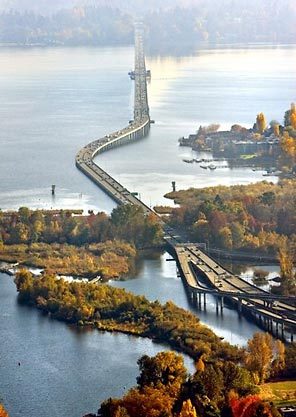
SR 520, ALASKAN WAY VIADUCT AND I-5 REBUILD - USING TOLLING & PUBLIC EMPLOYEE PENSION FUND PARTNERSHIPS
TOLLING
# Legislature authorizes a toll on the SR 520 Bridge in 2009 and (for our proposed) Alaskan Way Viaduct bypass tunnel. Small portion of tolls earmarked for high capacity transit on the 520 corridor and surface transit enhancements on Seattle's Waterfront.
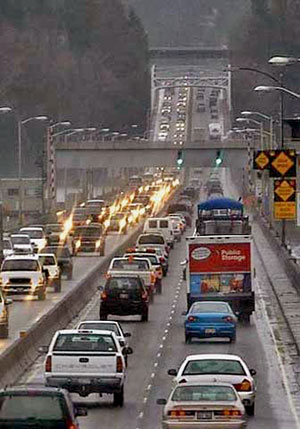
# Expand tolling in 2010 to the express lanes only on Interstates 5 and 90 initially. Treat these as HOT (high occupancy-toll) "premium lanes."
# Reconfigure express lanes within existing I-5 footprint to three bi-directional express HOT lanes allowing two-way flows and eliminating major bottlenecks at Northgate and the I-5/I-90 interchange when directions are reversed.
# On I-90, tolling can pay for expanded Bus Rapid Transit (BRT) service rather than light rail, and cross-subsidize the 520 corridor. New passenger ferry routes in the King County Ferry District Plan should also be factored in the cross-lake non-SOV strategy.
PENSION FUND PARTNERSHIPS
# Change state law to authorize "alliance contracting" and project cost-sharing between WSDOT and public employee and building trade union pension funds for SR 520, Alaska Way Viaduct bypass tunnel replacement and I-5 rebuild.
# We recommend, wherever possible, using union and public employee pension funds as primary partners for major public highway/transit projects - with foreign or private equity investors as partners only as necessary, and only under carefully-structured terms.
# In any such partnerships, the public sector should retain control of transportation assets and toll rates to protect system users and ensure the tolls also benefit transit. (Union pension funds were used previously in construction of the Pacific Place garage.)
# British Columbia offers a remarkable example of how private equity capital was leveraged with public resources to finish major infrastructure projects like expansion of Sea to Sky Highway before the 2010 Olympic Games
HOT LANE/BUS RAPID TRANSIT/LIGHT RAIL NETWORK (KING/PIERCE/SNOHOMISH COUNTIES)
# Voters approved the "Rapid Ride" BRT enhancements in King County last year. Why not expand it to the three counties through partnerships with Sound Transit and its successful ST EXPRESS bus service? Funding could come through a portion of our proposed regional HOT lane tolls, as well as potential sales and MVET taxes levied at regional level.
# Amend I-405/SR 167 master plans to extend 167 to Port of Tacoma and construct one additional HOT lane (rather than two new general purpose lanes) from Renton to Bellevue on I-405. They would be twinned with existing HOV lane to provide two continuous HOT/HOV lanes adjacent to non-tolled, general-purpose lanes from Lynnwood to Tacoma. Operationally, they would fit well with the state's current billion dollar investments in I-405 and SR 167.
# By 2020, central Puget Sound would be ringed by a complete HOT/BRT system with expanded park and ride lots serving as major transportation gateways.
# Sound Transit should complete light rail to Northgate per the 1996 Sound Move plan. (Note: Portland's Tri-Met partnered with Bechtel to extend the rail line to Portland International Airport.)
SR 520/I-405: TRANSIT HUB, CORRIDOR AND GATEWAY
BRT AND UPGRADED PARK AND RIDES
# Bus Rapid Transit should get a new look on the East-West State Route 520 corridor. Examine potential funding partnerships with union/public employee pension funds, private developers and major employers.
# Link the Microsoft Connector, and other private and public transit choices to greatly expand Park and Ride lots such as South Kirkland. Include electrification for plug-in hybrid vehicle recharge, use development fees and provide concierge services.
I-405 CORRIDOR: SAVE EASTSIDE RAIL
# In the adjoining I-405 north-south corridor, regional leaders should ensure that lightweight, biofuel-burning, bike-toting Diesel Multiple Unit self-powered rail cars ply the BNSF eastside rail line - adjacent to a string of upgraded park and ride lots modeled after the South Kirkland facility. The enhanced park-and-rides and DMU rail service would complement the planned bike and walking trail paralleling the rail line.
# Given the electoral meltdown of Prop. 1 and its hallmark extension of light rail to the north, south and east, it seems unbelievable to us that public agencies would agree to the ripping up of 31 miles of useable north-south rail track from Renton to Snohomish for a recreational trail with a vague promise to reconsider multi-billion dollar "high capacity transit" in 20 years-plus. Once the rail is ripped out it will never return. This is the result of a signed Memorandum Of Understanding between the Port of Seattle and King County.
# Cascadia has hired respected BNSF retired operations executives to walk the entire 42-mile corridor (the 11-mile Woodinville-Snohomish section would remain in use for freight rail) to see how much it would cost to upgrade the track for Diesel Multiple Unit trains going 40 miles per hour. Private sector developers would contribute to station development.
# Sound Transit has ample current funding to contract for train and BRT service between East King and Snohomish counties. Commuters from Snohomish County and South King County could transfer at the Park and Ride from the north-south rail and trail corridor to the East-West 520 BRT corridor. But saving the Eastside rail corridor will require quick action.
FREIGHT RAIL INVESTMENT TO BOOST I-5 COMMUTER RAIL CAPACITY
# State-recommended investments in Stampede Pass would allow faster movement of freight between the Ports of Seattle and Tacoma and the eastern U.S. This would also allow for expansion of Sound Transit's Sounder commuter rail between Everett and Tacoma by freeing up north-south track capacity. The proposed Eastside DMU rail line along I-405 (see above) would connect via existing track to the more westerly and parallel Everett to Tacoma line.
REGIONAL TRANSPORTATION ACCOUNTABILITY
# For five years, Cascadia and others have pushed for a consolidation of the myriad of transportation agencies in the region under a single unified board of directors, citing the successes in Vancouver, BC, Portland, San Diego and Denver in passing major regional transportation investment programs. We are always told by the establishment, "we don't have a leadership problem, we have a funding problem." Now, following Prop. 1's defeat, we have a political problem; elected leaders going in different directions.
# A Regional Transportation Commission was appointed by the legislature and Gov. Gregoire, and chaired by John Stanton and Norm Rice. Its strong and well-reasoned recommendation for a unified regional transportation board of directors in Puget Sound passed the state senate in 2007 but was blocked in the House. The Stanton-Rice report should be the basis for reforming central Puget Sound transportation leadership. We need a unified, single board of directors with powers to plan, fund and prioritize projects and consolidate agencies (similar to Vancouver and Portland).
# A regional transportation board of directors should:
1) Consolidate current regional transportation agencies;
2) Consist of elected and appointed members;
3) Include an advisory council;
4) Propose transportation projects and funding voters will approve
5) Maintain oversight and accountability on current projects, while continuing to plan for the future.
# County borders are increasingly irrelevant. Alter MPO/RTPO statutes to establish regional transportation decision-making bodies for Central Puget Sound (King, Pierce, Snohomish, Kitsap, Thurston), North Puget Sound (Snohomish, Skagit, Whatcom, Island, San Juan), and Southwest Washington - for the purpose of multi-county transportation project planning and funding. Snohomish could be part of two different regional groups, if it so chooses.
# The three regional transportation decision-making bodies would be tasked to coordinate and pool resources with WSDOT for these programs: I-5 enhancements (including cross-Columbia River bridge), freight and passenger rail improvements (coordinated with British Columbia and Oregon), multi-county and special needs transit, and corridor-based technology improvements (i.e. truck parking, diesel emission reduction and alternative fuel/plug-in stations at I-5 highway rest areas.
FLEX FUEL, PLUG-IN HYBRID ELECTRIC VEHICLES
# Cascadia Center serves on the Governor's Climate Action Team, and recommends that state and local government fleet purchases of plug-in hybrid electric vehicles should be encouraged and expanded. Either through legislative action or executive order, Washington's state government should commit to purchasing plug-ins when they become available.
# We recommend that funding be made available for state and local governments to convert standard hybrids to plug-ins. These vehicles should work with the grid, and funding would be necessary to assure they are compliant.
# Another objective should be to establish an alternative fuels infrastructure at park and ride lots, interstate truck stops, and passenger vehicle rest areas.
PASSENGER FERRIES
# The legislature should enable a Sound-wide passenger-only ferry inter-local agreement among ports, transit districts, local governments, private operators, and the state ferries to pool resources for passenger-only ferries and coordinate regional routes. The PSRC study in progress will further articulate how a regional passenger-only ferry system can best be facilitated.
# King County has formed a passenger-only ferry district and Pierce, Skagit and Whatcom also operate ferries. All would benefit from coordination at the Sound level while allowing local communities to custom design their passenger-only ferry service and encourage public-private partnerships.
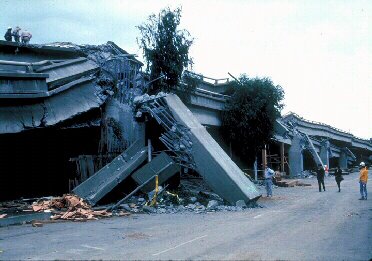
# In addition to providing direct non-SOV connections between growing cities in Puget Sound (Return of the Mosquito Fleet), new technology passenger ferries could provide more boat building jobs to our urban and maritime industries and - as in the Bay Area - an emergency transportation network in case of an earthquake.
TRAFFIC SIGNAL SYNCHRONIZATION
# More than 400 transportation projects have been funded by the 2003 and 2005 state gas tax increases, but some are clearly recognized to be proving not feasible due to a range of factors. The legislature should identify those projects and redirect the money to regional traffic signal synchronization projects, which will help reduce traffic congestion in the sort term. The Puget Sound Regional Council's new Traffic Operations Committee has an excellent framework for action, including test results from recent corridor coordination efforts.
Direct comments to Bruce Agnew (bagnew@discovery.org), Steve Marshall (smarshall@discovery.org), Mike Wussow (mikew@discovery.org), and Matt Rosenberg (mattr@discovery.org).
Transportation
Wednesday, March 12, 2008
Cascadia plan for the Puget Sound after the failure of Prop 1


I 405 widening continues as BNSF cuts it eastside line
BNSF Railway to cut Eastside line
By Ashley Bach Seattle Times Eastside bureau
Beginning today, the 42-mile rail line between Snohomish and Renton will be split in two.
BNSF Railway will remove one mile of track around the Wilburton Tunnel in South Bellevue over the next week, severing an Eastside line that has been active for decades. The removal has long been in the works as part of the state's widening of Interstate 405.
On Tuesday, BNSF ran its last trains on the complete line, carrying components south to the Boeing plant in Renton.
Parts of the Eastside rail line still will be used, including service up to six days a week on the Bellevue-Snohomish section for customers such as Safeway and Weyerhaeuser, said BNSF spokesman Gus Melonas.
The south part of the line, from Bellevue to Renton, probably will be used only for storage and moving equipment.
The trains to Boeing are now traveling through Seattle and Tukwila and finally, to Renton.
The ultimate fate of the rest of the 42-mile line is up in the air. The Port of Seattle is in final negotiations to buy the rail corridor from BNSF, but the tracks may or may not stay.
A group of advocates, including the Cascadia Center and Cascade Bicycle Club, are pushing to preserve and upgrade the tracks for a commuter rail line. King County Executive Ron Sims wants to tear out the tracks to make room for a recreational trail and perhaps a new rail line later.
Al Runte, director of special projects for All Aboard Washington, a pro-rail group, said he worries that BNSF will take out more track than the one mile necessary for the I-405 widening.
Melonas said BNSF will take out only the one mile but that plans for the rest of the track haven't been determined.
As part of the I-405 widening in South Bellevue, the Wilburton Tunnel railroad bridge will be removed in August, state officials said. The widening is expected to be completed in late 2009.
Monday, March 10, 2008
The Case for Eastside Commmuter Rail
Get On Board With Eastside Commuter Rail" 1/22/08
Matt Rosenberg
"Get on board with Eastside commuter rail," urges the Everett Herald in a Sunday editorial following two community forums on the policy initiative last week, in which Cascadia Center previewed a new 501c4 non-profit - the Eastside TRailway Partnership - to raise public and private funds for a pilot route between Snohomish and Bellevue on old Burlington Northern and Sante Fe tracks to be purchased by the Port of Seattle. The Herald:
Imagine relatively small, quiet, fuel-efficient trains carrying thousands of commuters and tourists between Snohomish and Bellevue, and perhaps farther south, each weekday -- running every hour or even half-hour on tracks that already exist. Imagine a comfortable, scenic rail commute that includes seamless connections to buses to get you right where you need to go. Then imagine a bicycle/pedestrian trail safely using the same corridor, potentially connecting Snohomish County's Centennial Trail with King County's extensive trail system.
It's not a dream, it's a real possibility....First, the Port of Seattle must complete its planned purchase of the 42-mile Burlington Northern Santa Fe corridor. The port...should follow through with this visionary investment.
In the meantime, local leaders should get behind this eminently sensible idea and quickly identify funding sources. The nonprofit Cascadia Center, which is pushing the rail and trail idea, estimates that between $100 million and $250 million will be needed to get the line going -- a bargain compared with other projects. Cascadia's (Director) Bruce Agnew, a former Snohomish County Council member, says much of that could come from private investors who could put in amenities along the route.
After the first Eastside TRailways Partnership forum held last week in Kirkland (Seattle Times article here), Agnew spoke at length with KIRO 710's Dave Ross. Agnew said:
We're talking about a mixture of public and private financing. We'd like to see the track rehabilitated by public agencies like Sound Transit, Metro and Community Transit, since it extends up into Snohomish County. But the stations and the trail development and some of the other track work like sidings could be paid for by private developers in nodes around stations where they want to put in...software parks or housing. For instance, Metro has a plan for housing that goes around the South Kirkland park-and-ride lots, similar to what was done with the streetcar in Seattle.
Getting the old tracks up to snuff for commuter rail is eminently do-able. A Cascadia Center report by retired BNSF Northwest Director of Operations Read Fay emphasized the modest costs for rehabilitation of the tracks to accomodate trains at 40 miles per hour. Part of the proposal is to use smart trains. Cascadia has also stressed the preferability of Diesel Motor Unit double-decker coaches on the envisioned route, which can burn biodiesel and carry bicycles. They require no locomotive and can pull two more cars of the same type. (Above left is a DMU unit to be used in the San Diego region on the North County Transit District's "Sprinter" route between Escondido and Oceanside. Service is scheduled to begin in several weeks). As Agnew noted on the Dave Ross Show, so-callled DMUs are:
....extremely quiet, it's basically not louder than a bus, instead of the traditional commuter rail, which has a loud locomotive and a bunch of train sets following it....the vision is a quiet train operating once a half hour or maybe an hour, and a good trail system with small stations that are community oriented, lots of stops. We could see at South Kirkland park-and-ride a transfer to bus rapid transit at an expanded park-and-ride on (State Route) 520....
Using double-decker DMU coaches, the passenger capacity of a two-car train would be almost 400, compared to just 200, Agnew noted, on the West Coast Amtrak run which includes Portland, Seattle and Vancouver. Artist J. Craig Thorpe's preliminary sketches of Eastside commuter rail station designs - done for Cascadia Center - are here.
The next step, as the Everett Herald noted, is for the Port to complete its purchase of the BNSF line. In a post-event recap, Cascadia Center provides names and e-mail addresses of key Port officials that the public may wish to contact regarding the proposed deal.
It's important to note that not only does the Port of Seattle deserve credit for deciding to keep the valuable rail and trail corridor protected in public ownership, so too does King County, which in recent months has engaged in sometimes-complicated negotiations focused on buying some or all of the property from the Port and perhaps ripping out all the rails to focus solely on trail construction. In a Seattle Post-Intelligencer op-ed published yesterday, County Council Members Larry Phillips and Bob Ferguson affirm the Council's formal support of a dual use approach which leaves the rails intact and includes their use for transit.
The county will quite understandably proceed with its own public process in part because it wants to encourage regional agencies to deliberate together on possible rail operations, and partly because the county retains an option to purchase from the Port the seven-mile-long Woodinville-Redmond spur, and track south from the Wilburton Trestle in Bellevue, to the end of the line in Renton.
Meanwhile, a March public meeting in Bellevue is being tentatively planned, at which board members of the Eastside TRailways Partnership would meet formally for the first time. Priorities will include advancing the dialog on joint public-private financing of the Snohomish to Bellevue pilot project; plus balancing needs of trail and rail users; and seeking additional community input. Stay tuned.
UPDATE, 1/28/08: Additional press coverage on Cascadia's push for Eastside commuter rail comes via the Everett Herald news staff; plus Seattle Times opinionator Lance Dickie, and the Kirkland Courier-Reporter.