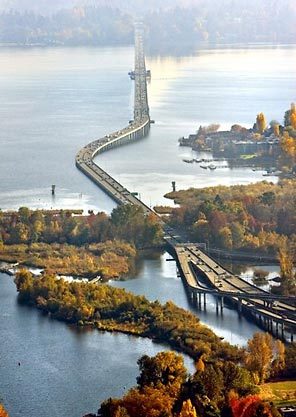
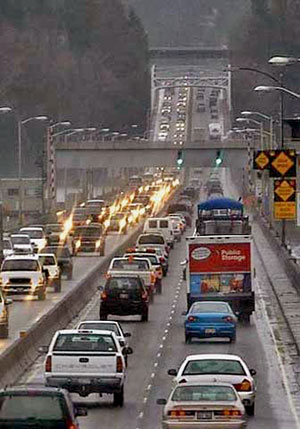
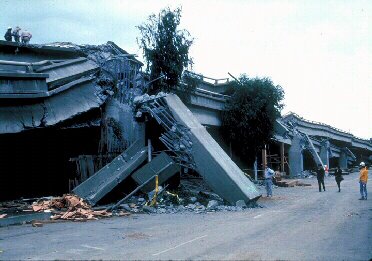
The phrase,'Unsound Transit', was coined by the Wall Street Journal to describe Seattle where,"Light Rail Madness eats billions that could otherwise be devoted to truly efficient transportation technologies." The Puget Sound's traffic congestion is a growing cancer on the region's prosperity. This website, captures news and expert opinion about ways to address the crisis. This is not a blog, but a knowledge base, which collects the best articles and presents them in a searchable format. My goal is to arm residents with knowledge so they can champion fact-based, rather than emotional, solutions.

Transportation

Showing posts with label 6.13 Slugging. Show all posts

Wednesday, March 12, 2008

Slugging in DC covered by New York Times

April 29, 2003

To Commute to Capital, Early Bird Gets 'Slugs'

A chilly dawn is breaking over the Horner Road commuter parking lot in Woodbridge, 25 miles south of Washington, D.C. A woman in a white Mercedes pulls up to the front of the line of people dressed for office work.

''Pentagon?'' she asks a bald man in a somber suit.

''Yes, ma'am,'' he tells her, climbing aboard.

''Pentagon?'' she asks the next in line, a man with a book.

And then they are off, whipping 60 and 70 miles an hour up Interstate 95 in the H.O.V. lanes, passing drivers crawling in the regular lanes that make I-95 and I-395 to Washington among the most enervating, most crash-prone, most congested rush-hour arteries in the nation. They will be at work in half an hour, as little as a quarter of the time that each would have spent driving alone.

This form of commuting -- solo drivers picking up strangers so they can all cruise to work legally in high-occupancy-vehicle lanes -- is called ''slugging.'' Passengers are ''slugs,'' a label alluding not to their energy or wit but to counterfeit tokens and coins. A ride, too, is a slug. Drivers are drivers, or less commonly, ''body snatchers,'' ''scrapers'' and ''land sharks.'' With little notice outside Washington, these Northern Virginia commuters to the nation's capital and big office sites of nearby Arlington, Rosslyn and Crystal City have blended hitchhiking and carpooling into a quick, efficient way to outmaneuver a traffic-choked freeway.

Slugging started by spontaneous eruption and runs by perpetual motion. When the area's three-person, high-occupancy vehicle lanes opened 30 years ago, some guy and then another and another picked up commuters at bus stops to get the passengers needed to use the lanes. No government agency sanctions slugging, runs it, regulates it, promotes it or thought it up. The Census Bureau, which tracks most forms of commuting, knows nothing about slugging.

In slugging, there is no supervisor, dispatcher or schedule, no ticket or fare. No think tank has analyzed it, although one slug, Lt. Col. David LeBlanc of the Army, has written a how-to book, ''Slugging,'' which he published himself, and he operates one of two local slugging Web sites. But organized oversight stops there.

There are, however, rules.

''When you get in the car, you don't converse with the driver,'' said David Howe, 41, a slug who works as a security manager for the Defense Department. ''Only the driver can initiate a conversation. You're basically a body in the car. You're not to talk on a cellphone or with other people in the car.''

Slugs must not smoke, eat, fiddle with the radio, windows or air-conditioning or, if they are invited to talk, say anything at all about religion or politics, Mr. Howe said.

About 10,000 commuters in Northern Virginia -- no one keeps an exact count -- go to and from work this way. In a study four years ago, the Virginia Department of Transportation spotted slugs aboard one in four cars traveling the H.O.V. lanes during the 6-to-9 a.m., three-rider restricted period. Since then the number of sites for them to park and line up off I-95 and in Washington, especially along 14th Street, where slugs stand to go home, has grown.

The Virginia Department of Transportation, which operates 12 commuter lots just off I-95 that are used mostly by slugs, has expanded the parking places to 7,934, all free of charge, from 4,205 in 1995. Most were added in the last two years. Privately owned sites, mostly in malls, account for at least 2,000 additional free spaces. Many lots fill up by 7:30, so slugs' cars line roads into the lots.

''I live about three miles from here,'' in a large planned community called Montclair, said Mr. Howe as he walked into the 360-car Dumfries Road lot, just east of I-95's Exit 152. It was 7:40 a.m. and the lot was already full, so he parked with a long line of other cars on an adjacent road. No slug line remained, and as he waited -- just five minutes for a ride to the Pentagon -- Mr. Howe explained the system.

In the lots, a driver at the head of the car line pulls up to the ''head slug'' in the front of the commuter line. He flashes an 8-by-10 card showing one of the line's regular destinations, like the Pentagon, the State Department, or 14th and Constitution downtown, or calls it out. If that is the head slug's destination, he gets in the car. If, instead, the head slug is going to Rosslyn, the driver must take the next in line going to the Pentagon. A driver who spots a friend down the line may offer him a ride, and a slug can take another car if he is suspicious of the driver of the first. In practice, it is first come first served.

''Generally, it's safe because you have one driver picking up two strangers,'' said Jenny Cameron, 26, who was in line for a ride from the Horner Road site here to her job downtown at the World Wildlife Fund.

''I slug because I can't afford the parking downtown,'' Ms. Cameron said. ''It costs $7 in my building.''

She said: ''I have turned down rides where two men were in the front seat. In general, I've never been scared. Only once in a while do you get a bad driver. The worst thing was getting in a car and finding somebody was smoking. More often you hear about nice stuff like drivers' picking up slugs when other drivers' cars have broken down.''

Tracy Rutherford, 41, a college admissions officer in Crystal City who has been hauling slugs for six years, explains what happens when a cellphone rings: ''I just ask them to keep it short. We all have to check in sometimes. There's never a hassle because we need each other. They need me. I need them.''

Linda Cockrell, a screening manager at Reagan National Airport, pulled up in a green Jeep. ''What I do is take the H.O.V. and the Pentagon exit off 395 and drop people off'' approaching the airport, said Ms. Cockrell, who lives in Manassas. Without slugs aboard, she said, ''it takes me over two hours to drive it. With this it's less than 30 minutes.''

No government agencies, slugging Web sites or slugs and drivers interviewed could cite a single instance of crime and slugging.

''I have never heard of any crime, any foul play, anything,'' Mr. Howe said. ''The only thing that happened to me that was adverse, I got in a car at the Pentagon, and the guy ran out of gas.'' The driver called for assistance, and Mr. Howe called a friend for a ride back to his lot.

Lately, transportation analysts say, experiments in slugging have begun in Houston, San Francisco and Seattle, and in many more cities, commuters turn to carpooling and other forms of sharing rides. But in the numbers of people involved, ''nothing else like this has developed as it has in D.C.,'' David Schrank, a researcher at the Texas Transportation Institute, said.

''Slugging's developed into its own lifestyle there,'' he said. His institute, which monitors the nation's shifting travel patterns, ranks Washington's congestion the third worst, after Los Angeles and San Francisco.

Evenings, as waves of slugs spill out of offices downtown to catch rides back to the lots like Horner Road, lines can stretch to 30 or 40 and waits to 10 minutes. But mornings this week at Horner Road, lines flowed without stop and stretched to no more than 10 passengers or cars and to waits of no more than a minute or two.

Horner Road takes 2,267 cars, nearly all slugs. There, said Valerie Pardo, a senior transportation engineer at the Virginia Department of Transportation, ''we've had to add spaces and add spaces and add spaces.'' She said: ''Sluggers are a very important part of the success of our H.O.V. lanes. We've got 25,000 cars using them every day, and sluggers are a big part of that.''

Other than paving lots and putting up Plexiglas shelters for the slug lines and buses, slugging is strictly laissez faire.

''We try to stay out it,'' Ms. Prado said. The state does not openly promote slugging, she said, in part because the state could become liable for accidents or crime in the lots.

Slugging is working and growing, Phil Salopek, a demographer at the Census Bureau speculates, because it responds to measures employers have been taking to fight traffic congestion. Unlike carpooling, which declined in the 1990's, it accommodates workers' flexible and alternative work schedules. ''Slugging lets you do that,'' he said. ''Slugging may work for you, too.''

Monday, March 10, 2008

Slugging in Washington DC

To Commute to Capital, Early Bird Gets 'Slugs'

A chilly dawn is breaking over the Horner Road commuter parking lot in Woodbridge, 25 miles south of Washington, D.C. A woman in a white Mercedes pulls up to the front of the line of people dressed for office work.

''Pentagon?'' she asks a bald man in a somber suit.

''Yes, ma'am,'' he tells her, climbing aboard.

''Pentagon?'' she asks the next in line, a man with a book.

And then they are off, whipping 60 and 70 miles an hour up Interstate 95 in the H.O.V. lanes, passing drivers crawling in the regular lanes that make I-95 and I-395 to Washington among the most enervating, most crash-prone, most congested rush-hour arteries in the nation. They will be at work in half an hour, as little as a quarter of the time that each would have spent driving alone.

This form of commuting -- solo drivers picking up strangers so they can all cruise to work legally in high-occupancy-vehicle lanes -- is called ''slugging.'' Passengers are ''slugs,'' a label alluding not to their energy or wit but to counterfeit tokens and coins. A ride, too, is a slug. Drivers are drivers, or less commonly, ''body snatchers,'' ''scrapers'' and ''land sharks.'' With little notice outside Washington, these Northern Virginia commuters to the nation's capital and big office sites of nearby Arlington, Rosslyn and Crystal City have blended hitchhiking and carpooling into a quick, efficient way to outmaneuver a traffic-choked freeway.

Slugging started by spontaneous eruption and runs by perpetual motion. When the area's three-person, high-occupancy vehicle lanes opened 30 years ago, some guy and then another and another picked up commuters at bus stops to get the passengers needed to use the lanes. No government agency sanctions slugging, runs it, regulates it, promotes it or thought it up. The Census Bureau, which tracks most forms of commuting, knows nothing about slugging.

In slugging, there is no supervisor, dispatcher or schedule, no ticket or fare. No think tank has analyzed it, although one slug, Lt. Col. David LeBlanc of the Army, has written a how-to book, ''Slugging,'' which he published himself, and he operates one of two local slugging Web sites. But organized oversight stops there.

There are, however, rules.

''When you get in the car, you don't converse with the driver,'' said David Howe, 41, a slug who works as a security manager for the Defense Department. ''Only the driver can initiate a conversation. You're basically a body in the car. You're not to talk on a cellphone or with other people in the car.''

Slugs must not smoke, eat, fiddle with the radio, windows or air-conditioning or, if they are invited to talk, say anything at all about religion or politics, Mr. Howe said.

About 10,000 commuters in Northern Virginia -- no one keeps an exact count -- go to and from work this way. In a study four years ago, the Virginia Department of Transportation spotted slugs aboard one in four cars traveling the H.O.V. lanes during the 6-to-9 a.m., three-rider restricted period. Since then the number of sites for them to park and line up off I-95 and in Washington, especially along 14th Street, where slugs stand to go home, has grown.

The Virginia Department of Transportation, which operates 12 commuter lots just off I-95 that are used mostly by slugs, has expanded the parking places to 7,934, all free of charge, from 4,205 in 1995. Most were added in the last two years. Privately owned sites, mostly in malls, account for at least 2,000 additional free spaces. Many lots fill up by 7:30, so slugs' cars line roads into the lots.

''I live about three miles from here,'' in a large planned community called Montclair, said Mr. Howe as he walked into the 360-car Dumfries Road lot, just east of I-95's Exit 152. It was 7:40 a.m. and the lot was already full, so he parked with a long line of other cars on an adjacent road. No slug line remained, and as he waited -- just five minutes for a ride to the Pentagon -- Mr. Howe explained the system.

In the lots, a driver at the head of the car line pulls up to the ''head slug'' in the front of the commuter line. He flashes an 8-by-10 card showing one of the line's regular destinations, like the Pentagon, the State Department, or 14th and Constitution downtown, or calls it out. If that is the head slug's destination, he gets in the car. If, instead, the head slug is going to Rosslyn, the driver must take the next in line going to the Pentagon. A driver who spots a friend down the line may offer him a ride, and a slug can take another car if he is suspicious of the driver of the first. In practice, it is first come first served.

''Generally, it's safe because you have one driver picking up two strangers,'' said Jenny Cameron, 26, who was in line for a ride from the Horner Road site here to her job downtown at the World Wildlife Fund.

''I slug because I can't afford the parking downtown,'' Ms. Cameron said. ''It costs $7 in my building.''

She said: ''I have turned down rides where two men were in the front seat. In general, I've never been scared. Only once in a while do you get a bad driver. The worst thing was getting in a car and finding somebody was smoking. More often you hear about nice stuff like drivers' picking up slugs when other drivers' cars have broken down.''

Tracy Rutherford, 41, a college admissions officer in Crystal City who has been hauling slugs for six years, explains what happens when a cellphone rings: ''I just ask them to keep it short. We all have to check in sometimes. There's never a hassle because we need each other. They need me. I need them.''

Linda Cockrell, a screening manager at Reagan National Airport, pulled up in a green Jeep. ''What I do is take the H.O.V. and the Pentagon exit off 395 and drop people off'' approaching the airport, said Ms. Cockrell, who lives in Manassas. Without slugs aboard, she said, ''it takes me over two hours to drive it. With this it's less than 30 minutes.''

No government agencies, slugging Web sites or slugs and drivers interviewed could cite a single instance of crime and slugging.

''I have never heard of any crime, any foul play, anything,'' Mr. Howe said. ''The only thing that happened to me that was adverse, I got in a car at the Pentagon, and the guy ran out of gas.'' The driver called for assistance, and Mr. Howe called a friend for a ride back to his lot.

Lately, transportation analysts say, experiments in slugging have begun in Houston, San Francisco and Seattle, and in many more cities, commuters turn to carpooling and other forms of sharing rides. But in the numbers of people involved, ''nothing else like this has developed as it has in D.C.,'' David Schrank, a researcher at the Texas Transportation Institute, said.

''Slugging's developed into its own lifestyle there,'' he said. His institute, which monitors the nation's shifting travel patterns, ranks Washington's congestion the third worst, after Los Angeles and San Francisco.

Evenings, as waves of slugs spill out of offices downtown to catch rides back to the lots like Horner Road, lines can stretch to 30 or 40 and waits to 10 minutes. But mornings this week at Horner Road, lines flowed without stop and stretched to no more than 10 passengers or cars and to waits of no more than a minute or two.

Horner Road takes 2,267 cars, nearly all slugs. There, said Valerie Pardo, a senior transportation engineer at the Virginia Department of Transportation, ''we've had to add spaces and add spaces and add spaces.'' She said: ''Sluggers are a very important part of the success of our H.O.V. lanes. We've got 25,000 cars using them every day, and sluggers are a big part of that.''

Other than paving lots and putting up Plexiglas shelters for the slug lines and buses, slugging is strictly laissez faire.

''We try to stay out it,'' Ms. Prado said. The state does not openly promote slugging, she said, in part because the state could become liable for accidents or crime in the lots.

Slugging is working and growing, Phil Salopek, a demographer at the Census Bureau speculates, because it responds to measures employers have been taking to fight traffic congestion. Unlike carpooling, which declined in the 1990's, it accommodates workers' flexible and alternative work schedules. ''Slugging lets you do that,'' he said. ''Slugging may work for you, too.''
Slugging in Houston

Journal of Public Transportation, Vol. 9, No. 5, 2006 9/8/06

30

and 8 minutes on the Northwest Freeway. The average time spent waiting for a

bus was assumed to be half of the average headway based on the assumption of

random arrivals of transit passengers (Meyer and Miller 2001). Casual carpoolers

saved an average of 2 minutes 36 seconds over transit on the Katy Freeway and 1

minute 36 seconds on the Northwest Freeway.

Other factors besides travel time savings might have influenced the mode choice

of the travelers. Monetary costs (e.g., transit fare, fuel) or trip purpose could have

affected a traveler's decision (Wall 2002). Socioeconomic characteristics could also

have had a major influence on a traveler's decision to casual carpool. Travelers may

have valued the reliability of travel times on the HOV lane. The survey data were

used to determine what, if any, trip and socioeconomic characteristics increased

the likelihood of a traveler choosing to casual carpool on a frequent (3 or more

times per week) basis.

Comparison of Traveler Characteristics by Mode

The survey data were initially examined for significant differences (p ≤ 0.05)

among four groups of travelers based on their primary mode choice: driving on

main lanes, using HOV lane with a traditional carpool, casual carpooling, and tran-

sit. A Chi-Square test assessed significant differences among the binary variables,

and a one-way analysis of variance (ANOVA) examined the continuous variables.

Additionally, a Kruskal-Wallis test determined any significant difference between

groups for the ordinal variables of age, income, and education.

The results of the statistical tests revealed significant differences among travelers

in the four primary morning modes of travel (Table 2). The percentage of respon-

dents on commute, recreation, school, and other trip types was significantly differ-

ent among the four groups. Casual carpoolers were more likely to be on commute

trips. The percentage of respondents ages 25 to 34 and 65+ was significantly differ-

ent among modes. A much higher percentage of casual carpoolers were between

ages 25 and 34. The average household size, percentage of single adult house-

holds and married without children households, and the number of vehicles per

household also differed among modes, with HOV users having significantly larger

households. A difference was also found for those with occupations that were pro-

fessional/managerial, sales, homemaker, self-employed, or retired. Income ranges

of $25,000 to $35,000, $50,000 to $75,000, $100,000 to $200,000, and $200,000 or

more were also different among the four mode choices.

Page 9

Slugging in Houston

31

Table 2. Descriptive Statistics of Surveyed Travelers

1

Significant (p ≤ 0.05) difference when comparing all four modes.

2

Significant (p ≤ 0.05) difference when comparing casual carpooling and transit.

Page 10

Journal of Public Transportation, Vol. 9, No. 5, 2006

32

Next, similar statistical tests were performed to determine significant differences

(p ≤ 0.05) between travelers using just two mode choices: casual carpooling and

transit. These mode choices were specifically examined due to their symbiotic

relationship and the similarity of the modes since travelers on both modes (1)

use park-and-ride lots, (2) have someone else drive, (3) travel on HOV lanes, and

(4) are dropped off relatively close to their work. Also, casual carpoolers are often

former transit users (Beroldo 1990), and in this study more than 90 percent still

used transit for some of their similar trips (Table 3).

The results of the statistical tests (Table 2) revealed several significant differ-

ences between casual carpoolers and transit riders. A higher percentage of casual

carpool passengers were on commute trips and between the ages of 25 and 34,

while a higher percentage of transit riders were between the ages of 55 and 64. A

significantly higher percentage of casual carpoolers had professional/managerial

occupations, while a significantly higher percentage of transit riders had house-

hold incomes between $25,000 and $34,999.

Casual Carpool Passenger Characteristics

The surveys distributed to casual carpool passengers contained a series of ques-

tions that were exclusive to that group. These questions addressed the nature

of each traveler's casual carpooling trip and his or her previous experience using

the mode (Table 3). For this analysis only, both frequent and infrequent casual

carpoolers were examined. The results provided insight into the practice of casual

carpooling in Houston, including what modes were commonly used for return

trips and how frequently respondents joined a casual carpool.

Survey responses indicated that most casual carpool passengers (65.3%) had

never met their travel companions before. However, almost one third indicated

that they had traveled with them once or twice, indicating that a relatively small

community of people used the mode consistently. More than 75 percent of users

noted that they casual carpooled at least three times per week. Passengers also

cited saving money (62.8%) and slow bus service (52.6%) as the two primary rea-

sons for casual carpooling. They indicated that they often use the bus for similar

trips and for the evening return trip. They also noted that money is rarely given to

the driver as compensation, which is consistent with casual carpooling practices

elsewhere in the United States.

Page 11

Slugging in Houston

33

Table 3. Casual Carpool Passenger Characteristics (n = 208)

Note: Some percentages sum to over 100 percent as respondents could choose multiple answers

for some questions

Page 12

Journal of Public Transportation, Vol. 9, No. 5, 2006

34

Mode Choice Model Estimation

To better understand casual carpoolers and the factors that affect their mode

choice, discrete choice model coefficients were estimated for two sets of choices.

The choice between casual carpooling and transit was evaluated with the first

model. The second model examined traveler choice of four modes: casual carpool,

transit, traditional carpool, and driving on GPLs.

Methodology

Both models were estimated as discrete choice models. Discrete choice models

assume that each traveler makes his or her decision based on the utility of each

mode (Ben-Akiva and Lerman 1985). The traveler's ultimate decision will deter-

mined by both the systematic utility based on measured variables and the random

utility of each mode. The model in this analysis was estimated using a logit model,

which assumes that random utilities follow an extreme value distribution (Small

and Winston 1999).

Casual Carpool versus Transit Mode Choice Model

Although many variables were tested when estimating the model coefficients, only

those variables significant at the 95 percent confidence level and not correlated

to other variables were left in the final model. The results of the discrete choice

model are shown in Table 4. For this model, the null choice was casual carpooling.

The utility function derived in the model describes the utility of the transit mode

relative to the casual carpooling mode that had all coefficients equal to zero.

The results of the model highlight some of the factors that describe selected types

of travelers who choose to casual carpool rather than use transit. The constant

coefficient is positive, indicating that all else being equal, travelers were more likely

to choose transit than casual carpooling. This was not surprising as many more

travelers used transit than casual carpools. The results also indicated that having

an income between $25,000 and $35,000 increased the traveler's likelihood to use

transit rather than casual carpooling. However, being on a commute trip, making

a higher number of total trips per week, and/or being between the ages of 25 and

34 increased the traveler's likelihood of forming casual carpools.

Page 13

Slugging in Houston

35

Table 4. Model Coefficient Estimation Results

(Casual Carpooling vs. Transit)

1

1

Base alternative is casual carpooling with utility of zero.

*Significant at the 95 percent confidence level.

Four-Option Mode Choice Model

Several sets of variables were used for testing the four-choice model, using the

main lanes option as the null choice. Only variables significant at the 95 percent

confidence level remained in the final model. The variables used in the model as

well as which mode choice utility functions they were associated with are listed in

Table 5, while the model estimation results are shown in Table 6.

The constants for the HOV, casual carpool, and transit modes were all negative,

indicating that all else being equal, travelers were most likely to drive on the main

lanes. The trip purpose, age, and occupation (professional) variables applied only

to the casual carpooling utility function and indicated a number of factors influ-

enced casual carpoolers' decisions. The coefficient for the trip purpose was positive,

indicating that being on a commute trip increased the likelihood that a traveler

Page 14

Journal of Public Transportation, Vol. 9, No. 5, 2006

36

Table 5. Definitions of Variables Used in Logit Model (All Four Modes)

would choose casual carpooling over the other three modes, which duplicates the

results of the previous model. Professional/managerial or administrative/clerical

occupations also increased a traveler's likelihood to use casual carpooling over the

other three modes. Thus, travelers with weekday jobs with typical workday hours

were more likely to casual carpool. This was not surprising considering the times

during which casual carpooling occurs. Travelers with typical workdays would be

more likely to encounter peak-period congestion if they drove alone on the GPLs.

The results also indicated being between the ages of 55 and 64 reduced a traveler's

likelihood of casual carpooling, which reflected a possible increased willingness

among younger persons to try a newer, less-utilized mode of transportation.

In addition, having an income between $25,000 and $35,000 reduced a traveler's

likelihood of casual carpooling, which was surprising considering the relatively low

expense of that mode. One possible explanation was that low-income persons

already used transit for many of their other trips, and they chose to use transit

Page 15

Slugging in Houston

37

Table 6. Model Coefficient Estimation Results (All Four Modes)

1

Base alternative is driving alone on main lanes with utility of zero.

*Significant at the 95 percent confidence level.

Page 16

Journal of Public Transportation, Vol. 9, No. 5, 2006

38

during the times of casual carpooling as well. Another possible explanation was

subsidized transit passes were available to low-income travelers. Travelers with

subsidized transit passes would have little to no money-savings incentive to casual

carpool. Also, the descriptive statistics indicated that travelers with incomes

between $25,000 and $35,000 were less likely to make commute trips, leading to

less use of casual carpooling because commuting is a primary factor that influ-

ences casual carpool use.

Summary

This research effort examined the use of casual carpooling in Houston, Texas. Sur-

vey results revealed that most casual carpool passengers often used transit for eve-

ning return trips and similar morning trips. Approximately 63 percent used casual

carpooling to save money and about 53 percent used casual carpooling because of

slow bus service. Most casual carpoolers (76%) used this mode three or more times

per week. Casual carpool passengers were significantly more likely to be on com-

mute trips and be between the ages of 25 and 34 (younger), but were significantly

less likely to have household incomes between $25,000 and $35,000.

The results obtained in these analyses provided some information on the charac-

teristics of travelers who chose to casual carpool. This information can be used to

better evaluate HOV/HOT lane use and future lane development considerations.

Casual carpooling has grown in popularity and should be considered when assess-

ing potential corridor improvements. Although potential liability concerns would

likely prevent agencies from actively promoting casual carpooling, they could

encourage it passively by constructing park-and-ride HOV facilities that are con-

ducive to the mode. Casual carpooling has the potential to improve the operation

efficiency of HOV/HOT facilities by improving person movement. Although there

are potential liability concerns, it may eventually become beneficial to promote

casual carpooling as a viable mode alternative.

Acknowledgments

This article reflects the views of the authors, who are responsible for the facts and

the accuracy of the data presented herein. This article was a result of research

conducted in cooperation with the Federal Highway Administration (FHWA),

the Texas Department of Transportation (TxDOT), and the Metropolitan Transit

Authority of Harris County, Texas. The authors gratefully acknowledge the con-

39

tributions of numerous individuals and organizations that made the successful

completion of this article possible.

References

Ben-Akiva, M., and S. Lerman. 1985. Discrete choice analysis: Theory and application

to travel demand. Cambridge, MA: MIT Press.

Beroldo, S. 1990. Casual carpooling in the San Francisco Bay Area. Transportation

Quarterly 44 (1): 133–150.

Burris, M., and J. Appiah. 2004. An examination of Houston's QuickRide partici-

pants by frequency of QuickRide usage. Transportation Research Record 1864,

22–30.

Burris, M., and W. Stockton. 2004. HOT lanes in Houston—Six years of experience.

Journal of Public Transportation 7 (3): 1–21.

Houston TranStar Real Time Traffic Information. http://traffic.tamu.edu. Accessed

June 15, 2004.

LeBlanc, D. E. 1999. Slugging: The commuting alternative for Washington, D.C. East

Point, GA: Forel Publishing.

Meyer, D., and E. Miller. 2001. Urban transportation planning. New York: McGraw-

Hill.

Ojah, M., and M. Burris. 2004. Quantification of casual carpooling in Houston. Texas

Transportation Institute.

Reno, A.T., W. A. Gellert, and A. Verzosa. 1989. Evaluation of Springfield instant

carpooling. Transportation Research Record 1212, 53–62.

RIDES for Bay Area Commuters, Inc. 1999. Casual carpooling 1998 update.

rideshare.511.org/research/pdfs/casualcarpool.99.pdf> Accessed December

8, 2003.

Small, K. A., and C. Winston. 1999. The demand for transportation: Models and

applications. Essays in Transportation Economics and Policy. Washington, DC:

Brookings Institute Press.

Spielberg, F., and P. Shapiro. 2000. Mating habits of slugs: Dynamic carpool forma-

tion in the I-95/I-395 corridor of Northern Virginia. Transportation Research

Record 1711, 31–38.

Page 18

Journal of Public Transportation, Vol. 9, No. 5, 2006

High Tech Slugging Pilots in Seattle

10/2/06

"Slugging" goes high tech


Wikipedia defines slugging as, "a form of commuting that...combines a variation of 'ride-share' commuting and hitchhiking." Essentially, folks who need rides stand at designated locations (near bus stops, for example), and folks who need riders (for the HOV lanes) pick them up. Personally, I'd prefer to ride with strangers in a government-sanctioned context, but if it works for other folks…


Slugging is very popular in cities like Washington, Pittsburgh, and San Francisco. It happens occasionally in the Seattle area (it's been happening at Overlake Transit Center for years), but it's certainly not an established or common practice.


Yet.


Today I met with Zachary Corker of Goose Networks, a startup that's brought Seattle's special high-tech flavor to this ride-sharing phenomenon. Goose's service "allows commuters to find ridesharing partners in real-time by simply sending a free text message from their existing mobile phones." Instead of standing on the street and waiting for a stranger to pass, Seattle-area sluggers can sign up for Goose's service (for free) and send a text message when they're ready to leave. The system matches drivers and riders and sends a return text message with all relevant information. Users are also screened, so it's more likely to be safe. Interested? Check out the tutorial on the Goose Networks website.


If you happen to work at Microsoft and live in one of nine central-Seattle zip codes (98101, 98102, 98104, 98109, 98112, 98119, 98121, 98122, 98199), you can participate in Goose's three-month beta. They even offer incentives like free gas.


Of course, real-time carpooling can't offer free wireless Internet access, like the 545. I'm just sayin'.

Posted by Bus Chick at October 2, 2006 11:42 a.m.

Category: Cool stuff

Comments

#13638


Posted by Bus Chick at 10/2/06 1:36 p.m.


P.S. - I see this service as becoming even more useful when it expands to neighborhoods that have poor or infrequent bus service. As far as I'm concerned, downtown is pretty ideal for busing.

Report violation

#13727


Posted by Orin O'Neill at 10/3/06 9:43 p.m.


A couple of decades ago (!!) I lived in South Everett and commuted to downtown Seattle from the Mariner Park & Ride via Community Transit. On several occasions, I got rides from people looking for a third warm body to comply with the carpool requirement at the time. In every case, once I got in the car, the other people pretty much forgot that I existed... none ever even asked my name. I may as well have been a bag of groceries...

Report violation

#18704


Posted by unregistered user at 12/12/06 10:48 a.m.


The field of dynamic ridesharing is on the verge of taking off.


1. Bus Chick, if you haven't spoken with Seattle's John Niles yet, he has a web site that tracks some of this stuff, and he participated in some of Seattle's earlier efforts in this arena. http://www.globaltelematics.com/


2. Famous old Seattle pilot project


SST (Seattle Smart Traveler) (Carpool Ride Matching Initiative)

http://sst.ivhs.washington.edu/sst/

SST is a carpool matching program unlike any existing system in the country. It uses the World Wide Web to allow users to find travel partners for ALL the trips they make during the week, regardless of how variable their schedules might be. It allows users to seek matches for trips at different times, or to different locations on different days. It also allows people to seek matches for more than one trip per day, and for occasional and one-time only trips. When users find matches for the trips they are interested in, the names of those matches are displayed on the screen along with a phone number and an e-mail address. Additionally, SST features an "Automatic E-Mail Generator" which allows the user to instantly send out a trip specific e-mail to each person on the list. SST was designed with the needs of students, faculty and staff in mind, and is available for use exclusively by those affiliated with the UW community.


3. Here's a proposal for yet another variation, "digital hitchhiking," for MS campus: http://www.cities21.org/CascadiaHitchhikePaper.doc. MS hasn't gone for this approach yet, but, one of MS's employees volunteered to write the SW.


- Steve Raney, Cities21.org

Rules for Slugging in San Francisco

Easy riders -- casual carpooling rolls on with few hassles
30-year-old social experiment rated high by commuters
- Michael Taylor, Chronicle Staff Writer

Monday, January 31, 2005

This is the one line people actually like to stand in. Or park in, for that matter.

Every weekday morning, mostly in the East Bay, you see them lined up like lemmings -- sedans, SUVs, pickup trucks and the odd sports car, creeping along the curb. Coming up the sidewalk toward them, dressed for the day's battle with the city, are the hardy commuters.

It's the casual carpool, a free-form, almost completely unorganized amalgam of that rare thing in the social economy -- something that actually works, an idea that benefits most of the people involved. Cars heading for San Francisco get filled with people going in the same direction, and the drivers can use carpool lanes to bypass the wait at the Bay Bridge tollbooths and, as lagniappe, save $3 a day.

Now the carpool experiment -- though it's probably unfair to call a 30- year-old activity an experiment -- has spread from its birthplaces in Oakland and Berkeley into such far-flung places as Vallejo and Fairfield, growing even as the Bay Area grows.

"It's better than BART. I can always get a seat, it's free, it's faster, and I hate to drive," said Helen Wolff, a 26-year-old attorney who has been getting rides to the city from a carpool pickup point near the Safeway on Claremont Avenue in Oakland for the past four months. "It's the closest I'll come to hitchhiking. It adds a bit of adventure to the morning commute."

Wolff is one of hundreds or even thousands of people, for all anyone knows -- the beauty of this operation is that no government agency monitors it -- who are part of a commuting venture that has produced its own culture of behavior, the do's and don'ts of being a rider and driver.

Most of the region's casual carpoolers appear to come from Albany, Berkeley and Oakland, and most of them seem to work in downtown San Francisco, usually a ride of 20 to 30 minutes from the inner East Bay. And what do they do during the ride?

For the most part, nothing. Somewhere along the line, a form of etiquette evolved that goes like this: no smoking, don't use your cell phone, driver chooses the radio station (normally, it's classical music, jazz or, particularly from Berkeley cars, National Public Radio), and, above all, only the driver may initiate conversation.

But like many things that purport to have rules, and people being who they are, the rules get broken.

Michael Floss, a 45-year-old banker, said he's caught rides from three places -- Oakland's Lake Merritt, North Berkeley near the BART station and the Claremont Avenue/Safeway spot.

"The Lake Merritt rides were more friendly, more talkative," Floss said. "The rules about driver starting conversation weren't as rigid. On one of my first rides, it turned out the driver and I work at the same company."

Floss once recommended to some friends who were traveling around the world on $25 a day that they take the carpool to San Francisco as a cheap way of getting to town.

"So they're chatting to the driver and as he pulls over to let them out, he hands them a $100 bill and says, 'I hope you can stay a couple more days in San Francisco,' " Floss said.

On the other hand, given that human behavior isn't always perfect, there can be a few wrinkles in this carpool business. Although the California Highway Patrol and local police could not recall any major crimes associated with the casual carpool system, there are unverified and isolated reports about quirky drivers, the kind you think twice about when the car pulls up, and even quirky riders.

One woman, according to Wolff, has been known to walk up to an SUV and open the door as if she were about to get in. She suddenly "goes on a tirade, shouting, 'Shame on you for driving an SUV! You're ruining the environment!' " Wolff said. "Then she slams the door and takes the car behind the SUV."

The other day, standing in the Rockridge queue, 47-year-old Stacey Weinberger was first in line for the next car, a two-seat Thunderbird. (Two- seat cars with two passengers are allowed in the Bay Bridge carpool lanes.) Weinberger bent down to have a look at the driver, saw it was a man, and opted for the next car.

"I'm not comfortable riding in a two-seater with people I don't know," Weinberger said. She was one of several women who said they think twice about riding in a two-seater driven by a man.

But the occasional aberrations are the exceptions. San Francisco police robbery division Inspector Ray Ragona said he had never heard of a rider or driver filing a crime report after carpooling into the city, and he applauded the carpool system as "one of those strange things that actually works. I let a total stranger in my car, and he might be an ax murderer out of Arkansas, but I've never heard of any such crimes (in the Bay Area carpools)."

Bob Berndt, 41, who comes in from Orinda and picks up passengers in Oakland, said that in three years of driving commuters, "I've seen nothing odd. The only thing I notice is that people bring their own kinds of phobias, like adjusting the seat or the air vents, but it's no big deal. They're establishing their space."

And Jennifer Lee, a 34-year-old writer who was getting a lift in Berndt's Volvo wagon recently, said, "In four years (of carpooling), I've met only one odd person. He's a retired man who picks up people and drives them to the city. He's very talkative.

"He said, 'I do this because I want to meet people.' He was friendly. But clearly lonely."

For the retiree driving in from Oakland, it's not an onerous journey -- half an hour at best. From Solano County, it's more than twice the distance, but in Solano County, one of the fastest-growing counties of California, distance doesn't seem to matter. Each day, hundreds of commuters from Vallejo and even farther afield pour onto Interstate 80 and head south.

The other day, shortly after 7 a.m., a reporter picked up two commuters at the main rendezvous point in Vallejo, the big Caltrans park-and-ride lot at Curtola Parkway and Lemon Street. The lot, where commuters leave their cars for the day, is usually full by 6:30 a.m.

The 30-mile ride from Vallejo to downtown San Francisco seems more casual than the journeys from Oakland or Berkeley -- three people are cooped up in a car for as much as an hour, and they tend to get to know each other over the long haul.

"I think it's kind of like networking," Oscar Lumanlan, 47, said as the car slipped into the carpool lane about six miles south of the Carquinez Bridge. The Financial District worker said the long ride to work encourages conversation, and he's used it as an opportunity to "learn a lot of things" from his fellow passengers.

His co-rider, 45-year-old computer expert Tim Savage, said he's even discovered a new wrinkle on the traditional journey. Savage said that when he was driving passengers into San Francisco from Vallejo, he learned that many of them actually work in Oakland. They find it faster to carpool into San Francisco and then take BART back to Oakland than it would have been driving solo from Vallejo down the creep-and-crawl I-80 corridor.

In the evening, there's a reverse commute from San Francisco -- drivers returning to Vallejo, Fairfield and elsewhere pick up riders on Beale Street, between Howard and Folsom streets.

"I actually get home earlier than if I drove into the city myself," Savage said.
For more details

More information about the Bay Area's casual carpooling can be found at www.ridenow.org/carpool, created by UC Berkeley computer programmer Dan Kirshner.
CASUAL CARPOOLING

-- Rules Of The Road

Over the years, casual carpoolers have developed an informal etiquette. Here are some of the do’s and don’ts:

- If there are more cars than waiting riders, it’s a max of three people to a car. But when there are many riders and only the occasionally arriving car, it’s OK for a rider to ask the driver, “Will you take three?”

- First come, first served. Riders should stay in the queue. Be polite.

- Same thing for drivers: Don’t drive around the neighborhood looking for riders who are heading for the carpool pickup point. It’s unfair for the drivers who have been waiting in line. It’s OK for women to decline a ride in a two-seater driven by a man, letting the first man in line take the ride instead.

- No talking during the ride, unless it’s initiated by the driver. But it’s all right to break that rule if you see a big truck wandering into your lane and think perhaps you should warn the driver.

- Radios, if they’re on at all, are tuned to jazz or classical music, or to National Public Radio. KCBS is too jangly and hot for that hour of the morning.

- No smoking. No eating. No drinking. This brings up the delicate subject of telling the prospective rider, who has one leg into your car, “I’d prefer it if you did not bring your 12-ounce decaf soy milk latte into my car, where you may well spill it.”

- No using cell phones. Stifle the ringer.

- Everyone should buckle up.

- Let people out at Fremont and Howard streets. It’s OK for passengers to ask drivers to let them out farther down Howard or up in the Financial District, if that’s where the car is headed.
-- Oakland

1. Claremont and College. By the Union 76 gas station on the north side of Claremont.

2. Hudson and Claremont. Under Hwy 24 on Hudson, just before Claremont.

3. Grand and Perkins. On the north side of Grand, by the Shell sign next to AC Transit stop.

4. Lakeshore and Grand. Under I-580 in parking lot, on the left as you enter.

5. Oakland and Monte Vista. At the intersection of Oakland and Monte Vista.

6. Park and Hampel. Near TransBay bus stop on Park and Hampel.

7. Park and Hollywood. Adjacent to TransBay bus stops on Park between Trestle Glen and Hollywood.

8. High St and MacArthur. At the vacant lot on the corner. -- Piedmont

9. Oakland and Hillside. On Oakland Avenue, just east of Hillside.. -- Oakland

Fruitvale & Montana. Just north of Park and Ride lot on Montana by Flagg.

-- Moraga

Moraga Way. North side of Moraga Way, west of School Street.

-- Lafayette

BART North of the station, just outside and to the right of the parking lot.

-- Alameda

Encinal and Park Ave. On the northeast corner of Encinal and Park Ave.

-- Emeryville marina

Powell St. between Admiral and Commodore.

-- Berkeley

North Berkeley BART. On Sacramento, east of the entrance to the BART station. Some rides to Civic Center. Just carry a sign saying “Civic Center.”

-- El Cerrito

Del Norte BART. On Eastshore, just south of HomeLife. Do not park in the HomeLife parking lot. You will be ticketed/towed.

-- Albany

Pierce St. south of Central Ave. Across the street from the Pacific Far East shopping mall.

-- Richmond

Richmond Parkway Park and Ride. Richmond Parkway just west of I-80. Caution: the lot fills early (7 a.m.). You may be towed if you park in the adjacent shopping center lot.

-- Hercules

Park and Ride. In the lot, near 80 on San Pablo Ave., just north of Sycamore. Caution: the lot has been filling up. Please do not park illegally; cars will be towed.

-- Orinda BART

In the alley on the north side of Theater Square.

-- Fairfield

1. Fairfield Transportation Center.

Cadenasso Dr. near Beck Ave south of I-80 W. Texas St. exit).

2. Starting today: Corner of Cadenasso and Magellan.

E-mail Michael Taylor at mtaylor@sfchronicle.com.

Monday, January 1, 1990

Holder 5

for labels

The articles are posted solely for educational purposes to raise awareness of transportation issues. I claim no authorship, nor do I profit from this website. Where known, all original authors and/or source publisher have been noted in the post. As this is a knowledge base, rather than a blog, I have reproduced the articles in full to allow for complete reader understanding and allow for comprehensive text searching...see custom google search engine at the top of the page. If you have concerns about the inclusion of a specific article, please email bbdc1@live.com. for a speedy resolution.