See: The Puget Sound Regional Council's Vision 2040 plan?www.psrc.org/projects/vision/
Seattle Times
The combined populations of Seattle and Bellevue could grow by nearly 300,000 under a plan that attempts to direct much of the region's projected growth to its largest cities.
Vision 2040, adopted overwhelmingly Thursday by elected officials from four counties and more than 40 cities, also opposes building any more "fully contained communities," such as Redmond Ridge, in rural areas.
The Puget Sound Regional Council's 40-year blueprint for slowing sprawl and speeding up downtown renewal discourages high-density islands outside the urban growth line "because of their potential to create sprawl and undermine state and regional growth management goals."
Tacoma City Councilmember Mike Lonergan, who headed the planning effort, said fully contained communities are "an oxymoron" because they overwhelm rural roads as the new residents drive elsewhere to work, shop and attend school.
Cities and counties aren't required to comply with policies in Vision 2040, an update of the Vision 2020 plan that was adopted in 1995. But the Regional Council's role in allocating some federal road-building funds gives it influence over local land-use decisions.
Snohomish County Executive Aaron Reardon voted in committee last month against language discouraging fully contained communities. Snohomish County currently is considering a 15,000-resident planned community in the rural Lake Roesiger area.
King County Executive Ron Sims, saying Redmond Ridge was a mistake, supported the Vision 2040 goals.
Sims adviser Karen Wolf called Vision 2040 "fabulous" and said it will allow King, Snohomish, Pierce and Kitsap counties to grow by 1.7 million people without moving the urban growth boundary.
The plan would locate one-third of those new residents in the region's five largest cities: Seattle, Bellevue, Everett, Tacoma and Bremerton. Smaller cities would take 41 percent of the growth, and areas outside cities 28 percent.
Only one city — University Place in Pierce County — voted against the plan, and Kitsap County split its vote, with one commissioner in favor and one against.
University Place Mayor Linda Bird said the City Council supports the plan's goals but isn't convinced the city of 31,000 can handle 23,000 more residents, as the plan suggests.
Kitsap County Commissioner Jan Angel, who also voted no, said she fears jurisdictions could lose federal road-building money allocated by the Regional Council if they fail to comply with the plan. "My concern is the lack of local control," she said. "This will be another level of regional government."
Vision 2040 projects that Tacoma, a city of 193,500, would grow by 127,000 residents and Everett would nearly double by adding 89,000.
Bellevue City Councilmember John Chelminiak and Seattle Mayor Greg Nickels' spokesman Marty McOmber welcomed the goal of bringing 294,000 more residents into those two cities. Seattle now has 563,400 and Bellevue 109,600. That growth target will be apportioned between the cities through a separate county planning process.
But even as those ambitious growth targets were being adopted, former state Transportation Secretary Doug MacDonald questioned whether they are realistic without new efforts to attract more families with children to the largest cities.
From 2000 to 2007 — the first seven years of the Vision 2040 planning period — MacDonald said, only 13 percent of King County's growth went into Seattle and Bellevue, well below the target of 32 percent.
Lonergan drew applause from the PSRC "general assembly" members when he responded to MacDonald by saying, "Yes, we need to do better, but, yes, we are headed in the right direction."
Transportation
Tuesday, May 6, 2008
2040 Vision for Puget Sound includes growth of 1.7 million people.


Tuesday, April 8, 2008
Seattle's plans to cope when Viaduct closes for construction
Is viaduct traffic heading to a street near you?
Rerouting calls for more trolleys, fewer I-5 ramps
Moving people and goods around the construction shutdown of Seattle's Alaskan Way Viaduct might be done with new streetcars or trolleys, widening key city streets or even closing some freeway ramps.
Now the question is whether those possibilities -- and many others -- make sense and can be financed before the state firms up its plans for the viaduct.
Members of the Seattle City and King County councils, in an unusual joint session, heard Monday about dozens of ways to handle diverted traffic if the viaduct is permanently removed or while its replacement is constructed.
Ideas centered on increasing the capacity of Interstate 5 through downtown, making more traffic on side streets possible, and increasing east-west connections across the city. All or some part of the 103,000 vehicle trips on the viaduct daily would have to be diverted or eliminated during construction or after a permanent teardown.
Some options examined by city and state officials already are raising questions, including:
Officials said none of the ideas has been analyzed enough to determine its effects during a reconstruction or teardown of the viaduct. Officials expect to begin considering possible solutions, including combinations of steps, by July.
"The question is, what are the logical combinations" of measures, said Steve Pearce, manager of a city urban-mobility project related to the viaduct replacement.
City Councilman Richard McIver said that because the state is replacing the viaduct, it should consider financing part of the city-street improvements, but state officials have not committed to such funding.
The state previously has offered $50 million toward the $168.5 million cost of widening the Spokane Street Viaduct and $30 million toward the purchase of buses to carry some commuters. Other financing will "come up as we look at alternatives," said Ron Paananen, state viaduct project director.
Gene Hoglund, leader of the pro-elevated highway group Families for an Elevated Solution, questioned eliminating freeway ramps and rerouting trucks onto Fourth Avenue.
"It's a dream. Evidently they plan on limiting cars coming into the city," he said. "That's the only way I can see this working."
Although council members praised their staffs for collaborating with the state for the first time since last year's citywide viaduct advisory vote, they asked for cost figures on proposals to expand transit.
Expansion would cost King County more in operating expenses.
"We could never pay for everything that was presented today, but we could do a lot of it," County Councilman Dow Constantine said.
Wednesday, March 12, 2008
I 405 widening continues as BNSF cuts it eastside line
BNSF Railway to cut Eastside line
By Ashley Bach Seattle Times Eastside bureau
Beginning today, the 42-mile rail line between Snohomish and Renton will be split in two.
BNSF Railway will remove one mile of track around the Wilburton Tunnel in South Bellevue over the next week, severing an Eastside line that has been active for decades. The removal has long been in the works as part of the state's widening of Interstate 405.
On Tuesday, BNSF ran its last trains on the complete line, carrying components south to the Boeing plant in Renton.
Parts of the Eastside rail line still will be used, including service up to six days a week on the Bellevue-Snohomish section for customers such as Safeway and Weyerhaeuser, said BNSF spokesman Gus Melonas.
The south part of the line, from Bellevue to Renton, probably will be used only for storage and moving equipment.
The trains to Boeing are now traveling through Seattle and Tukwila and finally, to Renton.
The ultimate fate of the rest of the 42-mile line is up in the air. The Port of Seattle is in final negotiations to buy the rail corridor from BNSF, but the tracks may or may not stay.
A group of advocates, including the Cascadia Center and Cascade Bicycle Club, are pushing to preserve and upgrade the tracks for a commuter rail line. King County Executive Ron Sims wants to tear out the tracks to make room for a recreational trail and perhaps a new rail line later.
Al Runte, director of special projects for All Aboard Washington, a pro-rail group, said he worries that BNSF will take out more track than the one mile necessary for the I-405 widening.
Melonas said BNSF will take out only the one mile but that plans for the rest of the track haven't been determined.
As part of the I-405 widening in South Bellevue, the Wilburton Tunnel railroad bridge will be removed in August, state officials said. The widening is expected to be completed in late 2009.
Monday, March 10, 2008
Gregoire: "Watch me tear Viaduct Down!"
Gregoire: 'Watch me' tear down the viaduct
Governor tells the city she won't let issue be pushed to back burner 1/3/08
By CHRIS McGANN
P-I CAPITOL CORRESPONDENT
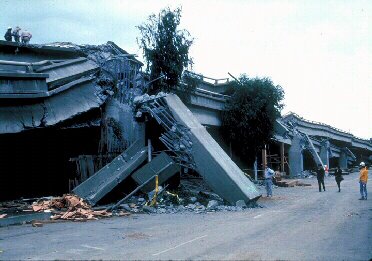
OLYMPIA-- With or without Seattle's approval, the state will tear down the earthquake-damaged Alaskan Way Viaduct in 2012, Gov. Chris Gregoire said Thursday.
"It's coming down in 2012. I'm taking it down -- the middle," she said, referring to the elevated portion of the span that runs roughly from Battery Street Tunnel to Pioneer Square, which has been the most vexing and controversial piece of the transportation puzzle.
"That's the timeline. I'm not going to fudge on it. And if we don't have some alternative by then, boy are we going to have a mess on our hands because it's coming down."
Asked if she, as governor, could trump the state's largest city and county and unilaterally tear down a highway that carries more than 100,000 vehicles a day through the heart of Seattle, Gregoire said:
"Yeah, watch me."
The governor set a hard deadline after a tortured and unsuccessful attempt to resolve the issue last year. At that time Seattle, King County and the state fought and floundered in their attempts to produce a viable option for replacing or rebuilding the viaduct.
Instead of a new $2.8 billion elevated highway similar to the current viaduct the state wanted, Seattle Mayor Greg Nickels fought for a more expensive tunnel and King County Executive Ron Sims wanted a street-level solution that would have included much more transit.
Last year Gregoire twisted arms and issued her recommendation but ultimately deferred the decision to Seattle voters, who rejected both a proposed elevated rebuild and a more expensive tunnel along the waterfront. The surface option was not on the ballot.
In the end, elected leaders agreed to a truce and opted to begin demolition and utility relocation on the south end of the roadway.
That gave everyone until 2012 to agree about how to replace the double-decker section through the heart of the city.
Now Gregoire said she's not letting the issue get pushed to a political back burner.
Seattle Deputy Mayor Tim Ceis said setting an inflexible deadline is unrealistic.
"This is not just an issue for the city of Seattle to ensure that the system functions when it comes down, this is an issue for the entire state of Washington, because this is the economic center for the state," he said.
If the statement was intended to be a threat, Ceis said, it would be out of character to Gregoire.
"I find it hard to believe that she is issuing a threat right now because we are all working so well together. ... It's everybody's objective to get the viaduct down as soon as is possible and practical. But in order to do that, you have to ensure that projects have been funded and completed that allow the transportation system to continue to function if you cut off that corridor."
He said the city and the state are making good progress toward crafting a workable solution the people will agree on.
"No matter what, the state has to be a constructive partner in this project," Ceis said. "The state has the funding and we need to be able to make those fixes to the rest of the system in order for the viaduct to come down by 2012."
Ceis said the timeline was not, in itself, impossible, "but it's going to take a real push by all parties involved."
As for the sticky question of how to pay for the project, Gregoire said the state would keep its commitment to provide $2.8 billion. Any more would have to come from other sources.
Although she plans to team up with other governors to appeal to the federal government for increased investments in state infrastructure projects, Gregoire said that money would not be secured in time for the viaduct replacement.
Sims applauded the governor's hard deadline and her openness to addressing the problem with a much more comprehensive solution.
"The viaduct has to come down. It's not safe," Sims said. "I support (Gregoire's) position on that. It is a tough decision to make ... but it's the smart thing to do."
In the past, Gregoire opposed a surface option, but in recent months she has said she's now open to the idea.
In last year's debate, Speaker of the House Frank Chopp, D-Seattle, was unbending about his desire to rebuild an elevated viaduct.
"I'm comfortable with her statement," he said. "That project has got to get resolved; it cannot just go on forever."
He said Gregoire had already made her deadline clear.
"I remember her telling me that a long time ago because obviously, it's a safety issue," he said.
As the discussion continues about a surface option, leaders are careful to explain they aren't simply talking about a ground-level highway along the waterfront.
The viaduct traffic would have to be dispersed and otherwise addressed through a wide swath of Seattle.
"What Greg (Nickels) and Ron (Sims) and I have talked about is: 'Let's stop thinking about replacement of the Alaska Way Viaduct and start thinking about how do we do transportation in all of Seattle from I-5 to the waterfront,' " Gregoire said.
"We really are fundamentally not efficient and effective now. Our offramps from I-5 are not efficient to the flow of traffic. What international city do we know of that would have two-way traffic in downtown? What international city do we know of that would have street parking in the middle of downtown?
"We have not stepped back, collectively ... and said, 'How can we make this a user-friendly, international city?'
"That's why a 'surface option' is on the table now," Gregoire said. "If we simply say replace the viaduct, and if that's all we do, the surface option won't work. I still stand by that. I've looked at it, the ramifications to the waterfront are terrible. We won't have any legitimate freight mobility. ... The surface option works only (and I don't know if it does) but only if you look at the totality."
King county increases Traffic Light Coordination
Suburbs getting traffic signals synchronized to ease the squeeze
Wednesday, February 20, 2002
By LARRY LANGE
SEATTLE POST-INTELLIGENCER REPORTER
During morning and afternoon commuting peaks, it becomes almost impossible to get into or out of the parking lot at Issaquah's Front Street Market.
Cars jam the street all the way from Interstate 90 to the Issaquah-Hobart Road as commuters and school buses vie for space on the main street in the city's historic district.
So even though synchronizing traffic lights may be only a temporary answer, market manager Lori Steendahl was glad to hear it will be done on Front Street near the store.
"It couldn't hurt," Steendahl said yesterday after King County announced $415,000 in light-synchronization work countywide. Speaking of Front Street, Steendahl said, "I don't know why they haven't tried that yet."
County Executive Ron Sims announced the latest batch of traffic-light synchronization work yesterday, the second year the county has conducted the work. Financed with money from a 0.2 percent sales-tax boost approved by voters in 2000, the work is scheduled to continue for two more years.
This year's work includes synchronizing five lights on Issaquah's Front Street, to improve traffic flow there at an estimated cost of $25,000 for five lights. But the list of nine projects range includes the coordination of 29 traffic lights on two sections of Seattle's Rainier Avenue between I-90 and 57th Avenue South.
The projects cover lights on some of the region's busiest roads. Not everyone has noticed a difference in traffic flow where the lights have been synchronized, but officials said many drivers have and seem pleased with it.
Map
Officials haven't yet estimated the time savings for the new projects. In Seattle, coordination of 20 lights on Aurora Avenue last year cut typical driving time 20 percent between Green Lake and North 145th Street, city transportation spokesman Michael Graubard said.
Savings can be achieved both in travel time and changes in speed, and some of the biggest improvements come in suburban areas, far away from the jammed streets of Seattle. Last year, synchronizing 11 signals on the West Valley Highway in Kent cut rush-hour driving time on the 3.5-mile stretch from more than 15 minutes to just under 11. Speed increased from 14 mph to 22.
Some of the savings are small but look bigger when the length of the congested roadway is considered. Speeds on a stretch of Northeast 85th Street in Kirkland increased 3 mph during rush hour after the county program synchronized five lights between 114th and 132nd avenues. It's only a one-mile stretch, but the change means speeds are one-third faster.
Some may not notice a difference. Representatives of three South King County businesses that use the West Valley Highway said their drivers hadn't mentioned any improvement in traffic speeds. Doug Kushan of City Beverage in Kent said many of his company's drivers start at 3:30 a.m. "so they miss a lot" of rush-hour traffic.
In Seattle, however, "people are noticing the difference, and they've been appreciating it and they're telling us," Graubard said. In addition to readjusting the Rainier Avenue lights, the city plans to spend $185,000 of its own money synchronizing 37 other signals -- 20 on Lake City Way, 12 on California Avenue Southwest and five on Northeast 145th Street, as part of a program of changes to be completed by April.
The fixes are just temporary. Traffic experts say traffic signals need to be recalibrated every three to five years to reflect changes in traffic patterns. That's what the city will be doing on the two sections of Rainier Avenue, where lights were last adjusted in 1998.
Tuesday, March 4, 2008
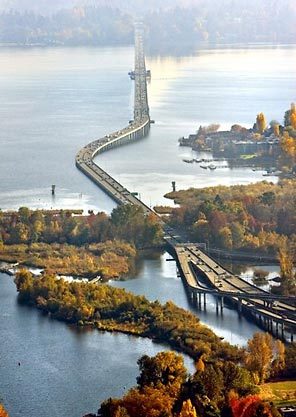
Sims wants to use SR 520 tolls to pay for transit

Pay for transit as part of tolls package for 520 bridge
By RON SIMS
GUEST COLUMNIST
Not too long ago policymakers believed talk of highway tolling was taboo; they thought the public wasn't ready to consider tolling. However, a survey of 500 King County residents shows the public is way ahead of policymakers. The poll found 89 percent of people rate congestion relief as urgent or extremely urgent. The poll also found resounding support for variable tolling on state Route 520 as one solution.
We have worked the congestion issue with the Washington State Department of Transportation and the Puget Sound Regional Council and received a $127 million federal Urban Partnership Grant to fund new tolling technology and to pay for 35 additional buses in the 520 corridor. The grant, which will put 1 million new bus passenger trips on the corridor each year, requires variable tolling on state Route 520 by September 2009.
Understanding that variable tolling is the best means to reduce congestion and replace the 520 bridge without new taxes, Gov. Chris Gregoire proposed her 520 finance plan in January. I applaud the governor for her leadership. The House has already taken the first step toward this goal when it passed the 520 tolling policy and finance bills. What is needed now is specific language to finance transit as part of the package.
Variable tolling is market driven. Tolls would be lower when fewer people are on the road and higher during peak traffic hours, much like the way movie theaters charge less for matinees when fewer people come to the theater. Because half the drivers on the road during peak times are not commuting to work, variable tolling reduces congestion by giving drivers more options and encouraging people to combine trips, drive more at off-peak times, car pool or use improved transit.
The poll showed nearly two-thirds of county residents think the Legislature should support a 520 package that includes tolling, and 82 percent support early tolling to pay for a new bridge. The poll also shows:
# 82 percent support tolling over increased gas and excise taxes.
# 84 percent support tolling over general tax increases.
# 63 percent agree both 520 and the I-90 bridge should be tolled to prevent drivers from diverting to I-90 to avoid the tolls and to generate money for I-90 maintenance and more transit.
# Experience in San Diego shows even low-income residents support variable tolling over taxes because it gives them choices and is less burdensome.
King County residents seek choice. They want the opportunity to choose to pay the toll, travel at a different time or take transit. In order for that choice to be meaningful, we need enhanced transit in the 520 corridor. Support for variable tolling on both bridges drops 20 points when transit investments are not included. The good news here is that people see transit as a reliable option and are getting on the bus across the county in record numbers. Metro Transit's January 2008 ridership is up a record 18.7 percent compared with January 2005.
We've made a good first step; let's not stop here. Let's listen. Let's pass a 520 finance package this session that funds enhanced transit giving us all real choice. If we don't, we'll be missing a historic opportunity to reduce congestion.
Ron Sims is King County executive.
Tuesday, November 6, 2007
Prop 1 KIng County Voters Pamphlet
King County Local Voters' Pamphlet
November 6, 2007 General Election
SOUND TRANSIT (A REGIONAL TRANSIT AUTHORITY) AND RTID (A REGIONAL TRANSPORTATION INVESTMENT DISTRICT
Requires a simple majority of the persons voting on the proposition residing in the proposed regional transportation investment district and a simple majority of the persons voting on the proposition residing within the regional transit authority vote. (RCW 36.120.070(2) and RCW 81.112.030(1))
PROPOSITION NO. 1
REGIONAL ROADS AND TRANSIT SYSTEM
To reduce transportation congestion, increase road and transit capacity, promote safety, facilitate mobility, provide for an integrated regional transportation system, and improve the health, welfare, and safety of the citizens of Washington, shall Sound Transit (a regional transit authority) implement a regional rail and transit system linking Lynnwood, Shoreline, Northgate, Seattle, Bellevue, Redmond, SeaTac airport, Kent, Federal Way and Tacoma as described in the Sound Transit 2 plan, financed by the existing taxes approved by the voters in 1996 and an additional sales and use tax of up to five-tenths of one percent imposed by Sound Transit, all as provided in Resolution No. R2007-15; and shall a regional transportation investment district (RTID) be formed and authorized to implement and invest in improving the regional transportation system by replacing vulnerable bridges, improving safety, and increasing capacity on state and local roads to further link major education, employment, and retail centers as described in Moving Forward Together: A Blueprint for Progress – King Pierce Snohomish Counties, financed by a sales and use tax of one-tenth of one percent and a local motor vehicle excise tax of eight-tenths of one percent imposed by RTID, all as provided in Resolution No. PC-2007-02; further provided that the Sound Transit taxes shall be imposed only within the boundaries of Sound Transit, and the RTID taxes shall be imposed only within the boundaries of the RTID?
YES
NO
EXPLANATORY STATEMENT
This proposition would approve: (a) Sound Transit’s (ST) plan described in Resolution R2007-15, (b) formation of a Regional Transportation Investment District (RTID), and (c) RTID’s plan described in Resolution PC-2007-02. The plans expand mass transit and improve roads and bridges in Snohomish, King, and Pierce counties, building approximately 50 miles of light rail, adding express bus service, improving traffic chokepoints, and addressing earthquake safety.
The resolutions and plans use existing taxes plus additional sales and use taxes of up to six-tenths of one percent and motor vehicle excise taxes of eight-tenths of one percent. They provide for using taxes from geographic areas to benefit those areas and address modifications and timelines. Costs include estimated capital costs (2006 dollars, excluding debt service) of: ST - $10.8 billion, RTID - $7.0 billion.
Planned projects include:
Transit (ST):
Expand light rail system with daily service to new destinations in each county, add streetcar on Seattle’s First Hill, add express bus service, enhance commuter rail, and study future expansion.
Roads (RTID):
King: SR-520 (six-lane bridge), I-405, SR-167, SR-167/I-405 interchange, Mercer and Spokane Streets, SR-509 (connecting I-5 to SeaTac).
Pierce: SR-167 (connecting Puyallup to Tacoma), SR-704, SR-410/SR-162.
Snohomish: US-2 Trestle, SR-9, SR-522.
Plus I-5 interchanges (Lakewood to Marysville), HOV-lanes, park-and-rides.
Statement For
YES on Roads & Transit
Traffic problems in the Puget Sound are bad and getting worse. It is time to act. Roads & Transit is a comprehensive, balanced approach to solving the problem.
Vote YES for 50 miles of light rail connecting Seattle to Tacoma, Lynnwood and the Eastside, through Fife, Federal Way, Des Moines, Mercer Island, Bellevue, Redmond, Northgate, Shoreline, and Mountlake Terrace.
Vote YES for more express bus service, 12,000 new park-and-ride spaces and new HOV lanes throughout the region.
Vote YES for funding to replace vulnerable bridges – SR-520 Bridge, Spokane Street Viaduct, South Park Bridge.
Vote YES to reduce congestion – the “Mercer Mess” in Seattle, the 405/167 interchange in Renton, the “Federal Way Triangle” at I-5/Hwy 18 are included. Also funded are new lanes on I-5 in South King County and along 405 between Renton and Bellevue.
Vote YES to allow first responders to get to emergencies faster.
Vote YES to keep our economy moving by allowing goods and services to move throughout the region.
Join business, labor and environmental leaders from across the region in voting YES for these critical safety, congestion relief and transit projects.
For more information, visit www.yesonroadsandtransit.org .
Rebuttal of Statement Against
The statement against Roads & Transit is misleading and full of inaccurate numbers.
• Expanded bus service, more park-and-ride lots, 50 miles of light rail are good for our environment.
• New transit service along with highway and bridge safety projects, like the SR520 bridge, will reduce traffic congestion and increase safety.
• The finance plan and cost estimates have been reviewed by independent financial experts.
It’s time to act. YES for Roads & Transit.
STATEMENT PREPARED BY: Mark Martinez, Mary McCumber, Scott Carson
Statement Against
Proposition 1 would impose the biggest local tax increase in American history – yet traffic congestion would double by 2028 according to Sound Transit’s own documentation!
The tax bite is staggering! $157 billion over 50 years – costing most households nearly $2,000 on average each year – misrepresented by Sound Transit as merely $230 annually. Remember: voters repealed the Monorail when understated taxes ballooned to $11 billion.
These “forever” taxes more than double both Sound Transit’s portion of our state’s regressive sales taxes and also car license tab fees.
This proposal is NOT balanced. Only 10% finances roads – for all buses, carpools, vanpools, emergency vehicles and local freight. Just a fraction of that goes toward fixing dangerous bridges and crumbling freeways. Nearly 90% funds Sound Transit’s light rail – which it projects to move about 1% of daily trips. Meanwhile, everyone else is stuck in worse gridlock!
In 1996, Sound Transit promised completion of its Ten-Year Plan within budget by 2006. So what happened? Billions in cost overruns, 10 years behind schedule, transit use declining as a percentage of travel, traffic increasing, and global warming worsening.
Leading Democrats, Republicans and the Sierra Club all oppose Proposition 1.
Don’t be fooled -- AGAIN. Vote No!
For more information, visit www.TruthAboutRoadsAndTransit.info .
Rebuttal Of Statement For
No to Doubling Local Taxes:
Why aren’t taxpayers being told that Proposition 1 costs $157.5 billion?
No to More Empty Promises:
Sound Transit is 10 years behind schedule and billions of dollars over budget. Remember how service to Capitol Hill and to the UW was promised by 2006?
Why hand over more taxes before completion of what was promised in 1996?
Since safety is important:
Why is there no funding for the Alaskan Way Viaduct?
STATEMENT PREPARED BY: Will Knedlik, Phil Talmadge, Kemper Freeman
Complete Text of Resolution
SOUND TRANSIT
RESOLUTION NO. R2007-15
A RESOLUTION of the Board of the Central Puget Sound Regional Transit Authority calling an election to approve local taxes to implement the Sound Transit 2 Plan for improvements to the regional rail and transit system for Pierce, King and Snohomish Counties; describing the proposed high-capacity transportation system improvements; setting forth the ballot title and confirming and fixing the Authority’s boundaries for said election; and directing the chief executive officer to deliver this Resolution to the election officials of the participating counties for such actions pursuant to RCW 81.104.140, RCW 81.112.030, Substitute House Bill 1396, and RCW 29A.04.330 as may be necessary to conduct said election on November 6, 2007
WHEREAS, the Central Puget Sound Regional Transit Authority, hereinafter referred to as Sound Transit, has been created for the Pierce, King and Snohomish Counties region by action of their respective county councils pursuant to RCW 81.112.030 and is duly authorized under Chapters 81.104 and 81.112 RCW to plan, develop, operate and fund a high-capacity transportation system for said region; and
WHEREAS, in 1996, voters within the Central Puget Sound Regional Transit Authority district approved local funding for implementation of a Ten-Year Regional System Plan entitled “Sound Move” to provide a first phase plan for a regional high-capacity transportation system for the central Puget Sound region; and
WHEREAS, at the same time that Sound Move was adopted in 1996, the Sound Transit Board also adopted the Regional Transit Long-Range Vision as the agency’s statement of goals, policies and strategies to guide long-range development of such system; and
WHEREAS, Sound Move included the development of Link light rail, Sounder commuter rail, ST Express bus and supportive services and facilities to be funded through the voter-approved local option taxes, federal grants, bonds, fares and other operating revenues; and
WHEREAS, in the ensuing decade, Sound Transit designed, funded, built and commenced operations of the planned system authorized by the voters and state law and has now completed or has under design most of the first-phase projects identified in Sound Move; and
WHEREAS, at various junctures in the development of the first phase of the regional high-capacity transportation system, the legality of Sound Transit’s decisions to make necessary adjustments to facility locations and design, construction budgets and schedules were challenged and upheld by the courts; and
WHEREAS, although the implementation of Sound Move has positively addressed the current and future mobility needs of the region, even more significant population and employment growth is predicted for the central Puget Sound region in the next several decades; and
WHEREAS, in response to such information, and after a rigorous public involvement, planning and environmental review process, the Sound Transit Board by Resolution No. R2005-14 (July 7, 2005) updated its Long-Range Plan and affirmed its commitment to a high-capacity transportation system built on a regional spine of Link light rail from Tacoma to Seattle to Everett, and including a direct rail connection to east King County; and
WHEREAS, said updated Long-Range Plan served as the basis for more extensive planning and public discussions to identify projects for the next phase of development of the region’s high-capacity transportation system; and
WHEREAS, in 2006, the State Legislature enacted Engrossed Substitute House Bill 2871 which requires Sound Transit and the Regional Transportation Investment District (“RTID”) to propose separate ballot measures to fund regional investments in roads and transit to the voters in November 2007, and conditioned the authority to implement the roads plan proposed by the RTID and the transit plan proposed by Sound Transit on voter approval of both ballot measures; and
WHEREAS, in 2007, the State Legislature, enacted Substitute House Bill 1396, which requires Sound Transit and RTID to submit their proposed transportation plans in a single ballot question in order to provide voters with an easier and more efficient method of expressing their will, and which included findings that transportation improvements proposed by Sound Transit and RTID form integral parts of, and are naturally and necessarily related to, a single regional transportation system; and
WHEREAS, Sound Transit and RTID have worked together on a combined single ballot, conducted extensive public outreach and confirmed that a comprehensive investment package of regional road and transit improvements form integral parts of, and are naturally and necessarily related to, a single regional transportation system that will help increase road and transit capacity and provide significant benefits to the public; and
WHEREAS, as a result of such planning and collaborative efforts, and to address the region’s continuing need for additional transportation improvements to respond to growth, the Sound Transit Board by Resolution No. R2007-05 (May 24, 2007) adopted the Sound Transit 2 Regional Transit System Plan for Central Puget Sound (hereinafter “Sound Transit 2 Plan”) together with related appendices that include financial policies to guide the next phase of development of the regional system; and
WHEREAS, the Sound Transit 2 Plan has been reviewed by the Puget Sound Regional Council which found that the plan is in conformity with regional transportation and development plans, including Vision 2020 and Destination 2030, and by an expert review panel which provided comments on the plan consistent with RCW 81.104.110; and
WHEREAS, the funding and implementation of the Sound Transit 2 Plan will provide improved high-capacity transportation services, including express bus, light rail and commuter rail, necessary for the continued mobility of the citizens of Pierce, King and Snohomish Counties and for the maintenance of both the environment and economy.
NOW THEREFORE BE IT RESOLVED by the Board of the Central Puget Sound Regional Transit Authority as follows:
Section 1. The Board hereby finds and declares that the best interests and welfare of the citizens of the Pierce, King and Snohomish Counties region require Sound Transit to implement the Sound Transit 2 Plan, as described in the document entitled “Making Connections, The Regional Transit System Plan for Central Puget Sound” adopted May 24, 2007 by Resolution No. R2007-05, which includes the following types of capital and service improvements to further develop and expand high-capacity transportation corridors and services for the region:
a) Light-Rail Extensions. Sound Transit shall plan, develop and provide for the operation of an expanded regional light-rail system and other associated or necessary system improvements, including the acquisition of rights-of-way and real property interests, rail lines and rolling stock, rail stations, parking facilities, and such other appurtenant facilities as may be necessary for the implementation of the regional light-rail system extensions as generally described in the Sound Transit 2 Plan.
b) Sounder Commuter-Rail Improvements. Sound Transit shall plan, develop and provide for the operation of a regional commuter-rail system and other associated or necessary system improvements, including the acquisition of rights-of-way and real property interests, rail lines and rolling stock, rail stations, parking facilities and such other appurtenant facilities as may be necessary for the implementation of the regional commuter-rail improvements as generally described in the Sound Transit 2 Plan.
c) ST Express Improvements. Sound Transit shall plan, develop and provide for a better coordinated and more efficient regional express bus system and other associated or necessary system improvements, including the acquisition of rights-of-way and real property interests, rolling stock, transit centers, parking facilities and such other appurtenant facilities as may be necessary for the implementation of an improved and expanded regional express bus system as generally described in the Sound Transit 2 Plan.
d) Corridor Planning Studies. Sound Transit shall study future system expansion options by conducting a series of corridor planning studies to help identify potential investments to consider in a future phase of high-capacity transit investments in the region as generally described in the Sound Transit 2 Plan.
The cost of all necessary property acquisition, relocation, equipment; construction, architectural, design, engineering, permitting, legal, planning, and other related consulting services; inspection and testing; administrative expenses; operations and maintenance; capital replacement; debt service; and other costs incurred in connection with the implementation of the Sound Transit 2 Plan improvements shall be deemed a part of the costs of such improvements. Sound Transit shall determine the exact extent, specifications and procurement methods for all such improvements.
The Board shall determine the application of available moneys as between the various projects set forth above, consistent with the financial policies adopted as part of the Sound Transit 2 Plan, and provide legislative direction as may be necessary to respond to changed conditions and circumstances so as to accomplish, as nearly as may be, all improvements described or provided for in this section.
In accordance with the Sound Transit 2 Plan, the Board may issue bonds from time to time to finance the plan and use the proceeds of the taxes approved by the voters as provided for herein to pay principal and interest on said bonds.
The Board finds and declares that the approximate cost of the Sound Transit 2 Plan implementation is, as near as may be estimated, the sum of $14,112,000,000 (in 2006 dollars).
Section 2. In the event Sound Transit receives greater amounts of local taxes, other local revenue, bond proceeds, and/or greater federal and/or other contributions than required to pay for the cost to fully implement the Sound Transit 2 Plan, including unfunded projects, Sound Transit will use such excess funds as may be determined by the Board to be in the best interests of the region, which may include, but not be limited to, the application of such funds to existing or new fund accounts, and Sound Move plan improvements, right-of-way preservation, expanded transit services and associated capital and operating and maintenance costs, capital replacement costs, reserve fund accounts for future operating and capital costs, reducing debt service costs or the total level of bonded indebtedness or tax levies, and/or authorizing new improvements as the Board deems appropriate, consistent with applicable resolutions of the Board.
In the event that the proceeds of local taxes and revenue, and/or bonds, federal and/or other contributions, plus any other moneys legally available and authorized for the transportation purposes described in this Resolution No. R2007-15 are determined by the Board to be sufficient to accomplish the Sound Transit 2 Plan, Sound Transit shall acquire, construct, equip, operate, maintain, replace, or make such improvements to the facilities and equipment of the Authority as the Board deems necessary to implement and achieve the objectives of the Sound Transit 2 Plan (including construction of the unfunded high-priority light-rail extension and other unfunded projects) and of the Sound Move plan.
In the event that the proceeds of local taxes, other local revenue, bonds, and federal and/or other contributions, plus any other moneys of Sound Transit legally available, are determined by the Board to be insufficient to accomplish the Sound Transit 2 Plan, Sound Transit shall use the available funds for paying the cost of those improvements, or portions thereof, contained in the Sound Transit 2 Plan or Sound Move that are deemed by the Board, in its discretion, to be most necessary and in the best interests of Sound Transit after consideration of the financial policies adopted as part of the Sound Transit 2 Plan. The Board may amend the Sound Transit 2 Plan accordingly to reflect such adjustments to the plan as the Board, in its discretion, deems appropriate under the circumstances and as may be authorized by the Sound Transit 2 Plan, this Resolution No. R2007-15, or by law. In the event that the Sound Transit 2 Plan improvements, or some portion thereof, are for any reason determined to be unaffordable due to increased cost or insufficient revenue, or impractical or infeasible to accomplish due to changed or unforeseen conditions or to force majeure events, the Board may implement the steps authorized in the “adjustments to subarea projects and services” section of the financial policies, or amend the Sound Transit 2 Plan as otherwise permitted by law or as provided herein, and use the available funds to pay principal of or interest on bonds, and to pay for such affordable and feasible portions of the capital and/or service improvements identified in the Sound Transit 2 Plan and/or such other capital and/or service improvements that best achieve the stated goals of the Sound Transit 2 Plan, as the Board in its discretion shall determine to be appropriate or necessary in accordance with law and Board plans and policies.
Section 3. Voter approval of this Resolution No. R2007-15 and the Sound Transit 2 Plan shall authorize taxes to fund the planning, design, construction, and ongoing costs to operate and maintain the projects and transportation services that are part of the Sound Transit 2 Plan and the Sound Move plan making up the voter-approved regional transportation system. Additional voter approval shall be required to use the taxes authorized herein for the construction of any future program of capital phase improvements not authorized in the Sound Transit 2 Plan or Sound Move.
Section 4. For the sole purpose of providing funds for the planning, development, operation, and maintenance of a high-capacity transportation system as provided in Chapters 81.104 and 81.112 RCW, and in Resolution No. R2007-05, adopted May 24, 2007, and incorporated herein by reference, Sound Transit shall (1) use the existing four-tenths of one percent sales and use tax, and the existing three-tenths of one percent motor-vehicle excise tax (which motor-vehicle excise tax shall not be imposed after 2028) approved by the voters as local-option taxes in 1996 if the existing taxes are approved for said purposes by the voters within the Authority’s boundaries, and (2) in addition to said existing local-option taxes, Sound Transit shall levy or impose, and collect an additional sales and use tax of up to five-tenths of one percent as provided in RCW 81.104.170 if such additional local-option taxes are approved by the voters within the Authority’s boundaries pursuant to RCW 81.112.030, and Substitute House Bill 1396.
Section 5. The local-option taxes approved by the voters shall be levied or imposed at such rates and collected as of such dates as may be determined by the Board pursuant to law. The Board intends for the levy, imposition, and collection of the sales and use tax to begin on January 1, 2008.
Section 6. The existing four-tenths of one percent sales and use tax, and the existing three-tenths of one percent motor-vehicle excise tax approved by the voters as local-option taxes in 1996 shall continue to be levied or imposed for the purposes set forth in Resolution 75 and as provided in Sane Transit v. Sound Transit, 151 Wn.2d 60, 85 P.3d 346 (2004) notwithstanding the outcome of the election provided for herein.
Section 7. To ensure that implementation of the Sound Transit 2 Plan occurs within the framework and intent of the financial policies adopted by Resolution No. R2007-05, Sound Transit’s financial statements will be subjected to a financial audit each year by an independent auditing firm, and Sound Transit shall appoint and maintain an advisory citizen oversight committee for the construction period. The oversight committee will be charged with an annual review of Sound Transit’s performance and financial plan, for reporting and providing recommendations to the Board.
Section 8. The Board finds and declares that this Resolution No. R2007-15 is the proposition to be submitted to the voters as part of a single ballot question with the related RTID proposition as part of a comprehensive transportation package to be voted upon at the general election to be held within the Authority’s district and the RTID’s district on November 6, 2007. The Board requests the Pierce County Auditor, the King County Manager of Records and Elections and the Snohomish County Auditor to assume jurisdiction of and to call and conduct such election and to submit this Resolution No. R2007-15 as the Sound Transit proposition to the voters, and to use regular polling place or other authorized voting ballot procedures as provided in Chapters 81.104, 81.112, and 36.120 RCW, Substitute House Bill 1396, and other applicable law.
RCW 81.104.140(9) requires that a local voters’ pamphlet be produced as provided in Chapter 29A.32 RCW. Accordingly, the Board directs the chief executive officer to request the county elections officials to print a complete and accurate copy of this resolution in the voters’ pamphlet, and to coordinate on production and distribution of the local voters’ pamphlet, pursuant to such arrangements as the county elections officials deem appropriate and necessary.
Section 9. The chief executive officer is authorized and directed to certify to the Pierce County Auditor, the King County Manager of Records and Elections and the Snohomish County Auditor, within the time required by law, a copy of this Resolution No. R2007-15 as the proposition to be submitted and voted upon at said election.
Section 10. The chief executive officer is further authorized and directed to certify to the Pierce County Auditor, the King County Manager of Records and Elections and the Snohomish County Auditor, within the time required by law, a copy of the ballot title for Resolution No. R2007-15. The ballot title shall be in substantially the following form:
SOUND TRANSIT (A REGIONAL TRANSIT AUTHORITY)
AND
RTID (A REGIONAL TRANSPORTATION INVESTMENT DISTRICT)
PROPOSITION __
REGIONAL ROADS AND TRANSIT SYSTEM
To reduce transportation congestion, increase road and transit capacity, promote safety, facilitate mobility, provide for an integrated regional transportation system, and improve the health, welfare, and safety of the citizens of Washington, shall Sound Transit (a regional transit authority) implement a regional rail and transit system linking Lynnwood, Shoreline, Northgate, Seattle, Bellevue, Redmond, SeaTac airport, Kent, Federal Way and Tacoma as described in the Sound Transit 2 plan, financed by the existing taxes approved by the voters in 1996 and an additional sales and use tax of up to five-tenths of one percent imposed by Sound Transit, all as provided in Resolution No. R2007-15 and shall a regional transportation investment district (RTID) be formed and authorized to implement and invest in improving the regional transportation system by replacing vulnerable bridges, improving safety, and increasing capacity on state and local roads to further link major education, employment, and retail centers as described in Moving Forward Together: A Blueprint for Progress — King Pierce Snohomish Counties, financed by a sales and use tax of up to one-tenth of one percent and a local motor vehicle excise tax of up to eight-tenths of one percent imposed by the RTID, all as provided in Resolution No. PC-2007-02; and further provided that the Sound Transit taxes shall be imposed only within the boundaries of Sound Transit, and the RTID taxes shall be imposed only within the boundaries of the RTID?
YES. . . . . . . . . . . . . . . . . . . [ ]
NO . . . . . . . . . . . . . . . . . . . [ ]
Section 11. As required by RCW 81.112.030, the proposition shall not be considered approved unless both a majority of the persons voting on the proposition residing within the Regional Transportation Investment District vote in favor of the proposition and a majority of the persons voting on the proposition residing within the Sound Transit district vote in favor of the proposition.
Section 12. The Board finds and declares that the boundaries provided in Exhibit A to this Resolution No. R2007-15 are hereby fixed as the final election boundaries for the Authority’s election to be held on November 6, 2007. The Board directs and authorizes the chief executive officer to deliver, within the time required by law, said final election boundaries to the Pierce County Auditor, the King County Manager of Records and Elections and the Snohomish County Auditor.
Section 13. The Board hereby authorizes the chief executive officer to take any other and further actions deemed necessary to implement the policies and determinations of the Board pursuant to this Resolution No. R2007-15.
ADOPTED by the Board of the Central Puget Sound Regional Transit Authority by not less than a two-thirds affirmative vote of the entire membership of the Board at a regular meeting thereof held on July 12, 2007.
John W. Ladenburg (signed)
Board Chair
___________________________________________________________________________________________________________
Regional Transportation Investment District
Planning Committee
Resolution No. PC-2007-02
A Resolution of the Regional Transportation Investment District Planning Committee recommending the creation of a Regional Transportation Investment District; recommending a regional transportation investment plan that includes transportation projects to improve mobility for the King, Pierce and Snohomish County region; recommending sources of revenue and a financing plan to fund the recommended transportation projects; and forwarding its recommendations to the King, Pierce and Snohomish County legislative authorities for approval for submittal to the voters in accordance with RCW 36.120.070.
WHEREAS, the Regional Transportation Investment District Planning Committee (“Planning Committee”) is an advisory committee established and authorized under RCW 36.120.040 to develop and make recommendations to the legislative authorities of King, Pierce and Snohomish Counties on a proposed regional transportation investment plan including proposed revenue sources (the “Recommended Plan”), and on the creation of a new agency, the Regional Transportation Investment District (“RTID”), to implement the Recommended Plan if submitted to and approved by the voters in accordance with RCW 36.120.040 and RCW 36.120.070, as such statute was amended in the 2007 legislative session (the “Voted Plan”); and
WHEREAS, in identifying potential transportation projects, the Planning Committee through its Executive Board considered the requirements included in the definition of “transportation project” under RCW 36.120.020(8), applied the factors set forth in RCW 36.120.040(1), coordinated its activities pursuant to RCW 36.120.040(2), considered performance criteria set forth in RCW 36.120.060 as well as the “RTID Guiding Principles”, and, in identifying potential transportation projects that improve city streets, county roads or highways, considered the specific requirement under RCW 36.120.020(8)(c); and
WHEREAS, the Planning Committee, through its Executive Board, conducted public meetings to encourage active public participation in the development of the Recommended Plan, undertaking extensive public and agency outreach efforts during August, September, and October 2006 to prepare a draft Recommended Plan, including a public hearing on October 13, 2006, a public comment period lasting until October 27, 2006, presentations to organizations and groups, articles in newsletters, joint Roads & Transit open houses with Sound Transit, newspaper advertising, and an updated website; and
WHEREAS, the Planning Committee, through its Executive Board, consulted with local jurisdictions and Sound Transit in developing proposed RTID boundaries in the three-county area; and
WHEREAS, staff reported to the Executive Board of the Planning Committee (the “Executive Board”) at the December 7, 2006 joint meeting with the Sound Transit Executive Committee the results of the public involvement process, including an overview of comments received through public outreach; and
WHEREAS, the draft Recommended Plan was updated to reflect this public and agency input and was distributed for further public outreach and review in conjunction with Sound Transit’s ST2 Draft Package; and
WHEREAS, the Planning Committee, through its Executive Board, conducted additional public meetings to review the Recommended Plan, and continued its extensive public and agency outreach efforts through May 2007, including additional presentations to organizations and groups, articles in newsletters, joint Roads & Transit open houses with Sound
Transit, newspaper advertising, and website informational postings; and
WHEREAS, the Planning Committee considered potential local, state and federal revenue sources in developing the Recommended Plan, which leverages the proposed financial contribution by RTID (assuming the agency is formed) so that the federal, state, local and other revenue sources continue to fund major congestion relief and transportation capacity improvement projects in each county in the proposed RTID; and
WHEREAS, the Planning Committee, with assistance from the Washington State Department of Transportation, worked to develop cost forecasts for proposed transportation projects, integrating its project costing methodology with revenue forecasts in developing the Recommended Plan; and
WHEREAS, as required by RCW 36.120.040(5), the Recommended Plan includes cost estimates for each transportation project, including reasonable contingency costs, and provides estimated project costs in constant dollars as well as year of expenditure dollars, ranges of project costs reflecting levels of project design, identification of mitigation costs, ranges of revenue forecasts, and cash flow and bond analysis; and
WHEREAS, as required by RCW 36.120.040(5), the Recommended Plan also provides that funds will be maximized to implement projects in the Voted Plan, including paying environmental and mitigation costs, and that administrative costs will be minimized; and
WHEREAS, as required by RCW 36.120.045, the Recommended Plan includes a funding proposal for the I-520 bridge replacement and HOV project that assures full project funding for seismic safety and corridor connectivity on I-520 between I-5 and I-405; and
WHEREAS, the Metropolitan Transportation Plan, also referred to as Destination 2030, adopted by the Puget Sound Regional Council (“PSRC”) on April 5, 2007 includes all of the projects in the Recommended Plan; and
WHEREAS, the plan-level environmental documents prepared and issued by the PSRC under the State Environmental Policy Act (“SEPA”) for the Metropolitan Transportation Plan, including but not limited to the final environmental impact statement on Destination 2030 dated May 10, 2001 and EIS Addendum on Destination 2030 dated March 5, 2007 (the “EIS/Addendum”), encompass the range of proposed plan-level actions, alternatives, and impacts for the Recommended Plan; and
WHEREAS, in addition, Sound Transit prepared and issued SEPA plan-level environmental documents on the Regional Transit Long Range Plan, also referred to as Sound Transit 2 (ST2), including but not limited to a supplemental environmental impact statement dated June 2005 (“SEIS”), that encompass the range of proposed plan-level actions, alternatives to and impacts of the transit component of the Recommended Plan; and
WHEREAS, the Planning Committee and its Executive Board, although solely an advisory committee established for the purpose of recommending whether a regional transportation agency should be established and a plan approved, considered the PSRC EIS/Addendum on the Metropolitan Transportation Plan and the Sound Transit SEIS on the Regional Transit Long Range Plan prior to its determination to forward the Recommended Plan to the King, Pierce and Snohomish County legislative authorities and voters; and
WHEREAS, the financial estimates in the Recommended Plan include investments for environmental protection and mitigation as provided by RCW 36.120.040; and
WHEREAS, the King, Pierce and Snohomish County Councils will, to the extent required and practicable within the statutory deadline in RCW 36.120.070, proceed with appropriate plan-level SEPA review in response to the advisory recommendations from the RTID Planning Committee; and
WHEREAS, as provided in the Recommended Plan, the projects in any plan approved by the voters shall undergo project-level environmental review by the appropriate agency; and
WHEREAS, upon formation of RTID, RTID will adopt SEPA procedures as required for municipal corporations under RCW 43.21C.110 and WAC 197-11-902, to ensure that any required environmental review under SEPA is conducted for modifications to the Plan approved by the County legislative authorities and voters; and
WHEREAS, the Recommended Plan also includes sources of revenue authorized by RCW 36.120.050 and a financing plan to fund the transportation projects included in the Recommended Plan, consistent with the equity principles set forth in RCW 36.120.040(4); and
WHEREAS, the Recommended Plan and Sound Transit’s ST2 Package together identify transportation improvements consisting of road and transit projects that naturally and necessarily relate to a single regional transportation system, as part of a comprehensive approach to transportation investments to help reduce transportation congestion, increase road and transit capacity, promote safety, facilitate mobility of freight and people and improve the health, safety, and welfare of the citizens of Washington State; and
WHEREAS, the Executive Board has formulated the Recommended Plan and, by motion, has recommended the Recommended Plan, including recommended revenue sources and proposed RTID boundaries, for approval by the Planning Committee all pursuant to RCW 36.120.030(4); and
WHEREAS, pursuant to RCW 36.120.070, the Planning Committee has drafted the ballot proposition on behalf of the county legislative authorities, and such ballot proposition is substantially in the form set forth in 2007 c 509 s 4; and
WHEREAS, it is in the best interests of the region that the Recommended Plan, including the proposed revenue sources and RTID boundaries recommended therein, be forwarded to the King, Pierce and Snohomish County legislative authorities under RCW 36.120.040(7) and RCW 36.120.070 for submittal to the voters for approval of the Recommended Plan, including approval of the revenue sources necessary to finance the Recommended Plan, and approval of the formation of RTID, to be integrated with Sound Transit’s ST2 plan and submitted to the voters as part of the Roads & Transit joint ballot proposal for the November 2007 election in the form set forth herein;
NOW, THEREFORE, BE IT RESOLVED by the Planning Committee as follows:
Section 1. The Planning Committee hereby adopts the recitals set forth above as findings.
Section 2. The Planning Committee in its advisory capacity under RCW 36.120.030 adopts and recommends to the King, Pierce, and Snohomish County legislative authorities:
A. that a regional transportation agency, the Regional Transportation Investment District, be formed with the boundaries described in the Recommended Plan attached as Appendix A;
B. that the Recommended Plan substantially as attached in Appendix A be approved for submittal to the voters; and
C. that, upon formation, RTID promptly establish operating and accountability procedures for implementation of the Plan including but not limited to accountability for implementation of environmental mitigation investments, procedures to implement the State Environmental Policy Act, and procedures to implement the Public Record Act and the Open Public Meetings Act.
Section 3. (a) Changes to Transportation Projects or Revenue Sources. RCW 36.120.140 provides for modifications to the Voted Plan to change transportation projects or revenue sources. The RTID board is expressly authorized to change transportation projects or revenue sources if two or more participating counties adopt a resolution to modify the plan and voters approve the redefined plan. The RTID board is also expressly authorized to modify the Voted Plan to change transportation projects within a participating county with board and county voter approval, while maintaining the equity of the plan and not increasing the total level of plan expenditure for the affected county. If a transportation project cost exceeds its original cost estimate by more than twenty percent as identified in the Voted Plan, the RTID board may submit to voters a ballot measure that redefines the scope of the transportation project, its schedule, or its costs, or, alternatively, the counties may elect to have RTID continue the transportation project without submitting an additional ballot proposal to the voters, all as set forth in RCW 36.120.140(3).
(b) Changes to Facilities, Funds and Sequence of Construction. Construction costs, new technologies, availability of alternative facilities, availability of alternative funds, environmental conditions, legal requirements, and other foreseeable or unforeseeable but changed conditions may require modification or replacement of facilities necessary to accomplish the transportation projects identified in the Voted Plan. For planning purposes, the Recommended Plan includes illustrative facilities to be completed as part of a transportation project. As modeling, planning, engineering, environmental review, permitting, bidding and other steps to identifying, designing, financing and constructing a facility are undertaken, the description of the facilities identified in the Voted Plan may be modified or replaced with other facilities to accomplish or improve the same transportation project as set forth below. If the RTID Board shall determine that it is necessary to modify or replace all or a portion of any facility that is part of a transportation project included in the Voted Plan, RTID shall not be required to complete such facility or part thereof, and may apply revenues to other facilities that are part of the same transportation project, to other transportation projects or to retire debt, as the Board may determine consistent with the purposes of the Plan and state law.
The RTID board shall determine whether to modify or complete a facility and the application of available funds as between transportation projects and as between the various facilities necessary to accomplish the transportation projects in the Voted Plan, subject to the equity principles and other requirements of state law. The sequence of constructing transportation projects and facilities may be modified over time by the RTID Board as necessary in the judgment of the RTID Board best to accomplish the Voted Plan. As provided in RCW 36.120.040(4), the RTID board shall retain flexibility to manage distribution of revenues, debt and project schedules so that RTID may effectively implement the Plan.
In the event that RTID revenues, bond proceeds and any other legally available RTID funds for a transportation project are insufficient to accomplish all of the facilities that are part of a transportation project included in the Plan, the RTID board shall use the available revenues, bond proceeds or other funds for paying the cost of those facilities deemed in the judgment of the Board most necessary and in the best interest of RTID in achieving the purposes of the Voted Plan.
Section 4. The Planning Committee recommends imposition of the revenue sources identified in the Recommended Plan, including a regional sales and use tax, as specified in RCW 82.14.430, of 0.1% of the selling price, in the case of a sales tax, or value of the article used, in the case of a use tax, upon the occurrence of any taxable event in the RTID area, and a 0.8% local motor vehicle excise tax under RCW 81.100.060. These taxes shall be authorized to be imposed upon an affirmative vote of the majority of the voters within the boundaries of RTID voting on the ballot proposition as set forth in RCW 36.120.070 and forwarded to the legislative authorities of King, Pierce and Snohomish County pursuant to Section 2. Once imposed, these taxes shall expire upon payment in full of all costs of the Voted Plan including debt service. Tax revenues may be used only to implement the Voted Plan and changes thereto as set forth in section 3 above.
Section 5. The Recommended Plan shall be promptly transmitted to the legislative authorities of King, Pierce and Snohomish Counties as a recommendation for approval for submittal to the voters pursuant to RCW 36.120.040(7). This recommendation includes approval of the revenue sources necessary to finance the Recommended Plan, and approval of the formation of RTID. The Project Manager of the Planning Committee is hereby authorized to approve modifications to the format and wording of the Recommended Plan that do not change the substance of the Recommended Plan. Such modifications may include, by way of illustration, filling in blanks, correcting cross-references, and clarifying or curing any formal defect, omission, inconsistency or ambiguity. Such modifications may be included in the Recommended Plan transmitted to the legislative authorities as required by this Section, or the Project Manager may shortly thereafter replace the version initially transmitted with a final form, if necessary, including all modifications permitted under this Section.
The Planning Committee therefore recommends that the legislative authorities of King, Pierce and Snohomish Counties initiate the election process under RCW 36.120.070 upon receipt of the transmitted Recommended Plan, by indicating their participation in RTID and approving for submittal the Recommended Plan to the voters within the proposed RTID boundaries with Sound Transit’s ST2 plan as part of the Road & Transit joint ballot proposal for the November 2007 election.
Section 6. Pursuant to RCW 36.120.070, the Planning Committee requests that the legislative authorities of King, Pierce and Snohomish Counties indicate their participation and submit to the voters of the proposed RTID a ballot proposition that approves formation of the RTID, approves the Recommended Plan and approves the revenue sources necessary to finance the plan, as part of a single ballot proposition that includes, in conjunction with RCW 81.112.030(10), a plan to support Sound Transit’s system and financing plan, or additional implementation phases of the system and financing plan, developed under chapter 81.112 RCW. The ballot proposition shall be in the following form drafted by the Planning Committee in accordance with RCW 36.120.070:
SOUND TRANSIT (A REGIONAL TRANSIT AUTHORITY)
AND
RTID (A REGIONAL TRANSPORTATION INVESTMENT DISTRICT)
PROPOSITION #1
REGIONAL ROADS AND TRANSIT SYSTEM
To reduce transportation congestion, increase road and transit capacity, promote safety, facilitate mobility, provide for an integrated regional transportation system, and improve the health, welfare, and safety of the citizens of Washington, shall Sound Transit (a regional transit authority) implement a regional rail and transit system linking Lynnwood, Shoreline, Northgate, Seattle, Bellevue, Redmond, SeaTac airport, Kent, Federal Way and Tacoma as described in the Sound Transit 2 plan, financed by the existing taxes approved by the voters in 1996 and an additional sales and use tax of up to five-tenths of one percent imposed by Sound Transit, all as provided in Resolution No. [2007-insert number]; and shall a regional transportation investment district (RTID) be formed and authorized to implement and invest in improving the regional transportation system by replacing vulnerable bridges, improving safety, and increasing capacity on state and local roads to further link major education, employment, and retail centers as described in Moving Forward Together: A Blueprint for Progress – King Pierce Snohomish Counties, financed by a sales and use tax of up to one-tenth of one percent and a local motor vehicle excise tax of up to eight-tenths of one percent imposed by RTID, all as provided in Resolution No. PC-2007-02; further provided that the Sound Transit taxes shall be imposed only within the boundaries of Sound Transit, and the RTID taxes shall be imposed only within the boundaries of the RTID?
YES. . . . . . . . . . . . . . . . . . . .[ ]
NO . . . . . . . . . . . . . . . . . . . .[ ]
Section 7. Pursuant to RCW 36.120.040(7), notice that the Recommended Plan has been forwarded to the legislative authorities of King, Pierce and Snohomish Counties to initiate the election process shall be provided at the same time to each city and town within the recommended RTID boundaries, the governor, the chairs of the transportation committees of the legislature, the secretary of transportation, and each legislator whose legislative district is partially or wholly within the recommended boundaries of RTID.
Section 8. If a section, subsection, paragraph, sentence, clause, or phrase of this resolution is declared unconstitutional or invalid for any reason by any court of competent jurisdiction, such decision shall not affect the validity of the remaining portions of this resolution.
ADOPTED by the advisory Regional Transportation Investment District Planning Committee at a special meeting thereof held on June 8, 2007.
Douglas B. MacDonald, Chair (signed)
Appendix A
Moving Forward Together: A Blueprint for Progress King, Pierce, Snohomish Counties, available at www.rtid.org and on file at public libraries within the county.
__________________________________________________________________________________________________________
King County Ordinance 15854
Proposed No. 2007-0357.1 Sponsors Patterson and Dunn
AN ORDINANCE providing for King County’s participation in a regional transportation investment district and providing for submittal to the qualified electors, at a special election to be held in conjunction with the general election on November 6, 2007, of a proposition to authorize creation of the regional transportation investment district and approve a regional transportation investment plan, including sources of revenue and a financing plan.
BE IT ORDAINED BY THE COUNCIL OF KING COUNTY:
SECTION 1. Findings.
A. On June 17, 2002, the council, by Motion 11452 (“Convening Motion”), authorized the chair of the council to jointly convene a Regional Transportation Investment District (“RTID”) Planning Committee with the chairs of the Snohomish and Pierce county councils, pursuant to RCW 36.120.030(1), thereby electing to participate in the RTID Planning Committee.
B. The RTID Planning Committee through its executive board conducted public meetings and extensive public and agency outreach efforts to assure active public participation in the identification of the boundaries of a proposed RTID and in the development of a recommended regional transportation investment plan (“Recommended Plan”), as detailed in Resolution No. PC-2007-02 of the RTID Planning Committee (the “Planning Committee Resolution”).
C. In identifying potential transportation projects, the Planning Committee through its executive board considered the requirements included in the definition of “transportation project” under RCW 36.120.020(8), applied the factors set forth in RCW 36.120.040(1), coordinated its activities pursuant to RCW 36.120.040(2), considered performance criteria set forth in RCW 36.120.060 as well as the RTID Guiding Principles and, in identifying potential transportation projects that improve city streets, county roads or highways, considered the specific requirements of RCW 36.120.020(8)(c).
D. The Planning Committee through its executive board conducted public meetings to encourage active public participation in the development of the Recommended Plan, undertaking extensive public and agency outreach efforts during August, September and October 2006 to prepare a draft Recommended Plan, including a public hearing on October 13, 2006, a public comment period lasting until October 27, 2006, presentations to organizations and groups, articles in newsletters, joint Roads & Transit open houses with Sound Transit, newspaper advertising and an updated website.
E. The Planning Committee through its executive board consulted with local jurisdictions and the Regional Transit Authority (Sound Transit) in developing proposed RTID boundaries in the three county area.
F. At the December 7, 2006 joint meeting with the Sound Transit executive committee, staff reported to the executive board of the Planning Committee the results of the public involvement process, including an overview of comments received through public outreach.
G. The draft Recommended Plan was updated to reflect this public and agency input and was distributed for further public outreach and review in conjunction with Sound Transit’s ST2 Draft Package.
H. The Planning Committee through its executive board conducted additional public meetings to review the updated Recommended Plan and continued its extensive public and agency outreach efforts, including additional presentations to organizations and groups, articles in newsletters, joint Roads & Transit open houses with Sound Transit, newspaper advertising and website informational postings.
I. The Planning Committee considered potential local, state and federal revenue sources in developing the Recommended Plan, which leverages the proposed financial contribution by RTID, assuming the agency is formed, so that the local, state and federal and other revenue sources continue to fund major congestion relief and transportation capacity improvement projects in each county in the proposed RTID.
J. The Planning Committee, with assistance from the Washington state Department of Transportation, worked to develop cost forecasts for proposed transportation projects, integrating its project costing methodology with revenue forecasts in developing the Recommended Plan.
K. As required by RCW 36.120.040(5), the Recommended Plan includes cost estimates for each transportation project, including reasonable contingency costs, and provides estimated project costs in constant dollars as well as year of expenditure dollars, ranges of project costs reflecting levels of project design, identification of mitigation costs, ranges of revenue forecasts and cash flow and bond analysis.
L. As required by RCW 36.120.040(5), the Recommended Plan also provides that funds will be maximized to implement projects in the Recommended Plan, including paying environmental and mitigation costs, and that administrative costs will be minimized.
M. As required by RCW 36.120.045, the Recommended Plan includes a funding proposal for the state route number 520 bridge replacement and an HOV project that assures full project funding for seismic safety and corridor connectivity on state route number 520 between I-5 and I-405.
N. On June 11, 2007, the council received from the RTID Planning Committee, the Recommended Plan, Attachment A to this ordinance.
O. RCW 36.120.070 permits the county council, within ninety days of receipt of a proposed “regional transportation investment plan” under RCW 36.120.040, to agree to participate and submit to the voters of a proposed RTID a single ballot proposition that approves formation of the RTID and approves the regional transportation investment plan including the revenue sources necessary to finance the plan.
P. The Metropolitan Transportation Plan, also referred to as Destination 2030, adopted by the Puget Sound Regional Council (“PSRC”) on April 5, 2007, includes substantially all of the projects in the Recommended Plan, and the plan-level environmental documents prepared and issued by the PSRC under the state Environmental Policy Act (“SEPA”) for the Metropolitan Transportation Plan, including but not limited to the final environmental impact statement (“EIS”), on Destination 2030 dated May 10, 2001 and the EIS Addendum on Destination 2030 dated March 5, 2007, substantially encompass the range of proposed plan-level actions, alternatives and impacts for the Recommended Plan.
Q. The county’s designated SEPA responsible official issued a notice and statement of adoption on June 14, 2007 adopting the PSRC EIS documents on the Metropolitan Transportation Plan and the associated 2005, 2006 and 2007 addenda; and the county has committed, as stated in the Planning Committee Resolution, the Recommended Plan and the county’s notice and statement of adoption, that appropriate project-level environmental review under SEPA will be conducted by the appropriate agencies for the projects in the plan.
R. The county’s comprehensive plan contemplates by reference the projects in the Recommended Plan.
S. RCW 36.120.070 provides that the question of whether or not RTID shall be created and whether or not the Recommended Plan shall be approved may be submitted by participating counties to the qualified electors of the proposed RTID for their ratification or rejection.
T. RCW 36.120.070 requires participating counties to submit the proposition as a single ballot proposition including Sound Transit’s plan to support its system and financing plan, or additional implementation phases thereof, developed under chapter 81.112 RCW to the voters at the November 2007 general election.
U. As authorized by RCW 36.120.070, the Planning Committee has drafted the ballot proposition on behalf of the county legislative authorities. The ballot proposition is set forth in the Planning Committee Resolution in substantially the form set forth in section 4, chapter 509, Laws of 2007.
V. It is in the best interests of the residents of the county that the county shall participate and submit the Recommended Plan, including the proposed revenue sources and RTID boundaries recommended in the Recommended Plan, to the voters at the November 2007 election.
W. The Recommended Plan is a “regional transportation investment plan” as that term is defined in RCW 36.120.020(7) and meets the requirements for a regional transportation plan set forth in chapter 36.120 RCW.
X. The boundaries for the proposed RTID identified in the Recommended Plan include at least all of the contiguous areas within Sound Transit’s regional transit authority serving the county, meeting the requirements set forth in RCW 36.120.030(1).
Y. The proposition authorized to be submitted to the voters and described in this ordinance has for its object the furtherance and accomplishment of a system of regional transportation that constitutes a single purpose. The Recommended Plan and Sound Transit’s ST2 Package together identify transportation improvements consisting of road and transit projects that form integral parts of, and are naturally and necessarily related to, a single regional transportation system, as part of a comprehensive approach to transportation investments to help reduce transportation congestion, increase road and transit capacity, promote safety, facilitate mobility of freight and people and improve the health, safety, and welfare.
SECTION 2. Election to participate; approval of recommended plan and boundaries for submittal to voters; future modifications.
The county elects to participate in the RTID and approves the RTID boundaries and Recommended Plan for submittal to the voters in the form of a single ballot proposition that approves formation of the RTID, approves the RTID Recommended Plan and approves the revenue sources necessary to finance the plan. Upon approval of the Recommended Plan by the voters (as approved, the “Plan”), the Plan may be modified from time to time only as permitted by state law and Planning Committee Resolution PC-2007-02.
SECTION 3. Call for special election. In accordance with RCW 29A.04.321, a special election to be held in conjunction with the general election is called for November 6, 2007, to consider a proposition approving the creation of RTID and approving the Recommended Plan and the revenue sources set forth in the Recommended Plan. The manager of the records, elections and licensing services division shall cause notice to be given of this ordinance in accordance with the state constitution and general law and to submit to the qualified electors of the proposed RTID within the county, at the special county election, the proposition hereinafter set forth. The clerk of the council shall certify that proposition to the manager of the records, elections and licensing services division, in the following form, as drafted by the Planning Committee pursuant to RCW 36.120.070:
SOUND TRANSIT (A REGIONAL TRANSIT AUTHORITY)
AND
RTID (A REGIONAL TRANSPORTATION
INVESTMENT DISTRICT)
PROPOSITION #_
REGIONAL ROADS AND TRANSIT SYSTEM
To reduce transportation congestion, increase road and transit capacity, promote safety, facilitate mobility, provide for an integrated regional transportation system, and improve the health, welfare, and safety of the citizens of Washington, shall Sound Transit (a regional transit authority) implement a regional rail and transit system linking Lynnwood, Shoreline, Northgate, Seattle, Bellevue, Redmond, SeaTac airport, Kent, Federal Way and Tacoma as described in the Sound Transit 2 plan, financed by the existing taxes approved by the voters in 1996 and an additional sales and use tax of up to five-tenths of one percent imposed by Sound Transit, all as provided in Resolution No. [2007-insert number]; and shall a regional transportation investment district (RTID) be formed and authorized to implement and invest in improving the regional transportation system by replacing vulnerable bridges, improving safety, and increasing capacity on state and local roads to further link major education, employment, and retail centers as described in Moving Forward Together: A Blueprint for Progress – King Pierce Snohomish Counties, financed by a sales and use tax of up to one-tenth of one percent and a local motor vehicle excise tax of up to eight-tenths of one percent imposed by RTID, all as provided in Resolution No. PC-2007-02; further provided that the Sound Transit taxes shall be imposed only within the boundaries of Sound Transit, and the RTID taxes shall be imposed only within the boundaries of the RTID?
YES. . . . . . . . . . . . . . . . . . . [ ]
NO . . . . . . . . . . . . . . . . . . . [ ]
SECTION 4. Voter approval. As required by RCW 36.120.070, the electorate considering the proposition will be the voters voting within the boundaries of the proposed RTID. A simple majority of the total persons voting on the ballot proposition is required for approval. The proposition shall not be considered approved unless both a majority of the persons voting on the proposition residing in the proposed RTID vote in favor of the proposition and a majority of the persons voting on the proposition residing within the Sound Transit regional transit authority vote in favor of the proposition.
SECTION 5. Severability. If any provision of this ordinance shall for any reason be held to be invalid, such invalidity shall not affect or invalidate any other provision of this ordinance, but this ordinance shall be construed and enforced as if such invalid provision had not been contained herein; provided, that any provision which shall for any reason be held to be invalid shall be deemed to be in effect to the extent permitted by law.
SECTION 6. Ratification. The Convening Motion, the county’s participation in the RTID Planning Committee and the certification of the proposition by the clerk of the council in accordance with law before the election on November 6, 2007, and any other act consistent with the authority and before the effective date of this ordinance are hereby ratified and confirmed.
Ordinance 15854 was introduced on 6/18/2007 and passed by the Metropolitan King County Council on 6/25/2007, by the following vote:
Yes: 9 – Mr. Gossett, Ms. Patterson, Ms. Lambert, Mr. von Reichbauer, Mr. Dunn, Mr. Ferguson, Mr. Phillips, Ms. Hague and Mr. Constantine
No: 0
Excused: 0
KING COUNTY COUNCIL
KING COUNTY, WASHINGTON
Larry Gossett, Chair (signed)
ATTEST:
Anne Noris, Clerk of the Council (signed)
APPROVED this 6 day of July, 2007.
Ron Sims, County Executive (signed)
Attachments
A. Moving Forward Together: A Blueprint for Progress King,
Sunday, September 6, 1998
Metro Cut Corners on tunnel Installation: ST will need to replace
INTRODUCTION 9/6/98
The management audit of the Metro Tunnel Rail Installation Process was initiated at the request of the Metropolitan King County Council, and included in the Council-adopted 1998 Auditor’s Office work program. The Council’s interest was prompted by reports alleging that the existing tunnel rails might need to be replaced by RTA Sound Transit before implementation of light rail operations.
The Metro tunnel was initially designed as an electric-only bus facility with potential conversion for future light rail use, which was projected to be implemented after the year 2000 according to the Puget Sound Council of Government's Multi-Corridor Project Summary Report prepared in the mid-1980s. The Metro Council previously considered installing rail in the tunnel in 1985, but decided to postpone the installation until rail planning in the Puget Sound region was more defined. When the rail installation proposal resurfaced in 1988, 46% of the $431 million tunnel capital project budget had been spent and all the major construction contracts were awarded to contractors.
STUDY OBJECTIVE
The primary audit objective was to determine whether the rail installed in the tunnel between 1988 and 1990 may need to be replaced by RTA Sound Transit prior to implementing a light rail system. In addition, the decision-making process for the early rail installation was reviewed to assess whether Metro management was aware of and fully informed the Metro Council about the possible future replacement of existing rails or other necessary modifications, when the rail installation was proposed in 1988.
GENERAL CONCLUSIONS
The general audit conclusion was that Metro installed functional girder rail in the tunnel; however, some technical requirements important to light rail operations were relaxed or not addressed during the design process such as stray current corrosion protection, noise and vibration damping, and special trackwork. Thus, RTA Sound Transit will recommend replacing the existing tunnel rails to meet the technical requirements for light rail due to significant stray current leakage.
The report also concluded that the Metro Council, Transit Committee and DSTP Subcommittee were not fully informed about the significant rail modifications required to implement light rail, and were advised that technological obsolescence was not a major concern. In addition, different and often conflicting information was presented by Metro to the three Council bodies, which were finally advised that there were no clear financial or technological benefits from the early rail installation. However, the available Metro meeting minutes indicated that the early rail installation was a Council-initiated and driven process.
MAJOR FINDINGS AND RECOMMENDATIONS
FINDING 2-1 Although Metro installed functional girder rail in the tunnel, some technical requirements important to light rail operations were relaxed or not addressed during the design process.
Stray current corrosion protection is essential to embedded rail systems installed for dual-mode transportation operations. Stray current may, over time, corrode the rails as well as other utilities and structures located in the ground and tunnel structure (e.g., conduits for electric street lights, water pipes, etc.). Noise and wheel-rail vibrations are also important factors in light rail operations. Noise impacts passengers, and low-frequency vibrations can be transmitted through dense soils, which may cause movement in adjacent buildings or damage sensitive equipment.
Although functional girder rail was installed in the tunnel, Metro modified its design criteria following the completion of the initial, complex rail design because the engineer’s estimate was $1.7 million above the $5 million rail project budget. However, the new design criteria, which emphasized economy and ease of installation, eliminated or decreased the stray current protective measures as well as the noise and vibration reduction measures.
Other rail components specific to a selected light rail system were also deferred by Metro until the implementation of light rail operations, including the location of the axle of the rails cars and crossover tracks, traction power, signalization, and rail routes outside the tunnel. These technical requirements for effective light rail operations, which are generally defined in a comprehensive rail system, could ultimately have led to the replacement of the existing tunnel rail. Metro’s design consultant noted that the tunnel was state-of-the-art in terms of dual mode buses rather than rail, so many technical features essential to rail operations were not considered in either design.
Please see recommendations at the end of Findings 2-2 and 2-3 below.
Finding 2-2. Although the existing tunnel rails are usable, RTA Sound Transit will recommend replacing the rails to meet the technical requirements for a light rail system. Metro staff was aware of the need for substantial future modifications of the rail, including potential rail replacement, when the installation was proposed in 1988 .
Although the existing tunnel rails are usable, RTA Sound Transit and its design engineering consultant had two significant concerns about the as-built rail design: stray current corrosion protection and the wheel-rail vibrations. In fact, significant leakage of stray current in the as-built rail design was detected during recent tests conducted by the consultant. RTA Sound Transit indicated that engineering studies on the rail issues will be available in the Fall and will include a recommendation to replace the rail. In addition, newer technological enhancements will be recommended as the new rail system is designed.
The audit recommended that the Metropolitan King County Council consider requesting a full report from RTA Sound Transit on rail modifications required for light rail operations. Detailed explanations of operational and cost factors should be included in the justification presented to the Council for rail replacement.
Finding 2-3 The Metro Council was not fully informed about the significant rail modifications that were required to implement a light rail system, and was advised that technological obsolescence was not a concern.
Based upon the meeting minutes and staff reports, the early rail installation was a Council-initiated and driven process. However, even though the Metro Council was also informed that rail obsolescence was not considered an issue at the time, the review of the meeting minutes and staff reports from the Metro Council, Transit Committee and DSTP Subcommittee meetings indicated that the Metro Council was not fully informed of the future modifications required for light rail operations.
In addition, different and often conflicting information was presented by Metro at numerous meetings of the three Council bodies. For example, during the April 21, 1988 Metro Council meeting, the Council was only told that there would be a 10-15% increase in rail installation cost if the rails were installed after the tunnel opened. However, on the same day, during a Transit Committee Meeting, a detailed financial analysis of the rail installation was presented, and the Committee was informed that the decision of whether or not to place rail in the tunnel could not be based on clear financial benefits.
Ultimately, the early rail installation was inconsistent with Transit Committee minutes and staff reports in which the financial analysis was described, because the analysis suggested that it would be financially advantageous to postpone the rail installation if light rail operations were implemented after 1995. The Puget Sound Council of Governments' Multi-Corridor Project Summary Report, developed in the mid-1980s, indicated that light rail operations would be implemented after the year 2000 and as late as the year 2020.
The audit recommended that the Metropolitan King County Council, Regional Transit Committee, and its staff, in cooperation with the RTA Sound Transit Board, consider defining the reporting structure as well as the type and frequency of information to be routinely provided for decision-making purposes, to ensure that the Councilmembers can provide appropriate policy direction and oversight on the tunnel conversion to light rail. The audit also recommended that the Metro Transit Division management and staff provide timely and relevant reports to the Metropolitan King County Council, as defined in the above recommendation, regarding the conversion of the transit tunnel for light rail operations.