1/1/06 A short history of the birth and death of an innovative rapid transit project
On November 8, 2005, the people of Seattle voted to stop the Seattle Monorail Project and construction of the Green Line monorail. I was very disappointed and still believe that the monorail is the best solution for a rapid transit route in the West Seattle-Downtown Seattle-Ballard/Crown hill corridor. Over the next few weeks I am going to reorganize this web site and still push for the construction of a monorail system. In the meantime, some of the pages on this site are out-of-date or no longer relevant. This web site is a spare-time project and it is just going to take me several weeks to get much done with it.
A short history of the Project follows:
In 1962 Seattle was the location for a big world’s fair, officially called the Century 21 Exposition, but commonly known as the Seattle World’s Fair. Two landmarks that were built for the fair were the Space Needle and the monorail, both of which are still famous Seattle landmarks.
The monorail was designed and built by a German company, Alweg, now out of business. It is a little over one mile long and connects Downtown Seattle with the fair site, now known as Seattle Center, and the monorail is now called the Seattle Center Monorail.
Several years ago, a Seattle cab driver, Dick Falkenbury, thought it would be a great idea if the monorail could be extended to serve a much larger area. He successfully organized a campaign that resulted in the formation of the Elevated Transportation Company (ETC) to study the feasibility of a monorail system and to place a design on the ballot for voter approval.
The plan developed by ETC was for five monorail lines in Seattle, three running north and south and two running east and west. Patterned after the custom in many subway systems, each line was named after a color. The one selected to be the initial route was the Green Line, which would connect Downtown Seattle with West Seattle in the southwest part of the city and the Ballard and Crown Hill districts in the northwest part of the city.
In the November 2002 election the citizens of Seattle narrowly approved the ballot measure to build the Green Line and to begin initial design for a second line.
As a result of the November election, an agency was formed, known as the Seattle Popular Monorail Authority (SPMA), to administer the design and construction of the Green Line, and to begin planning for a second line. The SPMA operated under the simpler name, The Seattle Monorail Project, and that is the name used on their web site.
The Green Line would have been about 14 miles long and would have served, among other places, the West Seattle business district (Alaska Junction), Seahawks Stadium, Safeco Field, King Street Station (Amtrak and Sound Transit “Sounder” commuter rail), Downtown Seattle, the Seattle Center, the Interbay district, the Ballard district, Ballard High School, and Crown Hill district. The Green Line design provided for the possibility of extending it in the future south to the Fauntleroy Ferry Dock and from Crown Hill it could have been extended north and east to Northgate and/or Lake City.
The project included two water crossings — the Duwamish Waterway on the way to West Seattle and Salmon Bay between Interbay and Ballard.
On June 3, 2005, agreement was reached between the Seattle Monorail Project and Cascadia Monorail Company for a contract to design, buyild, maintain, and operate the Green Line. Later in the month details of the contract proposal were revealed, including a financing plan that would have cost about $9 billion in interest over fifty years. The financing plan resulted in fierce opposition and the financing plan was killed.
The SMP came up with a shorter line that would cut the cost of construction and financing. The new proposal was to build a starter line that would not go to Ballard and Crown Hill, and would not include the last segment of the West Seattle end of the line. This proposal was submitted to the voters.
Seattle Mayor Greg Nickels withdrew his support for the monorail, as did the city council and both of the Seattle daily newspapers. Monorail opponents launched a new campaign to kill the monorail.
In the general election of 8 November 2005, Seattle citizens voted against a shortened Green Line and the project is dead.
Since then, the Seattle Monorail Project has sold off the real estate acquired for building the Green Line, mostly disbanded, and only a skeleton staff is remaining to finish the procedures involved in shutting down.
Transportation
Monday, March 10, 2008
History of Seattle Monorail failure


Sunday, February 16, 2003
Sound Transit Exaggerates Benefits
Sound Transit Sounds Off
After Years of Taking The Stranger's Abuse, Sound Transit's Spokesman Fights Back
3/16/03
by Josh Fe
.
Sound Transit's chief communications officer, Ric Ilgenfritz, sent me an e-mail last week titled "Cuppa Joe?" He was fed up with the bad press we'd been heaping on his agency, and wanted to chat. I was suspicious, but agreed to meet at King Street Station. The conversation led to a full-fledged interview two days later at The Stranger's offices.
[Tim Eyman's Initiative 776 got overturned], but you're still fending off a lawsuit that says Sound Transit's 14-mile, $2.4 billion plan--scheduled to open between 2009 and 2011 and serve 42,000 daily riders--is not what voters approved. The plaintiffs have a point. Voters approved a 21-mile, $2.1 billion plan scheduled to open in 2006 and serve 127,600 daily riders. How do you sit at a bar with a voter and say, "We're asking for more money for a shorter line that will open five years later and serve one-third of the original ridership, but we're still doing what you asked for"?
I reject the premise of the question. The question is not: "You're paying more to go less far and carry fewer people." Read the Sound Move plan. It contemplates that we will build a 21-mile system in two segments--the first one from downtown going south, then north to the University District. The [current] 14-mile segment is the southern segment, and will capture the same ridership that was envisioned in that segment of the plan. The other two-thirds of it is in the north. We're still committed to doing it. The southern segment is not a stand-in for the 21 miles. It's building the first part of the plan.
We're doing an [environmental impact study] to find a cheaper way to get north. This is going to play out beyond 2006, and that's a legitimate question, to the extent that the plan was billed as a 10-year plan. But the question to the voters in '96 was: "Do you want to levy these taxes for the purposes of building a regional transit system?" The question was obviously answered in the affirmative, overwhelmingly. [Voters] constituted the board, giving it the authority to build the system. So that's where we find ourselves. It's going to cost more than originally thought. It's going to take longer than originally thought. But the ability to deliver the project as originally defined is still within our grasp and on our table.
So your position is: Phase One was approved and Sound Transit's taxing authority exists to get us from the U-District to the airport, even though it will cost more than the dollar amount approved in 1996. What check do voters have? Would you be willing to put a cap on the taxes? I'm a little nervous because in King County Superior Court you argued that you could levy the tax in perpetuity.
The judge did a thorough reading of the law. We're obligated to stop building at the end of Phase One. If we're going to build new projects, we have to ask the voters whether they want to keep going and approve additional taxes. The real question is, are we ever in this region going to decide that it's time to do something about the transportation problem? This is the best opportunity we've had in 30 years to add meaningful capacity to the regional transportation system, and the board isn't going to backtrack on that opportunity.
Can you give us a sense of what the northern route will cost?
We have sifted through multiple routes, looking for the ones that have cost savings. But until the technical and ridership [data] is put together, I'm not going to speculate. By May, we'll have three alternatives, one of which is the original plan. That will trigger a process including public outreach; we'll identify a preferred alternative sometime in the summer, and work toward a formal route adoption and finance plan.
The original plan went across Portage Bay. The new ones are right under I-5 to the west, and under the Montlake Cut to the east. So back to your guy sitting on the barstool. He has every right to be pissed that it's going to cost more and take longer. [But] that's the situation we find ourselves in. Show me a major capital project that doesn't have similar problems. The fact is, we're building what was described in the plan.
Where's the money to get to the airport? You have about $21 million left, according to Sound Transit's 2002 financial plan.
We're not going to put out any cost estimates on any part of our project until we know those are numbers we can stand behind.
Could it be less than $21 million?
I think it'll be more than that. As the design process goes forward, we'll be able to develop a reliable cost estimate. At that point, the board will decide how they're going to do it. We have a number of tools. We've got financial revenues from that sub-area, and there are other pots of federal funding. The Port has other pots of local and federal funding. We're looking to cost-share on the alignment.
This highlights Eastside King County Council Member Rob McKenna's question about sub-area equity. He's afraid that Sound Transit will violate its governing principle of sub-area equity by borrowing revenues from his district [East King County] to pay for things like the airport extension in South King County. He's got a point. When you look at Sound Transit's 2002 financial plan and the federal grant application, Eastside bonding capacity is held up as proof of Sound Transit's ability to cover the federal loan. The feds think, "Okay, Sound Transit has the money." Based on that, Sound Transit could be contractually obligated to the feds for money it doesn't have.
If you look at the East King sub-area, it's piling up money. It's the richest sub-area, and nobody foresaw that in 1996. But their project list won't come close to spending the amount of money they have. Sub-area borrowing occurs. If people are worried about getting their money back, it's a legitimate worry when they're doing some loaning. But there's no movement afoot or support on the board to violate the principal of sub-area equity. If they were going to change the policy, it would require a supermajority.
Sub-area borrowing enables us to manage our cash flow in the most efficient way possible to fund our projects in the order we're sequencing them. We have to square the books at the end of every year. So if there's a project under development in South King and there's a loan to that project from North King, they have to pay that back at the end of every year. If they need it again next year, they borrow it again. But there's a check every year. At the end of the project, all the books have to square--that's a statutory requirement, as opposed to just a policy of the board.
The Seattle Popular Monorail Authority's 14-mile, above-grade monorail plan is penciling in cheaper per mile than Sound Transit's at-grade, 14-mile line. Shouldn't we just go with one system that offers a more efficient rapid technology?
Monorail is an intermediate-capacity transit system that works very effectively in a dense urban environment. Light rail is a high-capacity system more appropriate for moving large numbers of people within a regional context. [Our] trains can carry 600 people at two-minute headways. They're designing their system, their platforms, and their stations for trains that are going to carry 150-200 people.
And light rail is not just an at-grade system. We have at-grade construction, tunnel construction, and elevated construction. We're going to be running 55 mph in our grade-separated alignments. At [Martin Luther King Way], we're running at the posted speed limits, but our trains [will] have the ability to jump signals. So the aggregate average speed is about 28 mph, which is probably a mile or two an hour faster than [monorail]. When you say, "It's cheaper, it's faster, it's more efficient," I don't think the facts bear that out.
There's a bill in Olympia to have an elected Sound Transit board. What do you think?
We're required to go to every jurisdiction we cross and get permits. The theory behind our board [structure] is that we have people who represent the jurisdictions we're in, and they're in a position to facilitate the permit process. If we didn't have that, we'd be in a very adversarial posture with every jurisdiction we came through.
Five hundred million dollars in federal money is assumed in the current 14-mile plan. Where is that money?
The president's budget, released this week, proposes $75 million--our third draw on the total $500 million. That clearly tips the administration's hand on what they think about this project. The final decision on the full grant will be made in early summer.
Monday, October 28, 2002
Slate Gorton argues in favor of Ref 51..."an imperfect solution"
Referendum 51 raises serious debate on Seattle University campus
October 28, 2002
On Wednesday, October 23, former Senator Slade Gorton, who currently co-chairs the "Yes on Referendum 51" campaign, participated in a panel discussion at Seattle University's transportation forum held in Wyckoff Auditorium. The event, which was co-sponsored by the College of Arts & Sciences and Albers School, provided Gorton with an opportunity to present a pro-Referendum 51 view, while at the same time fielding questions from a panel of students and the audience.
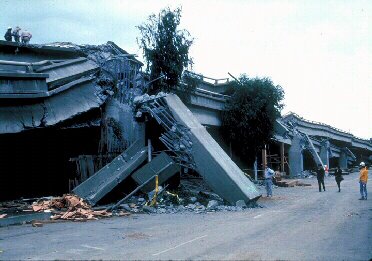
Referendum 51 is an issue that will appear on the November 5 ballot as a method of paying for a statewide 10-year, $7.7 billion transportation program. Changes that would be created by the passing of Referendum 51 include a one-time, 1 percent surcharge on vehicle sales, raising a weigh fee on trucks heavier than five tons, and increasing the state's gasoline tax by 9 cents a gallon over two years. The taxes used from these increases would be used to address problems such as traffic congestion, improving the safety of what the state Department of Transportation calls 2,037 "high accident" locations, and also repairing over 900 earthquake susceptible bridges. "Referendum 51 will not solve all of our transportation problems," said Gorton in his address. "It is the foundation for the house� it's not the house itself."
Gorton emphasized that the government would be accountable for each expense purchased with Referendum 51 money for the next ten years. "I can't remember any state legislature ever doing this before," said Gorton. "If this form of accountability works here, it can, and will, probably be applied to other forms of legislation as well."
In addition to the points brought up by Gorton, the student panel raised some topics for the former senator to speak upon as well. Shelly Fayette, a senior theology and religious studies major brought up the topic of mass transportation several times, asking why more money wasn't going to mass transit when it presented a more viable solution to the problem of traffic congestion. She also mentioned that Referendum 51 didn't present a very cost-effective solution for those with lower incomes. "Public transportation is a social justice issue that our state legislature should be concerned with," said Fayette.
"Under Referendum 51, a greater percentage of money will go to buses than the actual percentage of people who use the bus," replied Gorton. "The legislature is concerned with it [mass transit]. You'll soon have the option of a monorail . . .the problem is, you can't ask the people of Spokane to pay for a monorail in Seattle." Gorton also went on to state that a large amount of opposition towards Referendum 51 stems from the fact that it is not a "perfect" solution. "Perfection is the enemy of good," said Gorton. "I suspect that many people have better ideas� I have better ideas� but we aren't going to destroy them all by voting for this modest proposal in front of us right now."