The Blue Ribbon Commission on Transportation
Final Recommendations to the Governor and Legislature
adopted November 29, 2000
Final Recommendations
The Blue Ribbon Commission on Transportation
Final Recommendations adopted November 29, 2000
SUMMARY OF RECOMMENDATIONS
1. Adopt transportation benchmarks as a cornerstone of government accountability at the
state, city, county, and transit district levels.
2. Establish a single point of accountability at the state level, strengthening the role of the
state in ensuring accountability of the statewide transportation system.
3. Direct a thorough and independent performance review of WSDOT administration
practices and staffing levels.
4. Remove the barriers to achieving the transportation benchmarks for efficiency and sys-
tem performance by providing funding for a strong state and strong regional transporta-
tion system.
5. Invest in maintenance, preservation, and improvement of the entire transportation system
so that the transportation benchmarks can be achieved.
6. Provide regions with the ability to plan, select, fund, and implement (or contract for
implementation of) projects identified to meet the region’s transportation and land use
goals.
7. Achieve construction and project delivery efficiencies.
8. Incorporate the design-build process and its variations into construction projects to
achieve the goals of time-savings and avoidance of costly change orders.
9. Use the private sector to deliver projects and transportation services.
10. Reengineer the workplace to achieve greater efficiency, and consider the use of managed
competition for operations and maintenance functions.
11. Streamline permitting for transportation projects.
12. Link transportation funding to efficiencies.
13. Link maintenance and preservation funds to best practices.
page 1
The Blue Ribbon Commission on Transportation
14. Simplify funding distributions for best results.
15. Adopt a regional funding equity principle.
16. Seek a 90% farebox recovery for ferry system operational costs within 20 years.
17. Adopt a package of new revenues to fund a comprehensive multi-modal set of invest-
ments, which, taken together with the recommended efficiency measures and reforms,
will ensure a 20-year program of preserving, optimizing, and expanding the state’s trans-
portation system.
18. Begin action now to improve the transportation system, guided by the BRCT Early
Action Plan.
SUMMARY OF RECOMMENDED BENCHMARKS
1. Zero percent of interstate highways in poor condition.
2. Zero percent of major state routes in poor condition.
3. Zero percent of local arterials in poor condition.
4. Zero percent of bridges structurally deficient.
5. Complete seismic safety retrofits of all Level 1 and Level 2 bridges.
6. Traffic congestion on urban interstate highways will be significantly reduced and be no
worse than the national mean.
7. Delay per driver will be significantly reduced and be no worse than the national mean.
8. Maintain vehicle miles traveled (VMT) per capita at 2000 levels.
9. Increase non-auto share of work trips in urban centers or reverse the downward trend of
non-auto share of work trips in urban centers.
10. Administrative costs as a percent of transportation spending at the state, county and city
levels should improve to the median in the short-term and to the most efficient quartile nationally in the longer term.
11. Washington’s public transit agencies will achieve the median cost per vehicle revenue
hour of peer group transit agencies.
page 2
Final Recommendations
SUMMARY OF BENCHMARKS RECOMMENDED TO BE DEVELOPED
BY THE TRANSPORTATION ACCOUNTABILITY COMMISSION
1. Traffic Safety Benchmark: Traffic accidents will continue to decline.
2. Freight Mobility Benchmark: Freight movement and growth in trade-related freight
movement should be accommodated on the transportation system.
3. Air Quality Benchmark: Maintain air quality (carbon monoxide and ozone) at federally
required levels.
4. Project Cost Benchmark: Improve operations, maintenance, and project delivery costs.
5. Transportation Revenue Benchmark: Ensure that transportation spending keeps pace
with growth.
6. Person Delay Benchmark: Reduce overall hours of travel delay per person in congested
corridors.
page 3
The Blue Ribbon Commission on Transportation
RECOMMENDATIONS
Recommendation #1: Adopt transpor tation benchmarks as a cornerstone of g overnment accountability at the state , city, county, and transit district levels.
These benchmarks should measure results and monitor performance of the system. Transportation funding should be tied to progress in achieving the benchmarks.
With a focus on goals and results, benchmarks accurately quantify where Washington stands in comparison to other states. By giving a ‘baseline’ of current status, these measures can then be assessed for future action, and used as performance goals.
(The benchmarks are listed at the end of this report.)
Recommendation #2: Establish a single point of accountability at the state level strengthening the role of the state in ensuring accountability of the state wide transpor tation system.
a. The Washington Transportation Commission should negotiate a protocol with the Governor
on the procedures for the appointment of the replacement for the current Secretary of the Department of Transportation.
b. The Washington Transportation Commission should maintain its current authority until the
effective date of implementing legislation. At that time, the Commission should transition into the Transportation Accountability Commission, a single, independent, statewide point of accountability for reporting and monitoring the performance of the integrated state transportation system at all levels. The TAC should:
i. Take responsibility for overseeing attainment of the benchmarks addressed in Recommendation 1. ii. Provide a report card annually to the Governor and Legislature on:
• Progress toward achieving reform and efficiencies
• Progress toward accomplishment of the BRCT’s and the Legislature’s adopted investment
strategies
• Policy suggestions for furthering progress toward benchmarks and related transportation
policies
iii. The TAC should also review and advise on regional and integrated statewide transportation plans
and budgets and should advise the Governor in his or her exercise of plan certification responsibilities on whether plans are making adequate progress toward achieving benchmarks. Such reports should also be made to the Legislature.
page 4
Final Recommendations
iv. The TAC should be expected and encouraged to serve as an active “bully pulpit” for continuing
insistence on progress toward both adopting leading edge transportation strategies and achieving benchmarks. The TAC should report both successes and deficiencies.
c. From the effective date of implementing legislation forward, the Secretary shall serve at the
pleasure of the Governor, and subsequently, the Governor shall have appointment authority over the Secretary, with confirmation by the Senate. The authority of the Transportation Commission with respect to budget and policy will become advisory and the Governor will assume responsibility for the performance of the statewide transportation system, including proposing policies, plans and budgets to the Legislature and executing the policies, plans and budgets enacted by the Legislature.
d. The TAC membership should transition from the current Transportation Commission mem
bership in order to take advantage of its considerable expertise. In that transition, it should expand from seven to nine members, with no more than five out of the nine affiliated with a single political party. Three members shall be from Eastern Washington and six from Western Washington. Members should be appointed by the Governor and confirmed by the Senate. Terms of office should be six years, with terms staggered so three members are appointed every two years.
Recommendation #3: Direct a thorough and independent perf ormance r eview of WSDO T administration practices and staffing le vels.
a. Scale and size of accounting and management information systems division staffs.
b. Possible duplication of functions among regions
c. Possible application of computer and Internet technology for administration purposes.
d. Scale and size of other WSDOT support programs, including program D, S, T, and U func-
tions.
Recommendation #4: Remove the barriers to achieving the transpor tation benchmarks for efficiency and system perf ormance . Provide funding for a strong state and strong regional transpor tation system.
Recommendation #5: Invest in maintenance , preservation, and improvement of the entir e transpor tation system so that the transpor tation benchmarks can be achie ved.
a. Preserve the transportation system.
i. Prioritize and fund all maintenance, preservation, and safety needs of the existing transportation
infrastructure in the state, including operating and maintenance costs of rail, transit, and ferries. All agencies and jurisdictions should be required to demonstrate the use of maintenance management systems and, for roadways, pavement management systems, as a condition of receiving a baseline allocation of funding;
page 5
The Blue Ribbon Commission on Transportation
ii. Use the most cost-effective pavement surfaces available based on durability; iii. Phase out studded tires or establish a surcharge to recognize the cost of studded tire damage to
the roadways;
iv. Develop a utility cut ordinance for use throughout the state, or require jurisdictions to adopt a
utility accommodation ordinance that must include a section.
b. Optimize the transportation system.
i. Transportation system management (TSM) and intelligent transportation systems (ITS) policies
should be implemented where cost-effective.
ii. Transportation demand management (TDM) policies should be used to reduce demand on the
highway system.
iii. Jurisdictions should integrate transportation and land use planning. iv. Congestion pricing should be made a policy option for congested urban areas.
c. Make cost-effective system expansions in heavily traveled corridors.
i. Look to congestion. Congestion and accidents are key indicators of transportation dysfunction. ii. Look to corridors. Corridors are where congestion is likely to be, and congestion cannot be
effectively treated by isolated spot improvements.
iii. Use benefit-cost analysis to the extent possible, to analyze and communicate the value of invest
ment alternatives.
d. Improve the decision-making process for transportation investments.
i. Use cost-benefit analysis in selecting the most effective transportation investments. Multi-modal
benefit-cost analysis should be used to the extent possible as it develops. There is currently no institutionalized analytical approach to cost-benefit analysis across modes and regions. The method used for transportation projects necessarily differs from that used in private industry, taking into account societal costs and benefits. The state should encourage the development of the analytic tools to measure benefits and costs for all modes with a common methodology.
ii. Travel demand modeling tools should be enhanced and used by the state to evaluate investments. iii. Use a corridor approach in transportation planning and investing so the most heavily traveled
corridors are the highest investment priorities. The most effective mix of strategies in each corridor should be the goal.
iv. The state and local transportation authorities should invest in the human resources necessary to
supply the technical workforce capable of maintaining, preserving, and improving the transportation system.
Recommendation #6. Provide regions with the ability to plan, select, fund, and implement (or contract f or implementation of) pr ojects identified to meet the region’s transportation and land use goals.
a. The regional authority would have responsibility to program and prioritize, with selected state
and federal matching funds, state and regional roadway projects and regionally significant transit projects within the region.
page 6
Final Recommendations
i. A revenue package would be developed to implement a regional transportation plan, and the
authority would have increased funding for the transportation system improvements through an improved allocation of state and new revenues, using a regional equity principal.
ii. The authority would be able to contract with state, regional, and local jurisdictions for construc
tion and, where necessary, become the implementing agency. Other cost-effective and project delivery tools would be utilized, such as design/build and streamlined decision making.
b. Merged functions of any new authority may also include air pollution control. A regional
authority may be responsible for monitoring this commission’s indicator on air quality (among other things) to assess progress.
c. The governing board for the authority should include local and region-wide perspectives and
may have a directly elected or a federated membership. The authority would set goals, objectives, and standards, and monitor achievement and performance as part of its planning and funding responsibilities. With the principle of “no new bureaucracy,” however, our intention is to simplify and minimize structural redundancy rather than add new layers of government.
d. The size of the project or investment to be undertaken by the regional authority should de
pend upon its significance to the region. Standards for regional significance should be established for facilities; existing models are available via WSDOT’s defined facilities of ‘statewide significance,’ and those facilities defined in the Puget Sound Regional Council’s Metropolitan Transportation Plan.
Recommendation #7: Achieve construction and project delivery efficiencies.
a. Reduce engineering/construction cost ratio. WSDOT’s preliminary engineering and con-
struction engineering costs have recently been reduced from 26% to 20% of overall (‘hard’)
construction costs. We recommend that cost savings such as these continue at all levels of
government statewide.
b. Save money on materials and methods.
c. Use right-of-way ‘banking.’
d. Continue to assess prevailing wage survey techniques.
e. Make mitigation more cost-effective.
f. Provide incentives to encourage efficiencies.
g. Efficiencies will be realized by having predictable revenue sources to fully fund projects,
thereby eliminating starts and stops in design and construction which result in delays and increased project costs.
Recommendation #8: Incorporate the design-build process and its variations into construction projects to achieve the goals of time savings and avoidance of costly change orders.
page 7
The Blue Ribbon Commission on Transportation
a.
b. c. Grant statutory authority to transportation agencies to use design-build techniques and their variations, including design-build-operate, design-build-operate-own, design-build-ownoperate-transfer, and general contractor/construction management.
Provide methods by which public employees may participate in the design-build process. Provide increased education and training in alternative project delivery (ADP) concepts.
Recommendation #9. Use the private sector to deliver projects and transpor tation ser-
vices.
a. Continue pilot projects allowing the private sector to provide expertise and financing in
developing cost-effective transportation facilities.
b. Examine removing barriers preventing the private sector from providing transportation
services in light of some public expressed interest in alternative services, which could include ferry, bus, or monorail. A level playing field should be maintained between the public and private sectors. It is essential to take into account issues such as wages, health care and other benefits.
Recommendation #10: Reengineer the w orkplace to achieve greater efficiency , and consider the use of mana ged competition for operations and maintenance functions.
a. Place an emphasis on excellence in the workplace, through service, customer satisfaction, and a focus on results. Incorporate elements of total quality management into business practices.
b. Form partnerships with employer-employee organizations to develop apprenticeships and
training programs to ensure the availability of a skilled workforce to deliver projects and
services.
c. Under managed competition, private sector bids are sought for operations and maintenance
activities, and then compared to a bid from the public sector staff currently performing the service. Legislative authorization would be required to permit managed competition. Alternately, because managed competition is very restricted under current state law, it may be best to introduce a pilot program, perhaps through negotiation between labor and management. A level playing field should be maintained between the public and private sectors. It is essential to take into account issues such as wages, health care and other benefits.
Recommendation #11: Streamline permitting f or transpor tation projects.
a. Delegate 404 wetlands permit authority to the state. Section 404 of the Federal Clean Water
Act regulates the placement of fill in waters of the United States, including wetlands. In parts of Washington, the average time to acquire a permit from the federal government under this process is 1 to 2.2 years. Two states, Michigan (since 1984) and New Jersey (since 1994),
page 8
Final Recommendations
have been authorized to administer the Federal Section 404 program in parts of their states.
b. Write and apply substantive standards for transportation (road) projects to streamline permit
approvals thereby reducing process review delays. Based on the results of the pilot project, work toward a goal of one-stop permitting, using a single permit application. Use existing models to create an agency with powers to consolidate permit review for major transportation capital projects.
i. Identify highway projects of statewide significance to be eligible for review under this option. ii. Select a significant highway project as a pilot to plan and permit with an integrated steering
committee that includes project proponents, elected officials, agency staff, and public representatives (like the Trans-Lake Washington Project process). The ability to complete the project within two years of commencement should be a criterion in project selection.
iii. Evaluate the use of planning and permitting standards that encourage lower impact alternatives,
such as Smart Growth, transportation demand management (TDM), transportation system management (TSM), pricing, and transit, along with the HOV and general purpose roads proposed in the project.
iv. Accelerate the permit process for a project that uses low-impact development standards.
Recommendation #12: Link transpor tation funding to efficiencies.
a. Require WSDOT, counties, cities, and transit to demonstrate progress toward achieving benchmark efficiencies as a condition of receiving some portion of new baseline funding.
b. Require cities, counties and transit to demonstrate that they are not supplanting existing
transportation funds as a condition of receiving new funding.
Recommendation #13: Link maintenance and pr eservation funds to best practices.
a. Direct a baseline allocation of adequate funding to operations, maintenance, preservation and
safety functions for state highways, county roads, city streets, transit, ferries, and alternate
modes.
b. As a condition of receiving their baseline allocation of funding, require all agencies and juris
dictions to demonstrate the use of maintenance management systems and pavement management systems.
c. As a condition of receiving funding, require WSDOT, cities, and counties to demonstrate,
after an initial period of three years, that their preservation investments are based on lowest life cycle cost principles.
d. Require that available grant programs do not fund preservation projects that are already
funded out of baseline fund allocations.
page 9
The Blue Ribbon Commission on Transportation
Recommendation #14: Simplify funding distributions for best results.
a. Distribute pass-through funds according to a new formula that directs funds on a geographic
basis to counties and cities within counties, and takes into account lane miles, classification and pavement type, population, and utilization (for example, VMT), and is adjusted for changes in road jurisdiction at least once every five years.
b. Develop a new method for joint regional programming of federal funds, with the state, local
jurisdictions, transit agencies and other stakeholders participating in a regional prioritization process that directs federal funds to major corridors and facility clusters.
c. Require that federal funds be managed only by jurisdictions and agencies that are “certifica-
tion accepted.”
d. Create one-stop grant funding centers where all competitive funds, whether federal or state,
are disbursed under regional priority programming agreements and administered using a single application process.
Recommendation #15: Allow regions to retain funds they raise .
a. Adopt a regional equity principle for distribution of new funds to regions of the state, based
on the following three-tiers:
i. allocate sufficient funds statewide to all regions for basic operations, maintenance, preservation
and safety at a minimum agreed upon level;
ii. allocate all other new funds such that each region is guaranteed a minimum return of 85% of
funds generated in that region, and allocate remaining funds to a statewide equalization fund to be distributed to negative equity regions; and
iii. allocate all funds regionally authorized directly to the region in which they are generated.
Recommendation #16: Seek a 90% far ebox recovery for ferry system operational costs within 20 years.
a. Adopt the Ferry Tariff Policy Committee’s recommendation on a new ferry tariff policy,
including a new time-based route equity structure, premium pricing for passenger-only service, and 80% farebox recovery, phased in over the next six years. Seek to achieve a 20-year goal of 90% to 100% farebox recovery.
b. The Blue Ribbon Commission on Transportation recognizes ferries are an important part of
the highway system and recommends the Legislature give serious consideration to the Ferry Task Force’s findings on the needs of the ferry system.
page 10
Final Recommendations
Recommendation #17: Develop a package of new revenues to fund a comprehensive multi-modal set of investments, which, taken together with the r ecommended efficiency measur es and reforms, will ensure a 20-year program of pr eserving, optimizing, and expanding the state’s transportation system.
The Revenue Committee recommends a combination of the following revenue measures to comprise the elements of such a package:
a. Efficiency measures at the state, county, city, and transit agency levels.
b. Transfer from the state general fund transportation-related sales taxes, within the capacity
determined to be available.
c. Authorize the extension of the existing gross weight fee to all vehicles that use the roadway
system, including passenger cars, sport utility vehicles and recreation vehicles.
d. Authorize a surcharge to the existing gross weight fee for trucks, the proceeds to be dedicated
to freight mobility improvements.
e. Increase the motor fuel tax.
f. Extend the sales tax to motor fuels. The commission adopted a sales tax on gas to be imposed
on the wholesale commodity price of the fuel up to a set cap. The proceeds would be dedicated to all transportation purposes. The purpose of the price cap is to meet the commission’s goal of predictability in revenues and to reduce the potential for disruptive price swings. The choice of commodity price as the revenue basis is intended to avoid imposing the new tax on top of the existing motor fuel taxes. The tax would be collected at the ‘rack’ and paid by the distributor, like other fuel taxes.
g. Authorize a new surcharge on the wholesale sale of new and used vehicles, auto parts, and
accessories, the proceeds to be dedicated to transportation.
h. Adopt a new ferry tariff policy that includes premium pricing for passenger-only ferry service,
regional route equity pricing; adopt a new farebox recovery policy of 80% within six years and 90% within 20 years.
i. Authorize a local option vehicle mile traveled (VMT) charge to be used by regional entities in
congested regions of the state, and to be imposed on all vehicles registered in such a region.
j. Authorize new multi-modal transportation taxing authority for counties or regions that have
not been previously granted high capacity transportation taxing authority.
k. Expand the authority of counties to impose the local option motor vehicle license fee; repeal
the referendum provision; and authorize cities to impose the fee if the county in which they are located has not imposed the fee within two years of enactment.
l. Authorize bonding programs at the state and regional levels to achieve the funding levels
determined to be needed.
m. Authorize a local option regional sales tax dedicated to all transportation purposes.
page 11
The Blue Ribbon Commission on Transportation
n. Authorize to the state and to regional entities the implementation of all forms of value pricing,
including region-wide pricing and pricing on individual facilities.
o. Examine and, if appropriate, authorize the bonding of federal funds.
p. Examine and authorize the expansion of tax increment financing as a tool for transportation
and other development projects.
q. Examine all transportation revenue sources at least biennially and ensure that they are keep
ing pace with inflation and with growth according to benchmarked trends.
r. Extend the $30 license fee. The existing $30 license fee is applied only to passenger vehicles.
The commission adopted a recommendation to extend it to all vehicles including trailers.
s. Authorize a flat $20 traffic mitigation fee. (The existing $30 license fee would be increased to
$50. It should be a non-eighteenth-amendment restricted tax to ensure that it can be used for all transportation purposes.) A $20 charge would be imposed on all passenger vehicles and non-commercial trucks. The revenue generated could be used for any transportation purpose.
Recommendation #18: Begin action now to improve the transpor tation system, guided by the BRCT Earl y Action Plan
a. Act on accountability, efficiency, and governance recommendations.
b. Begin the first stage of investment in the 2001-2003 biennium by investing in actions that will
help the state reach the BRCT benchmarks.
i. Fund system maintenance and preservation throughout the state, ensuring continuation of effi
cient ferry and transit services.
ii. Optimize the current system using technology, and the most cost-effective demand management
techniques such as telecommuting and commute trip reduction tax credits.
iii. Fund cost-effective system expansions in all modes.
c. Set the stage for future investments by getting systems in place that will encourage best
practices, technical analysis to solve the toughest problems, and evaluation of performance by transportation agencies in delivering on the expected investments.
page 12
Final Recommendations
RECOMMENDED BENCHMARKS
Benchmark 1: Zero percent of interstate highwa ys in poor condition.
The benchmark committee found that slightly under five percent of the interstate highway was in poor condition in 1997.
Benchmark 2: Zero percent of major state r outes in poor condition.
The benchmark committee found that less than one percent of major state routes were in poor condition in 1997.
Benchmark 3: Zero percent of local arterials in poor condition.
Data were unavailable for current conditions of local arterials in Washington. A pilot project under the auspices of the Legislative Evaluation and Accountability Program (LEAP) is compiling the available data.
Benchmark 4: Zero percent of bridges structurally deficient.
The benchmark committee found that slightly fewer than twenty-five percent of bridges in Washington were in deficient condition in 1997. The benchmark applies to all bridges over 20 feet in length recorded in the State of Washington Inventory of Bridges (SWIBs).
Benchmark 5: Complete seismic safety retrofits of all Level 1 and Level 2 bridges.
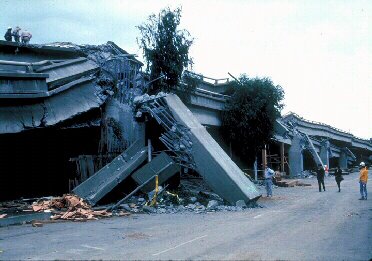
The benchmark committee found that the state has been pursuing a program to retrofit bridges and structures identified by risk level. Levels 1 and 2 are the two highest risk levels. Over 300 bridges have been retrofitted to date at a cost of about $40 million. However, almost 1,000 bridges remain to be repaired in the two highest risk levels at a cost of $560 million, $350 million of which is contained in a single structure, the Alaskan Way viaduct in Seattle.
Benchmark 6: Traffic congestion on urban interstate highwa ys will be significantly reduced and be no worse than the national mean.
The benchmark committee found that between sixty and eighty percent of urban interstate highways are congested in Washington. The national mean is about forty-five percent urban interstate miles congested.
page 13
The Blue Ribbon Commission on Transportation
Benchmark 7: Delay per driver will be significantly reduced and be no worse than the national mean.
This benchmark calculates delay per driver by metropolitan region. Delay per driver is a calculated average based on the number of licensed drivers in a region. It does not attempt to distinguish between individuals actually experiencing delay and those traveling on non-congested roads or not traveling at all. The benchmark committee found the national mean to be about forty hours of average delay per driver annually. Data show that the Seattle-Everett metropolitan area experienced seventy hours of average delay per driver annually; Vancouver-Portland experienced over fifty hours of average delay per driver annually; Individual regions of the state may choose to track more detailed data such as person delay on specific corridors.
Benchmark 8: Maintain vehicle miles traveled (VMT) per ca pita at 2000 levels.
The benchmark committee found that VMT in Washington were about 9,000 miles per person per year in 1998. While Washington’s population has grown about forty percent over the past twenty years, VMT have grown sixty percent, or about half again as fast. VMT have been growing faster than population since the mid-1980s. However, VMT per capita have leveled off at about 1990 levels. The Transportation Accountability Commission will review this benchmark and raise the standard if necessary to reach other benchmarks.
Benchmark 9: Increase non-auto shar e of work trips in urban centers or r everse the downward trend of non-auto share of work trips in urban centers.
The benchmark committee found that the only reliable data for this benchmark was the U.S. Census Bureau’s journey-to-work surveys, the most recent of which showed a declining share of non-auto trips in the 1980-90 timeframe. Year 2000 census data will be available early next year, 2001. The new accountability board should set a target for this benchmark when the data are available. Nonauto travel includes ferry, transit, walking and bicycling; commuter and light rail should be added when data become available.
Benchmark 10: Administrative costs as a percent of transpor tation spending at the state , county and city levels should improve to the median in the short-term and to the most efficient quar tile nationally in the longer term.
The benchmark committee found that the state transportation agency’s administrative costs fell between the third and fourth quartile nationally, (the first quartile being the lowest), or at roughly ten to twelve percent of spending. The committee added that these costs were not all due to inefficiency, but also to Washington’s environmental ethic, culture of planning, neighborhood activism, and citizen involvement. The benchmark applies to all transportation agencies in the state.
page 14
Final Recommendations
Benchmark 11: Washington’s public transit agencies will achieve the median cost per vehicle revenue hour of peer gr oup transit agencies, adjusting for regional cost of living
The benchmark committee found that King County Metro and Pierce Transit’s cost per vehicle hour were thirteen percent and fourteen percent respectively, above their peer group transit agencies nationwide. The committee also found that transit-operating costs are highly dependent on wages of transit personnel, which in turn are related to the economy and cost of living in the region.
page 15
The Blue Ribbon Commission on Transportation
BENCHMARKS TO BE DEVELOPED BY THE TRANSPORTATION ACCOUNTABILITY
COMMISSION
The following benchmarks are recommended for further development by the proposed transportation accountability commission that monitors and tracks benchmark progress. The accountability commission should develop metrics and identify targets and responsibility for these benchmarks.
Traffic Saf ety Benchmark: Traffic accidents will continue to decline.
The committee found that Washington has slightly less than 1.5 fatalities per 100 million vehicle miles, which is less than the national average of about 1.7. All accidents, including those involving bicyclists and pedestrians, should decline.
Freight Mobility Benchmark: Freight movement and gr owth in trade-r elated freight movement should be accommodated on the transpor tation system.
The benchmark committee found that growth in trade-related freight movements by truck (up over seventeen percent annually in the 1991-98 timeframe) and by railcars (up about nine percent annually in the 1991-98 timeframe) exceeded other economic growth rates. The Freight Mobility Strategic Investment Board (FMSIB) should be involved in developing additional benchmarks of freight movement and the supporting data to monitor progress.
Air Quality Benchmark: Maintain air quality (carbon mono xide and ozone) at federally required levels.
The benchmark committee found a declining incidence of carbon monoxide and ozone (the components of smog) in the state’s urban areas since the 1970’s. However, recently our air quality has come close to exceeding allowable levels on several occasions. Federal law requires that regions be sanctioned by loss of federal funds if this happens. The transportation accountability commission is asked to consider measuring greenhouse gases, particulates, and visibility when data and appropriate standards are available.
Project Cost Benchmark: Improve operations, maintenance , and project delivery costs.
Create benchmarks for the operations and maintenance and capital project delivery functions of transportation agencies, parallel to that suggested for their administrative costs. The new accountability commission that monitors and tracks benchmark progress is directed to develop metrics to compare Washington’s project development, design, permitting and construction costs with best practices nationally.
page 16
Final Recommendations
Transpor tation Revenue Benchmark: Ensure that transpor tation spending keeps pace with growth.
Washington’s transportation system must not be allowed to fall behind the pace of its population and economic growth. The transportation accountability commission should develop a benchmark that monitors transportation revenues and how they track transportation needs.
Person Delay Benchmark: Reduce overall hours of travel delay per person in congested corridors.
The new transportation accountability commission should develop and track a benchmark of person delay that can be used across all modes of travel.
page 17
The Blue Ribbon Commission on Transportation
TOOL BOX OF ADDITIONAL EFFICIENCY RECOMMENDATIONS
1. Improve data collection for best decisions.
a. All transportation agencies should improve data collection and cost allocation. Without access to
comparative data, it is not possible to measure accurately the cost and quality of services. b. Implement the management and financial accounting system changes recommended by the Joint
Legislative Audit Review Committee (JLARC).
c. Refine budget accounting and record systems (BARS) codes at the state, city, county, and transit
districts into a consistent format for cost comparison purposes.
. Requires data collection and reporting at the city level, consistent with data collected at state,
county, and transit district level, and reported to a single repository for simpler access. e. Define consistent terminology for — administration, construction, maintenance, operations, and
preservation —across all levels of government in order to make correct comparisons.
2. Improve management practices.
a. Improve project management.
b. Take measured (appropriate) risks.
c. Use enhanced team planning/partnering.
3. Improve the permit process.
a. Develop an environmental cost model to document and monitor the costs of environmental
review, permitting, and mitigation on projects.
b. Do environmental review early.
i. Require early agreements including interagency agreements early in decision-making process. ii. Provide early involvement by stakeholders.
c. Establish standards for environmental reviews that are consistent across jurisdictions.
i. Work with local agencies and state agencies to coordinate review efforts. ii. Coordinate environmental mitigation strategies with other agencies.
iii. Coordinate with other federal, state and local agencies, and with non-governmental organiza
tions to develop comprehensive strategies.
iv. Coordinate mitigation across jurisdictions. d. Use watershed based planning.
e. Make better use of current environmental processes and available resources.
i. Better integrate NEPA/SEPA: to the extent possible, coordinate reviews at the federal, state
and local levels.
ii. Fund staff in resource agencies to review permits: Staff shortages are a principal cause of
delay in issuing environmental permits. Funding staff positions for specific projects or on an ad hoc basis will facilitate earlier project review.
iii. Set and honor timelines.
iv. Use project teams.
page 18
Transportation
Monday, March 10, 2008
Report of the 2000 StateTransportation Blue Ribbon Commission


Thursday, February 21, 2008
Olympia Kills Plan to Give Sound Transit Roads
Sound Transit expansion denied
Lawmakers kill plan to give agency highway development responsibility
Last updated February 21, 2008 10:26 p.m. PT
By LARRY LANGE
P-I REPORTER
A measure to enlarge Sound Transit by giving it highway development responsibilities died in the Legislature, failing to get enough support from skeptical lawmakers and others.
Several groups, including environmentalists, local transportation officials and Sound Transit itself questioned the measure, Senate Bill 6772.
"It's dead for the session," said the measure's prime sponsor and Senate Transportation Committee chairwoman, Sen. Mary Margaret Haugen, D-Camano Island. Given other concerns over ferries, mountain pass closures and winter floods, "we can't get anybody to focus on it."
Haugen and four other senators introduced the proposal in late January, and Haugen's committee held one hearing on it, but committee members wouldn't send it to the full Senate.
Several unsuccessful attempts have been made at setting up a regional transportation agency, a move recommended in 2000 by a state blue-ribbon commission and in early 2007 by a second commission organized to look at the question.
Advocates of an agency that would plan and coordinate transportation projects say it could unclog the political logjam that has stopped many projects, and help raise local taxes and finance projects, because the state won't do it alone.
Haugen argued that a larger agency could better focus money on the most needed projects, including both roads and transit. A problem with the recently rejected Proposition 1 transportation funding measure was its scope -- spreading money over too many projects to please too many representatives of three counties, she said.
Local officials, who said they can manage transportation projects the way things are organized now, opposed it.
"Local governments think they're doing a wonderful job (and say) just give us more money, we can do it," Haugen said.
Some also said the bill didn't go far enough because it didn't include in a single agency the planning authority now held by the Puget Sound Regional Council, whose director, Bob Drewel, also was skeptical of the idea of a larger agency.
The bill would have reduced Sound Transit's board of directors from 18 members to 12, with seven elected by voters, including six from geographic districts and serving six-year terms. Currently, the agency's board members are local elected officials appointed to the board by county executives.
Sound Transit Executive Director Joni Earl told lawmakers her agency hadn't taken a position on the measure but that changing the board makeup could jeopardize the federal government's commitment to providing grant money to the agency.
Jessyn Farrell, director of the pro-transit Transportation Choices Coalition, said she thinks lawmakers should "leave Sound Transit alone while it's completing Phase 1" of its light rail line.
Haugen said the subject will come up again in next year's session for consideration, because other metropolitan areas have formed regional transpiration agencies to manage projects.
A related measure, Senate Bill 6771 to eliminate regional transportation investment districts such as the one that wrote part of the ill-fated Proposition 1, has been changed to delay further investment district elections until November 2009. The bill narrowly passed the Senate and is now in the House.
THE NEXT STEP
Sound Transit Thursday began asking residents in urban areas of King, Pierce and Snohomish counties what they think should be on another transit ballot measure. Agency officials haven't yet decided whether to attempt another one. They are asking about priorities, how ambitious the new version might be and how soon another measure should be on a ballot. Residents can take the survey through March 9 at soundtransit.org or by calling 1-866-511-1398. Voters in November rejected a ballot measure that included $30.8 billion in light rail and other transit projects.
Tuesday, March 15, 2005
Background to Initiative 917 inc History of Wa Road Taxes
P O L I C Y
b r i e f
Washington Research Council
PB 06-12 March 15, 2006
Initiative Targets
BRIEFLY
The 2005 transportation funding package was
passed to secure at-risk facilities, implement
road safety improve-
ments, support local
transportation
maintenance, and
relieve congestion.
Initiative 917 would
repeal many recently
enacted funding sources in order to return
Washington to $30 car tabs.
Transportation Fees
In 2005, lawmakers enacted a comprehensive transportation funding package to secure at-risk facilities, implement road safety improvements, support local transportation maintenance, and relieve congestion.
The major revenue contributor to these projects, a fuel tax increase, was upheld by voters last November. But a movement is now underway to remove the fee portion of this package. The Transportation Revenue
Forecast Council estimates that, if Initiative 917 qualifies for the ballot
and gets passed by voters, state revenue would be reduced by $2.7 billion
over the next 16 years.1 The initiative would also reduce local revenues
and restrict funding options.
INFRASTRUCTURE UNDERFUNDED
While road use continues to grow in Washington, transportation revenue
has historically failed to keep pace with the cost of needed transportation
investments. In 2000, the Blue Ribbon Commission on Transportation
found that existing revenue sources would only provide $55 billion of the $150 billion needed between 2001 and 2020. Governor Locke’s 2002 Competitiveness Council reached similar conclusions, finding that “Washington’s currently overwhelmed transportation system threatens jobs and economic vitality, wastes people’s time and money, diminishes quality of life, and degrades our environment” (WCC, 2002, p. 1).
CURRENT FUNDING
The Legislature responded to transportation funding shortages in 2003
with the "Nickel Funding Package." ESHB 2231, the first major trans-
portation investment package in 13 years, increased the gas and special
fuel tax by five cents per gallon and raised selected fees.
Then in 2005 lawmakers passed the Transportation Partnership Package.
ESSB 6103 phased in a 9.5 cent state fuel tax increase. The bill also en-
acted a vehicle weight fee on passenger cars and light trucks, created a
new motor home fee, increased fees for various drivers’ license services,
and raised license plate charges (WSDOT, 2005). In total, the funding
package will collect an estimated $7.37 billion in revenue over the next
1
Note: The fiscal analysis was for I-915, an earlier version of the initiative. However, their impact on revenue is identical.
Page 2
Washington Research Council
Figure 1. Overview of I-917
Changes to Transportation Funding
• Calculate vehicle taxes and fees using a depreciation schedule
based on purchase price and not on manufacturer’s base sug-
gested retail price
• Set license tab fees at $30 per year for vehicles weighing 20,000
pounds or less
• Repeal the $1 a year fee for each truck, motor truck, truck trac-
tor, road tractor, tractor, bus, auto stage, for hire vehicle with
seating capacity of more than six, trailer, semitrailer and pole
trailer
• Repeal the vehicle weight fee for motor vehicles, excluding mo-
tor homes
• Repeal the $75 a year vehicle weight fee for motor homes
• Remove the motor vehicle sales tax increase that became effec-
tive on July 1, 2003
• Lower the license plate retention fee from $20 to $0.50, the re-
flectorized license plate fee from $2 to $0.50, and the application for a new vehicle license number plate fee from $10 to $0.50
• Repeal select local and RTID motor vehicle taxes and fees authorized for voter approval
• Retire or defease bonds that have pledged the motor vehicle ex-
cise tax
16 years.
Because ESSB 6103 allows for bond-
ing, transportation investment will in-
crease by $8.475 billion by 2021. Of
this total, $7.1 billion funds 274 pro-
jects identified in the Transportation
Partnership Project List. The two largest
areas of project funding are choke point
and congestion relief (69 projects) and
at-risk structures (30 projects). The
package also includes funding for safety
investments, ferries, multi-modal im-
provements, environmental concerns,
and freight mobility.
In addition to state administered pro-
jects, a portion of the Transportation
Partnership Package revenue is allo-
cated directly to cities and counties.
Local governments can also enact addi-
tional fees and taxes to fund regional
projects. In 2002, the Legislature estab-
lished the Regional Transportation In-
vestment District (RTID) to allow resi-
dents of King, Pierce and Snohomish
Counties to fund transportation invest-
ments through local taxes. To move for-
ward, the 2006 Legislature created a re-
gional transportation commission to
propose a new governing entity and
transportation finance plan. The results of the study will be submitted to the Legislature by January 1, 2007, after which the commission will be dissolved. Governor Christine Gregoire is expected to sign ESHB 2871 in the following weeks. A local revenue proposal should be on the ballot for residents’ approval in 2007.
The 18th amendment to the state Constitution requires that certain funds (including fuel taxes) be dedicated exclusively for highway purposes. Other revenue sources, including many fees, can be spent on a much broader range of transportation related projects.
INITIATIVE 917
Initiative 917 was filed on January 9th and, if it receives sufficient signa-
tures to qualify, will appear on the ballot this November. The initiative
makes a number of changes to current transportation funding policies, in-
cluding repealing and amending parts of the 2003 and 2005 transportation
legislation. If enacted, the measure would lower motor vehicle registration
To receive advance notice of Washington
Research Council publications by e-mail
send your e-mail address to
wrc@researchcouncil.org
charges, repeal or reduce a number of fees, change the vehicle valuation
method for tax and fee purposes, and retire several outstanding bonds. See Figure 1 for details.
Page 3
Washington Research Council
$30 car tabs. Before the 2005 Transportation Partnership Package, passen-
ger cars were charged a $30 license fee. Now, in addition to this charge,
drivers pay a vehicle weight fee. Opponents of this increase argue that
lawmakers should respect Washington voters’ twice expressed desire for
$30 car tabs.
I-695, passed by voters in 1999, eliminated the state motor vehicle excise tax (MVET) effective January 1, 2000 and established a $30 state license tab fee. After the initiative was found to be unconstitutional for violating the “single subject” rule, the Legislature enacted portions of the initiative during the 2000 session. However, the legislation did not repeal the au-
thority to impose a voter-approved MVET or the authority to impose a local option vehicle license fee.
In 2002, voters passed a second transportation funding initiative. I-776
capped motor vehicle (including light truck) license tab fees at $30, re-
pealed state laws governing how vehicles are valued for the purpose of excise taxation, eliminated the authorization for a voter-approved local option MVET, and repealed the local option vehicle license fee.
In 2005, lawmakers effectively removed the $30 cap by imposing a
weight-based surcharge. Still, according to the Washington State Department of Transportation (WSDOT), 84 percent of passenger vehicles are only charged an additional $10 a year (2005).
Many motorists also pay additional charges to fund local mass-transit projects such as Sound Transit.
In total, WSDOT estimates that the average spending per passenger car is approximately $309 a year. (This estimate includes spending on the state gas tax, the federal gas tax, and the state license tab fees.)
Restricting Revenue. In addition to eliminating the vehicle weight fee, Initiative 917 removes authorization for the local option vehicle license fee and the local motor vehicle excise tax. Both of these revenue sources are currently authorized for voter approval.
Since the initiative was filed, several changes have been made to the taxes and fees authorized for regional transportation purposes. ESHB 2871, passed by the Legislature on March 8th and currently awaiting the Governor’s signature, lowers the maximum optional regional sales and use tax from 0.5 percent to 0.1 percent and raises the maximum regional transportation investment district MVET to 0.8 percent.
Lowering Fees. Initiative 917 lowers the license plate retention fee from
$20 to $0.50, the reflectorized license plate fee from $2.00 to $0.50, and
the application for a new vehicle license number plate fee from $10.00 to
$0.50.
The license plate retention fee was established in 2003 under ESHB 2231.
In 2005, ESSB 6103 raised the reflectorized license plate fee from $0.50 to
$2.00 and increased the application for a new vehicle license number plate
To receive advance notice of Washington
Research Council publications by e-mail
send your e-mail address to
wrc@researchcouncil.org
fee from $3.00 to $10.00.
Retiring Bonds. Sound Transit continues to levy an MVET, claiming that Initiative 776 did not eliminate its MVET because the proceeds are
Page 4
Washington Research Council
Figure 2. Summary of I-917
Impact on State Revenue, 2005 - 2021
$ in million
Trailer License Fee ($30) (140.71)
Truck License Fee (650.12)
Passenger Vehicle Weight Fees (885.85)
Motor Home Weight Fees (111.45)
Plate Reflectivity (68.06)
Plate Replacement Fees (197.83)
Retail Sales Tax on Motor Vehicles (672.54)
Motor Vehicle Filing Fees (0.52)
Plate Number Retention Fee (5.53)
Total (2,732.60)
Source: Transportation Revenue Forecast Council
pledged to service outstanding bonds. This interpretation is
currently under consideration by the court. Initiative 917 mandates retirement or defeasance of these Sound Transit bonds. (Defeasance is a process in which the borrower sets aside cash or bonds sufficient enough to service the debt, thereby effectively voiding the obligation.)
Sales Tax. The Nickel Funding Package imposed an additional retail sales tax of three-tenths of one percent of the selling price of a motor vehicle. Initiative 917 would remove this tax.
Vehicle Valuation. The initiative would also change the
calculation method for vehicle taxes and fees from the
manufacturer’s base suggested retail price to a depreciation
schedule based on the purchase price. The current calcula-
tion method has been criticized for overvaluing vehicles.
Since the initiative was proposed, the 2006 Legislature has
taken steps to bring vehicle valuations more in line with
actual values. SSB 6247, passed by the Legislature and de-
livered to the Governor on March 8th, establishes a stan-
dard administrative structure for the calculation of any fu-
ture, locally imposed MVET. The locally imposed MVET for a truck-type power or trailing unit will be based on the latest purchase price. For all other vehicles, calculations continue to be based off of the manufacturer’s suggested retail price. But the tax is now calculated at 85 percent of the manufacturer’s base suggested retail price multiplied by a depreciation schedule based off of a vehicle’s years of service.
Infrastructure. If passed, Initiative 917 would reduce state and local transportation revenue. Unless alternate funding is secured, some transportation projects could be placed on hold or cancelled. This, in turn, would slow economic development in Washington. “Roadways, airports, ferries, ports, and railways are all necessary for a strong economy, providing access to businesses, jobs, and world markets, as well as moving freight, commerce and commuters” (WHD, 2005, p. 12). See Figure 2.
Flexibility. In addition to reducing revenues, I-917 would reduce transportation spending flexibility by repealing several of the more open-ended
funding sources. The initiative would also limit local government’s and
the RTID’s funding options by removing some of the taxes and fees authorized for voter approval.
DISCUSSION
The recently enacted - and voter approved - taxes and fees were in response to longstanding concerns regarding Washington’s transportation and competitiveness. If Initiative 917 qualifies for the ballot and passes, transportation funding will be reduced.
To receive advance notice of Washington
Research Council publications by e-mail
send your e-mail address to ###
wrc@researchcouncil.org
Page 5
Washington Research Council
REFERENCES
The Blue Ribbon Commission on Transportation (2000). Transportation
Action: final recommendations to the governor and legislature.
Transportation Revenue Forecast Council (2006, January 30). Preliminary
Estimate of Impacts. Initiative Measure No. 915: AN ACT Relating to
limiting government-imposed charges relating to motor vehicles.
Washington Competitiveness Council (2002). Phase I Documents:
Competitiveness Council Executive Summary.
Washington House Democrats (2005). The Transportation Partnership Act
of 2005: Saving Lives, Moving People, Delivering Goods.
Washington Research Council (2005). Road Block: Initiative 912. Policy
Brief PB 05-09.
Washington State Department of Transportation (2005). 2005
Transportation Tax Package. In Project Funding.
Wednesday, December 19, 2001
Advanced Technology can bring major congestion relief
T-Ops: Use Technology to Combat Congestion
By: John Niles
The Seattle Times
December 19, 2001
You think traffic in the Puget Sound region is bad now? Try turning off the freeway ramp meters, as was done during a temporary experiment in Minneapolis. The result: a 22-percent increase in freeway travel times and 26 percent more crashes.
Most people are simply oblivious to the proven potential for technology improvement in the daily management of car, truck and bus traffic. Some rush-hour drivers and enlightened government officials know this, but sufficient political awareness to seriously consider and install these advances is lacking. The cost would be millions, not the billions we need for new freeway lanes and mass-transit systems. Technology does not replace the larger solutions, but it does provide some needed temporary relief.
This affordable bundle of actions is called "Traffic Operations Management," or T-Ops for short. T-Ops means the coordinated use of technology, emergency vehicles and skilled field personnel from multiple agencies to keep traffic moving smoothly. It is well worth the training and hard work.
Research into traffic patterns is striking. Over half of traffic congestion is caused by accidents, breakdowns and resulting rear-end collisions. For every one minute saved in clearing the road, four or five minutes of congestion are saved. Ramp metering is worth 14 to 50 percent fewer accidents and 8 to 60 percent faster traffic flow on freeways. And properly synchronized traffic lights knock off 8 to 25 percent of in-town travel times.
Some new traffic technology can have just as much effect as adding lanes. Here are some of the pieces of T-Ops:
• Install video cameras on all freeways and major arterials, and at every park-and-ride lot. Make the pictures available via cable TV and the Internet so people can pre-check conditions and traffic managers can fix problems. Traffic sensors that count cars and communicate with computers supplement the video.
• Put operations specialists on duty in traffic-management centers to watch for individual problems, and to adjust traffic lights, change the messages on electronic signs, dispatch service trucks for breakdowns and alert 911 immediately with complete information when accidents occur.
• Have emergency and road-clearance vehicles ready to roll, with personnel who are trained to clear the road as fast as safely possible. Tow trucks need to be pre-positioned in high-risk areas. (This already happens on bridge ends.)
• Sophisticated computers and fiber-optic communications synchronize traffic signals and set the blink rate on ramp meters, under human supervision.
• Updated laws and police procedure should emphasize clearing roads quickly. Existing laws against dangerous or unlicensed driving should be enforced vigorously to reduce the accidents that both cause congestion and yield more rear-end collisions upstream.
• Drivers and transit riders should receive precise, timely, easy-to-comprehend forecasts of travel time. Computers would assess upcoming traffic and pass the information through variable message signs, roadside radio stations, telephones and the Internet. Regular measurement of the traffic flow should let drivers and elected officials keep score on T-Ops' efficacy.
Operations management must include buses too. Traffic signals can detect and pass them through more green lights. Bus riders also deserve to know precisely how many minutes and seconds remain until their next bus arrives. In some parts of the region, www.mybus.org (accessible from the latest cell phones) allows riders to arrive just before the bus, avoiding the rain or cold. This could also boost ridership — taking more cars off clogged freeways.
Some of this is already happening some of the time. The central Puget Sound region's young T-Ops is celebrated in professional literature and hailed by federal officials. Tow trucks are on standby in a few locations. The Seattle-Tacoma online freeway map from the Washington Department of Transportation (DOT) advises 22,000 viewers daily. Synchronization of traffic lights is growing.
But meaningful T-Ops requires constant attention and upgrading. It has to work on weekends, evenings after rush hour, and the middle of the night when trucks and late-shift workers are on the road. Not some, but all of the arterial traffic lights need synchronization. Not some, but all of the arterial roads and intersections need sensor cameras and active management from traffic-management centers.
Freight management — e.g., keeping just-in-time deliveries from suffering excessive delays in congestion, or worse, trucks causing congestion while unloading — needs as high a priority as passenger car management. As the federal DOT says, government needs to "make the daily, smooth operation of trans-portation systems a core mission," along with building and maintaining roads.
Unfortunately, many local leaders don't realize that T-Ops offers more hope for quick improvement with less money than any other available tactic. Last year's state Blue Ribbon Commission on Transportation put the new revenue needed for T-Ops at $40 to $50 million statewide — the smallest tax bite of any recommendation made.
State Transportation Secretary Doug MacDonald has signaled a stronger agency commitment to operations management. Seattle Mayor-elect Greg Nickels has promised some new T-Ops steps.
But all transportation leaders must step up vigorously. Dr. Christine Johnson of the federal DOT notes, "In survey after survey, customers are saying they want to see the system operated to peak efficiency before we resort to costly construction measures."
"Peak efficiency" is not yet in sight, but could be if we demand all the T-Ops that is possible.
John S. Niles is senior fellow for transportation and technology at Discovery Institute, Seattle.