The phrase,'Unsound Transit', was coined by the Wall Street Journal to describe Seattle where,"Light Rail Madness eats billions that could otherwise be devoted to truly efficient transportation technologies." The Puget Sound's traffic congestion is a growing cancer on the region's prosperity. This website, captures news and expert opinion about ways to address the crisis. This is not a blog, but a knowledge base, which collects the best articles and presents them in a searchable format. My goal is to arm residents with knowledge so they can champion fact-based, rather than emotional, solutions.

Transportation

Showing posts with label Knute Berger. Show all posts

Friday, March 28, 2008

Nickels wants to add 60% more people in Seattle by 2040

Growing smart March 07

Population growth doesn’t have to overwhelm us — especially if we move it to North Dakota.

By Knute Berger

If the 19th and 20th centuries in Seattle were about promoting growth, the early 21st century is about coping with it. Gridlock, sprawl, and skyrocketing population suggest that we are firmly stuck in the era of the so-called growth paradox, that conundrum that stipulates an attractive region will spoil its quality of life by attracting more people than it can sustain.

The old boomtown mentality is still alive, though. Take Mayor Greg Nickels. The Puget Sound Regional Council has projected that central Puget Sound will grow by almost 1.5 million more people in the next three decades. A couple of hundred thousand of those folks will settle in Seattle. But that’s not enough for Nickels. He’d like an additional 350,000 people in the city by 2040. That’s 60 percent growth over our current population of 575,000.

As Richard Morrill, a retired University of Washington geography professor, told The Seattle Times in response to Nickels’ growth goals, “That magnitude of change hasn’t happened anywhere except maybe Beijing.” Welcome to Seattle, world-class megalopolis.

Much of the debate focuses on how to accommodate growth with more density, smarter development, bigger highways and mass transit. The underlying assumption is that — as former Seahawks owner and onetime big-time Eastside developer Ken Behring once predicted — a “tsunami” of growth is headed our way. The only thing that could stop that tsunami is, apparently, a real tsunami, which — along with a Mount Rainier lahar or major quake along the Seattle Fault — could, geologists say, wipe us out New Orleans style. But isn’t there a less catastrophic way to slow growth? I think so.

Let me be Lesser Seattle’s Horace Greeley for a moment and suggest that this is the right time to say, “Go East!” Just as the government once encouraged Americans to “go West” with free land and federal subsidies, we could do something similar today by pointing current and wannabe Seattleites back east to the heartland, where there are rural areas in need of boosting — indeed, communities that are desperate for new settlement.

Let me introduce you to North Dakota, for one.

North Dakota is one of the only states that has a declining population — a real achievement in a country that just hit the 300-million mark. North Dakota is 47th in population and is going backward; the U.S. Census Bureau projects it will be 48th by 2025.

Part of the problem is that the state is cold, bleak, and colorless — but winter in Seattle is no picnic either, especially for serotonin junkies. Yet Seattle and North Dakota have enough in common that the High Plains might appeal to some of the same immigrants. That depressing climate? Think of it as an incubator for the next grunge scene.

North Dakota is virtually the same age as Washington (both became states in 1889), and no place is more Middle American. Rugby, N.D., is the exact geographical center of North America. The state eschews glitz: Lawrence Welk was born there; Lewis and Clark were the last real celebrities to pass through. The state beverage is milk. Its license plates declare the state’s identity: North Dakota is the “Peace Garden State.” Wholesome, middlebrow, and peace loving — the place screams Seattle potential.

And it’s available at bargain rates: According to Coldwell Banker, Minot, N.D., has the most affordable housing in America. The average home price is only $162,000, which in Seattle — land of the $600,000 bungalow — would buy a Frango box. In a town served by rail and known for its lutefisk and meatball church socials, would-be Seattleites would likely find the kind of warm, urban village lifestyle they’ve been seeking in Ballard but for less than half the cost.

The most interesting thing about North Dakota is the New Homestead Act, a proposed law sponsored by North Dakota Democrat Sen. Byron Dorgan and other rural politicians. It is designed to offer incentives to folks willing to help gentrify declining rural areas. In short, it proposes to pay people to move to North Dakota. Under the legislative proposal, if you make the move, the government would pay off 50 percent of your college loans, give you a $5,000 tax credit for buying a house, and set up matching-fund savings accounts in your name. Plus, it would establish a $3 billion venture capital fund to help rural-bound entrepreneurs start new businesses. Heck, that beats Microsoft stock options.

So go East, prospective Seattleites! Go East, high-techies! The North Dakota grubstake is one Greg Nickels can’t match.

Monday, March 10, 2008

Governor Gregoire Hypes Disaster to sell bridges

Is Gregoire hyping disaster to sell bridges?

By Knute Berger 1/17/07

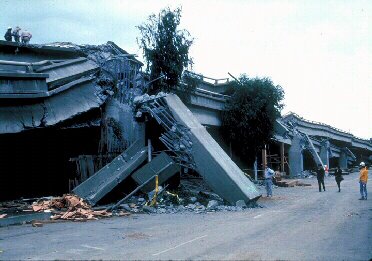
Gov. Christine Gregoire is eagerly sharing the happy news of her willingness to slap tolls on bridges and highways. She met with Oregon Gov.Ted Kulongoski in Clark County the other day to discuss moving ahead on a $4.2 billion new bridge over the Columbia River on I-5. The feds would pick up most of the tab, but Gregoire is set on imposing tolls. To push her agenda, she's using last summer's Minneapolis bridge collapse to make her case for urgency. Only problem is, it turns out the Minneapolis bridge disaster wasn't a case of aging infrastructure. The National Transportation Safety Board (NTSB) has concluded the problem was a design flaw.

Gregoire's statements on tolling the Columbia will ring bells for anyone listening to her rationales for exploring tolls the SR-520 bridge across Lake Washington. According to the Columbian, Gregoire is not only firm about making the new Columbia span--a key north-south link in the greater Vancouver-Portland area--a toll bridge, but she wants to look at imposing more tolls nearby:

Tolls, Gregoire said, will be a part of the finance package...
“The interesting questions there are: Do we start tolling before we even begin construction on the bridge to make sure the tolls can be lower when it’s ultimately opened? Do we do variable tolling to reduce congestion and give more choices to consumers? Do we have to toll someplace else because we’re going to push traffic in a big way” to other bridges? “In my mind, we are going to toll. How do we toll?”

The current Columbia bridge is considered a "bottleneck," but Gregoire is also raising the specter of safety and disaster. According to The Oregonian:

Gregoire said last summer's collapse of an interstate bridge in Minneapolis was "a wake-up call to this nation."

"The interstate bridges that connect Vancouver and Portland are heavily used and aging, and it is time to replace them in the name of safety as well as economic vitality," she said.

The Minneapolis bridge became the poster child for America's aging infrastructure, but Gregoire may have to look for another example. On Jan. 15, the New York Times reported:

Investigators said Monday that the Interstate 35W bridge in Minneapolis, which collapsed into the Mississippi River on Aug. 1, killing 13, came down because of a flaw in its design.

The designers had specified a metal plate that was too thin to serve as a junction of several girders, investigators say....

The I-35W bridge was of a type called “fracture critical,” meaning that the failure of any major member would cause a collapse, because it had no redundancy. The design is lighter and less expensive to build, but has gradually fallen out of favor with highway departments.

This doesn't mean that infrastructure isn't aging and that it doesn't need additional inspection, repair and possible replacement. But the situation in Minnesota isn't a case of neglected maintenance but likely a case of human error or poor judgement.

The case for bridge replacement can be made without hyping the Minnesota tragedy.

The articles are posted solely for educational purposes to raise awareness of transportation issues. I claim no authorship, nor do I profit from this website. Where known, all original authors and/or source publisher have been noted in the post. As this is a knowledge base, rather than a blog, I have reproduced the articles in full to allow for complete reader understanding and allow for comprehensive text searching...see custom google search engine at the top of the page. If you have concerns about the inclusion of a specific article, please email bbdc1@live.com. for a speedy resolution.