Sunday, November 12, 2006
Evergreen Point Bridge: Build it green
SEATTLE POST-INTELLIGENCER EDITORIAL BOARD
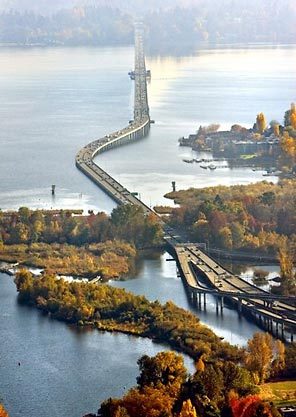
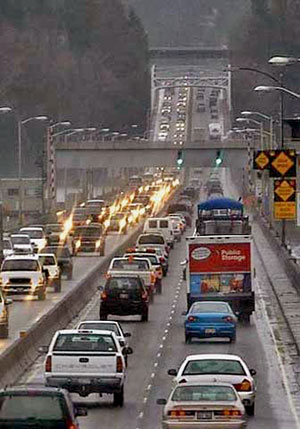
The state has laid out plans for a new, larger Evergreen Point Bridge that is six lanes, with capacity for evermore cars. The Seattle City Council is under pressure to go along.
But there is no six-lane plan that meets three city and regional essentials: preserving the Washington Park Arboretum, protecting the southeast corner of the University of Washington's campus from becoming a traffic dumping ground and keeping the Montlake neighborhood livable.
The City Council should push the discussion in a healthier direction. It should insist on a four-lane alternative, adding no new lanes but still helping the bridge accommodate more vehicles as ramp improvements, wider lanes, tolls and the like help buses and cars move more efficiently. The council also would show it is serious about controlling greenhouse gas emissions.
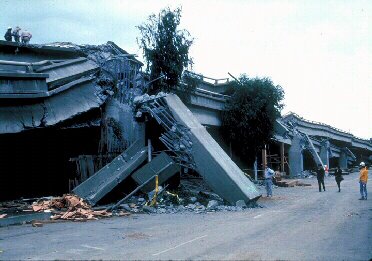
As state planners conclude, a four-lane alternative protects the public by replacing the current quake- and storm-prone bridge. The state environmental study concluded four lanes would meet other key goals: "improving ... reliability and protecting and enhancing neighborhoods and environmental values." In fact, the preference for six lanes rests on one criterion: a greater increase in "mobility for people and goods." That's bureaucratic for "cars and trucks still come first in our hearts."
Holding the line against an enlarged river of traffic will win the council few friends among those who reflexively bow to the car culture's voracious demands for land, water and public subsidy. Key council members like a six-lane option, called the Pacific Street interchange, which helps Montlake but risks UW and Arboretum harm.
The council has two intelligent options. First, there is the state's four-lane proposal, which needs adjustment but provides a starting point. Activists have also developed a four-lane option that emphasizes the ways transit improvements can be made more cost-effectively than with six lanes, provides intermittent shoulders on the bridge for stalled vehicles and demands strong mitigation measures. The cheaper "green alternative" also could help address an expert review panel's finance questions.
Jeannie Hale, president of Seattle Community Council Federation, told the City Council recently, "It's beyond me why the city of Seattle wants to encourage more automobile traffic." Four lanes will work, financially and environmentally
Transportation
Monday, March 10, 2008
Seattle doesn't want to encourage traffic by widening 520


Saturday, February 16, 2008
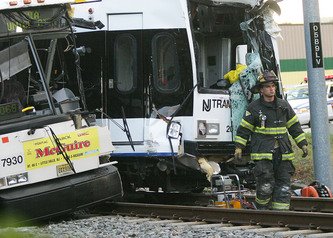
Minneapolis Light Rail Does Not Generate Enough Ridership
Minnesota is a state much like Washington. I found opinion among politically active people there to be much the same as here. That is, Democrats are excited by Obama's candidacy. Yet, with less excitement, most would accept Clinton's nomination if it came to that. Both Obama and Clinton must tread carefully until Ohio and Texas — and in the weeks thereafter, if Clinton remains in the race after March 4 — to maintain the sense in their party that either would be an acceptable standard bearer. Toughening rhetoric, charges and counter-charges, and edgy media campaigns now emanating from both camps could polarize opinion among Democrats and make it harder to come out of their Denver convention united.
Infrastructure politics
While in Minneapolis, I visited the site of the Interstate 35W bridge across the Mississippi River, which collapsed last summer. Sub-zero temperatures, biting winds, and weeks-old piles of snow on the ground had not deterred construction workers building its replacement. Huge covered, heated tents protected them as they made daily progress.
Neither our Alaskan Way Viaduct nor Highway 520 bridge across Lake Washington has collapsed, requiring such immediate replacement. However, I could not help but think, as I watched the construction crews in Minneapolis, that the job was being done start-to-finish there in a few months, whereas more than seven years after the Nisqually Quake called attention to the vulnerability of the aging viaduct and 520 bridge, state and local officials here had not yet arrived at final plans for their replacement or repair. Plans under discussion are provisional and subject to substantial change.
Minnesota is a progressive state which expects high performance by its public officials. Minnesotans would not tolerate for a moment the delay and fumbling existing around our viaduct/520 bridge issues. One particular thought crossed my mind: Does Gov. Chris Gregoire not recognize that she took office pledging fixes in both places and, in 2008, is still light years away from getting it done? Her Republican challenger, presumably Dino Rossi, no doubt will remind voters of that fact on a regular basis in the gubernatorial campaign. Both the viaduct and bridge are state highways. Any governor has it in her/his power to bring fix proposals to the Legislature and to drive them to conclusion, either with or without full support of local officials.
Minneapolis has a light rail system which is a convenient link to the airport but which does not make enough stops in the right places to generate ridership and revenue to sustain itself. A cautionary story for folk here. Federal money appears on the way to extend our Seattle light rail system beneath hills and across water to Husky Stadium, although local money also will be required. The University of Washington regents agreed long ago to cooperate in getting light rail to the University District. However, if you talk with officers of the university, you will find that most believe present bus service to the campus area is excellent and, moreover, that they anticipate the huge hole-in-ground and street disruptions attending light-rail extension to Husky Stadium with fear and loathing. Regents may wish to revisit the light rail station issue as they simultaneously examine how and with what money they propose to renovate Husky Stadium. Light rail also has become wrapped up in the debate about costs and configurations of the Montlake-adjacent 520 redo.
If all these decisions remain in limbo entering the gubernatorial and legislative campaigns, those in charge — and presumed to be not effectively dealing with them — will be on the defensive.
Minneapolis and Seattle are not alone in confronting the need to spend immediate billions on transportation and infrastructure upgrades. The questions here, as everywhere, have to do with priority, practicality, and affordability.